Events and outreach

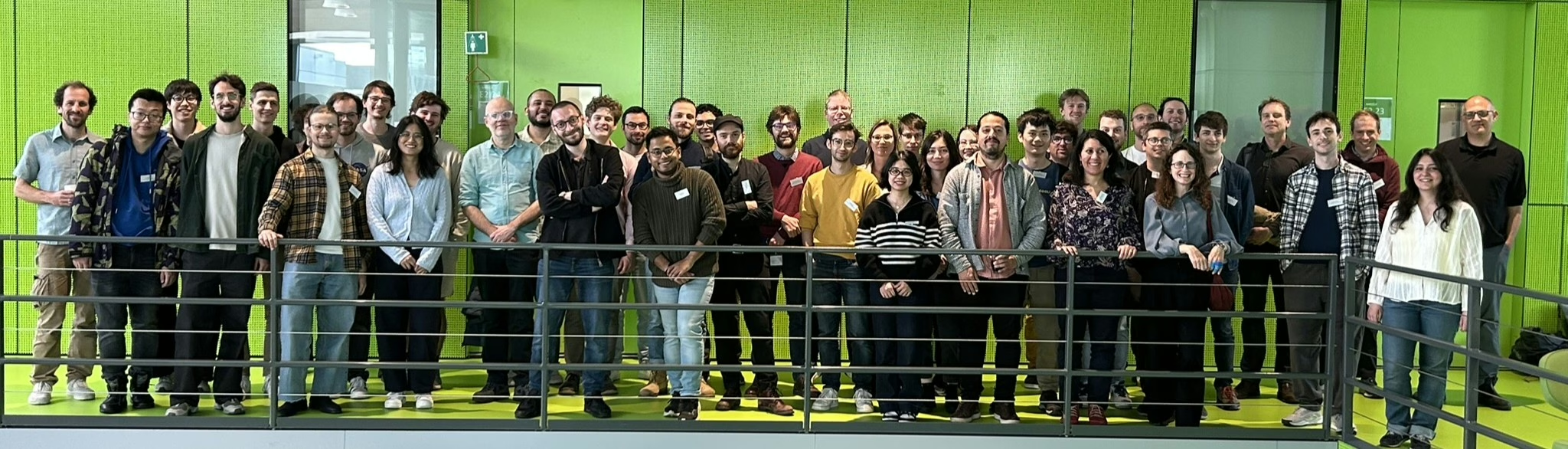
Full house for first Multistable Active Matter symposium

On April 16 and 17, AMOLF organized the first ‘Multistable Active Matter’ symposium. The initiative for this new symposium came from Martin van Hecke (Mechanical Metamaterials), with the aim of starting a discussion about a new direction in the field: the design and understanding of multistable active systems.

Active matter and multistable systems
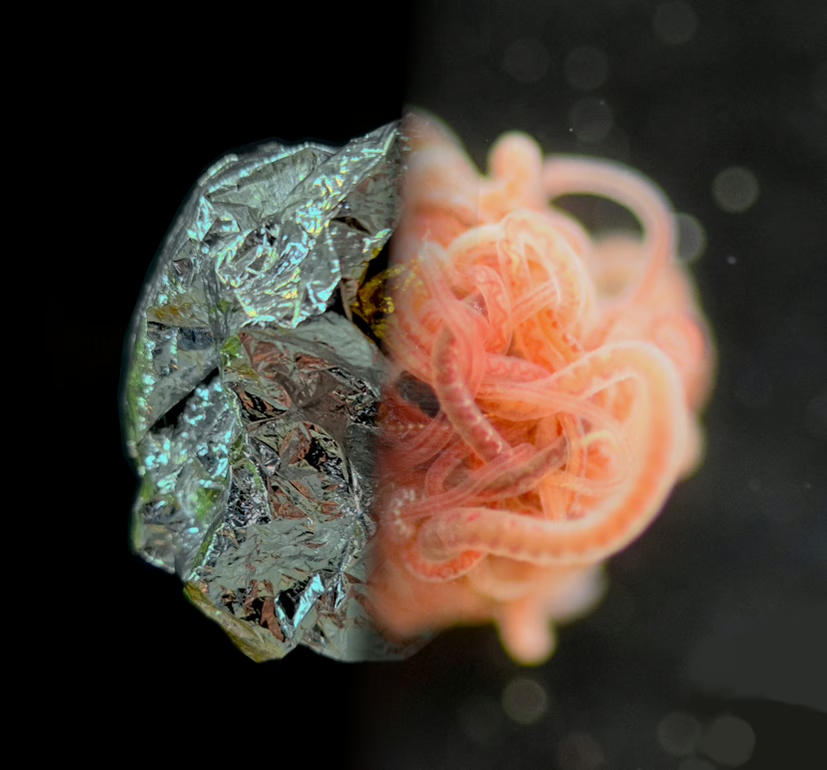
Examples of multistable active matter offering unique properties

Active matter refers to systems composed of microscopic units that are capable of consuming energy and generating motion. Examples are flocks of birds, pedestrian crowds and living tissues. All these systems exhibit striking collective behaviors that emerge at large scales.

Multistable systems can exist in multiple distinct stable states and transition between them when driven by external stimuli. This capacity for switching behavior is a hallmark of complex systems across disciplines, appearing in contexts ranging from crumpled paper and mechanical materials to robotic collectives.

Bridging ideas

By bridging together these ideas, multistable active systems offer a powerful framework for advancing our understanding of living systems and for engineering the next generation of adaptive, multifunctional materials.

When all visitors had left, postdoctoral researcher Paul Baconnier (Mechanical Metamaterials) reflected and concluded: “This was a remarkably active meeting.  The informal, small-scale setting created the perfect environment for deep discussions and the exchange of fresh ideas.”

Learn more

Share article
What's happening

Most recent news items

All news items
Collaboration

Successful outcomes of international EBEAM program led by AMOLF

The EU Pathfinder project Electron Beams Enhancing Analytical Microscopy (EBEAM) that was recently completed has received a highly positive review of the European Innovation Council (EIC). EBEAM brought together eight European research institutions and companies, including AMOLF, that develop new concepts and instruments combining spectroscopic analysis with electron microscopy.

Read news item
Research highlights

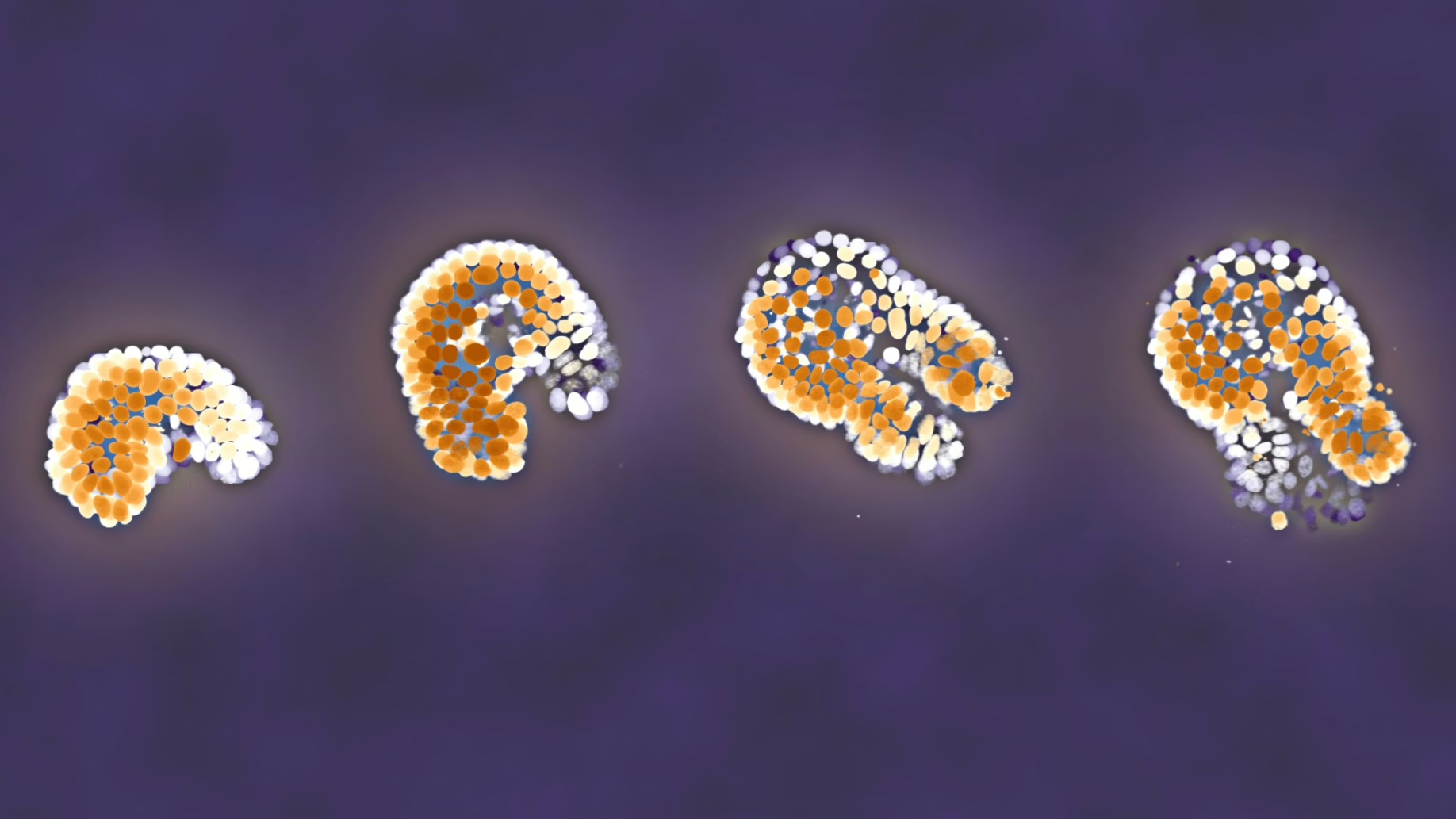
Everything you need to know about organoids

Organoids are instrumental in improving our understanding of processes that are otherwise hidden inside the body. For instance, these small 3D organs can be used to test medicines on tissue grown from a patient’s own cells. AMOLF researchers carry out unique and complex experiments to follow organoids in time. In order to enable other researchers to benefit from their experiences, they now publish their methods in the prestigious journal Nature Protocols.

Read news item
Events and outreach

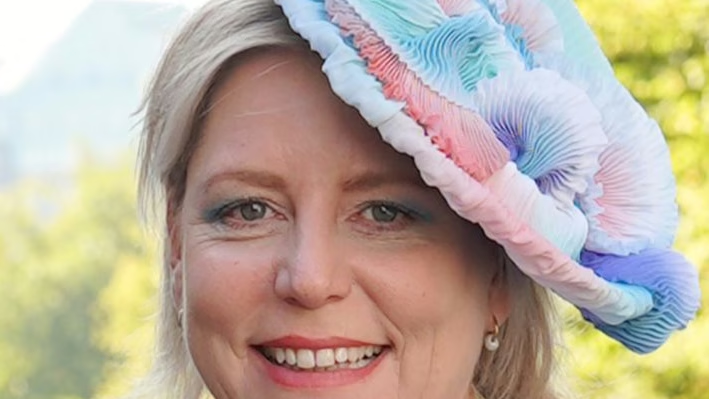
Minister Rianne Letschert wears hat and shoulder ornament inspired by Wim Noorduin’s research

This year at the opening of the parliamentary year (Prinsjesdag) Minister of Education, Culture and Science Rianne Letschert wears a spectacular hat and shoulder ornament. Both of them are inspired by the microscopic structures studied by group leader Wim Noorduin (AMOLF/UvA), which look remarkably like tiny flowers under a microscope. Artist and designer Malou Beemer translated these shapes, normally invisible to the naked eye, into wearable art.

Read news item
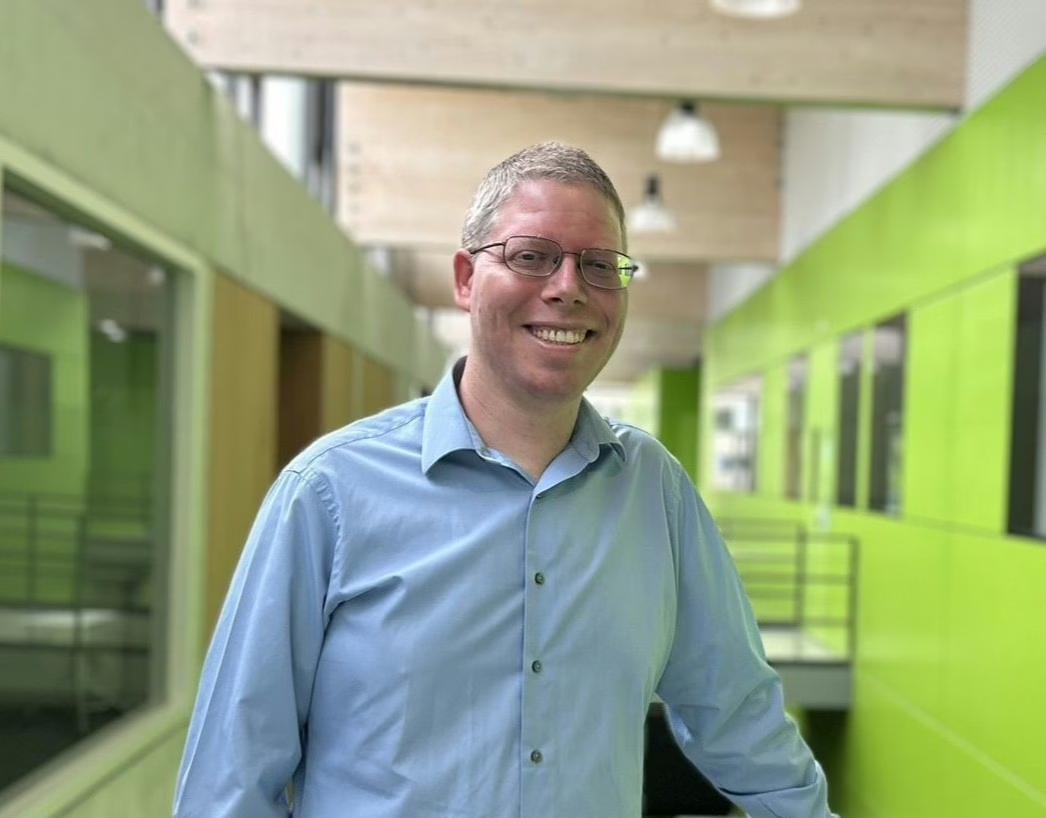
Nachi Stern, Group Leader Learning Machines at AMOLF
People and recognition

Nachi Stern awarded ERC Starting Grant to explore how matter learns

Why do brains learn, but rocks do not? Could a material one day adapt to its environment the way a living organism does? AMOLF group leader Dr. Nachi Stern has been awarded an ERC Starting Grant to investigate the physical laws of learning, in a project called, “Physical Learning in Dynamical Systems.”

Read news item
Stay informed

Get the latest research highlights, events, and news from our institute delivered to your inbox