People and recognition

Marie Curie Grant for understanding fungal decision making

In the last year, AMOLF postdoc Achille Joliot uncovered many fascinating details about mycorrhizal fungi. Now, he is able to take his research further as recipient of the Marie Sklodowska-Curie Individual Fellowship. Using the grant, Achille is eager to answer an ecologically important question: how are these fungi able to make sophisticated decisions without a central nervous system. This work will be carried out in the Physics of Behavior group led by Tom Shimizu.

Underground, mycorrhizal fungi form vast networks that trade soil nutrients for plant-derived carbon. These symbioses drive carbon cycling, mineral uptake, and ecosystem resilience. Researchers from the Physics of Behavior team and collaborators have shown that fungi display complex behaviors regulating exchanges with hosts. Yet despite the ecological behavior, the cellular dynamics and signals coordinating such sophistication across decentralized mycelial networks remains largely unknown today.

Disrupting the network to understand
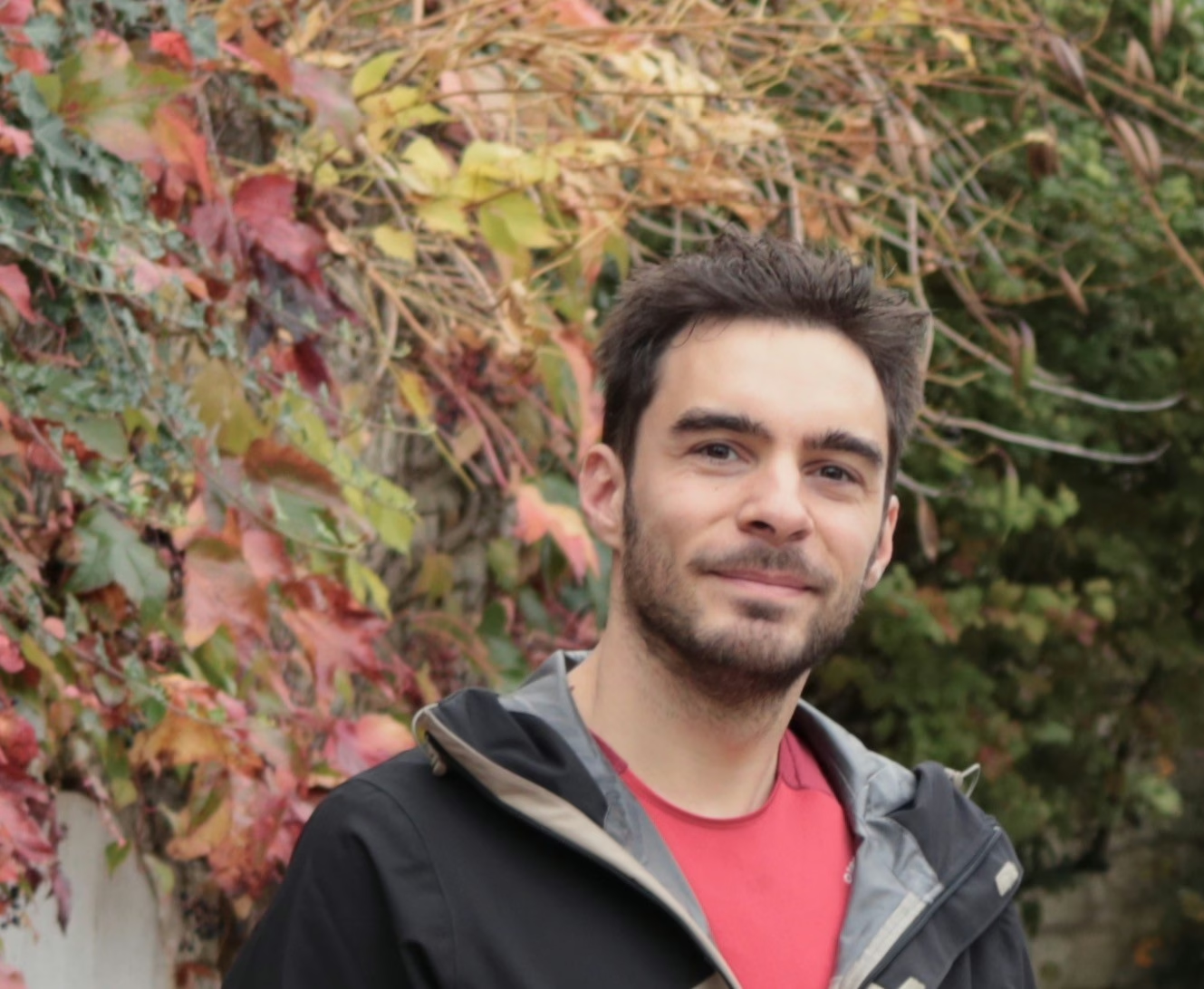
AMOLF postdoc Achille Joliot

Through a new biophysical approach, Achille seeks to unravel how mycorrhizal fungi regulate their behavior to engage in symbiotic trade. Achille shares his plans: “I will develop techniques to deliver localized interventions at the cellular level and network-scale stimuli that change the growth environment. These stimuli will disrupt nutrient transport machinery, metabolism, and host availability to trigger behavioral responses.”

Using robotic imaging technologies from the AMOLF team, Achille will then quantify responses from individual hyphae (microns) to entire networks (centimeters). This will allow new kinds of experiments that measure how mycorrhizal fungi respond to stimuli in real time.

Signals

Another aspect of the project is to study the signals that help fungi coordinate their responses. To do this, Achille will combine his experience using tiny glass probes with advanced imaging that makes activity inside cells visible. This will help him test whether electrical signals, calcium signals, or pressure changes are involved.

By linking results across different scales, the research aims to explain how complex, coordinated behavior can arise in a network without a central nervous system. These findings could guide future strategies to support biodiversity, agriculture, and climate stability.

Learn More

Read more about trade agreements in plant-fungal networks.

Share article
What's happening

Most recent news items

All news items
Collaboration

Successful outcomes of international EBEAM program led by AMOLF

The EU Pathfinder project Electron Beams Enhancing Analytical Microscopy (EBEAM) that was recently completed has received a highly positive review of the European Innovation Council (EIC). EBEAM brought together eight European research institutions and companies, including AMOLF, that develop new concepts and instruments combining spectroscopic analysis with electron microscopy.

Read news item
Research highlights

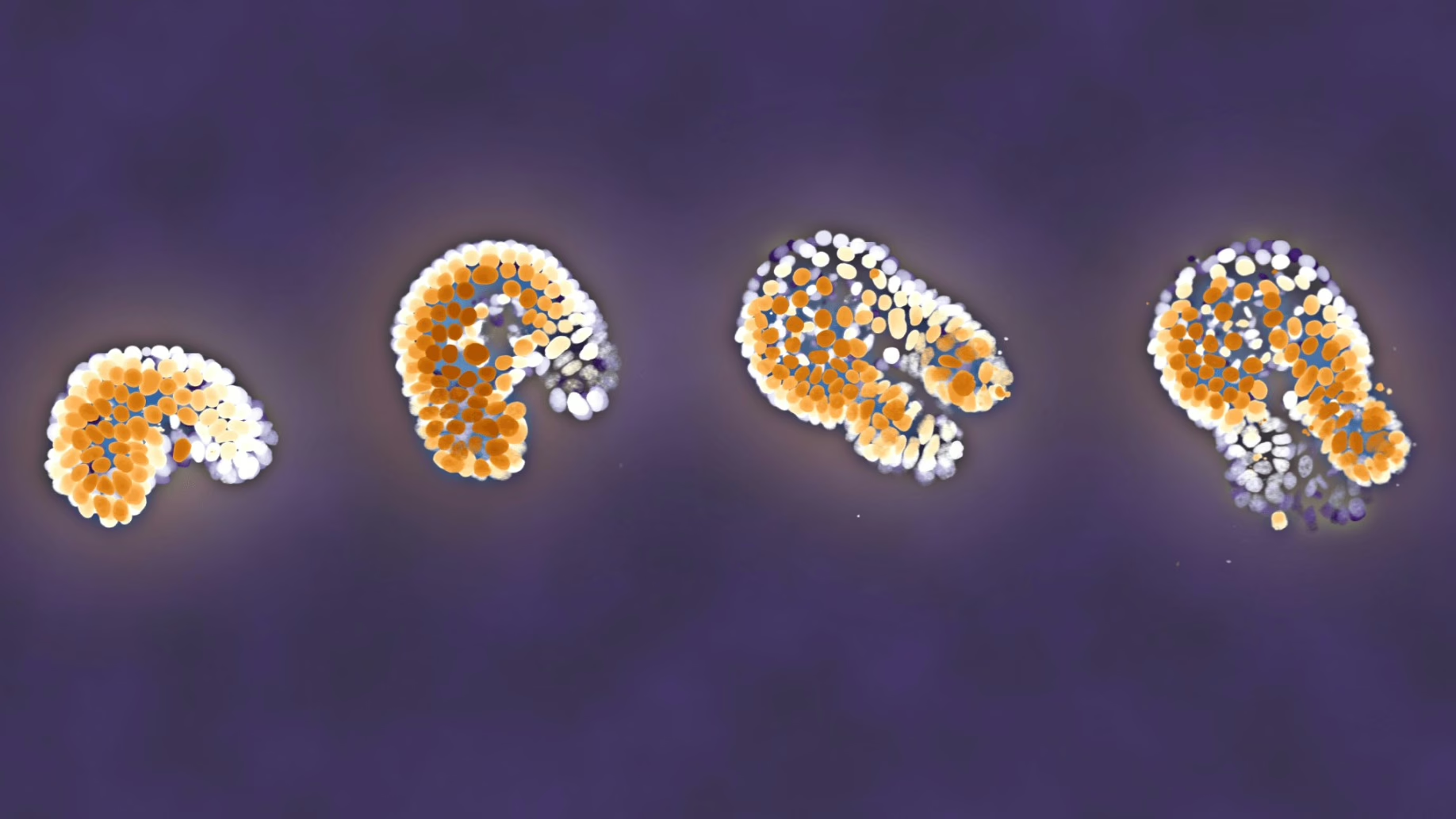
Everything you need to know about organoids

Organoids are instrumental in improving our understanding of processes that are otherwise hidden inside the body. For instance, these small 3D organs can be used to test medicines on tissue grown from a patient’s own cells. AMOLF researchers carry out unique and complex experiments to follow organoids in time. In order to enable other researchers to benefit from their experiences, they now publish their methods in the prestigious journal Nature Protocols.

Read news item
Events and outreach

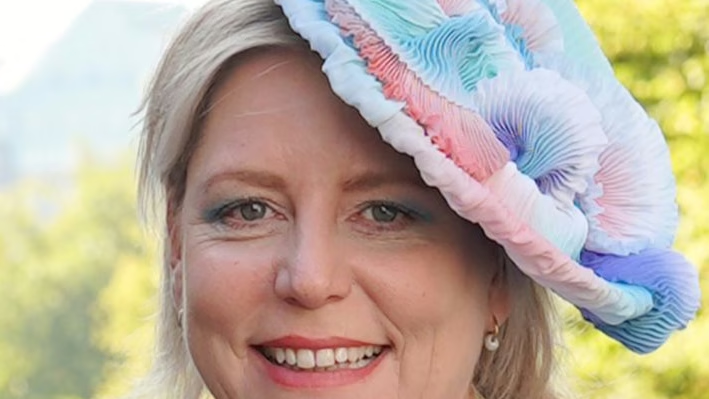
Minister Rianne Letschert wears hat and shoulder ornament inspired by Wim Noorduin’s research

This year at the opening of the parliamentary year (Prinsjesdag) Minister of Education, Culture and Science Rianne Letschert wears a spectacular hat and shoulder ornament. Both of them are inspired by the microscopic structures studied by group leader Wim Noorduin (AMOLF/UvA), which look remarkably like tiny flowers under a microscope. Artist and designer Malou Beemer translated these shapes, normally invisible to the naked eye, into wearable art.

Read news item
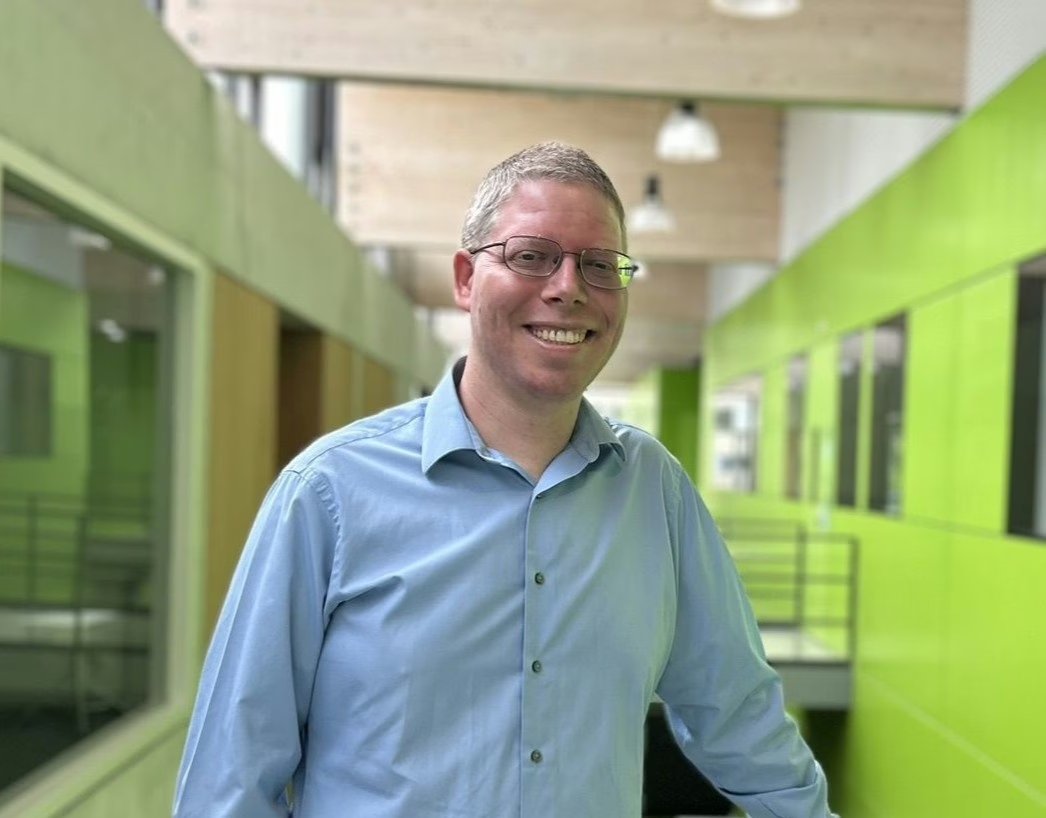
Nachi Stern, Group Leader Learning Machines at AMOLF
People and recognition

Nachi Stern awarded ERC Starting Grant to explore how matter learns

Why do brains learn, but rocks do not? Could a material one day adapt to its environment the way a living organism does? AMOLF group leader Dr. Nachi Stern has been awarded an ERC Starting Grant to investigate the physical laws of learning, in a project called, “Physical Learning in Dynamical Systems.”

Read news item
Stay informed

Get the latest research highlights, events, and news from our institute delivered to your inbox