People and recognition

Spring brings many Doctorate Celebrations

Burak Demirbas – Stress-induced protein dynamics and growth arrest in C. elegans during development – May 16thBurak Demirbas with PhD committee and his familyBurak…

Burak Demirbas – Stress-induced protein dynamics and growth arrest in C. elegans during development – May 16th  
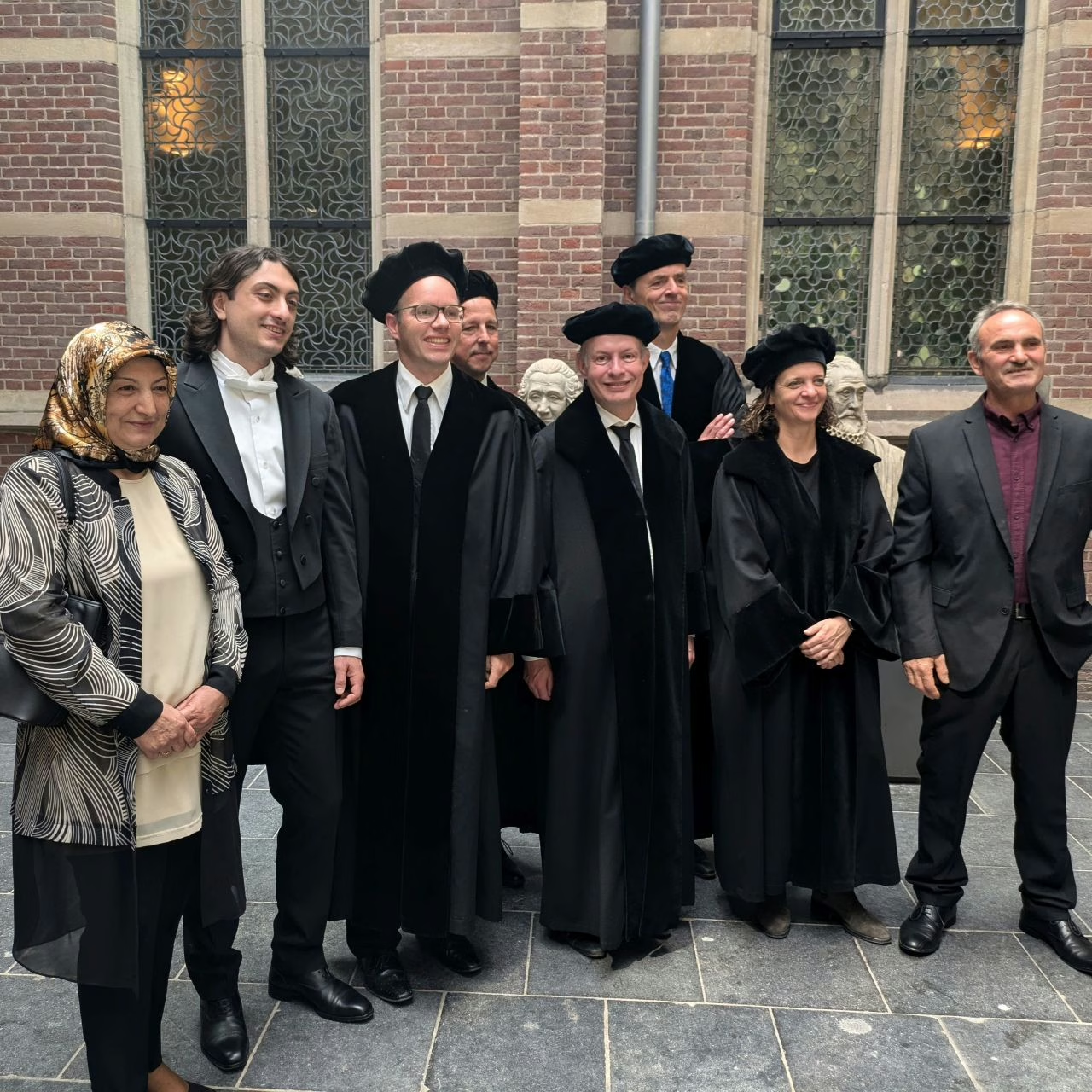
Burak Demirbas with PhD committee and his family

Burak did his doctoral research in the group of Jeroen van Zon. He studied the dynamics of a protein called DAF-16/FOXO, which, in the worm C. elegans, is associated with growth inhibition in response to stress. Burak: “We think that pulses of this protein stop growth when there is stress—such as lack of food. Then, the protein enters the cell, and once the stress is removed, it leaves. I was able to observe this correlation,” he explains. 

Burak left AMOLF in 2024 to begin a postdoctoral position in the group of Meike Wortel at the University of Amsterdam, Faculty of Science. He is currently working on a computational theory that predicts evolution. 

Lennard Kwakernaak – Counting Metamaterials – May 28th 
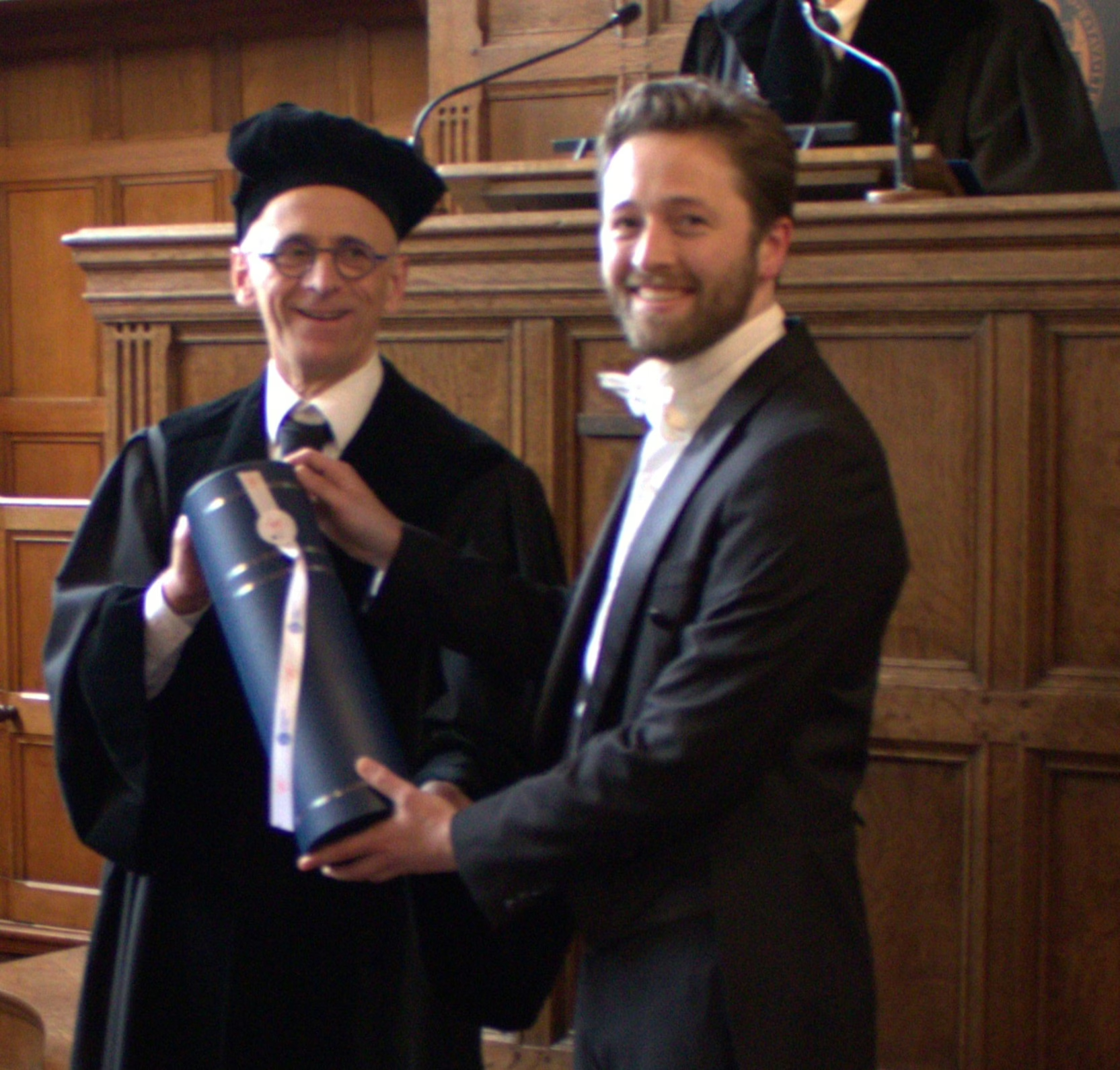
Lennard Kwakernaak receiving his diploma

Can a block of rubber count to ten? This was one of the questions Lennard Kwakernaak explored during four years of doctoral research at Leiden University and AMOLF, in the group of Martin van Hecke. In his thesis he answers many questions about the behavior of mechanical metamaterials. These are materials whose properties are defined not just by their molecular makeup but also by their structure. 

Lennard investigated how a rubber block could be used to process information, in a way similar to how a computer operates. A small bar that buckles to the left or right can represent a binary bit: a 1 or a 0. “It wasn’t easy to design the structure to behave exactly the way we wanted,” says Lennard. “Counting is the simplest form of computation we could think of, so it made sense as a starting point.” 

Would you like to try to make rubber count? Lennard has made instructions in the article “Beam Counter: a Rubber Block That Counts!”.

Nelson de Gaay Fortman – Amplifying Plasmonic Metasurfaces – June 5th 
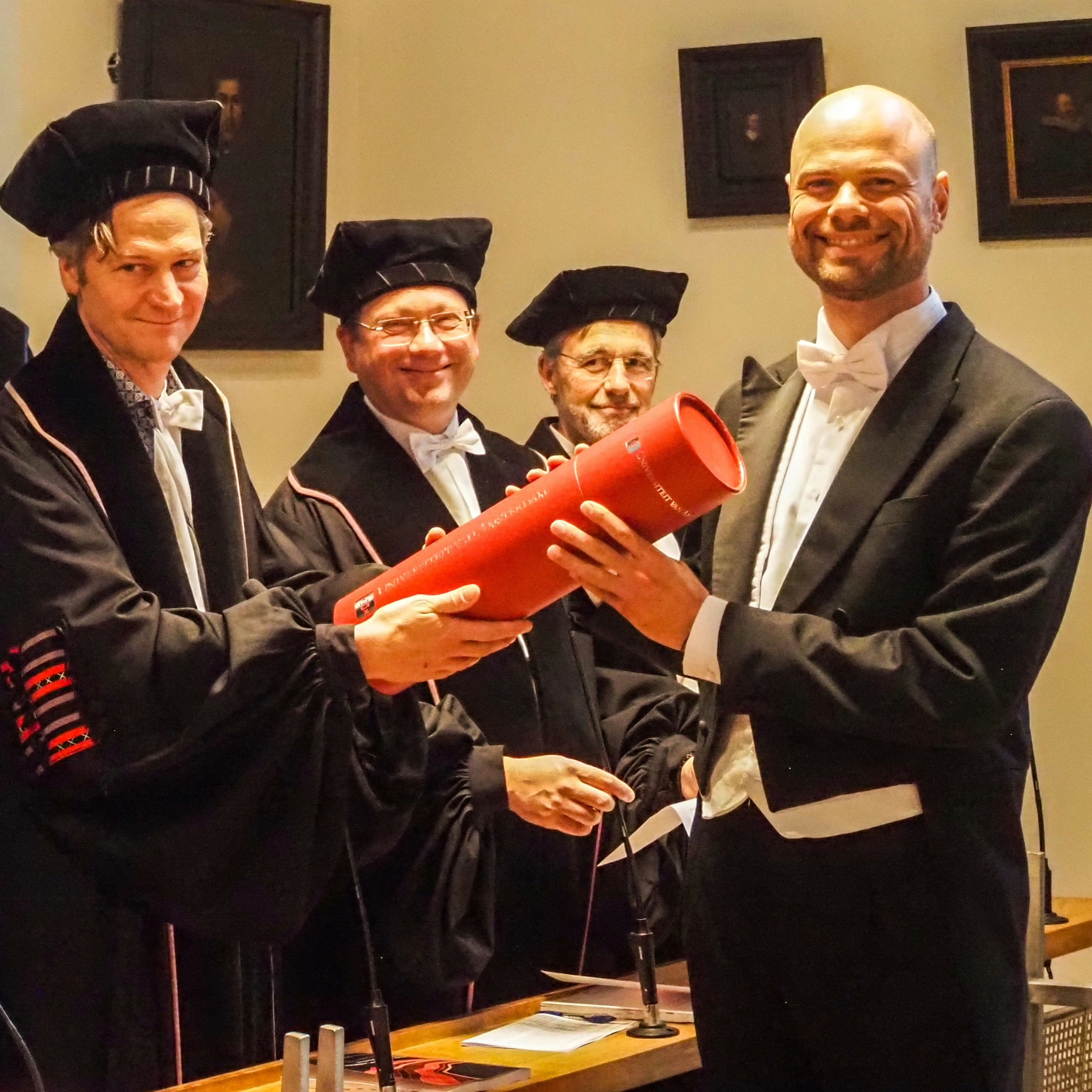
Nelson de Gaay Fortman receiving his diploma

As part of his PhD work in the group of Femius Koenderink, Nelson built a laser setup to study flat nanostructured materials known as metasurfaces that capture and manipulate light.  

One of the most important findings of Nelson’s research was the observation of spontaneous symmetry breaking in metasurface lasers: 

Nelson: “We saw that perfectly symmetric systems — composed of nanostructures — could suddenly ‘choose’ one direction in which to emit light. By capturing each laser pulse in detail and designing the symmetry landscape ourselves, we created a new platform to explore one of nature’s most fundamental phenomena at the nanoscale: how symmetric conditions can still lead to asymmetric outcomes. 

Share article
What's happening

Most recent news items

All news items
Collaboration

Successful outcomes of international EBEAM program led by AMOLF

The EU Pathfinder project Electron Beams Enhancing Analytical Microscopy (EBEAM) that was recently completed has received a highly positive review of the European Innovation Council (EIC). EBEAM brought together eight European research institutions and companies, including AMOLF, that develop new concepts and instruments combining spectroscopic analysis with electron microscopy.

Read news item
Research highlights

Everything you need to know about organoids

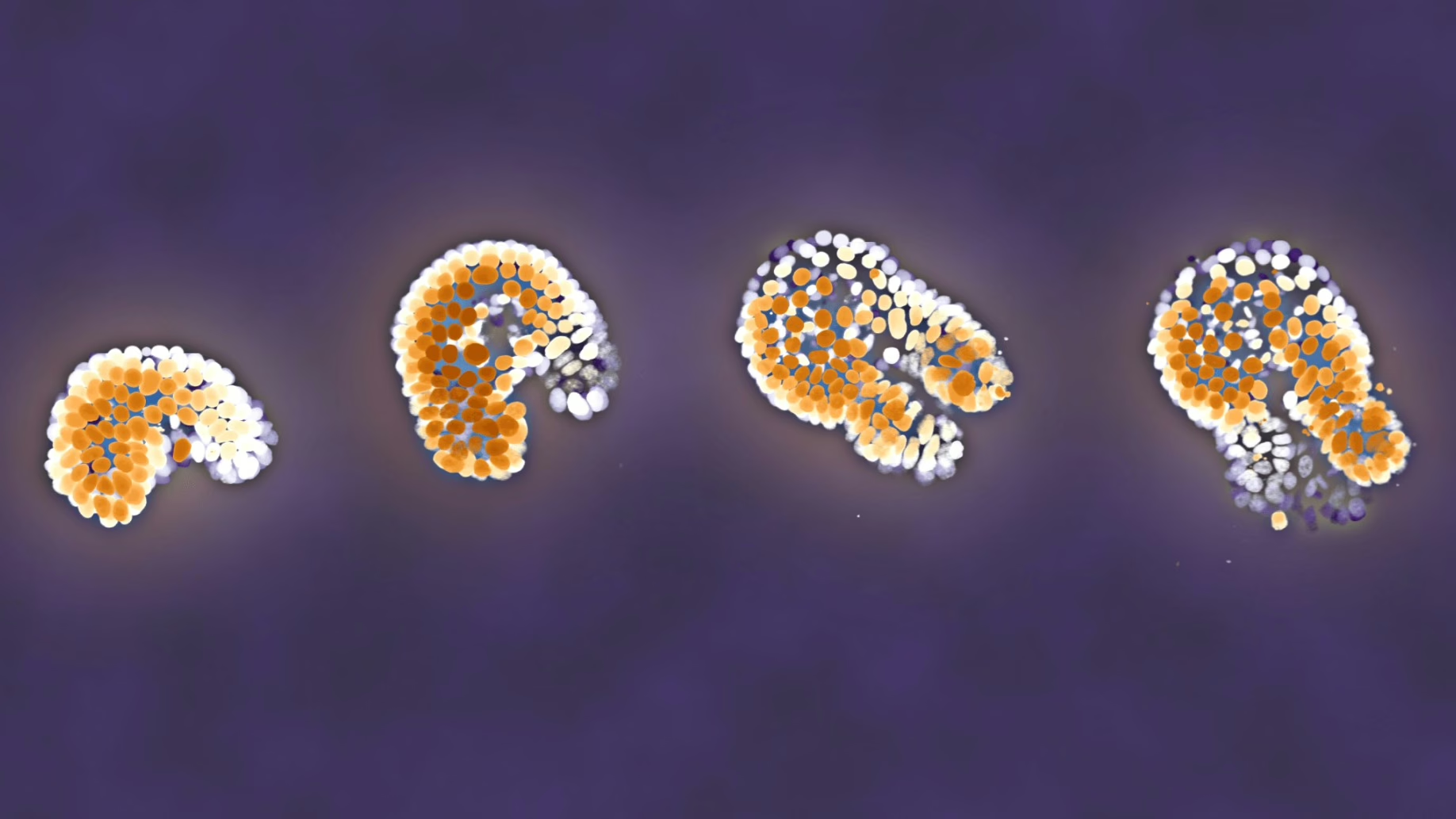
Organoids are instrumental in improving our understanding of processes that are otherwise hidden inside the body. For instance, these small 3D organs can be used to test medicines on tissue grown from a patient’s own cells. AMOLF researchers carry out unique and complex experiments to follow organoids in time. In order to enable other researchers to benefit from their experiences, they now publish their methods in the prestigious journal Nature Protocols.

Read news item
Events and outreach

Minister Rianne Letschert wears hat and shoulder ornament inspired by Wim Noorduin’s research

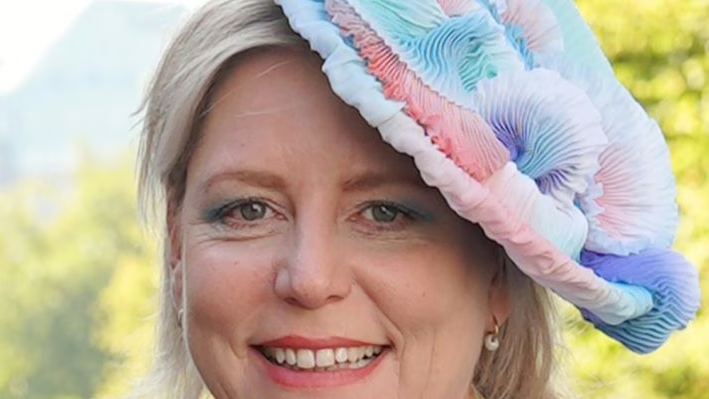
This year at the opening of the parliamentary year (Prinsjesdag) Minister of Education, Culture and Science Rianne Letschert wears a spectacular hat and shoulder ornament. Both of them are inspired by the microscopic structures studied by group leader Wim Noorduin (AMOLF/UvA), which look remarkably like tiny flowers under a microscope. Artist and designer Malou Beemer translated these shapes, normally invisible to the naked eye, into wearable art.

Read news item
Nachi Stern, Group Leader Learning Machines at AMOLF
People and recognition

Nachi Stern awarded ERC Starting Grant to explore how matter learns

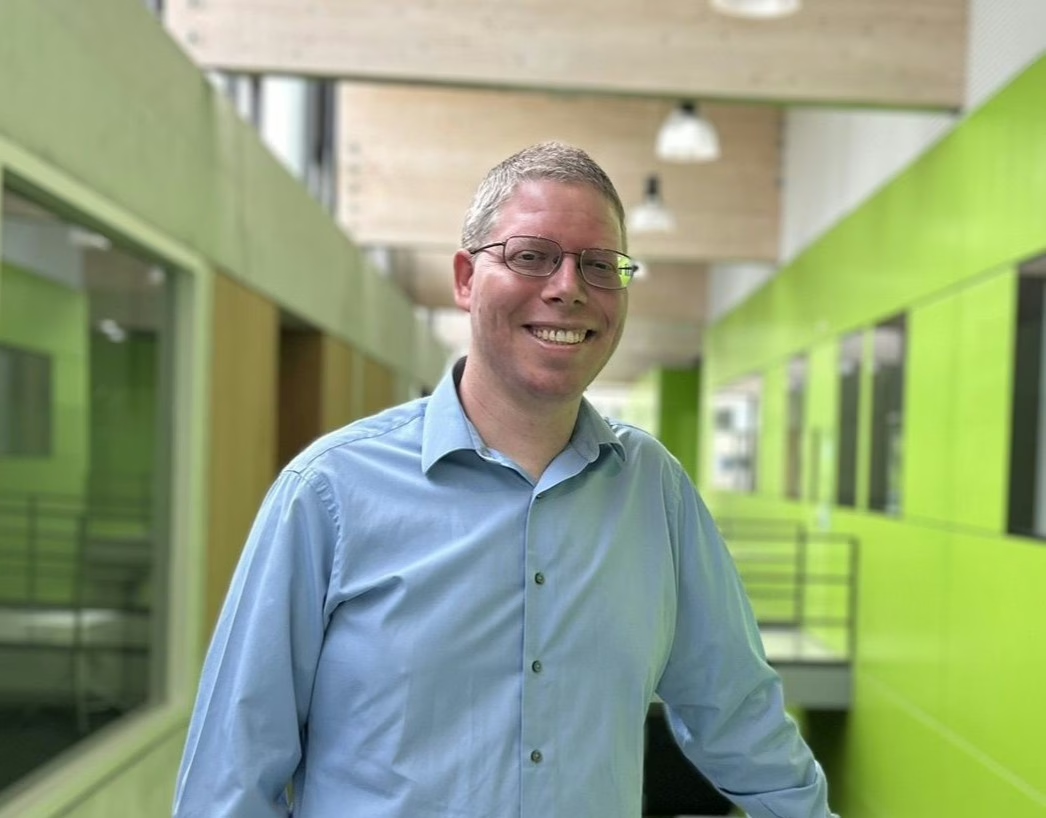
Why do brains learn, but rocks do not? Could a material one day adapt to its environment the way a living organism does? AMOLF group leader Dr. Nachi Stern has been awarded an ERC Starting Grant to investigate the physical laws of learning, in a project called, “Physical Learning in Dynamical Systems.”

Read news item
Stay informed

Get the latest research highlights, events, and news from our institute delivered to your inbox