Stairway to Impact Award
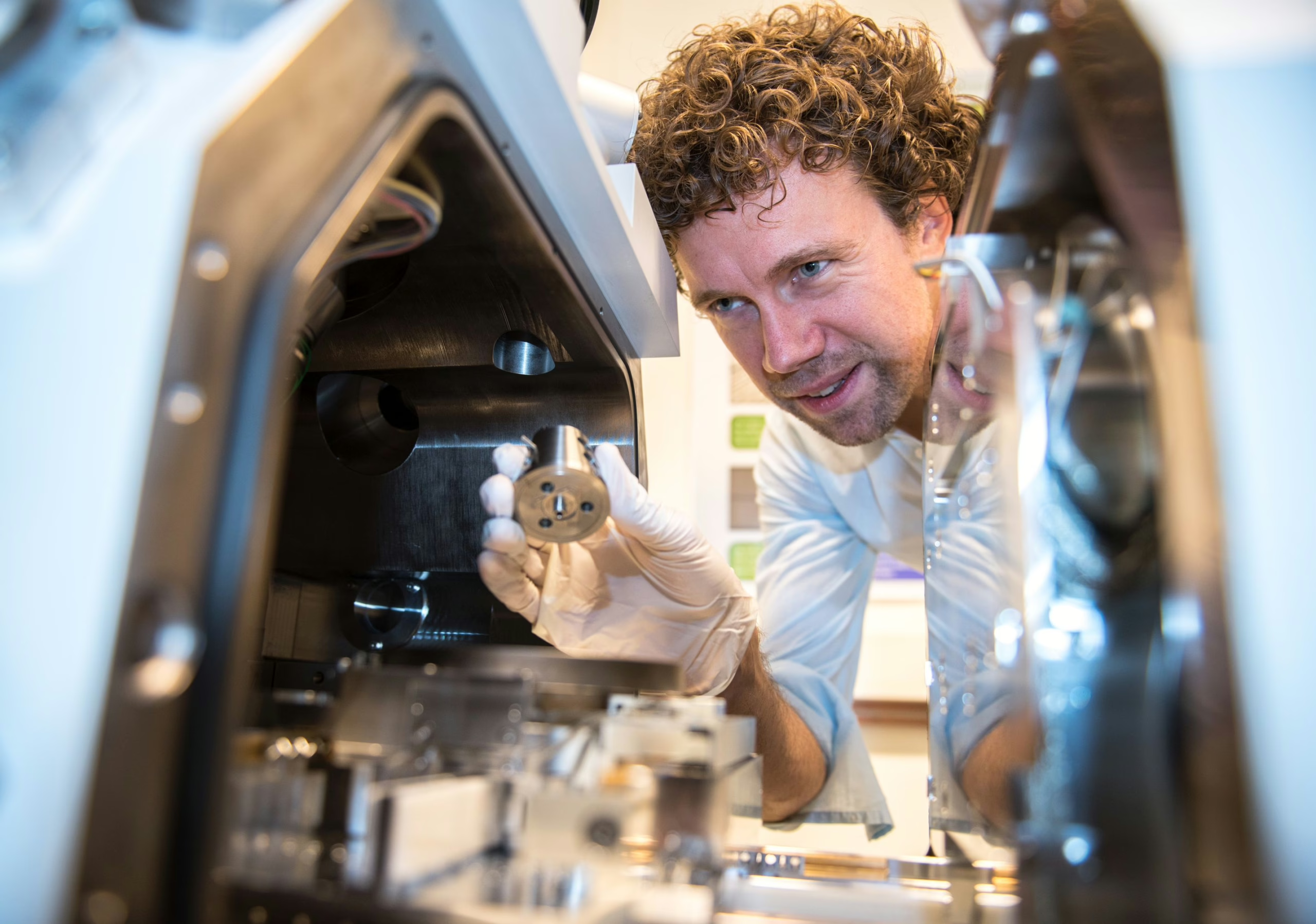
The Stairway to Impact prize honors scientists who successfully translate their research findings into solutions that address societal challenges or generate economic benefits. The award includes a €50,000 grant to further these impactful efforts. Wim will receive the prize at the upcoming NWO Physics conference in Veldhoven.
Jury Report
The jury commended Wim on his remarkable achievements. In their report, they stated:
“The committee is highly impressed by Professor Noorduin’s efforts to actively seek diverse applications for the lead test, thereby pursuing various avenues of societal impact. Not only does Professor Noorduin demonstrate its clear potential in the fields of health and environment, but he is also exploring applications in forensics. The committee applauds his collaboration with the police.”
The discovery
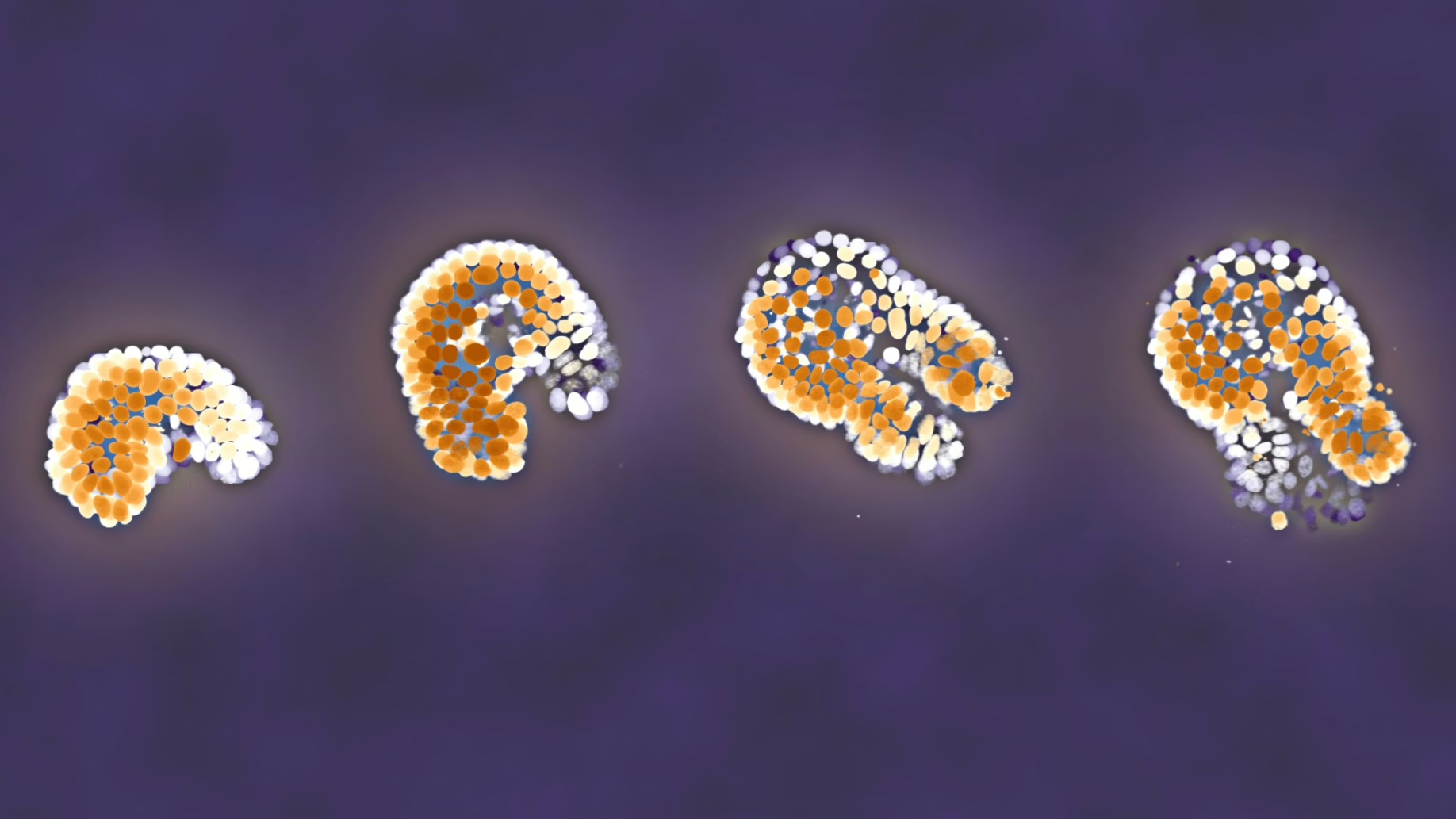
While working from home during the COVID pandemic, Wim discovered a chemical method to detect the presence of lead atoms on a surface. His group was studying a very promising material for solar cells, called perovskite, when he realized that the light-emitting properties of this material could help visualize lead atoms. This discovery appeared to offer a promising solution to the global problem of lead poisoning. After all, people are often unaware of lead in their environment.
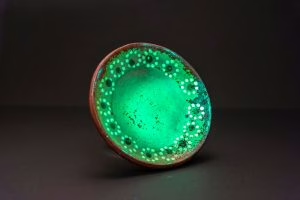
To test the idea, PhD student Lukas Helmbrecht prepared a solution capable of forming a perovskite upon contact with lead. Wim sprayed the solution on a gutter at home. The surface immediately emitted a bright green luminescence. To their surprise, the same reaction occurred on the paint of an adjacent window frame, indicating that both surfaces contained lead. The green light revealed the formation of a lead perovskite semiconductor, confirming the presence of lead.
Impact
Recognizing the potential impact of his discovery, Wim, alongside group members such as Lukas, embarked on a journey that ultimately led to the creation of a start-up company, Lumetallix. In partnership with Pure Earth, Lumetallix now distributes test kits to countries where they are most needed, addressing a critical public health issue.
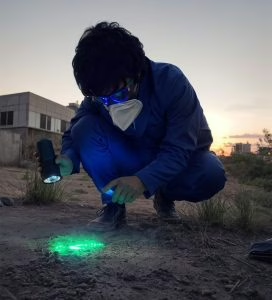
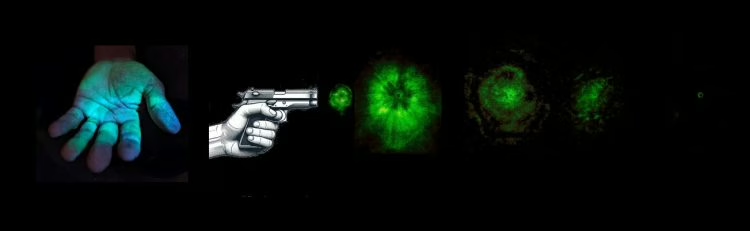
A new application for the lead detection method emerged recently. Collaborating with Kendra Adelberg, Arno van der Weijden, and Professor Arian van Asten from the University of Amsterdam, Wim is investigating its use in forensic science. When a pistol is fired, traces of lead are left in the surrounding environment. Because the lead detection method is fast and accurate, it promises to become a valuable forensic tool. This potential for forensic investigations is now further explored with forensic experts and police.
More information about the Stairway to Impact prize, and a video interview with Wim on the NWO website.
Photo credits: Lukas Helmbrecht, Arno van der Weijden Kendra Adelberg, and Lumetallix