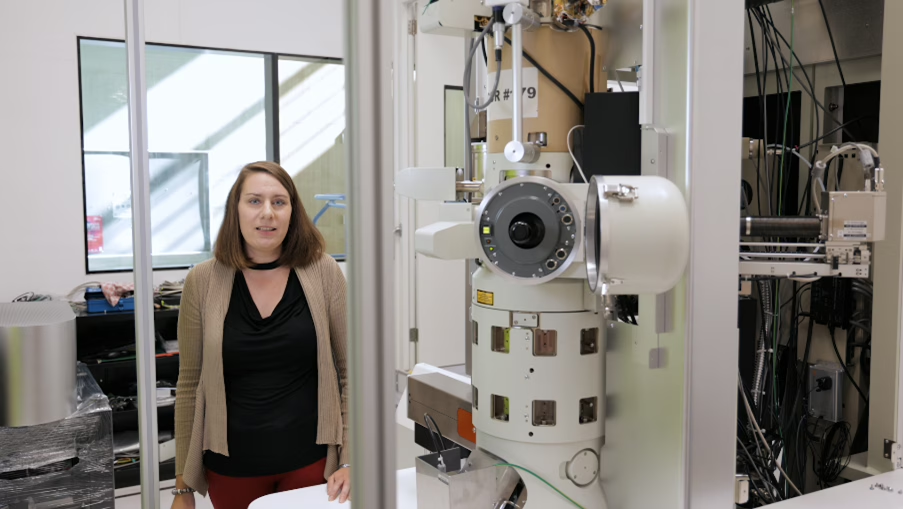
This year’s edition of the symposium focused on the light-driven processes monitored in the transmission electron microscope (TEM). Four keynote speakers shared their experiences with TEM microscopy and the latest advances in the field:
- Dr. Sophie Meuret (CEMES/CNRS, Toulouse, France): ‘Exploring the Dynamics of Semiconductors with an Ultrafast Transmission Electron Microscope’
- Prof. Ulrich Lorenz (EPFL, Lausanne, Switzerland): ‘Observing Nanoscale Dynamics with Time-Resolved Electron Microscopy’
- Dr. Armin Feist (Max Planck Institute, Göttingen, Germany): ‘Merging Electron Microscopy with Advanced Photonics’
- Prof. Jennifer Dionne (Stanford University, Stanford, United States): ‘The Light Stuff: Enabling Sustainable Chemical Manufacturing with Atomically-Optimized Photocatalysts’
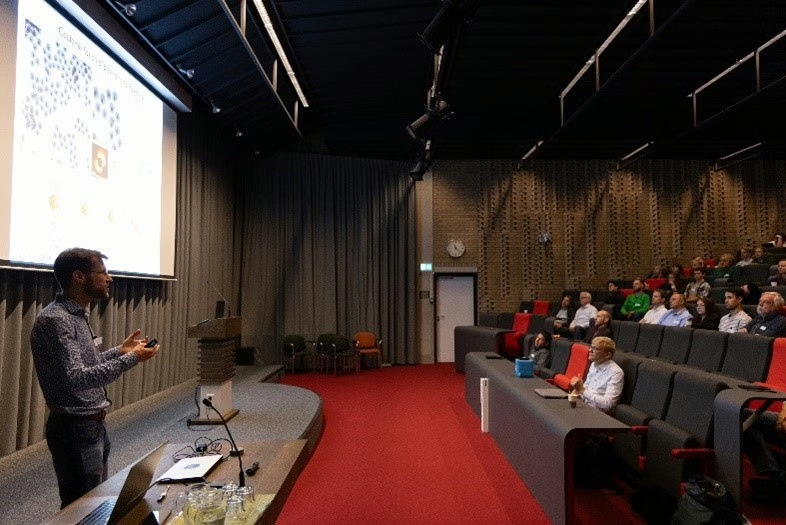
After these keynotes, the TEM was officially opened. At the bottom of this article, you will find photos that give an impression of the symposium.
New discoveries and technological advances
Wiebke Albrecht (AMOLF group leader Hybrid Nanosystems): “Modern life largely relies on fossil fuels to power our economy. Unfortunately, we know that this has caused a lot of issues surrounding climate change. Ideally, we want to produce electricity, fuels and all materials, using sunlight alone. For real operating conditions of a catalyst or a solar cell, you might want to introduce gas or liquid environments or heat and electric biasing. This is combinable with the light excitation in our TEM. One of the reasons it’s so unique. This capability will enable new scientific discoveries and technological advances.”
Dr. Wiebke Albrecht (AMOLF group leader Hybrid Nanosystems) and the TEM
Better solar cells and catalysts
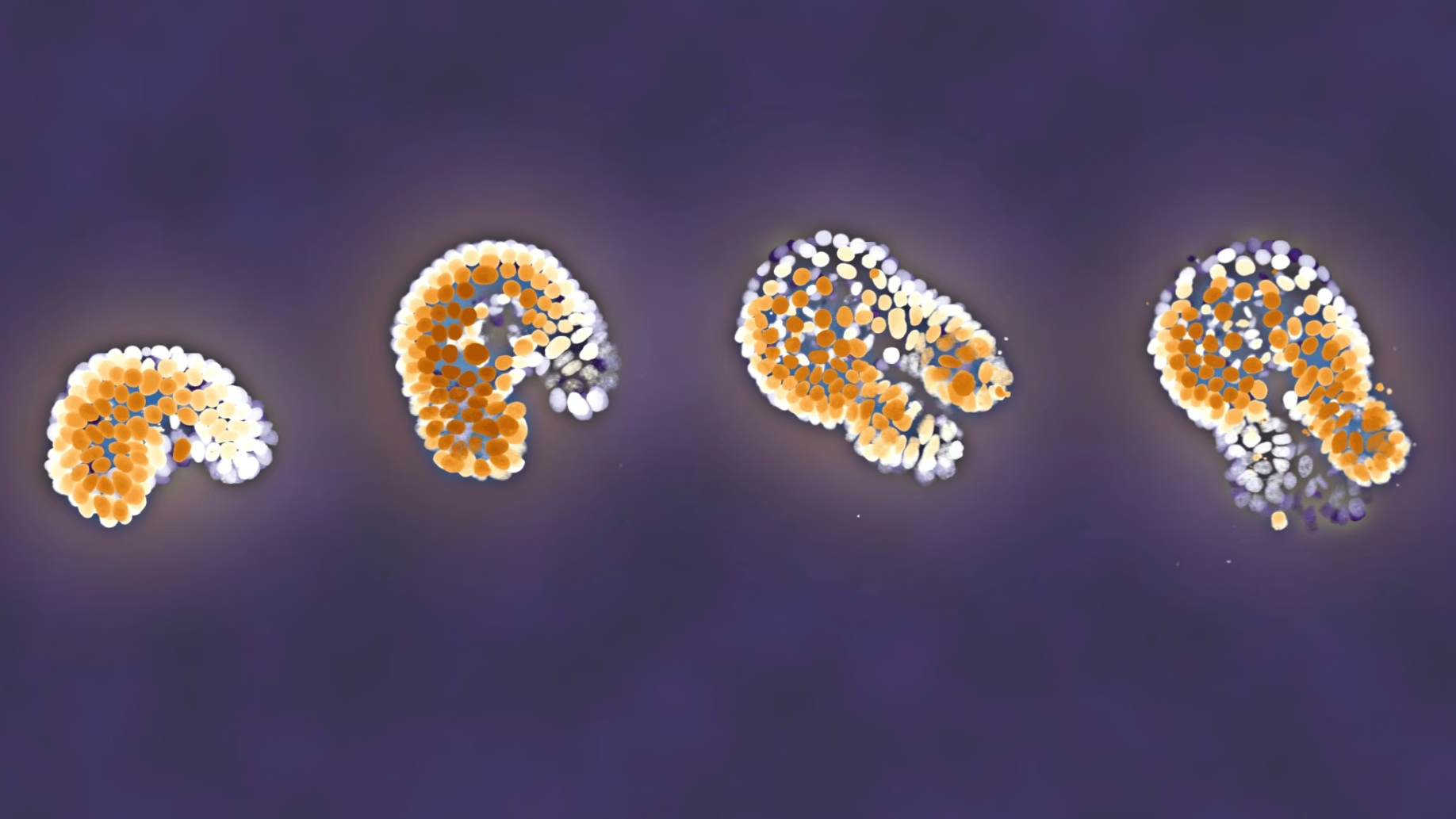
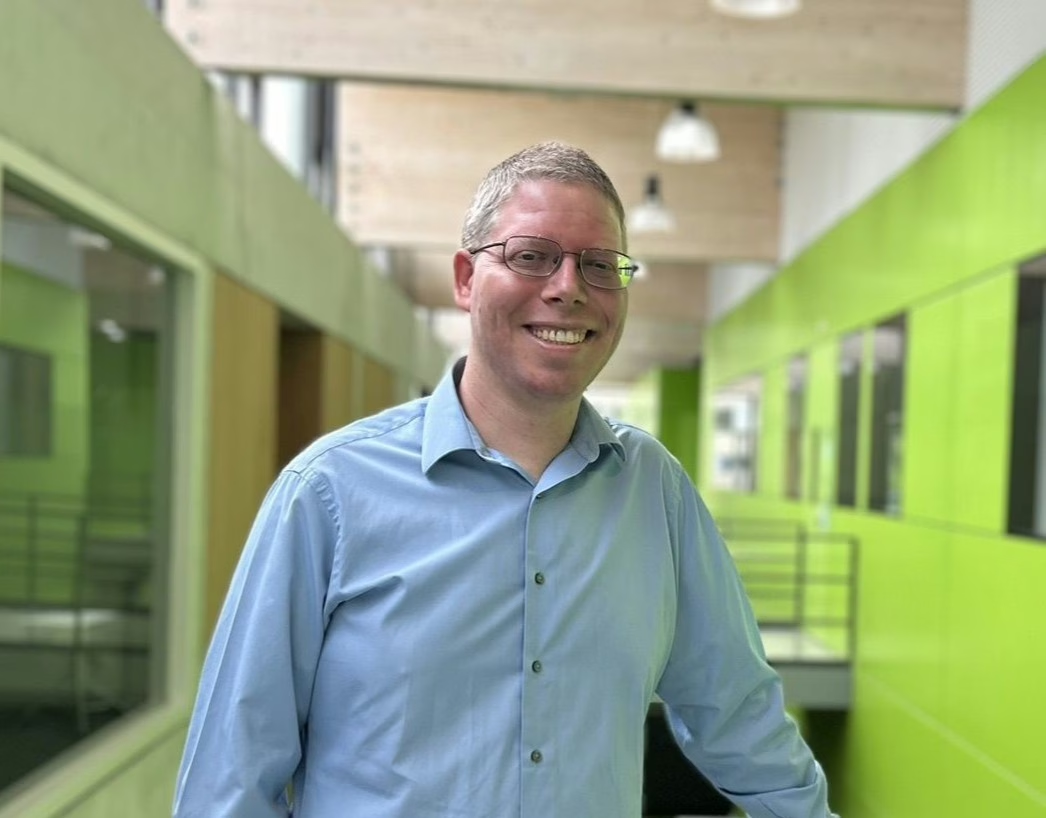
“In a normal electron microscope, materials look completely stable”, says Erik Garnett (AMOLF group leader Nanoscale Solar Cells). “What the researcher normally can’t see, is what happens under real operating conditions, like when shining light on a solar cell to make electricity or in a catalyst to drive a chemical reaction. What you see with the TEM are nanoparticles that act as a catalyst. When the light turns on, they start changing shape very rapidly. The exact shape and structure of the catalyst makes a huge difference on the properties, like the catalytic behavior, but normally we can’t see this. Now that we know the exact shape under light, we can make better solar cells and better catalysts.”
SHINE consortium funded by NWO
The TEM is the result of collaboration between AMOLF, University of Amsterdam, Vrije Universiteit (VU) and the Advanced Research Center for Nanolithography (ARCNL). This consortium received funding from the NWO Research Infrastructure (RI) call for the project ‘Shining light on atomic-scale processes’ (SHINE).
Use the TEM for your research?
This microscope is open to everyone inside and outside of the Netherlands forboth academic and industrial researchers. If you are interested, all you have to do is send an email to support.nanolab@amolf.nl and describe your process. Then, we plan an intake to discuss this further. Either you will get trained yourself on the microscope or we can do the measurements for you. For more information, please visit amolf.nl/tem.
[foogallery id=”24788″]