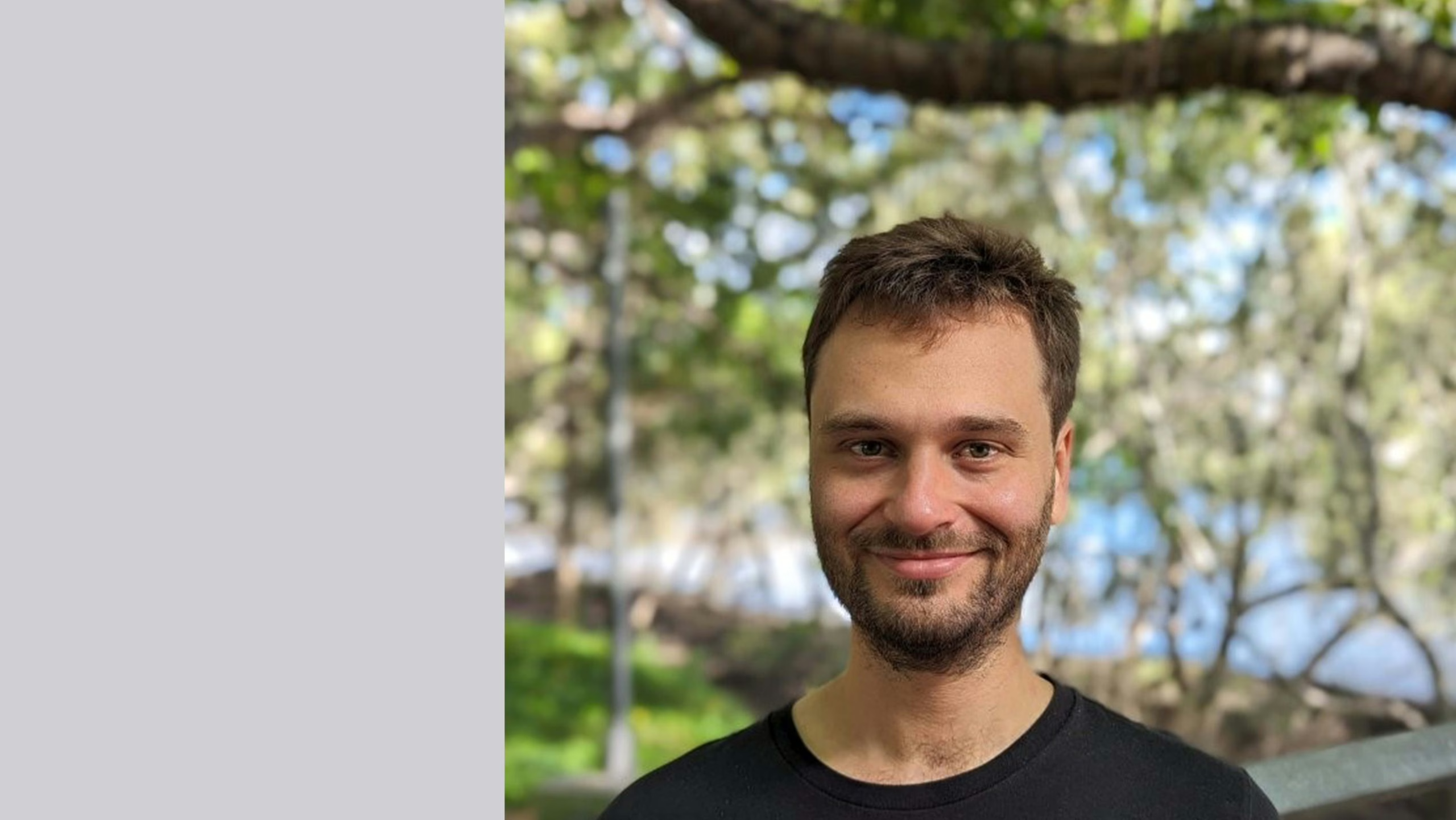
The prize is an initiative of the Dutch Physics Council. The award is named after Paul Ehrenfest and Tatiana Afanassjewa because of their exceptional ability to stimulate young researchers to leave the beaten path. The prize winner receives a bronze statue and € 5,000, to be spent freely. The Ehrenfest-Afanassjewa physics thesis prize will be awarded during the NWO Physics conference in Veldhoven on 23-24 January 2024.
Unique combination of insight, originality and impact
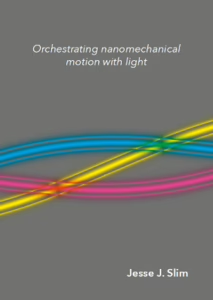
The PhD thesis of Slim is entitled “Orchestrating nanomechanical motion with light”. It can be found at the AMOLF website.
The jury is very impressed: Slim played a truly leading role in his research project, by combining his own theoretical conceptual ideas and insights with impressive experimental research and analyses. This resulted in exceptional breakthroughs in the field of optomechanics.
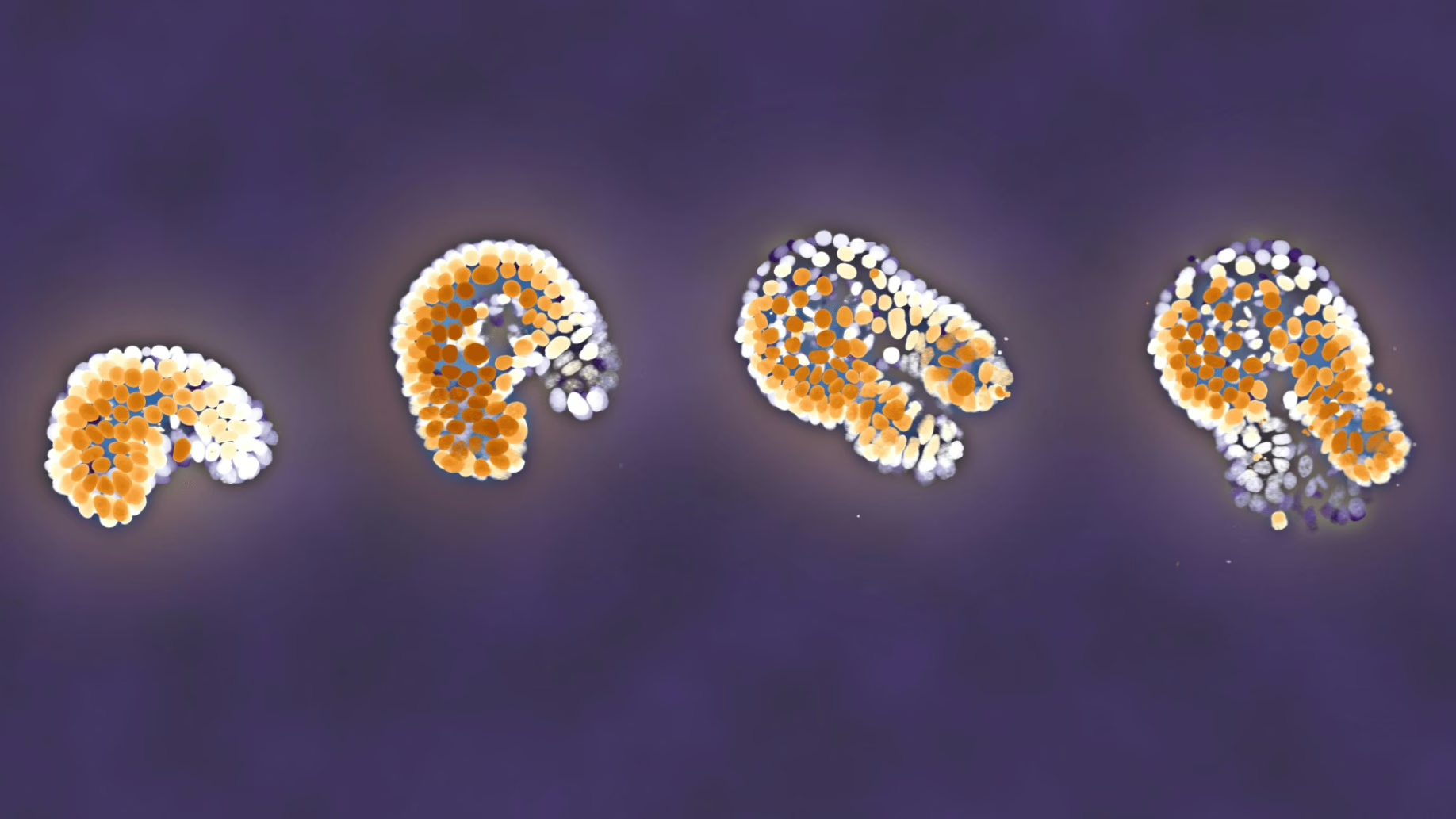
Slim discovered novel, intriguing behavior in mechanical vibrations (sound) at the nanoscale, by breaking away from fundamental principles that usually restrict the propagation of waves in materials. Laser light is used as a medium to connect multiple mechanical resonators into small, highly tuneable networks. These networks can be seen as small instances of metamaterials. He developed a unique experimental platform and engineered high-quality on-chip nano-optomechanical resonators as well as advanced, novel optical control techniques. Slim worked with a science animator to create an explainer video for their Nature (2022) publication to show a wide audience how optomechanical control works (https://vimeo.com/715474260)
This unique way of connecting mechanical resonators allowed him to demonstrate highly sought-after behavior that is usually completely absent for sound, and only known for electrons in strong magnetic fields. Moreover, he discovered new mechanisms and states of matter that have fascinating application prospects in sensing and information processing – not only for sound but also for other types of waves: from optics and acoustics to superconducting circuits and cold atoms.
It was clear to the jury that Slim excels both in written and oral communication, and initiated and maintained collaborations of great value. Besides his impressive scientific skills, he also represented the AMOLF employees in the Works Council AMOLF & NWO-I. The jury characterizes Jesse as an all-round excellent researcher who, based on his curiosity, thinks outside the box and loves to build experiments to study fundamental science.
Since April 2023, Jesse has joined the Queensland Quantum Optics Laboratory at the University of Queensland (Australia) as a postdoctoral research fellow working on quantum measurement in optomechanical systems.
Read more at the Dutch Physics Council website.