People and recognition

ERC Synergy Grant for AMOLF-Heidelberg-ETH team

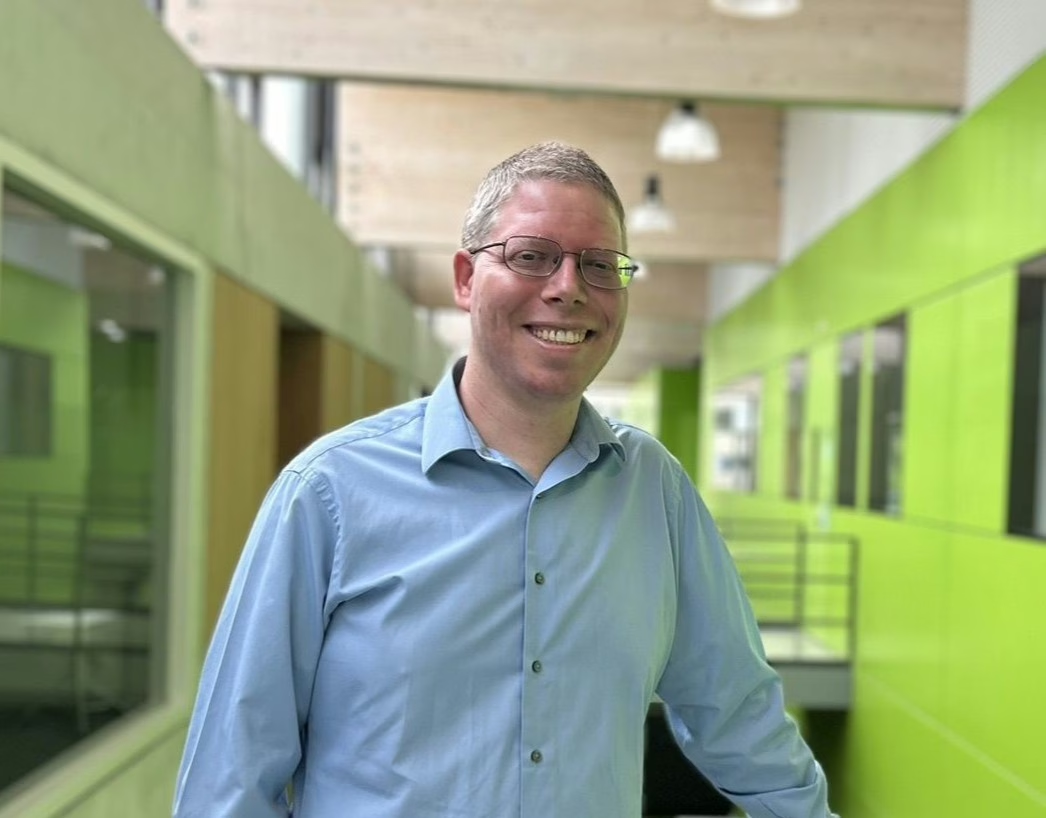
A prestigious ERC Synergy Grant worth 9.4 million euros has been awarded to the research groups of Sander Tans (AMOLF), Bernd Bukau (Heidelberg University) and Nenad Ban (ETH). The team aims to elucidate a new mechanism to explain how protein complexes are formed – the complex molecules that execute all main biological functions. Sander Tans also holds a professorship at Delft University of Technology.

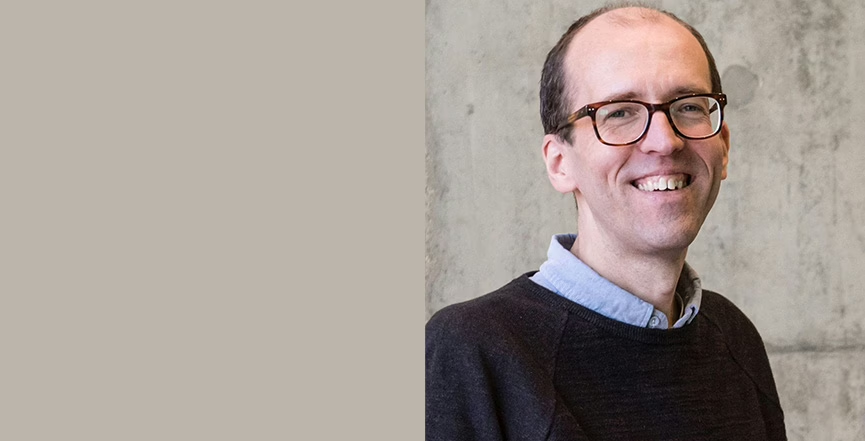
Sander Tans, photo by Mark Knight

Protein complexes are essential to all cellular processes, yet their formation is also an extremely sensitive process that is prone to failure. Indeed, protein misfolding and aggregation are thought to underpin most non-infectious diseases and ageing. Rapidly accumulating findings now suggest that multiple ribosomes actively work together to orchestrate when and where different proteins come together. The research team expects that this coordinated process enables unprecedented protein production capabilities and indicates a wide spectrum of yet unknown regulatory mechanisms in cells.

To elucidate how protein complexes are produced, the team will combine a range of cutting-edge methods: RNA deep sequencing approaches to map out ribosome interactions throughout the genome, single-molecule methods that provide a direct view on how the ribosomes move along the mRNA and how proteins assemble into complexes. Finally, (tomography) Cryo-EM  to visualize the internal structures of the highly complex multi-ribosome assemblies within cells will be used.

This ambitious program aims to reveal mechanisms that impact a vast spectrum of protein complexes and to uncover unknown layers of control in protein biogenesis. These insights will be useful for diverse applications, such as the design of mRNA vaccines and therapies, and to provide new hypotheses for the causes of various medical conditions.
Share article
What's happening

Most recent news items

All news items
Collaboration

Successful outcomes of international EBEAM program led by AMOLF

The EU Pathfinder project Electron Beams Enhancing Analytical Microscopy (EBEAM) that was recently completed has received a highly positive review of the European Innovation Council (EIC). EBEAM brought together eight European research institutions and companies, including AMOLF, that develop new concepts and instruments combining spectroscopic analysis with electron microscopy.

Read news item
Research highlights

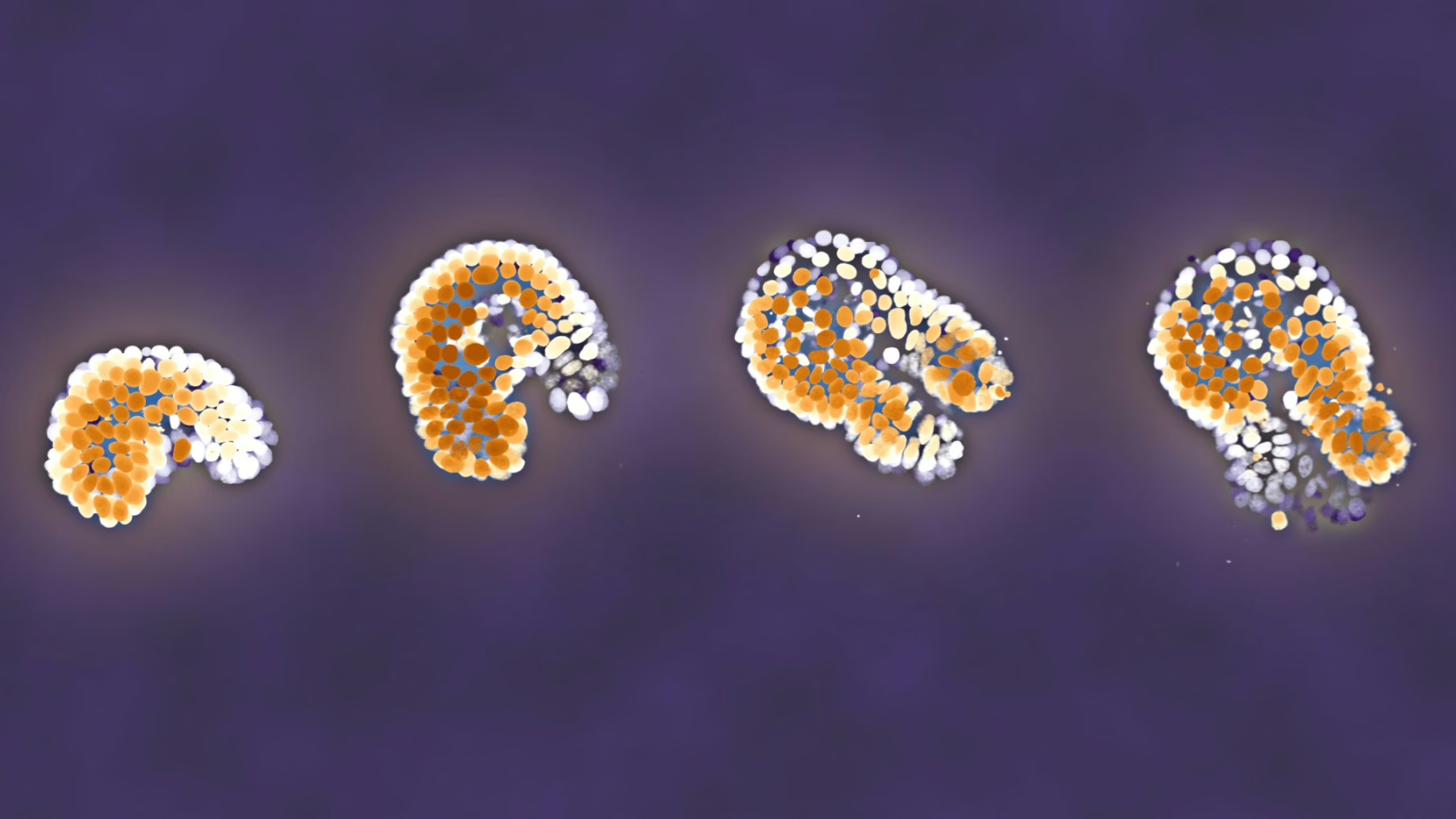
Everything you need to know about organoids

Organoids are instrumental in improving our understanding of processes that are otherwise hidden inside the body. For instance, these small 3D organs can be used to test medicines on tissue grown from a patient’s own cells. AMOLF researchers carry out unique and complex experiments to follow organoids in time. In order to enable other researchers to benefit from their experiences, they now publish their methods in the prestigious journal Nature Protocols.

Read news item
Events and outreach

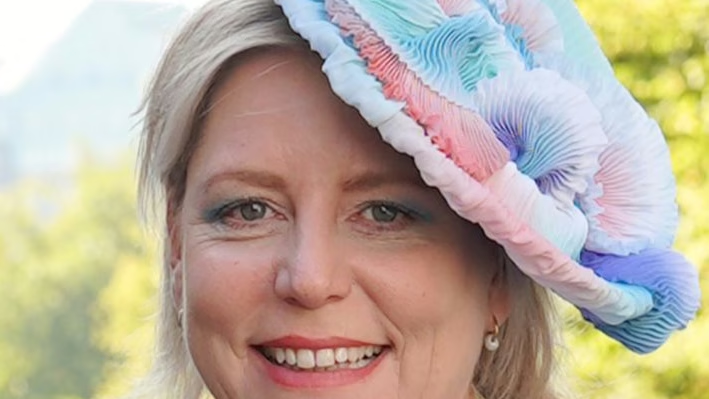
Minister Rianne Letschert wears hat and shoulder ornament inspired by Wim Noorduin’s research

This year at the opening of the parliamentary year (Prinsjesdag) Minister of Education, Culture and Science Rianne Letschert wears a spectacular hat and shoulder ornament. Both of them are inspired by the microscopic structures studied by group leader Wim Noorduin (AMOLF/UvA), which look remarkably like tiny flowers under a microscope. Artist and designer Malou Beemer translated these shapes, normally invisible to the naked eye, into wearable art.

Read news item
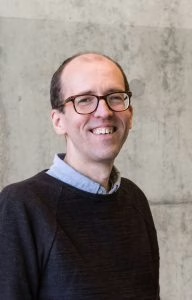
Nachi Stern, Group Leader Learning Machines at AMOLF
People and recognition

Nachi Stern awarded ERC Starting Grant to explore how matter learns

Why do brains learn, but rocks do not? Could a material one day adapt to its environment the way a living organism does? AMOLF group leader Dr. Nachi Stern has been awarded an ERC Starting Grant to investigate the physical laws of learning, in a project called, “Physical Learning in Dynamical Systems.”

Read news item
Stay informed

Get the latest research highlights, events, and news from our institute delivered to your inbox