
Teknowlogy 2022 takes place on May 31st and is organized by NWO.
Photo: Bob Eshuis
Published in NWO magazine Resultaat 2022
Share article
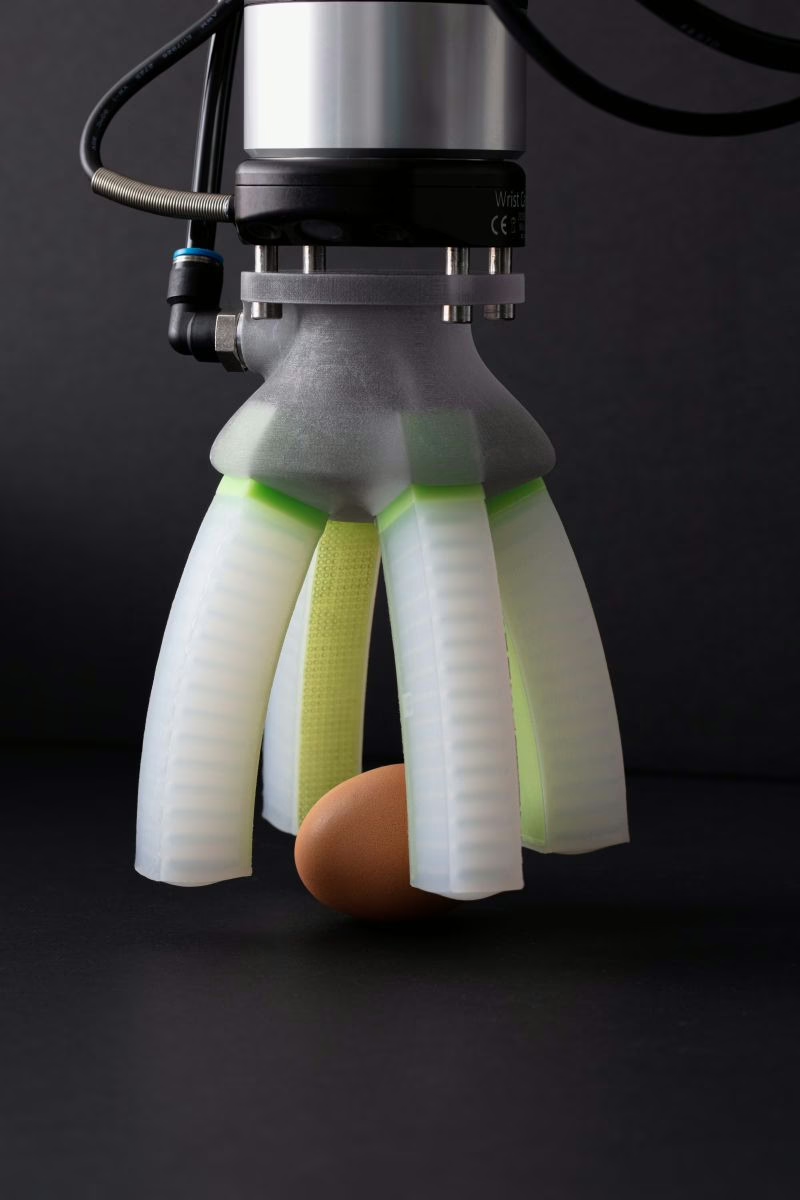
The Soft Robotic Matter research group led by Bas Overvelde will be present at Teknowlogy 2022: the Dutch festival where technology, science, innovation and valorization meet. At the event, visitors will be able to meet the latest soft robots that are controlled by fluidics, and soft robots that manage to carefully pick up differently shaped objects. Traditionally robots use electronics for their control, but the Soft Robotic Matter group mainly uses fluidic pressure to empower their robots.
Teknowlogy 2022 takes place on May 31st and is organized by NWO.
Photo: Bob Eshuis
Published in NWO magazine Resultaat 2022
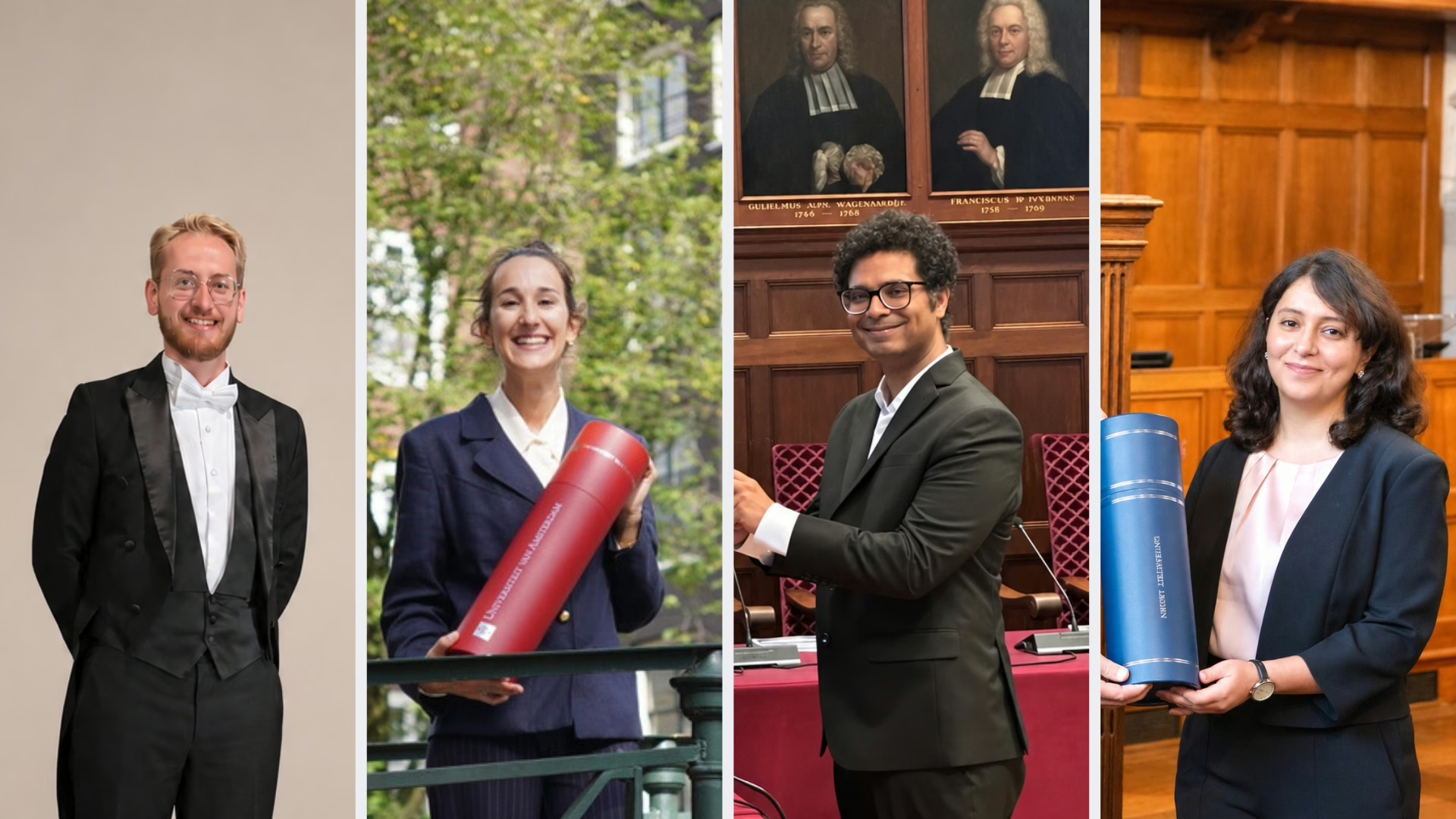
Four PhD students defended their thesis and are about to take the next steps in their career. Congratulations to Colin Meulblok (Mechanical Metamaterials), Francesca Scalerandi (Hybrid Nanosystems), Vashist Gangigude Ramesh (Interacting Photons), and Parisa Omidvar (Hypersmart Matter). We wish you all the best in your next steps!
AMOLF group leaders Professor Wiebke Albrecht and Professor Bruno Ehrler have received an NWO ENW-M2 grant for their joint research project, The Dynamic Atomic Interface between Halide Perovskites and Metals. The insights gained will pave the way for sustainable, high-performance solar energy and information technology. Wiebke and Bruno will each hire a PhD student for this project. The grant amounts to €800.000.
On October 8, Professor Wim Noorduin and his collaborator Professor Arian van Asten (University of Amsterdam) presented their scientific journey in a video to the audience at the ‘Avond van Wetenschap en Maatschappij’. They did so alongside the other nominees for the Huibregtsen Prize.
Silicon solar panels are rigid and heavy, and many rooftops cannot support them. This creates a need for thin, flexible solar cells that can be integrated into building materials. However, making silicon solar cells thinner makes it harder to trap light inside the material. Researchers in the 3D Photovoltaics group found a fascinating way to overcome this challenge using a phenomenon called hyperuniform disorder. They publish their findings in the journal ACS Photonics.
The researchers were able to make highly efficient silicon solar cell materials that are 30 times thinner than conventional ones. They managed to do this by integrating a layer of nanometer sized structures on top of the material. Up close, this pattern looks random, but it is remarkably when you step back: no clumps, no gaps, and no repeating pattern. This is called hyperuniform disorder (or HUD).
Get the latest research highlights, events, and news from our institute delivered to your inbox