
People and recognition

Vidi grant for Kristina Ganzinger

AMOLF group leader Kristina Ganzinger (Physics of Cellular Interactions) is one of the 78 researchers who received a NWO Vidi grant that is worth 800.000 euros. This grant allows Ganzinger to further expand her research on immune cell signaling using advanced microscopy and synthetic biology tools.

Re-wiring our immune cells to fight cancer
Our immune system not only safeguards us from infection, but also cancer: immune cells are constantly surveying our bodies to find – and kill – cells that carry mutations that could turn them into cancer cells. Unluckily though, some cancer cells can escape this immune cell detection.

Promising recent cancer therapies therefore equip our immune cells with additional receptors designed by scientists that enable these cells to also kill tumor cells that previously evaded detection. However, so far these therapies can only cure few cancer types. To find working receptor designs for other cancer types has proved to be difficult: we do not even understand how exactly the existing receptors work.

Ganzinger will use advanced microscopy to understand how these synthetic receptors – called chimeric antigen receptors, or CARs – re-program immune cells. The researchers will map their action in live cells, and rebuild the minimal signaling unit from the bottom-up to truly decipher how these molecules arrange in space and time to fulfill their function. Ultimately, a better understanding of how receptor design translates to their function should aid us in finding design principles to construct new receptors against different cancers.

NWO talent scheme
Vidi is aimed at experienced researchers who have carried out successful research for a number of years after obtaining their PhDs. Together with Veni and Vici, Vidi is part of the NWO Talent Programme. Researchers in the NWO Talent Programme are free to submit their own subject for funding. NWO thus encourages curiosity-driven and innovative research. NWO selects researchers based on the quality of the researcher, the innovative character of the research, the expected scientific impact of the research proposal and the possibilities for knowledge use.

More information on this year’s Vidi grants on the website of NWO.

Share article
What's happening

Most recent news items

All news items
Collaboration

Successful outcomes of international EBEAM program led by AMOLF

The EU Pathfinder project Electron Beams Enhancing Analytical Microscopy (EBEAM) that was recently completed has received a highly positive review of the European Innovation Council (EIC). EBEAM brought together eight European research institutions and companies, including AMOLF, that develop new concepts and instruments combining spectroscopic analysis with electron microscopy.

Read news item
Research highlights

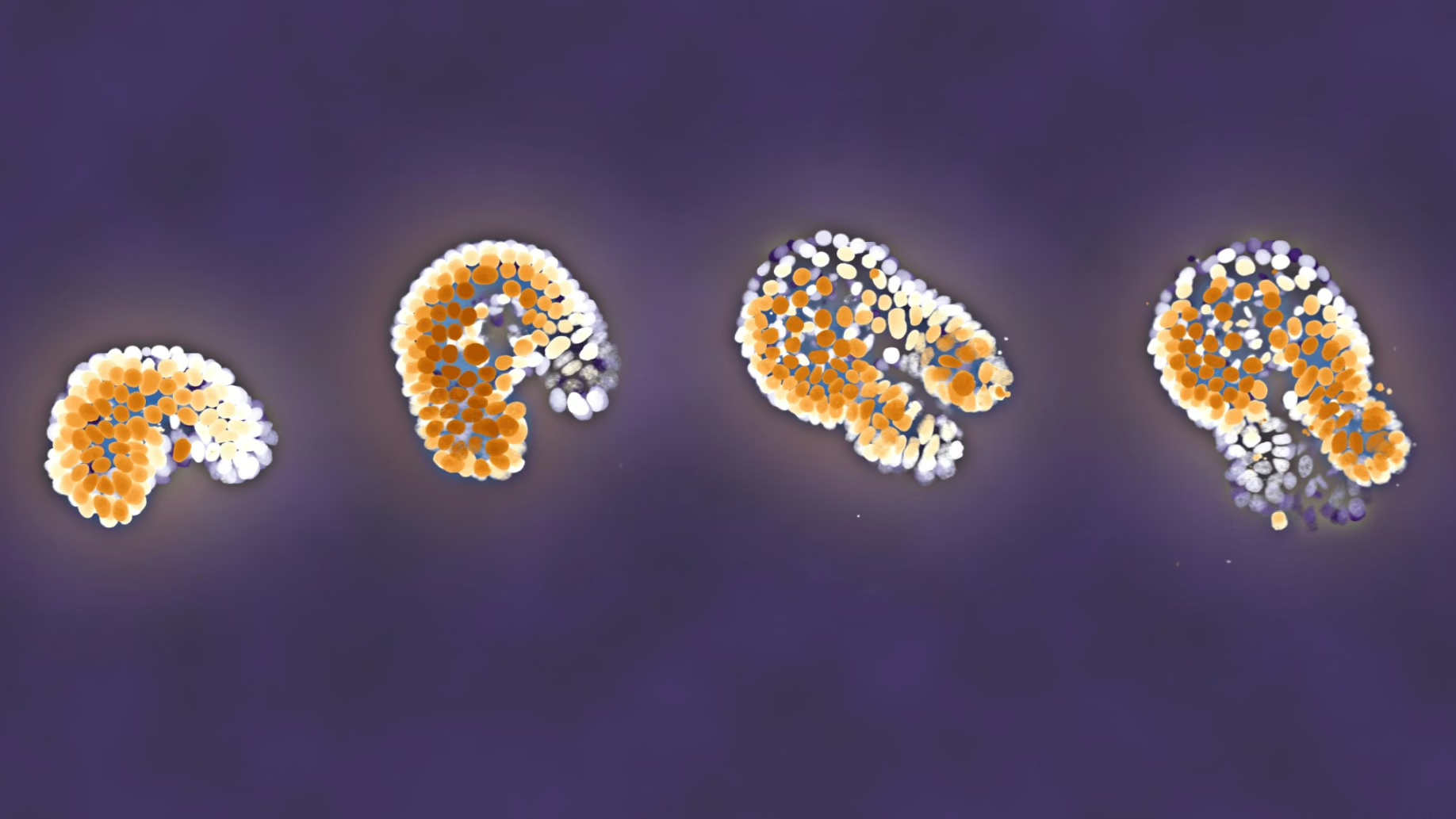
Everything you need to know about organoids

Organoids are instrumental in improving our understanding of processes that are otherwise hidden inside the body. For instance, these small 3D organs can be used to test medicines on tissue grown from a patient’s own cells. AMOLF researchers carry out unique and complex experiments to follow organoids in time. In order to enable other researchers to benefit from their experiences, they now publish their methods in the prestigious journal Nature Protocols.

Read news item
Events and outreach

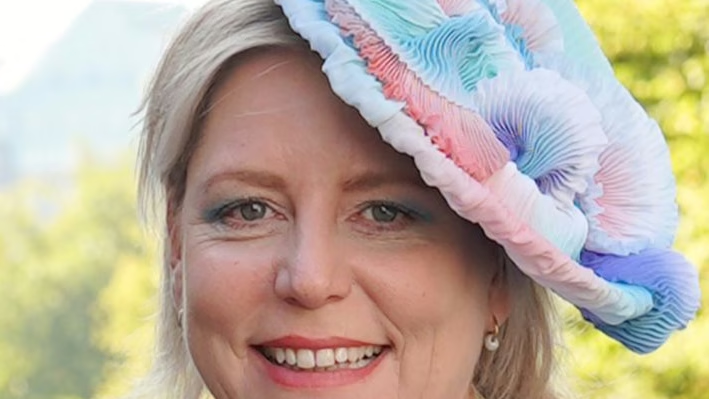
Minister Rianne Letschert wears hat and shoulder ornament inspired by Wim Noorduin’s research

This year at the opening of the parliamentary year (Prinsjesdag) Minister of Education, Culture and Science Rianne Letschert wears a spectacular hat and shoulder ornament. Both of them are inspired by the microscopic structures studied by group leader Wim Noorduin (AMOLF/UvA), which look remarkably like tiny flowers under a microscope. Artist and designer Malou Beemer translated these shapes, normally invisible to the naked eye, into wearable art.

Read news item
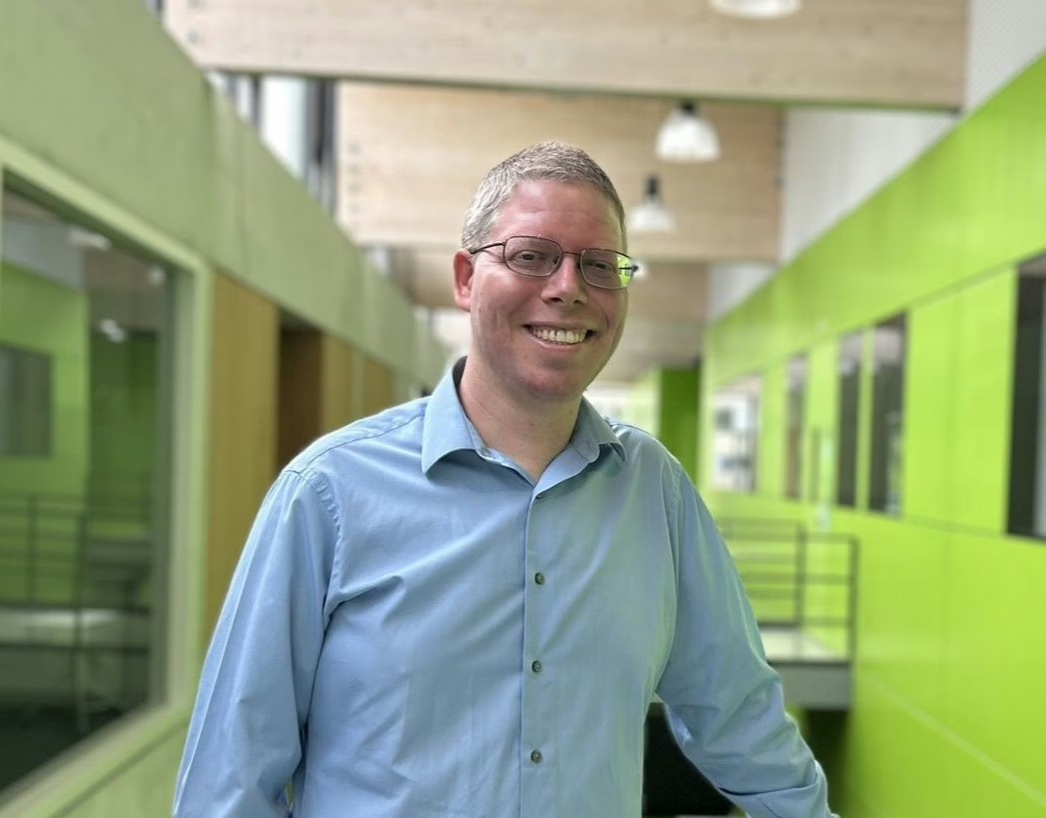
Nachi Stern, Group Leader Learning Machines at AMOLF
People and recognition

Nachi Stern awarded ERC Starting Grant to explore how matter learns

Why do brains learn, but rocks do not? Could a material one day adapt to its environment the way a living organism does? AMOLF group leader Dr. Nachi Stern has been awarded an ERC Starting Grant to investigate the physical laws of learning, in a project called, “Physical Learning in Dynamical Systems.”

Read news item
Stay informed

Get the latest research highlights, events, and news from our institute delivered to your inbox