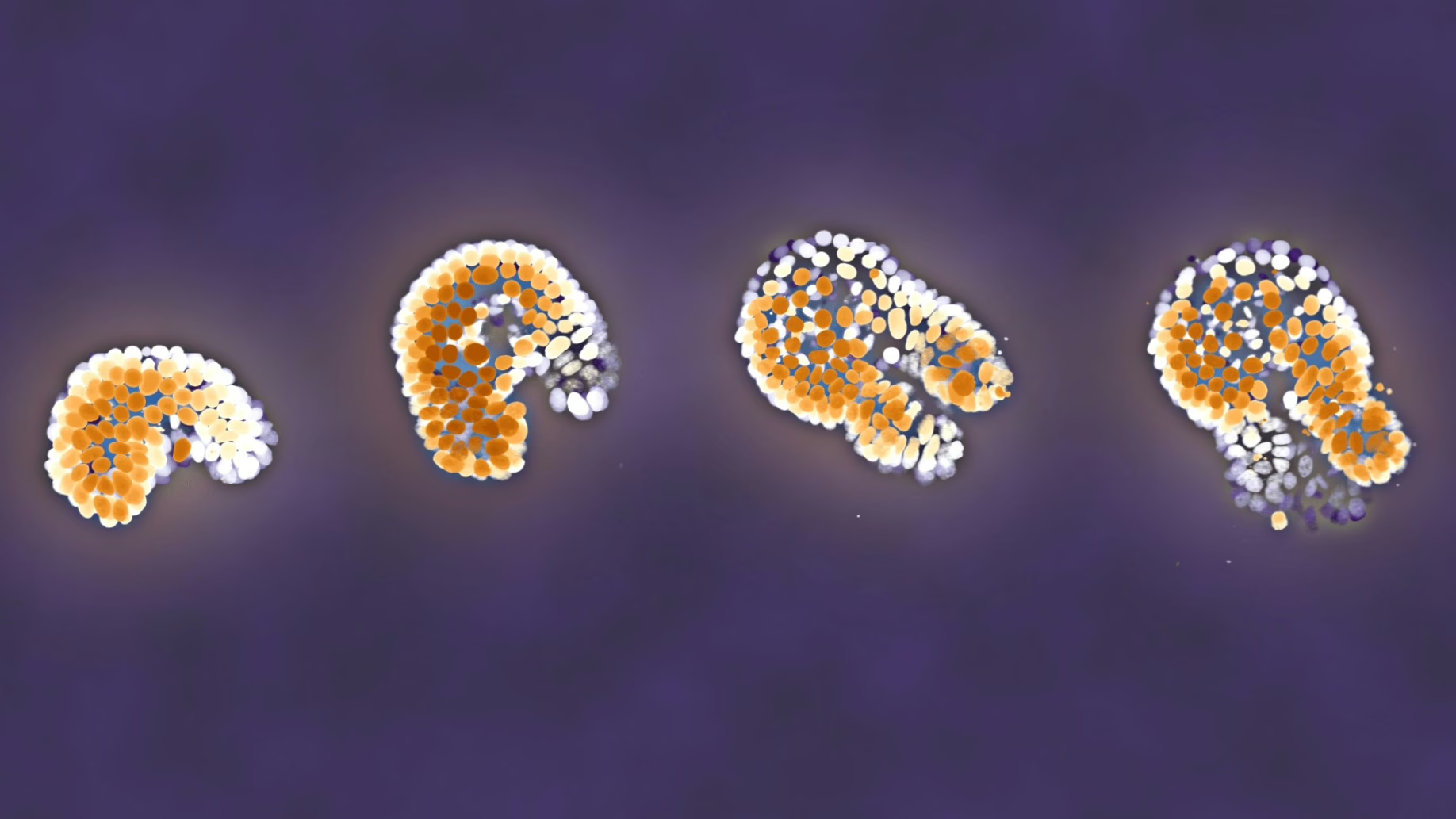
During her PhD at AMOLF Burla wanted to understand how cells can create tissues with very different mechanical properties -such as skin, bones or bone marrow- by using a limited set of building blocks. To answer this question she created reconstituted tissues and measured their mechanical properties while looking at their structure. Together with collaborators from Wageningen, she modeled the behavior of these networks to quantitatively predict their properties. Burla: “We showed that a combination of architectural and molecular (plastic) effects determines the mechanical properties of a tissue, specifically its rupture point. We also discovered precisely how, by combining two different constituents of tissues, we can modulate the way tissues respond to deformation. These findings are interesting because they help us understanding the behavior of tissues in the body, especially in relation to diseases such as cancer or fibrosis, but we can also use these principles to create smart materials to replace damaged parts of the body.”
Burla’s research at AMOLF was part of the Industrial Partnership Program (IPP) with Unilever Research & Development: the Hybrid Soft Materials program.