People and recognition

International award for research on symbiotic networks

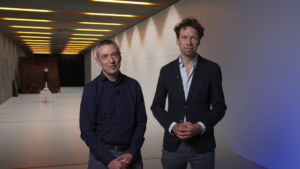
AMOLF group leader Tom Shimizu (Systems Biology) and colleagues from the Netherlands, USA and Japan have received a 1.2 million dollar research grant from the Human Frontier Science Program (HFSP).

Research plan
Even the simplest organisms can demonstrate surprisingly sophisticated behavior. Underground, plant roots and fungi form complex networks to trade nutrients. The international research team will look into the underlying structure of these networks and the rules that govern the nutrient trade strategies.  The central question they will address is, how do organisms without brains collect and integrate information to execute trade ‘decisions’?

The team
The intercontinental collaboration involves, in addition to Shimizu, evolutionary biologist Toby Kiers (VU Amsterdam), fluid dynamicist  Howard A. Stone (Princeton, USA), and network ecologist Hirokazu Toju (Kyoto University, Japan). Together, the team will develop new experiments to track how fungal networks transport nutrients and trade with their plant hosts. In keeping with HFSP’s focus on funding highly exploratory  and interdisciplinary research, the team will combine innovative techniques such as optical tracking of nutrients by quantum-dot labeling (Kiers), microscale fluid mechanics (Stone), high-throughput imaging (Shimizu), and transparent farming-film technology (Toju).

 About HFSP
The Human Frontier Science Program is an international research support program and it finances groundbreaking research into the complex mechanisms of living organisms. The organization has a strong history of supportive, pioneering research in the field of life sciences. The research grants provide three-year support to international teams involving at least two countries.
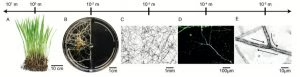
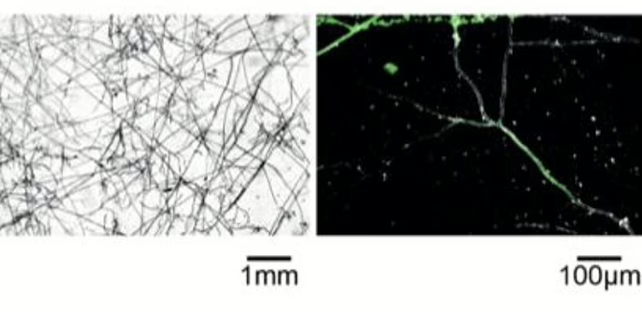
Nutrient transport in symbiotic fungal networks quantified under perturbations across scales.
Credits: Toby Kiers, Victor Caldas and Tom Shimizu
Share article
What's happening

Most recent news items

All news items
Joining forces to study perovskite interfaces
People and recognition

Joining forces to study perovskite interfaces

AMOLF group leaders Professor Wiebke Albrecht and Professor Bruno Ehrler have received an NWO ENW-M2 grant for their joint research project, The Dynamic Atomic Interface between Halide Perovskites and Metals. The insights gained will pave the way for sustainable, high-performance solar energy and information technology. Wiebke and Bruno will each hire a PhD student for this project. The grant amounts to €800.000.

Read news item
Wim Noorduin and Arian van Asten presenting their scientific journey
People and recognition

Wim Noorduin and Arian van Asten presenting their scientific journey

On October 8, Professor Wim Noorduin and his collaborator Professor Arian van Asten (University of Amsterdam) presented their scientific journey in a video to the audience at the ‘Avond van Wetenschap en Maatschappij’. They did so alongside the other nominees for the Huibregtsen Prize.

Read news item
Natural phenomena ‘hyperuniform disorder’ enables highly efficient, thin silicon solar cells
Research highlights

Natural phenomena ‘hyperuniform disorder’ enables highly efficient, thin silicon solar cells

Silicon solar panels are rigid and heavy, and many rooftops cannot support them. This creates a need for thin, flexible solar cells that can be integrated into building materials. However, making silicon solar cells thinner makes it harder to trap light inside the material. Researchers in the 3D Photovoltaics group found a fascinating way to overcome this challenge using a phenomenon called hyperuniform disorder. They publish their findings in the journal ACS Photonics.

The researchers were able to make highly efficient silicon solar cell materials that are 30 times thinner than conventional ones. They managed to do this by integrating a layer of nanometer sized structures on top of the material. Up close, this pattern looks random, but it is remarkably when you step back: no clumps, no gaps, and no repeating pattern. This is called hyperuniform disorder (or HUD).

Read news item
Stay informed

Get the latest research highlights, events, and news from our institute delivered to your inbox