About AMOLF

SEP committee refers to ‘the magic of AMOLF’

Every six years the NWO institutes are evaluated by a panel of independent experts according to the so-called Standard Evaluation Protocol (SEP). An international committee chaired by Søren Keiding (Aarhus University, Denmark) came to Amsterdam in October and gave AMOLF the highest score of ‘excellent/world leading’ for all three assessment criteria (scientific quality, societal relevance and viability).
AMOLF director Huib Bakker: “The visit was very inspiring and we are proud of getting the highest score for all three criteria. The committee was especially interested in our research model and described AMOLF as “a jewel for fundamental research in the Netherlands.”

Collaboration
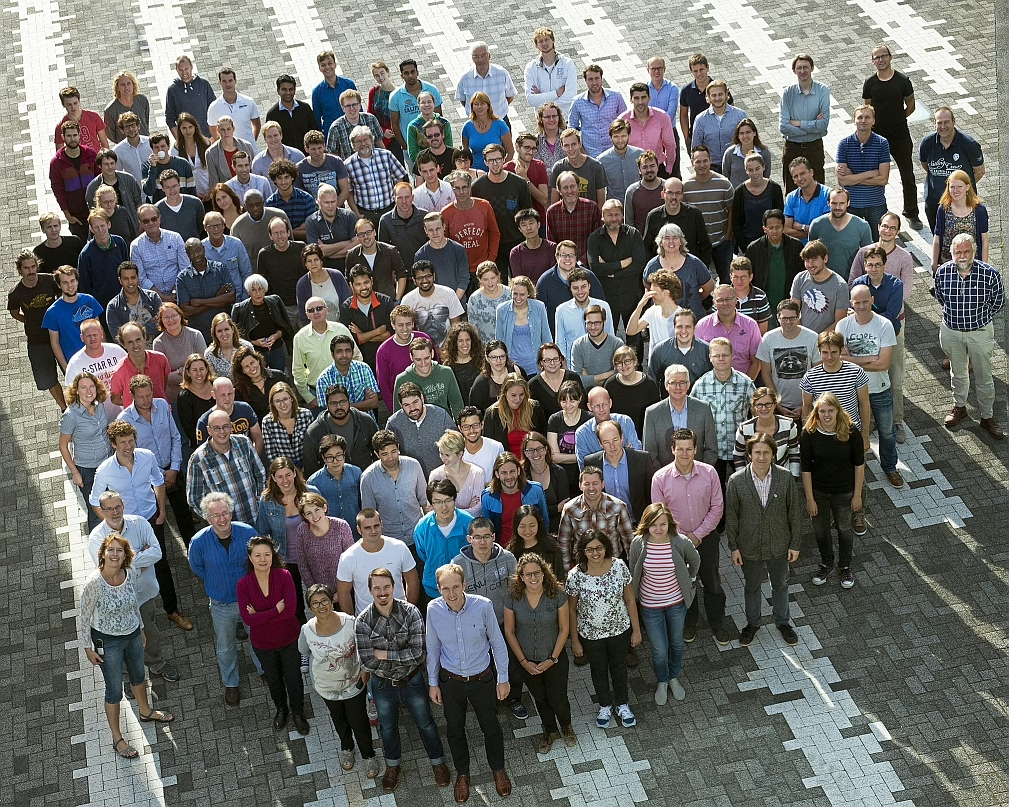
The committee complimented AMOLF in particular for the creation of a unique culture of intense collaboration, which in their view underlies the success of AMOLF: “The structure and size are key to the outstanding research, training, and impact of AMOLF…. Cooperation and interaction between all members of the staff is a key feature of the institute. This might be called the ‘magic of AMOLF’.”

Initiator
Bakker: “The committee emphasizes that AMOLF plays an important role in the Netherlands as initiator of new fields of research. It praises us for being able to rapidly and efficiently start new research themes in the field of functional, complex matter. Another important accomplishment they mention is AMOLF’s success in attracting internationally renowned researchers. These values define the unique added value of the institute within the Dutch scientific landscape.”

Recommendations
The committee also gave some recommendations. The most important one is to cherish and further strenghten the strong connections between the research themes, as at the interface between existing themes new ones are likely to arise. Also, the committee advocates keeping the flat and flexible organizational structure with relatively small research groups. This is crucial for the collaborative spirit both internally and externally and consequently for AMOLF’s role as a breeding ground for new science.  The committee also advises AMOLF to continue its efforts to collaborate with smaller companies and to investigate opportunities for start-ups. Finally, the committee encourages AMOLF to maintain the high priority on its diversity policy.

AMOLF Standard Evaluation Protocol 2011-2016

Read the NWO news release: NWO institutes praised for quality, innovation and national role
 

Share article
What's happening

Most recent news items

All news items
Collaboration

Successful outcomes of international EBEAM program led by AMOLF

The EU Pathfinder project Electron Beams Enhancing Analytical Microscopy (EBEAM) that was recently completed has received a highly positive review of the European Innovation Council (EIC). EBEAM brought together eight European research institutions and companies, including AMOLF, that develop new concepts and instruments combining spectroscopic analysis with electron microscopy.

Read news item
Research highlights

Everything you need to know about organoids

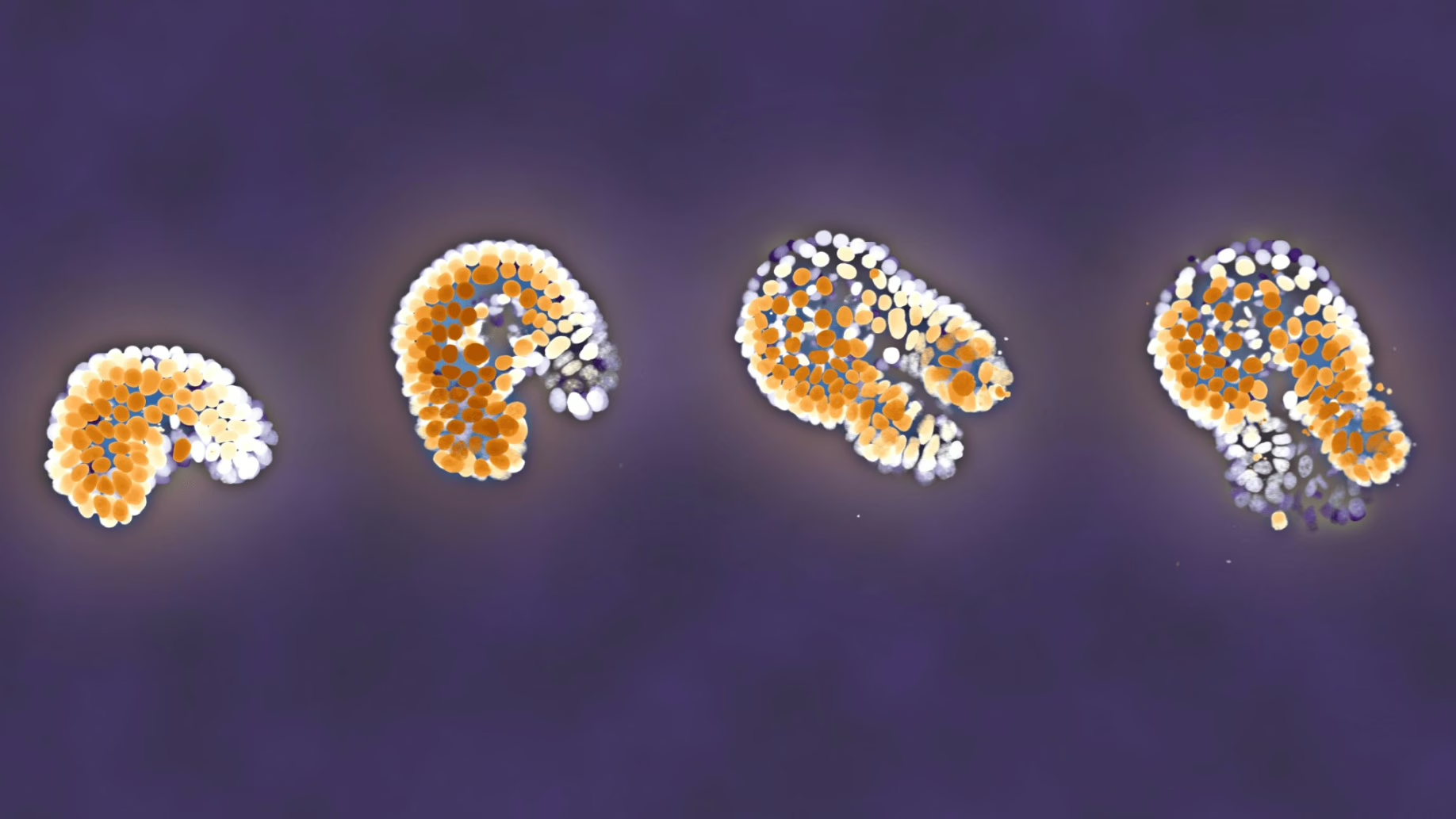
Organoids are instrumental in improving our understanding of processes that are otherwise hidden inside the body. For instance, these small 3D organs can be used to test medicines on tissue grown from a patient’s own cells. AMOLF researchers carry out unique and complex experiments to follow organoids in time. In order to enable other researchers to benefit from their experiences, they now publish their methods in the prestigious journal Nature Protocols.

Read news item
Events and outreach

Minister Rianne Letschert wears hat and shoulder ornament inspired by Wim Noorduin’s research

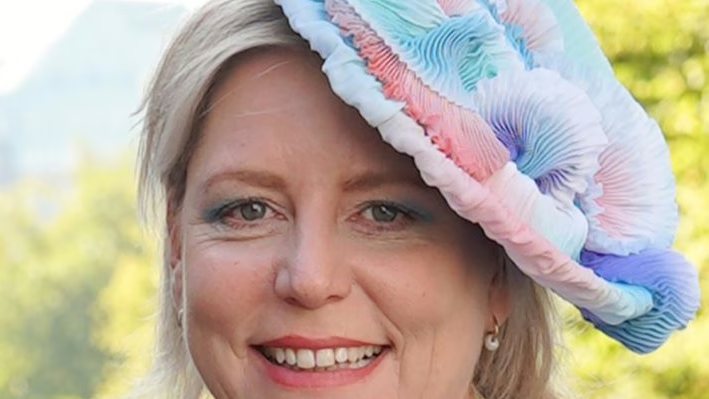
This year at the opening of the parliamentary year (Prinsjesdag) Minister of Education, Culture and Science Rianne Letschert wears a spectacular hat and shoulder ornament. Both of them are inspired by the microscopic structures studied by group leader Wim Noorduin (AMOLF/UvA), which look remarkably like tiny flowers under a microscope. Artist and designer Malou Beemer translated these shapes, normally invisible to the naked eye, into wearable art.

Read news item
Nachi Stern, Group Leader Learning Machines at AMOLF
People and recognition

Nachi Stern awarded ERC Starting Grant to explore how matter learns

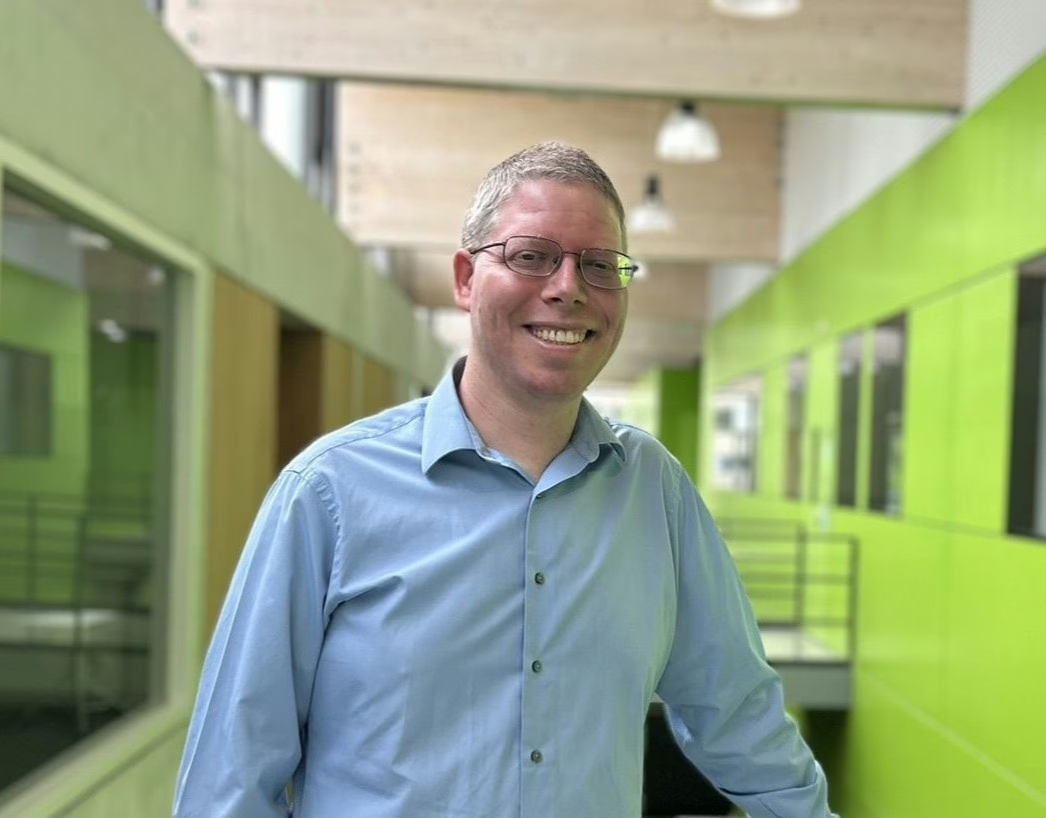
Why do brains learn, but rocks do not? Could a material one day adapt to its environment the way a living organism does? AMOLF group leader Dr. Nachi Stern has been awarded an ERC Starting Grant to investigate the physical laws of learning, in a project called, “Physical Learning in Dynamical Systems.”

Read news item
Stay informed

Get the latest research highlights, events, and news from our institute delivered to your inbox