
Research highlights

EPS QEOD Research into the Science of Light Prize voor Albert Polman

De Quantum Electronics and Optics Division (QEOD) van de European Physical Society (EPS) heeft de Research into the Science of Light 2017 toegekend aan AMOLF groepsleider Albert Polman. Hij ontvangt de prijs voor “het beheersen en manipuleren van licht op de nanoschaal en de ontwikkeling van nieuwe toepassingen in optische circuits op de nanoschaal, photovoltaics en superresolutie imaging. De prijs wordt in januari 2017 uitgereikt tijdens de 6th International Topical Meeting on Nanophotonics and Metamaterials (Nanometa) in Seefeld, Oostenrijk.

albert-polman-2017lowres

De EPS QEOD Research into the Science of Light Prize wordt iedere twee jaar toegekend aan een of meerdere onderzoekers en is een erkenning voor wetenschappelijke excellentie van recent onderzoek op het gebied van de optica. Het onderzoek moet voor een belangrijk deel in Europa of in samenwerking met Europese onderzoekers zijn gedaan. De prijs van 2000 euro kan worden toegekend voor zowel fundamenteel als toegepast onderzoek.

Meer informatie over EPS en de prijs: http://qeod.epsdivisions.org/QEOD%20Prizes/research-into-the-science-of-light-prizes
Meer informatie over Albert Polman: https://amolf.nl/people/albert-polman, www.erbium.nl, www.lmpv.nl

Share article
What's happening

Most recent news items

All news items
Collaboration

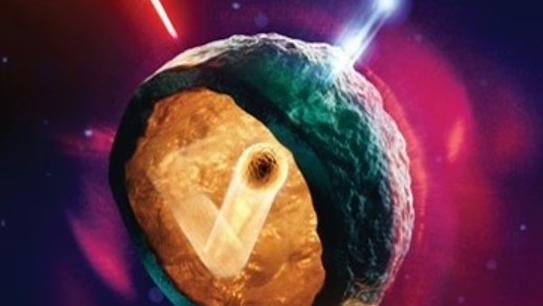
Successful outcomes of international EBEAM program led by AMOLF

The EU Pathfinder project Electron Beams Enhancing Analytical Microscopy (EBEAM) that was recently completed has received a highly positive review of the European Innovation Council (EIC). EBEAM brought together eight European research institutions and companies, including AMOLF, that develop new concepts and instruments combining spectroscopic analysis with electron microscopy.

Read news item
Research highlights

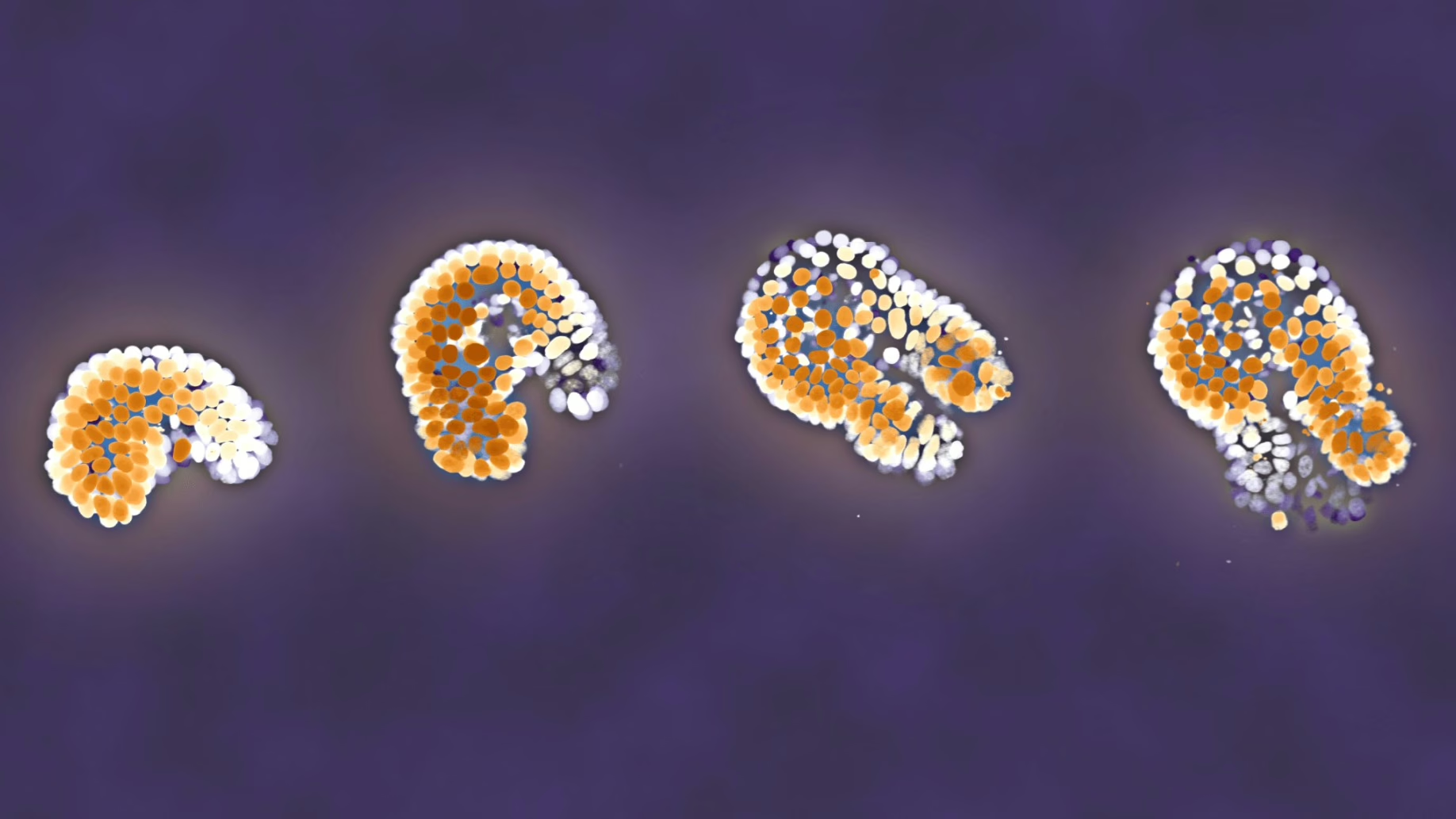
Everything you need to know about organoids

Organoids are instrumental in improving our understanding of processes that are otherwise hidden inside the body. For instance, these small 3D organs can be used to test medicines on tissue grown from a patient’s own cells. AMOLF researchers carry out unique and complex experiments to follow organoids in time. In order to enable other researchers to benefit from their experiences, they now publish their methods in the prestigious journal Nature Protocols.

Read news item
Events and outreach

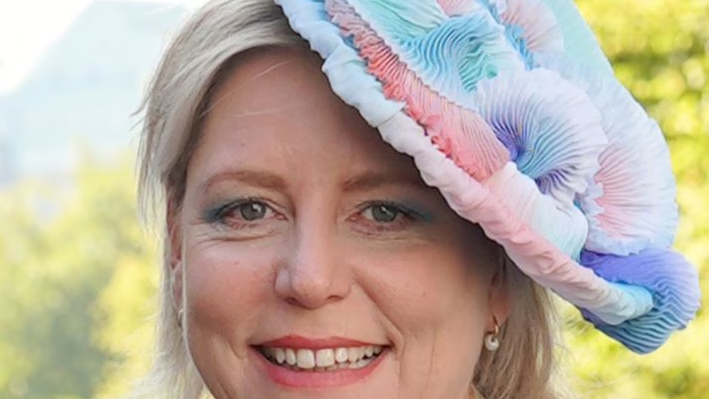
Minister Rianne Letschert wears hat and shoulder ornament inspired by Wim Noorduin’s research

This year at the opening of the parliamentary year (Prinsjesdag) Minister of Education, Culture and Science Rianne Letschert wears a spectacular hat and shoulder ornament. Both of them are inspired by the microscopic structures studied by group leader Wim Noorduin (AMOLF/UvA), which look remarkably like tiny flowers under a microscope. Artist and designer Malou Beemer translated these shapes, normally invisible to the naked eye, into wearable art.

Read news item
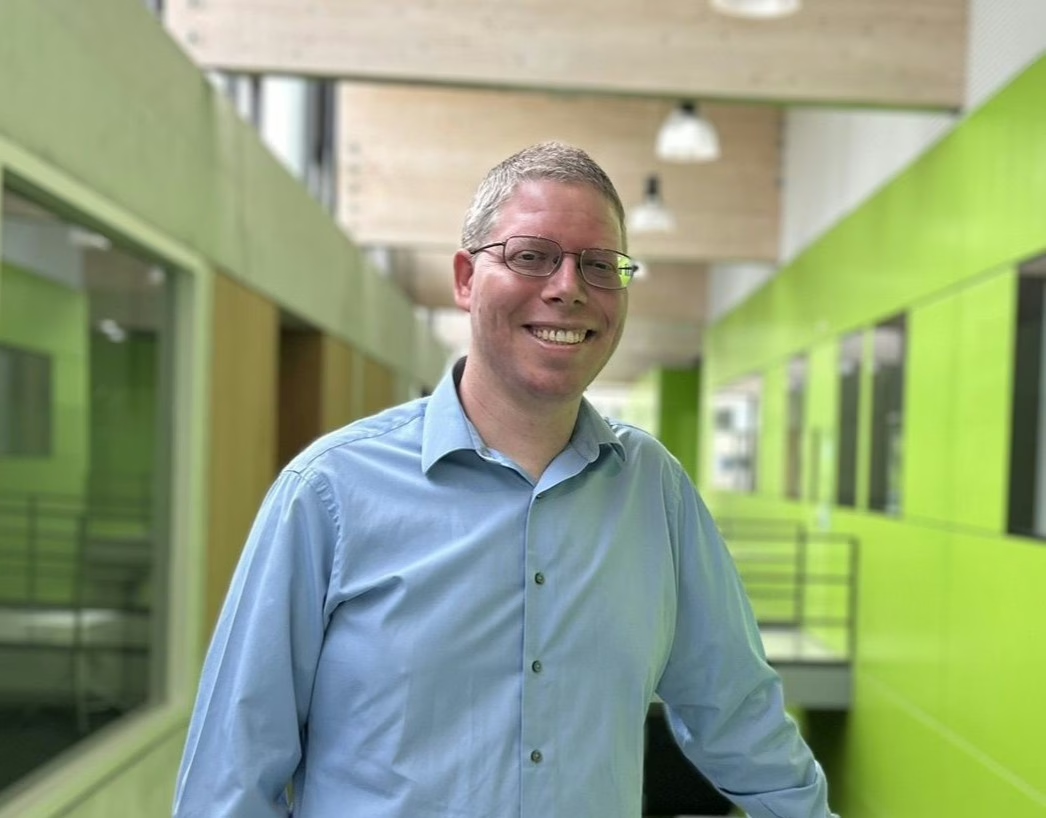
Nachi Stern, Group Leader Learning Machines at AMOLF
People and recognition

Nachi Stern awarded ERC Starting Grant to explore how matter learns

Why do brains learn, but rocks do not? Could a material one day adapt to its environment the way a living organism does? AMOLF group leader Dr. Nachi Stern has been awarded an ERC Starting Grant to investigate the physical laws of learning, in a project called, “Physical Learning in Dynamical Systems.”

Read news item
Stay informed

Get the latest research highlights, events, and news from our institute delivered to your inbox