Sustainable Energy Materials
Hybrid Nanosystems

The Hybrid Nanosystems group uses light as a tool to probe, program, and reshape nanomaterials. By combining advanced electron microscopy, single-particle optical spectroscopy, and electromagnetic simulations, we uncover how the atomic-scale structure of nanoparticles governs their response to light, and how light can drive these structures to transform.
Research focus
Metal nanoparticles have a remarkable ability to trap and concentrate light far beyond what bulk metals can achieve, known as plasmonics. These plasmonic nanoparticles are exquisitely sensitive to their own geometry: changing their size or shape can dramatically alter how they interact with light, making them uniquely powerful building blocks for technologies ranging from solar energy conversion to photocatalysis.
Our group works to establish precise, quantitative connections between nanoscale structure and optical function, and to use light not just as a passive probe, but as an active tool to reshape and reprogram nanomaterials in real time. We combine state-of-the-art electron microscopy with optical spectroscopy and simulations, always working at the level of individual nanoparticles, where hidden details come to light.
Our research is organized around five interconnected directions, united by the goal of understanding and controlling how light interacts with matter at the nanoscale:
How precisely can we link the shape of a plasmonic nanoparticle to the way it interacts with light? Answering this is a central, ongoing effort in our group. We do this by measuring the three-dimensional structure and optical response of the exact same individual particle, combining electron tomography, single-particle spectroscopy, and electromagnetic simulations. This particle-by-particle approach lets us extract quantitative information that ensemble measurements simply cannot provide, for example the exact local dielectric environment every particle sees, or how a particle’s exact morphology dictates the different channels through which energy is lost.
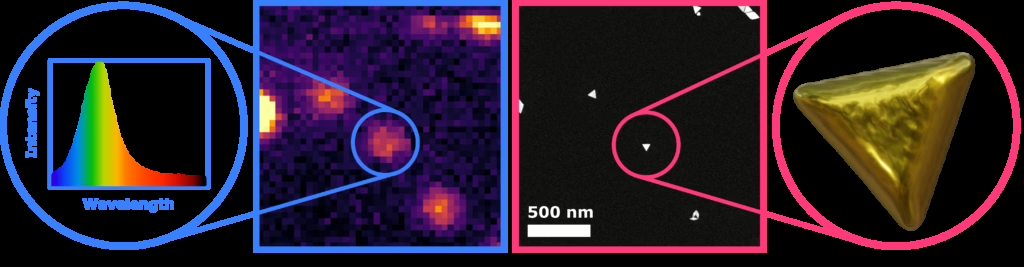
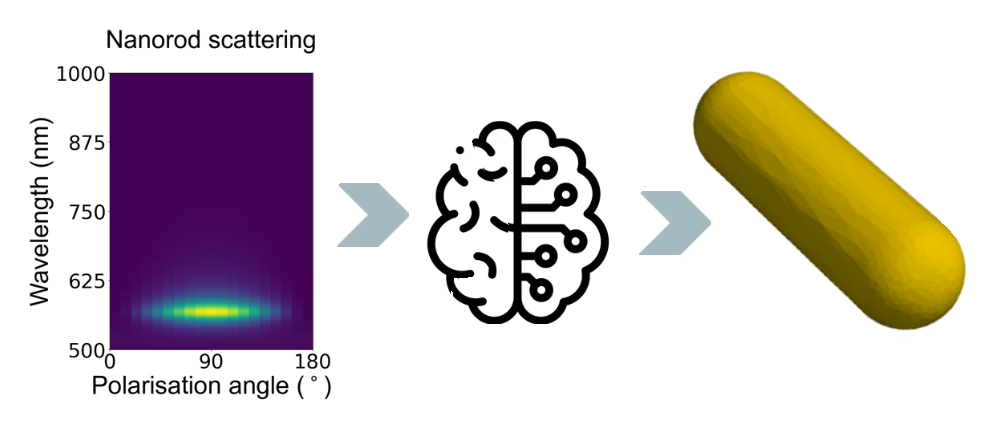
A plasmonic nanoparticle’s optical spectrum encodes information about its shape. We have developed a workflow that combines single-particle spectroscopy, electromagnetic simulations, and machine learning to reconstruct the three-dimensional shape of a nanoparticle from its optical scattering spectrum alone, with accuracy approaching that of the electron microscope. This opens the door to monitoring nanoparticles’ shapes in complex environments, such as catalytic reactors or biological fluids, where electron microscopy is not possible.
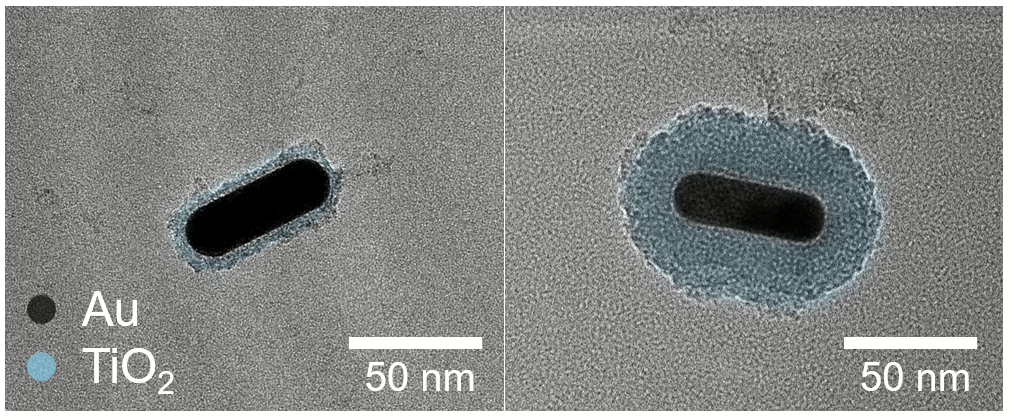
When different materials are brought together at the nanoscale, new phenomena emerge at their interfaces. We study coupled systems such as gold-gold dimers bridged by single molecules, and gold nanorods coated with titanium dioxide, correlating their atomic-scale interface structure with their optical and electronic properties. These measurements reveal how efficiently charge and energy are transferred across interfaces, knowledge critical for designing better photocatalysts and solar-energy converters.
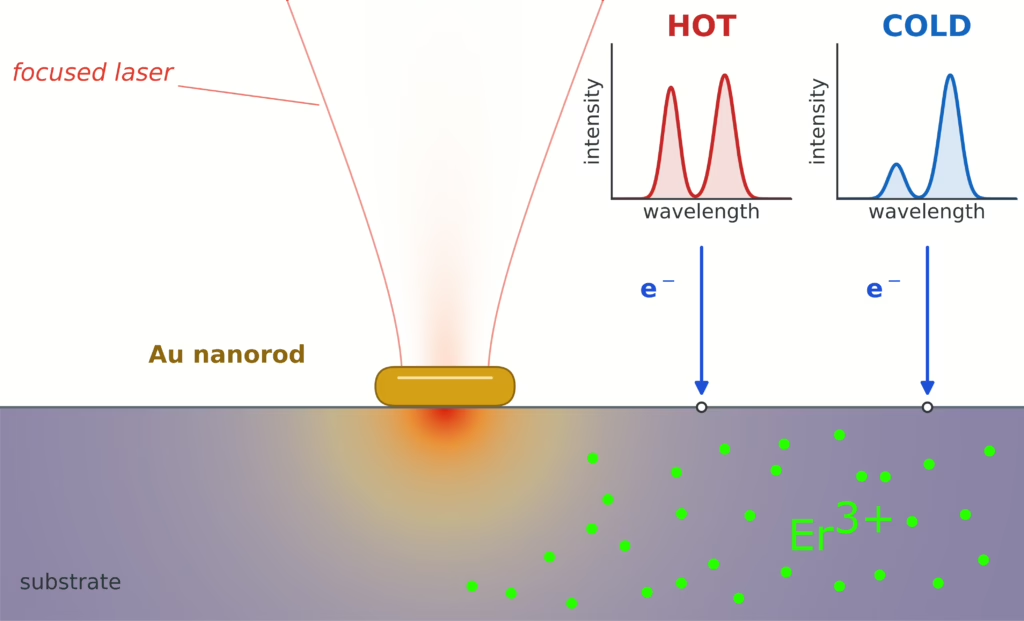
Plasmonic nanoparticles are extraordinarily efficient nanoscale heaters, but measuring the temperature in their immediate vicinity has been a long-standing challenge. We are developing cathodoluminescence-based nanothermometry, using the light emitted by specially prepared substrates under an electron beam, to map temperature distributions around laser-heated nanoparticles with nanometer spatial resolution. Paired with heat-dissipation simulations, this provides a direct window into how heat spreads at the nanoscale.
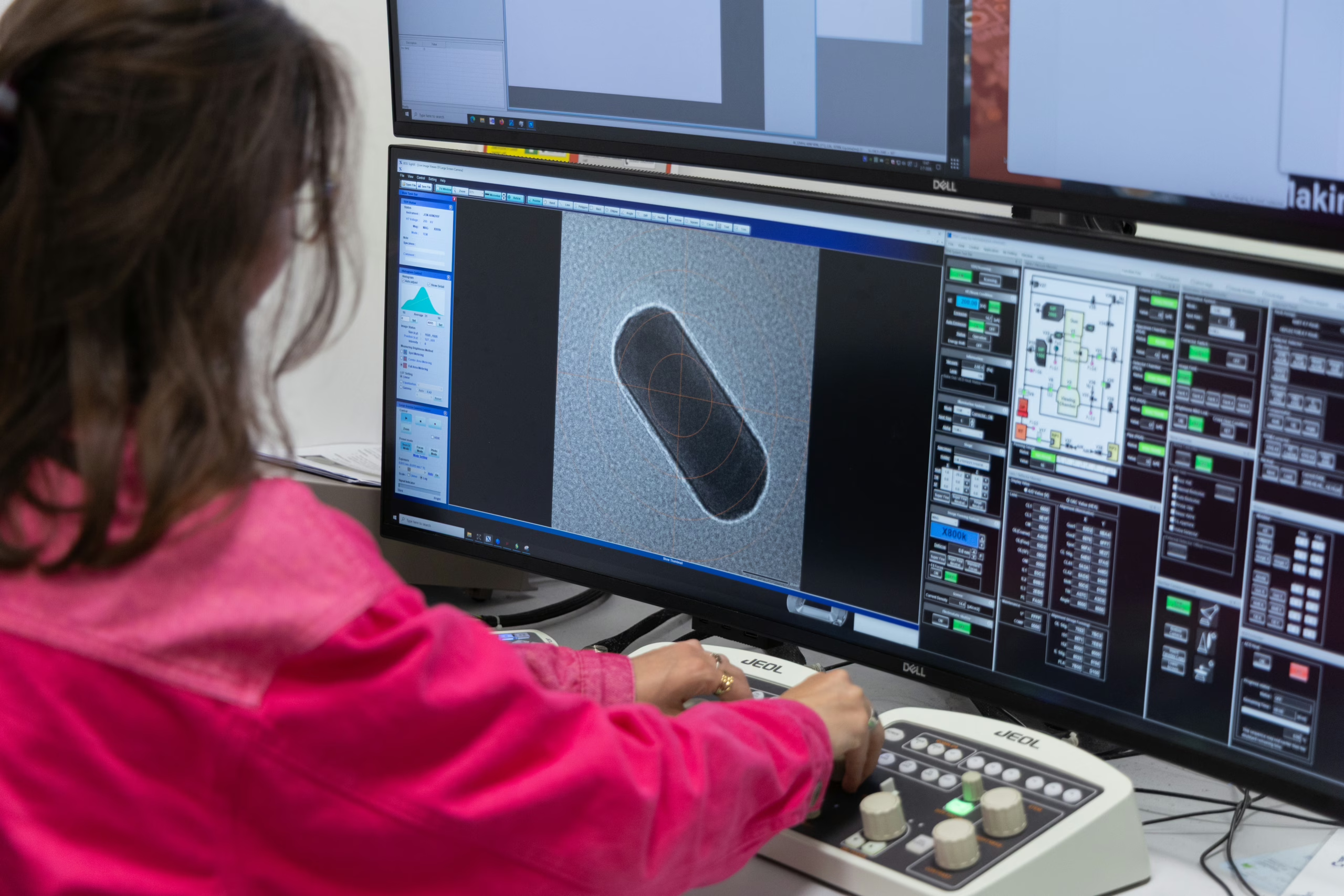
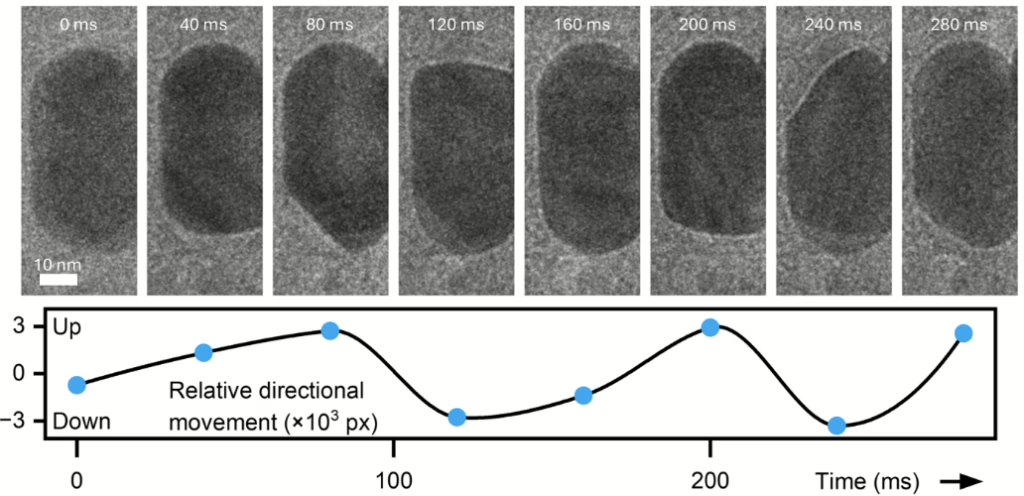
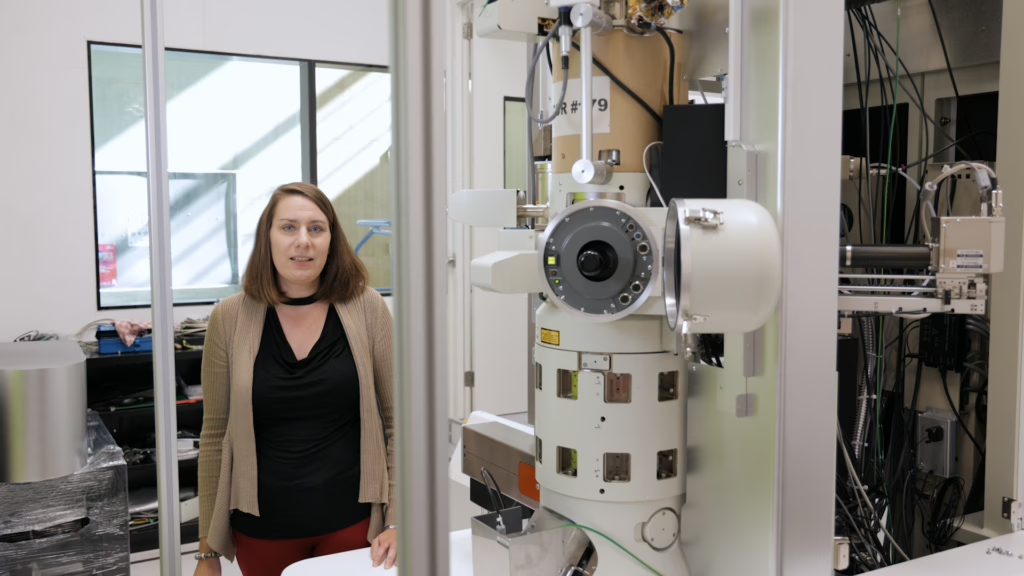
At the heart of our group is a world-unique transmission electron microscope with integrated laser excitation and nanosecond time resolution. This instrument lets us directly watch, at atomic resolution, how laser pulses drive nanoparticles to reshape, how defects form and migrate, and how crystalline phases nucleate. These observations reveal the non-equilibrium pathways that light-driven transformations follow, and bring us closer to the long-term goal of using light to deliberately sculpt matter at the atomic scale.







Hybrid Nanosystems Latest news






Most recent publications