
Research theme
Sustainable Energy Materials
AMOLF initiates and conducts fundamental research that leads to valuable insights and opportunities to create new functional materials and to find solutions to societal challenges. This translates into a research program that focuses on three highly interdisciplinary themes. One of these themes is Sustainable Energy Materials.
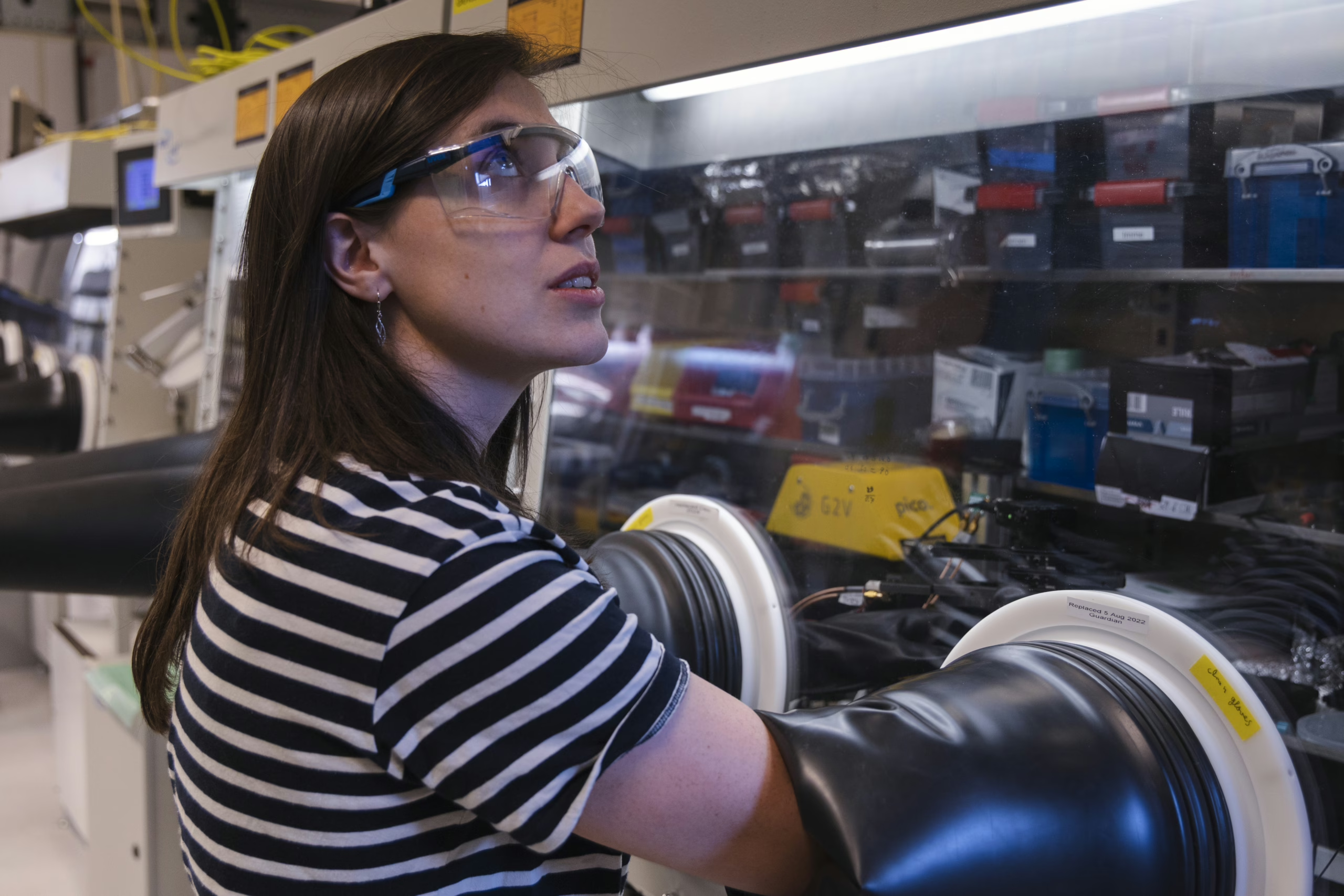
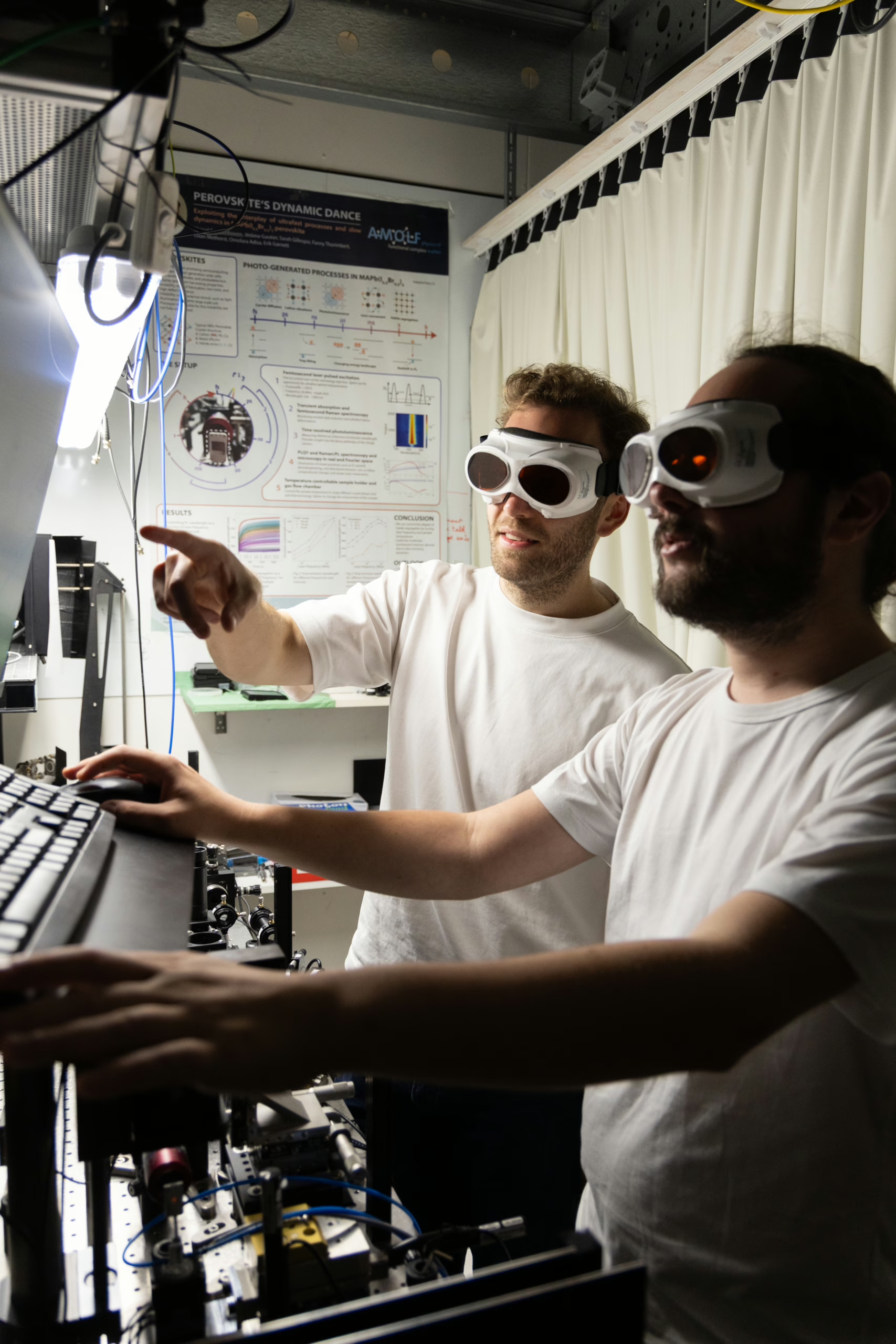
The Sustainable Energy Materials research program explores how manipulating light, electrons, and ions in space and time leads to new ways to generate and convert energy. Ultimately, this will result in higher efficiency, better stability, and new functionality in solar cells, light-emitting diodes, and chemical reactions.
Enabling the energy transition
Climate change is the greatest challenge facing society now and in the coming decades. A future sustainable society must find sustainable ways to power our lives. To do so, converting sunlight much more efficiently to electricity and chemicals is essential. This conversion requires exquisite control over both light and matter at nanometer length scales and ultrafast time scales.
Our research program uses fundamental insights in (nano)photonics and (nano)materials to efficiently convert sunlight to electricity and chemicals. We develop new material properties and device functionalities, ranging from self-optimizing tandem solar cells to programmable processes in light-driven chemical reactors.
Collaborative spirit
The Sustainable Energy Materials department is organized as a team of teams to amplify our impact. Our team is highly international, interdisciplinary, and diverse (also see our diversity policy). We are always looking for outstanding students from all different backgrounds to bring their unique perspectives and talents.
Please find the open positions here.
Related national programs
Our department also coordinates the national solar energy program SolarNL and the related academic program SolarLab.
Most recent publications
Contact
Do you have questions about the Sustainable Energy Materials research program? Then please contact program manager Tom Veeken at t.veeken@amolf.nl.