Autonomous Matter
Physics of Cellular Interactions

The group explores the basic physical principles behind cellular signaling, focusing on immune cell activation. How do natural but also human-designed cells transmit, process and respond to signals, both precisely and unambiguously?
Research focus
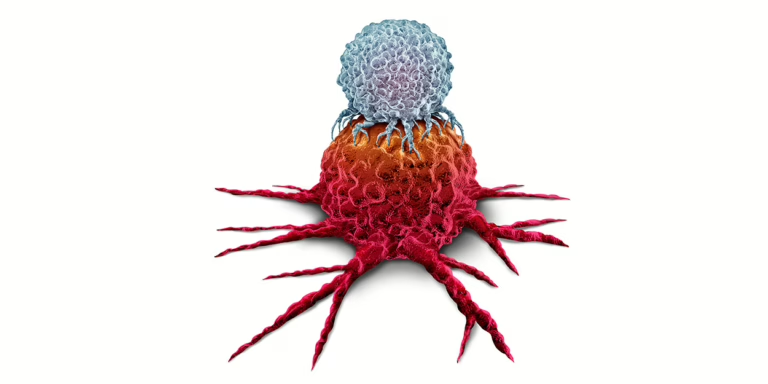
Scientists in the Physics of Cellular Interactions study how immune cells communicate when they touch. At these contact points, called immune synapses, proteins move, cluster, and reorganize to send signals that tell cells how to react. The group investigates how these physical movements and chemical signals work together to control immune responses.
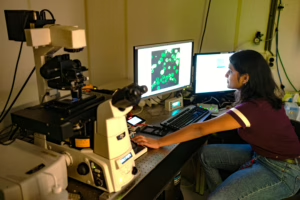
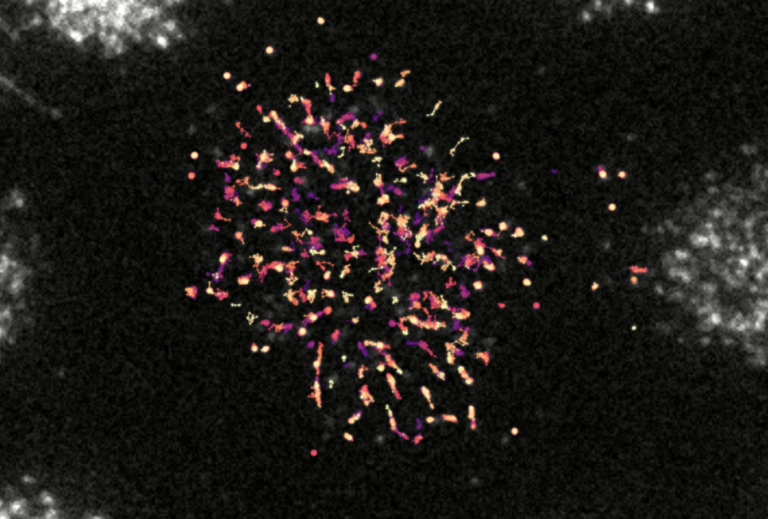
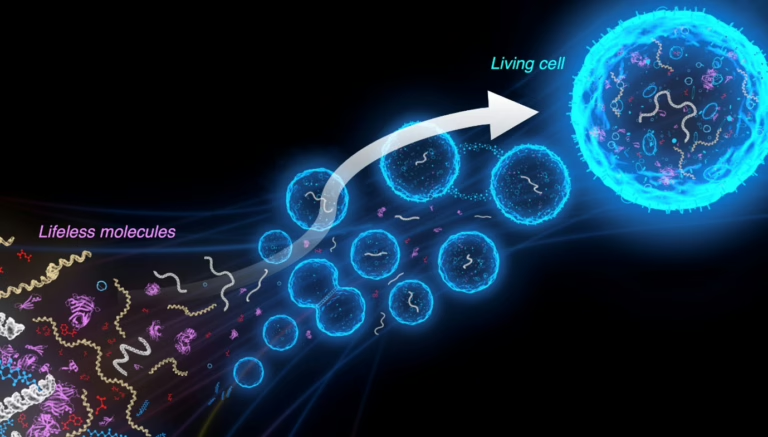
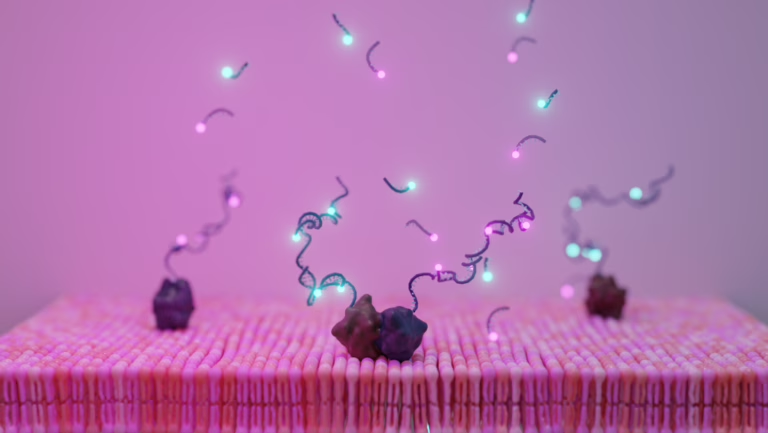
We use powerful microscopes, synthetic biology, and simplified model systems (e.g. lipid bilayers) to observe signaling one molecule at a time. By combining experiments in living cells with synthetic biology approaches, we can see how immune cells process information and make decisions, including in situations that could improve cancer immunotherapy. We also design artificial signaling systems and synthetic cells to test new ideas and principles behind biological sensing and signaling.
Our approach is based on advanced microscopy and on synthetic biology. We combine in vitro reconstitution of cell signaling with single-molecule biophysics to understand how immune cells communicate with each other: how do immune cells use molecular signaling pathways to transmit, process, and respond to information, both precisely and unambiguously?
Currently, most projects in the lab use a hybrid in vitro-in vivo approach, interfacing in vitro cell surface models with immune cells. We use this approach to study the spatiotemporal reorganization of immune cell signaling molecules in natural signaling networks, but also for human-designed signaling molecules in immunotherapeutics against cancer. By combining a synthetic biology approach with tools from microfabrication, we also study signaling patterns in synthetic cells and how they give rise to new cellular functions.
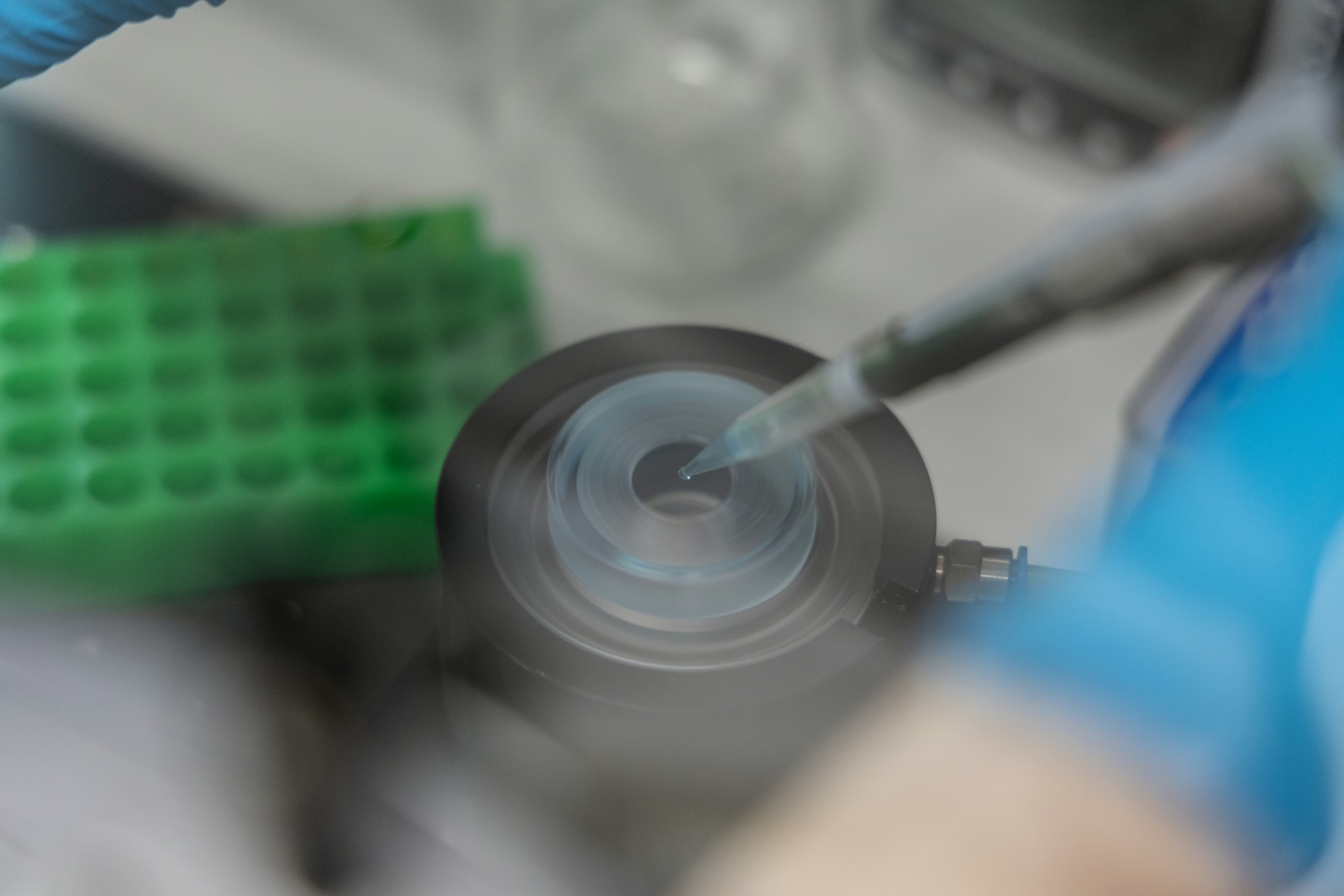
In addition to addressing research questions, the group develops new methods for fellow researchers. For example, they improved a method to encapsulate biological systems into GUVs by cDICE. To read more about this method go to the news item or go to the ACS Synthetic Biology paper. For a detailed protocol and for building your own cDICE/eDICE setup, go to Github.
Also, the group succeeded in finding an alternative method to monitor biomolecules in single-particle tracking experiments: DNA-PAINT for hour-long single-molecule tracking. The methods and instrumentation are shared on the group GitHub page.












Physics of Cellular Interactions Latest news





Most recent publications