Events and outreach

Science for all ages at Wetenschapsdag 2026

Each year during the national Weekend of Science, AMOLF opens its doors to visitors of all ages to share our enthusiasm for science. AMOLF organizes Wetenschapsdag together with four other research organizations at Amsterdam Science Park: ARCNL, Nikhef, CWI, and University of Amsterdam.

The 2026 edition was well attended, with 692 people visiting the AMOLF building. Many visitors came with children, but there was plenty to experience for adults as well. 
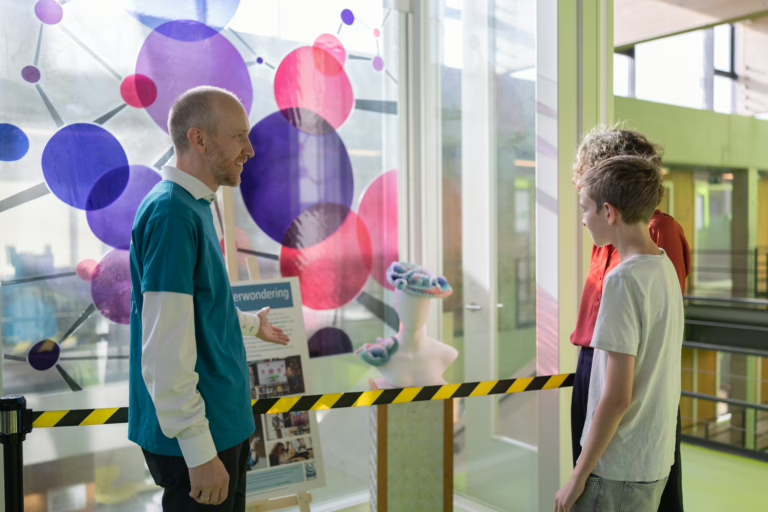
Bruno Ehrler presenting the hat and shoulder ornament worn by Minister Rianne Letschert at opening Parliamentary year 2026
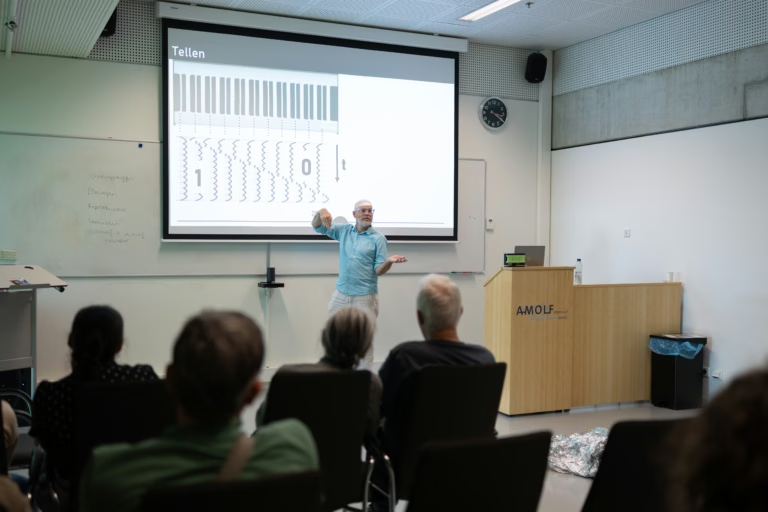
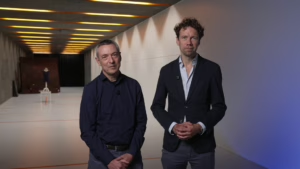
Martin van Hecke presenting at Wetenschapsdag 2026
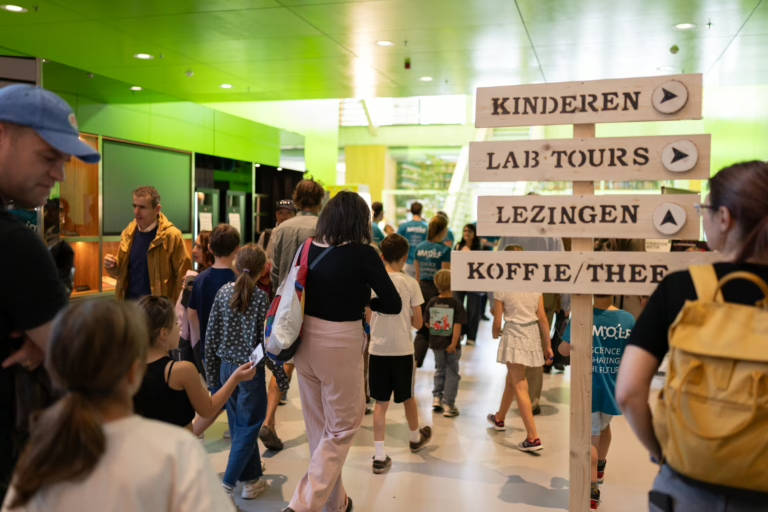
Wetenschapsdag 2026 - AMOLF central hallway

Wetenschapsdag for adults

The program included lectures about solar energy in relation to the limited space available in the Netherlands (Kay Cesar from TNO), how to build a living cell (Hannah Lena Wienecke from AMOLF), and how to make rubber count (Martin van Hecke from AMOLF).

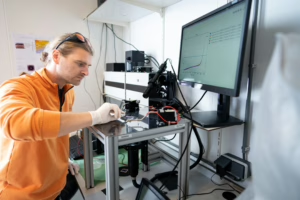
Wetenschapsdag is also the only time of the year when visitors can explore the labs. One of the new labs open to visitors this year was the transmission electron microscopy (TEM) facility. This microscope can not only reveal the smallest building blocks of materials but also show what happens when light shines on them.
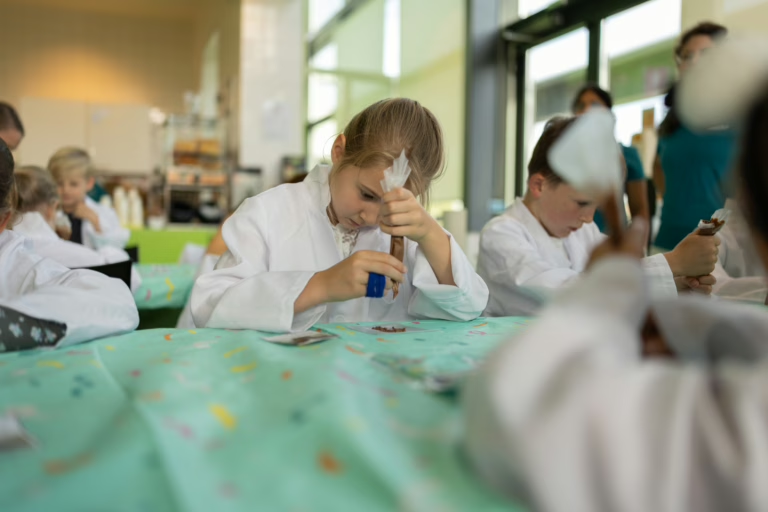
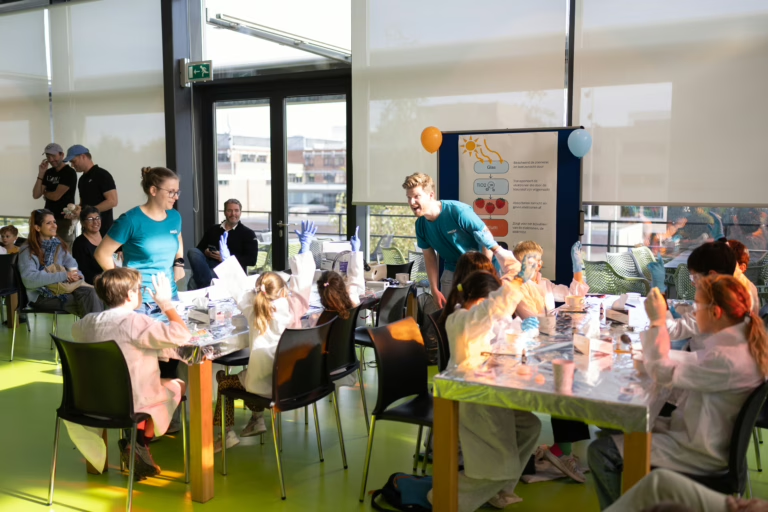
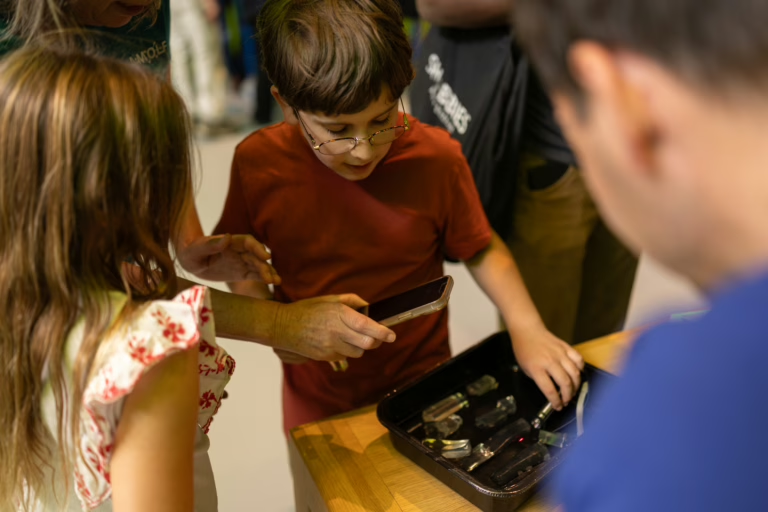
Wetenschapsdag 2026 - Rainbow chocolate workshop
Wetenschapsdag 2026 - Make your own solar cell (from berries)
Wetenschapsdag 2026 - guiding light demonstration

Wetenschapsdag for kids

This year, AMOLF offered five different workshops for kids:

  • Rainbow chocolate: Make chocolate reflect the colors of the rainbow.
  • Marshmallow structures: Build structures with marshmallows and learn about shadows.
  • Make your own solar cell: Create a solar cell using berries.
  • Fold your own microscope: Build a microscope and discover a hidden world. And take it home to explore!
  • Smaakmakers: Discover mirror molecules through smell and build your own molecule. Will it be a right-handed or left-handed molecule?

Mark your calendar for next year

During the national Weekend of Science in 2026, 125.000 people participated in activities throughout the country. The Wetenschapsdag Amsterdam Science Park is part of the Weekend of Science.

In 2027, Wetenschapsdag will be held on Saturday, October 2. More information follows in the weeks preceding the event.
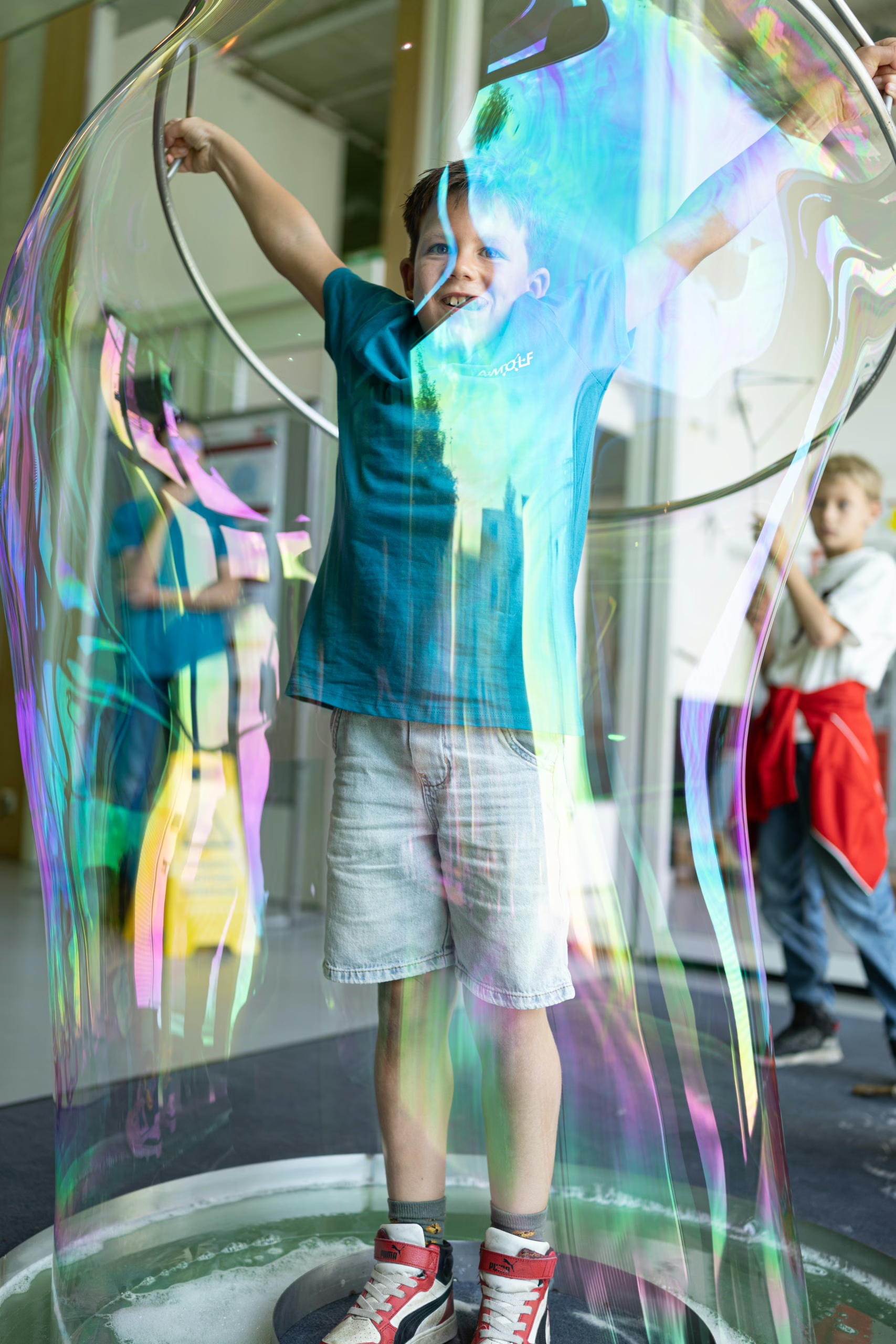
Wetenschapsdag 2026 - water and soap demonstration
Share article
What's happening

Most recent news items

All news items
Joining forces to study perovskite interfaces
People and recognition

Joining forces to study perovskite interfaces

AMOLF group leaders Professor Wiebke Albrecht and Professor Bruno Ehrler have received an NWO ENW-M2 grant for their joint research project, The Dynamic Atomic Interface between Halide Perovskites and Metals. The insights gained will pave the way for sustainable, high-performance solar energy and information technology. Wiebke and Bruno will each hire a PhD student for this project. The grant amounts to €800.000.

Read news item
Wim Noorduin and Arian van Asten presenting their scientific journey
People and recognition

Wim Noorduin and Arian van Asten presenting their scientific journey

On October 8, Professor Wim Noorduin and his collaborator Professor Arian van Asten (University of Amsterdam) presented their scientific journey in a video to the audience at the ‘Avond van Wetenschap en Maatschappij’. They did so alongside the other nominees for the Huibregtsen Prize.

Read news item
Natural phenomena ‘hyperuniform disorder’ enables highly efficient, thin silicon solar cells
Research highlights

Natural phenomena ‘hyperuniform disorder’ enables highly efficient, thin silicon solar cells

Silicon solar panels are rigid and heavy, and many rooftops cannot support them. This creates a need for thin, flexible solar cells that can be integrated into building materials. However, making silicon solar cells thinner makes it harder to trap light inside the material. Researchers in the 3D Photovoltaics group found a fascinating way to overcome this challenge using a phenomenon called hyperuniform disorder. They publish their findings in the journal ACS Photonics.

The researchers were able to make highly efficient silicon solar cell materials that are 30 times thinner than conventional ones. They managed to do this by integrating a layer of nanometer sized structures on top of the material. Up close, this pattern looks random, but it is remarkably when you step back: no clumps, no gaps, and no repeating pattern. This is called hyperuniform disorder (or HUD).

Read news item
Stay informed

Get the latest research highlights, events, and news from our institute delivered to your inbox