
News & updates
Latest developments from our institute
Stay informed about new research results, awards, events, and collaborations across our scientific community.
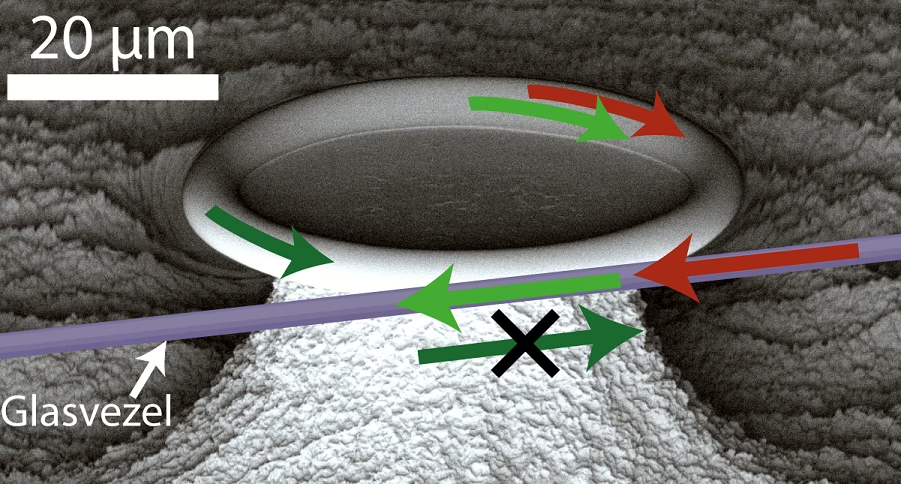
AMOLF researchers make one-way street for light
Researchers at FOM institute AMOLF and the University of Texas at Austin have created a compact one-way street for light. That is remarkable because light waves can generally move in both directions inside a material. Optical chips could benefit from the new functionality, as it enables a new way to route data encoded in the light signals. The researchers published their results in Nature Communications on 29 November.

Albert Polman has been awarded the EPS QEOD Prize for Research into the Science of Light
AMOLF group leader Albert Polman has been elected as the winner of the 2017 Research into the Science of Light Prize of the Quantum Electronics and Optics Division (QEOD) of the European Physical Society (EPS). He is awarded the prize “for mastering light at the nanoscale and for demonstrating novel applications in nanoscale optical circuits, photovoltaics, and super-resolution imaging”. The prize will be awarded at the forthcoming 6th International Topical Meeting on Nanophotonics and Metamaterials (Nanometa) to be held in Seefeld, Austria in January 2017.

EPS QEOD Research into the Science of Light Prize voor Albert Polman
De Quantum Electronics and Optics Division (QEOD) van de European Physical Society (EPS) heeft de Research into the Science of Light 2017 toegekend aan AMOLF groepsleider Albert Polman. Hij ontvangt de prijs voor “het beheersen en manipuleren van licht op de nanoschaal en de ontwikkeling van nieuwe toepassingen in optische circuits op de nanoschaal, photovoltaics en superresolutie imaging. De prijs wordt in januari 2017 uitgereikt tijdens de 6th International Topical Meeting on Nanophotonics and Metamaterials (Nanometa) in Seefeld, Oostenrijk.

Albert Polman elected as OSA Fellow
The Optical Society (OSA) has elected AMOLF group leader Albert Polman as Fellow of the OSA. The OSA elected Polman for “novel fundamental insights in the behavior of light at the nanoscale, leading to improved light management strategies in solar cells and the development of deep-subwavelength cathodoluminescence microscopy.” OSA Fellowships are awarded to “recognize members who have served with distinction in the advancement of optics and photonics”. Candidates for Fellow Membership are nominated by current OSA Fellow members.
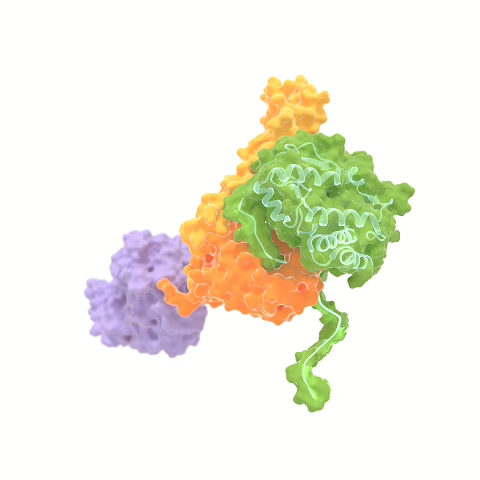
Universal clamping protein stabilizes folded proteins
New insight into how the chaperone protein Hsp70 works On October 26th Nature will publish a study that overturns the decades-old textbook model of action for a protein that is central for many processes in living cells. Researchers at the FOM Institute AMOLF and the University of Heidelberg show that the protein Hsp70 can mechanically stabilize folded proteins using a moveable lid, and thus protect them against stress and damage. This insight into how proteins help each other offers a new perspective on diverse cellular functions and can ultimately lead to a better understanding of diseases like cancer and Parkinson’s, in which failing protein systems are central.
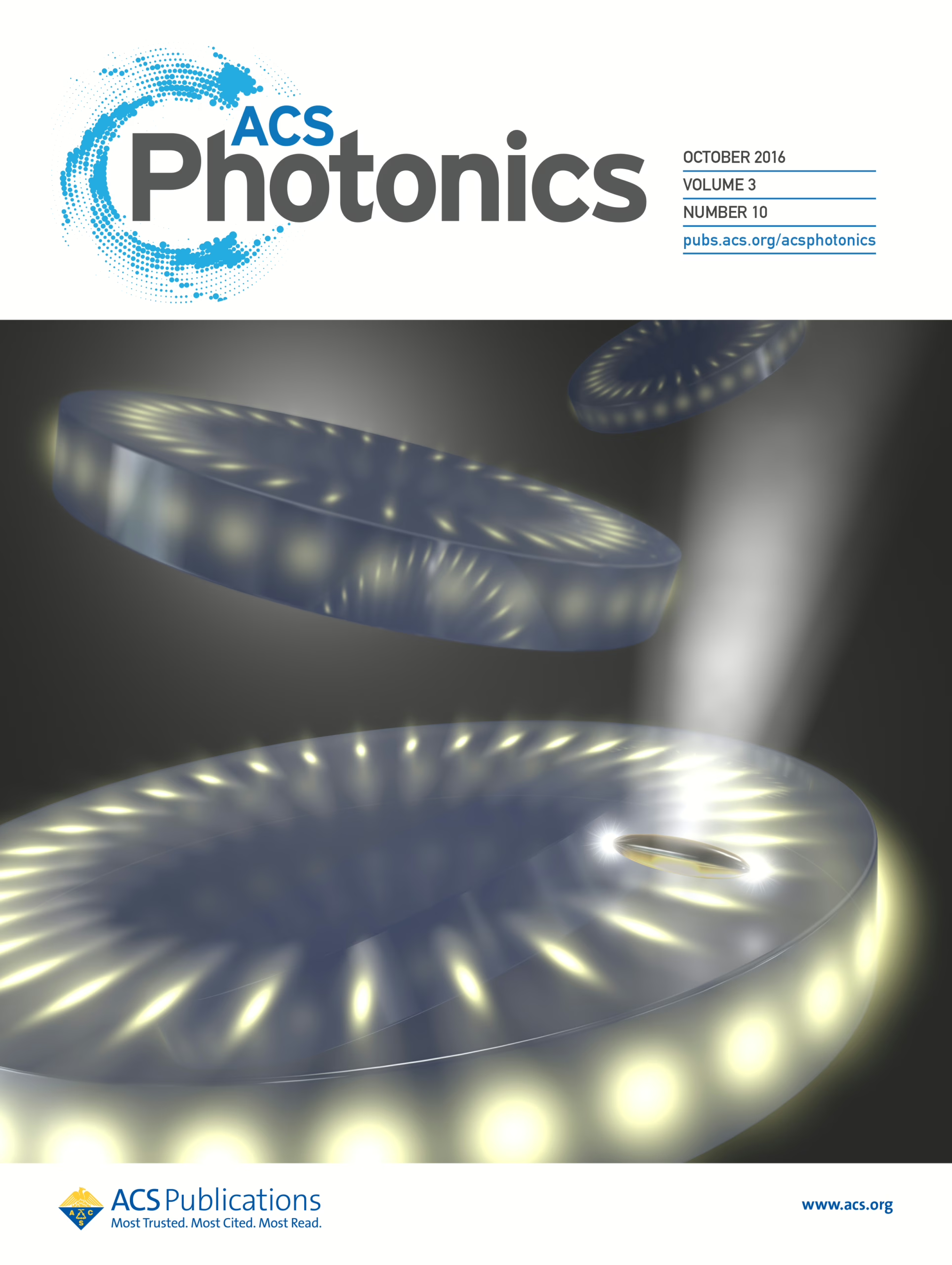
Hybrid structures on the cover of ACS Photonics
Optical cavities or metallic antennas are frequently used to enhance interactions between light and a single quantum emitter. We argue that hybrid systems combining an antenna and a cavity can achieve stronger interactions than the cavity or antenna alone. Through subtle interference effects, these systems can break the fundamental limit for single antennas and benefit simultaneously from the long photon lifetime in the cavity and the strong confinement near the antenna. As highlighted by the example on the cover, this also causes stronger light emission than in a cavity only.
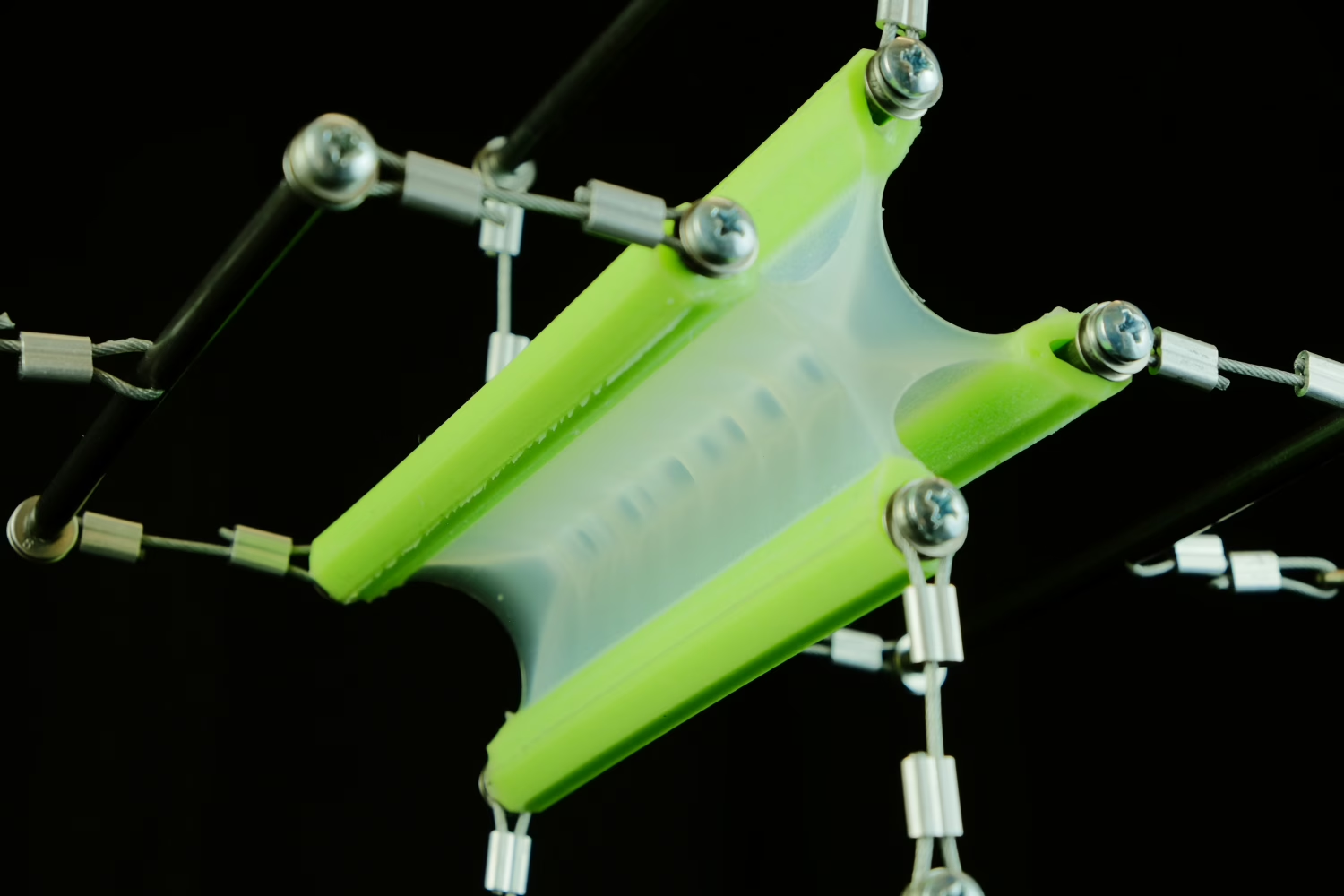
Tension instability flattens thick block
This summer Bas Overvelde started as tenure track group leader at AMOLF. During the first few months in Amsterdam he finished a project with former Harvard colleagues, which they published last month in Physical Review Letters. The team demonstrated for the first time experimentally that with the right amount of tensile force, a thick cube of soft material would undergo an elastic instability and suddenly deform into a thin, flat plate. Using tensile — stretching — forces, the team triggered this instability in a centimeters-thick elastomer block, deforming it into a flat surface.
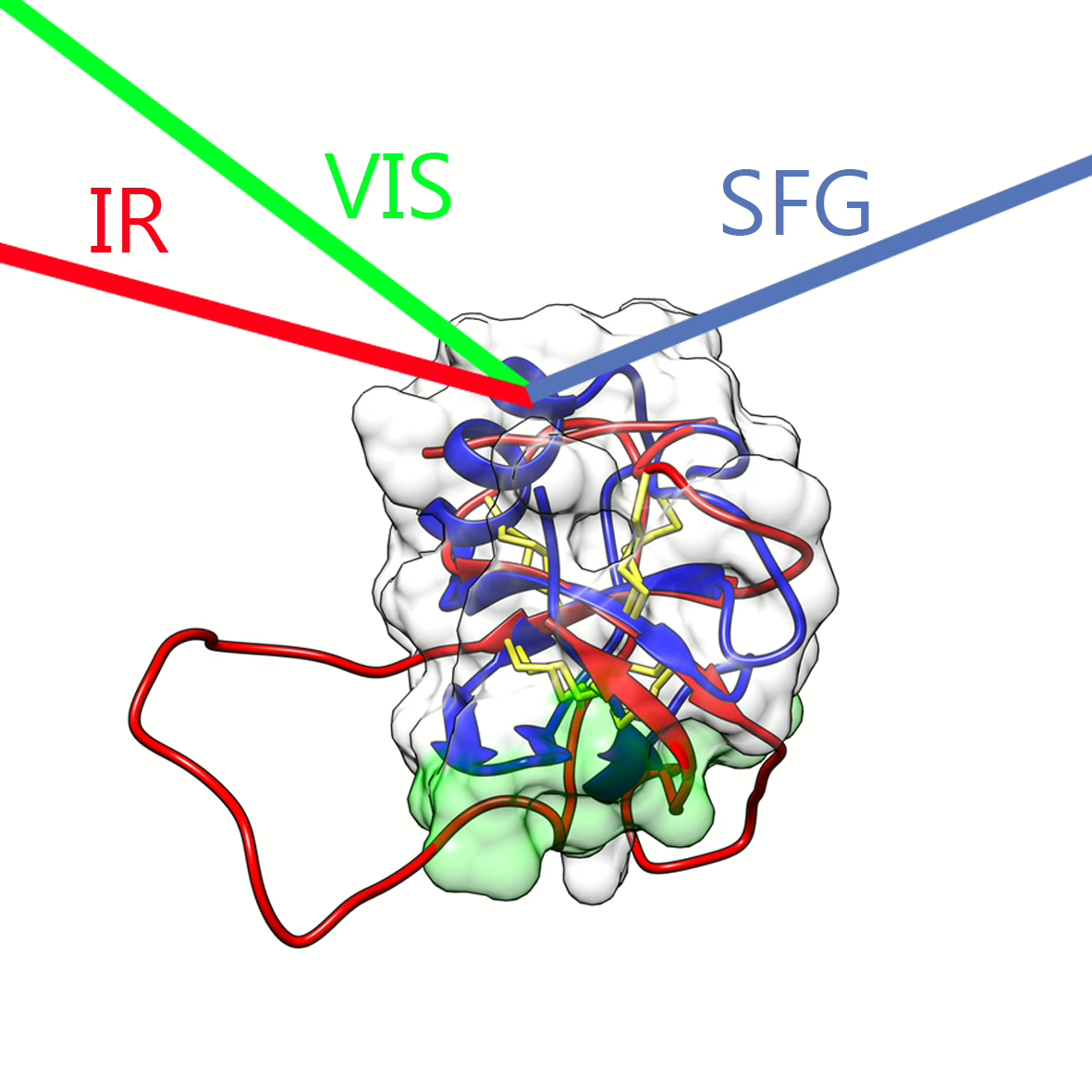
How do hydrophobins work at the water surface?
Hydrophobins are a group of highly surface-active proteins that are produced by fungi. They are known for their unique functions related to interfaces. Hydrophobins largely reduce the surface tension of water, strongly adhere to surfaces and form protective surface coatings, all functions that play important roles in fungal physiology. Hydrophobins are used in several industrial applications, such as foams, dispersions and functional coatings. These applications rely on the unique surface properties of hydrophobins characterized by the proteins’ self-assembly into robust films.