
News & updates
Latest developments from our institute
Stay informed about new research results, awards, events, and collaborations across our scientific community.
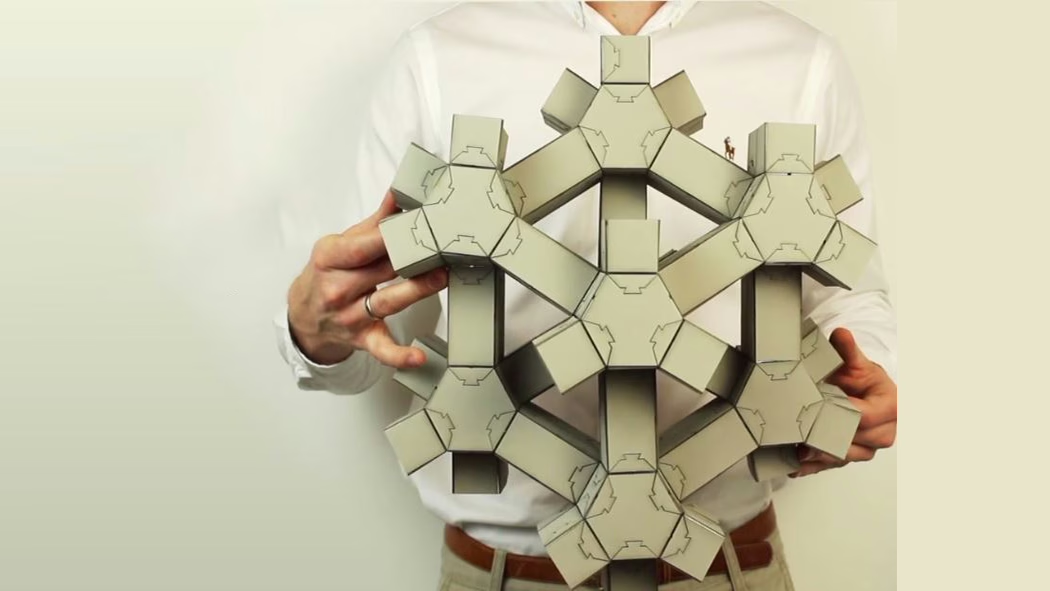
Bas Overvelde candidate for ‘Wetenschapstalent’
For the fourth time, New Scientist is looking for scientific talent in the Netherlands and Belgium. The contest is created to put young scientific talent and their work centre stage. AMOLF group leader Bas Overvelde is in the top 25 of scientist competing in this contest.

New method predicts evolution
As evolution is driven by chance, predicting it seems impossible. Nevertheless, scientists from AMOLF in Amsterdam and the ESPCI in Paris have succeeded in making predictions about the evolution of a set of genes in E. coli. When and how genes mutate remains random, but it did appear predictable which gene is more likely to evolve first, or if evolutionary deadlock arises. The results have been published on 13 April in the journal Nature Communications.
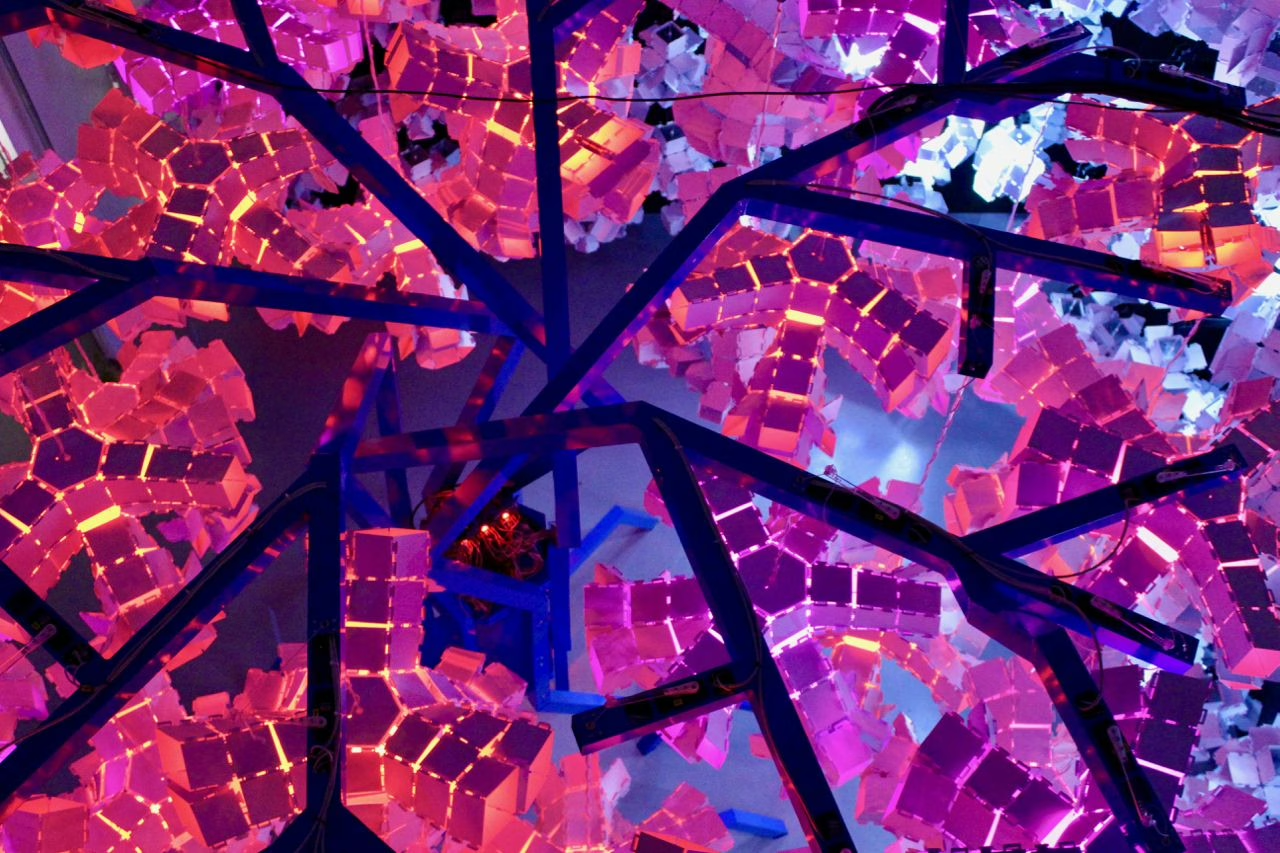
Edge of Chaos – an interactive kinetic installation
Between order and chaos, a mathematical space originally studied to understand the behaviour of avalanches and crystallisation of liquids, scientists are uncovering the rules for the existence of life itself. A small region called the “Edge of Chaos” displays complex behaviour that is both organised and unstable, creating the continuous flux that scientist hypothesise drives the engine of life – evolution – and produces the boundless novelty of the natural world.
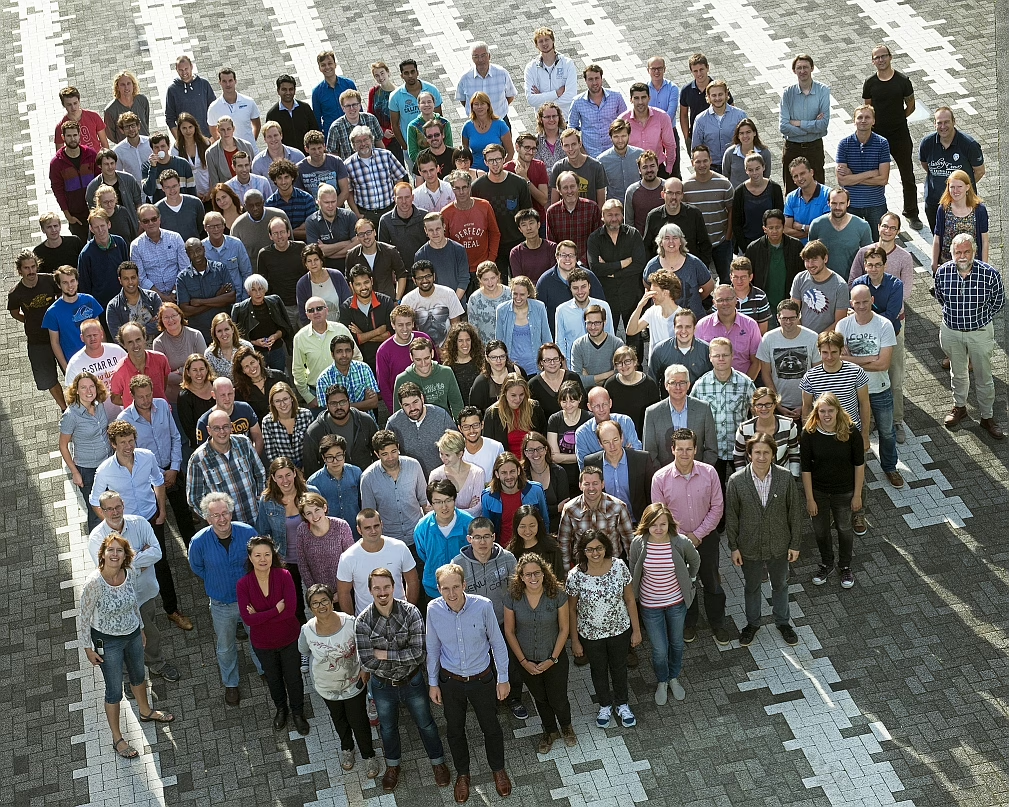
SEP committee refers to ‘the magic of AMOLF’
Every six years the NWO institutes are evaluated by a panel of independent experts according to the so-called Standard Evaluation Protocol (SEP). An international committee chaired by Søren Keiding (Aarhus University, Denmark) came to Amsterdam in October and gave AMOLF the highest score of ‘excellent/world leading’ for all three assessment criteria (scientific quality, societal relevance and viability). AMOLF director Huib Bakker: “The visit was very inspiring and we are proud of getting the highest score for all three criteria. The committee was especially interested in our research model and described AMOLF as “a jewel for fundamental research in the Netherlands.”
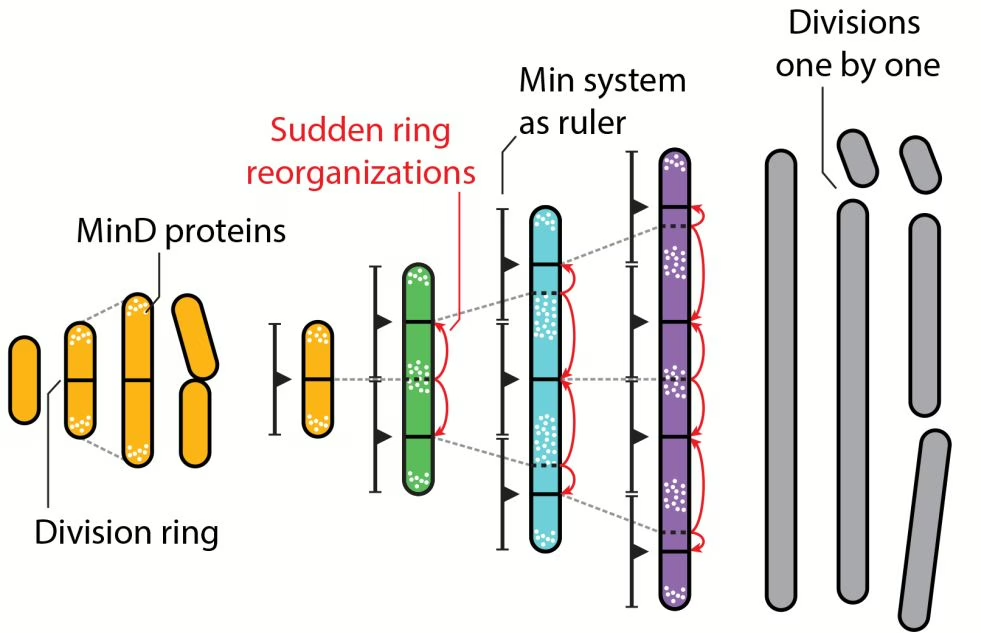
Stressed-out bacteria do measure up : As they grow, E. coli cells constantly mark sites where they can divide once the period of stress is over
When E. coli bacteria are physically distressed, they switch to stress mode and postpone cell division. But they still keep on growing, thus forming long filaments. AMOLF researchers discovered that these bacteria ‘know’ how long they are, which enables them to move protein rings to the sites where they will have to divide once the period of stress is over. The researchers involved published their findings in Current Biology, on 1 March 2018.

Researchers combine spintronics and nanophotonics in 2D material
Spintronics in materials of just a few atoms thick is an emerging field in which the ‘spin’ of electrons is used to process data, rather than the charge. Unfortunately, the spin only lasts for a very short time, making it (as yet) difficult to exploit in electronics. Researchers from the Kavli Institute of Nanoscience at TU Delft and the AMOLF group Nanoscale Solar Cells have now found a way to convert the spin information into a predictable light signal at room temperature. The discovery brings the worlds of spintronics and nanophotonics closer together and might lead to the development of an energy-efficient way of processing data, in data centres, for example. The researchers have given an account of their results in Science
Three AMOLF projects in NWO program Materials for Sustainability
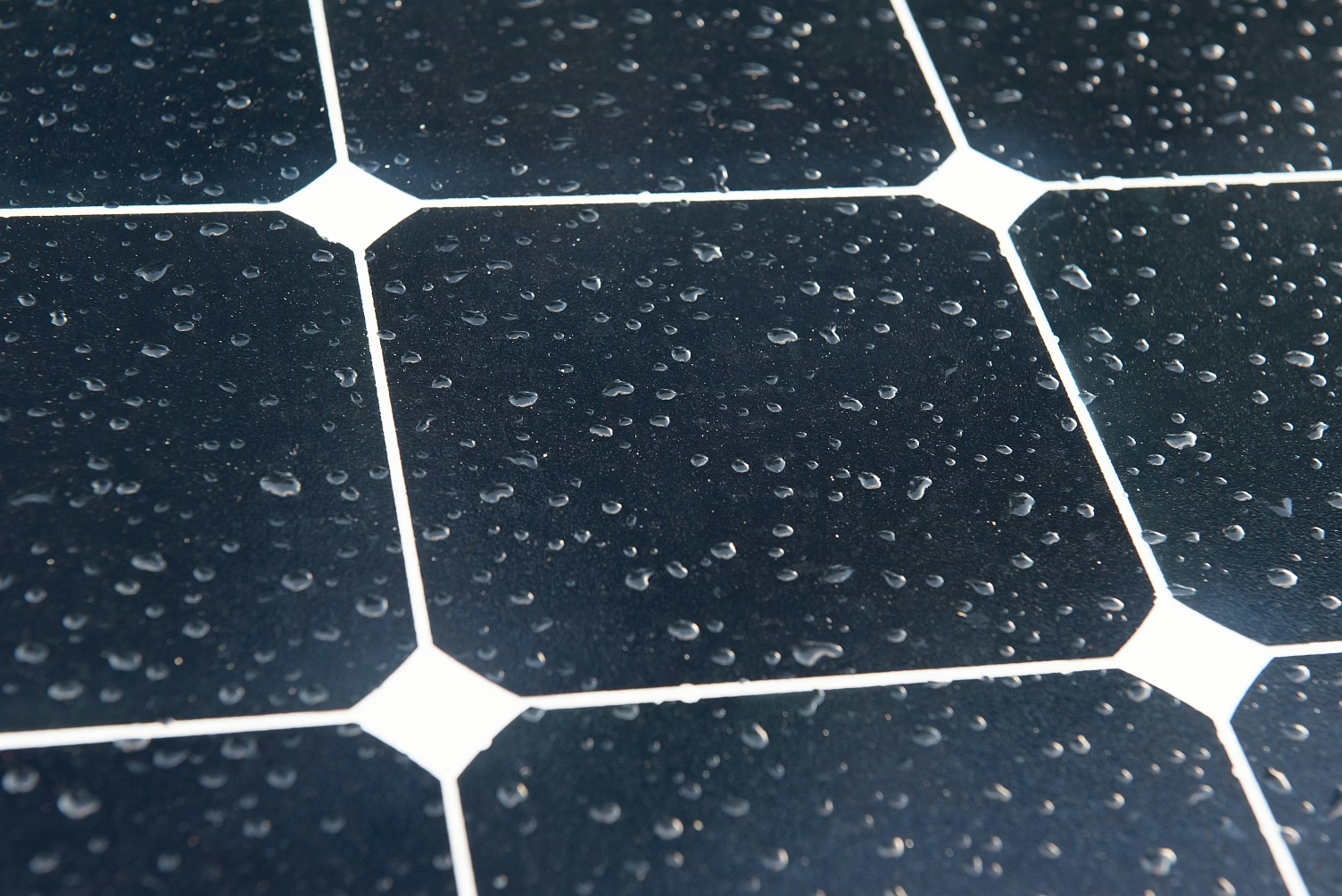
AMOLF participates in three new research projects that will start with funding through NWO’s program Materials for Sustainability (Mat4Sus). To enable a smooth transition from fossil fuels to a more sustainable source of energy we need a wide range of materials. The AMOLF groups contribute to the energy transition by enlarging the efficiency of solar cells and developing thinner foils and colored panels.
Rubicon award for Sander Mann
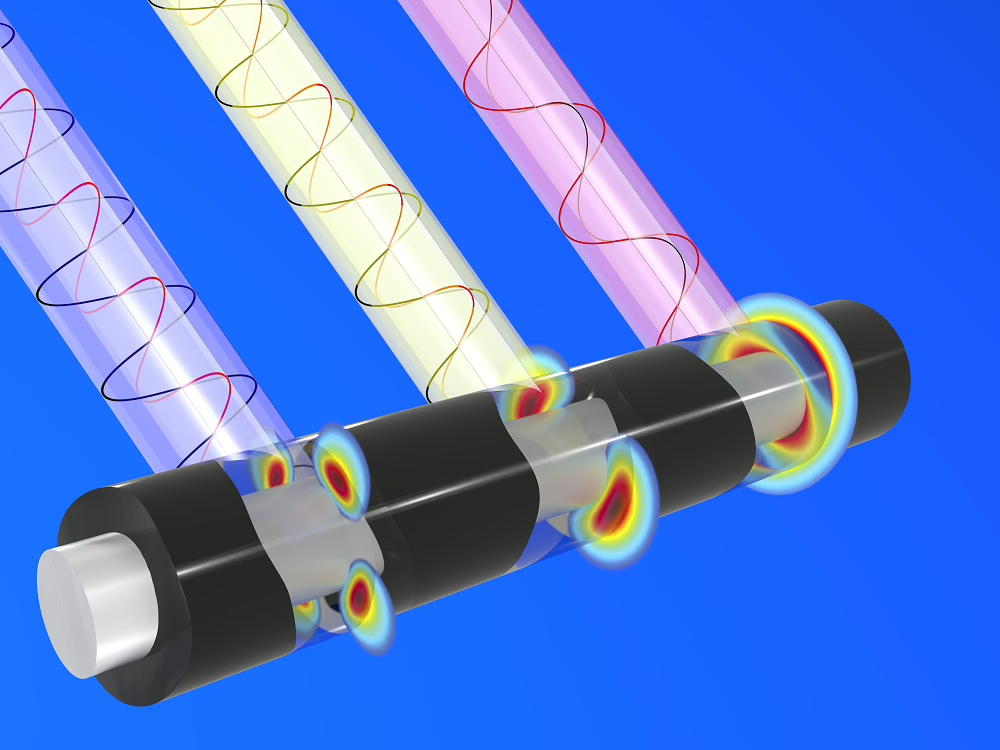
Former AMOLF PhD student Sander Mann has received an NWO Rubicon award to do research at the CUNY Advanced Science Research Center in New York. Mann obtained the cum laude degree for his doctorate research in the Nanoscale Solar Cells group led by Erik Garnett.