
News & updates
Latest developments from our institute
Stay informed about new research results, awards, events, and collaborations across our scientific community.
New breakthrough in measuring information flow
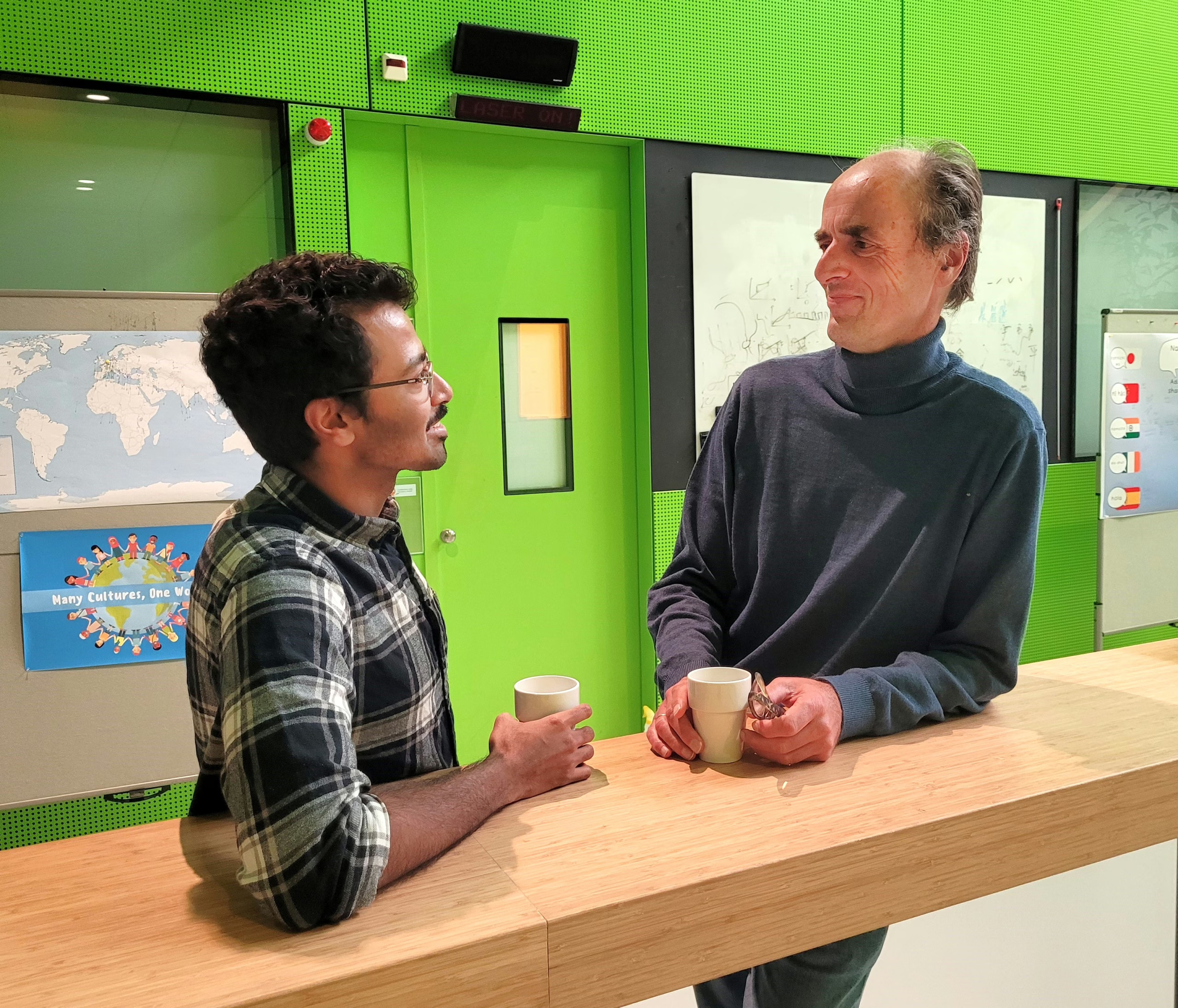
We are proud to share that AMOLF researchers have published a new paper in Physical Review Letters, entitled “Exact Computation of Transfer Entropy with Path Weight Sampling.” The study presents TE-PWS, a computational technique that – for the first time – enables the exact computation of transfer entropy, a central measure in information theory. Transfer entropy is used to quantify how information flows from one part of a system to another, and to detect causal relationships between variables.
Water molecules under control: AMOLF researchers open new path to sustainable industrial chemistry
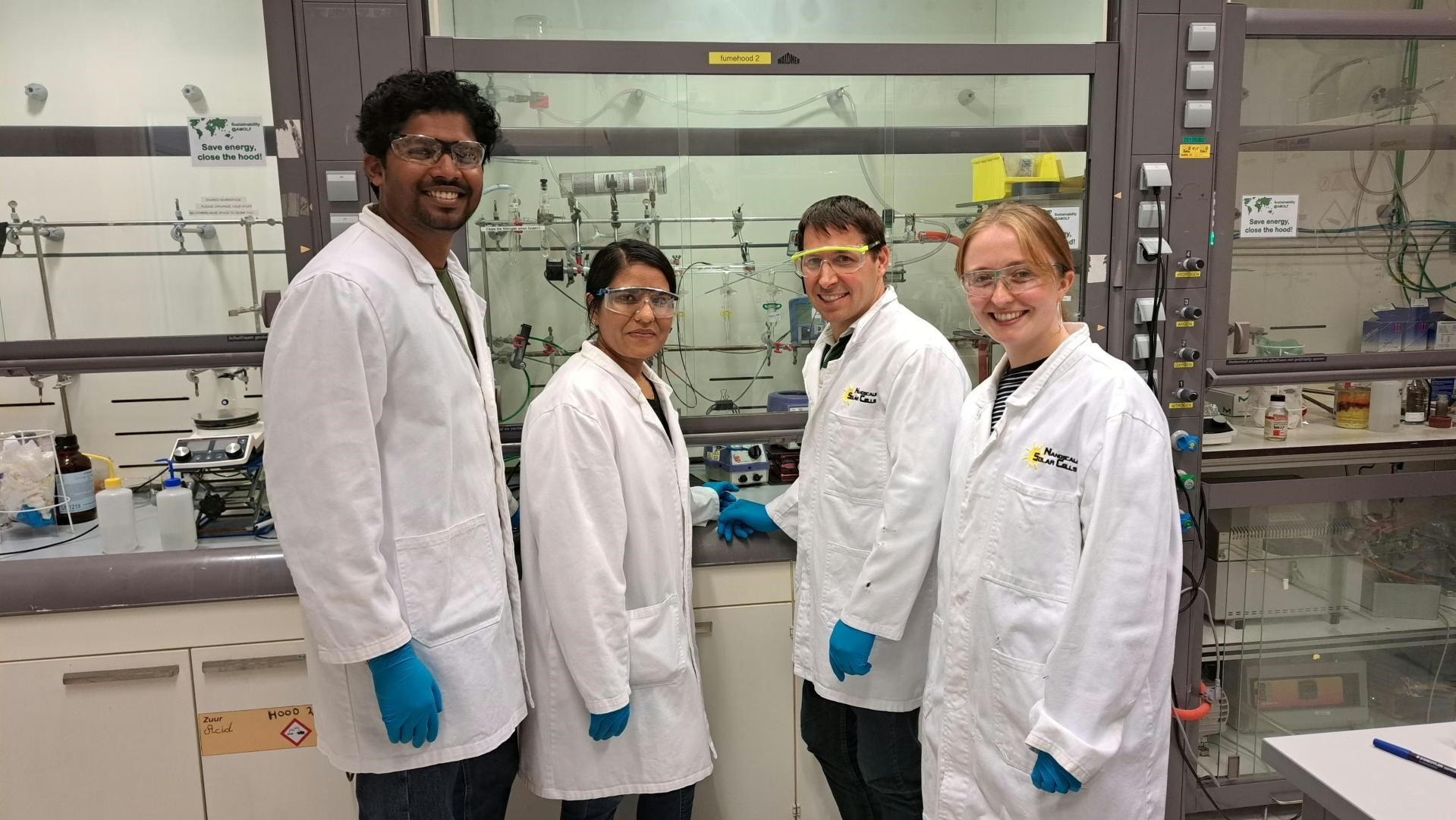
Researchers at AMOLF have demonstrated vibrational strong coupling in water layers only a few nanometers thick at metal surfaces. The study, published in Advanced Optical Materials and led by group leader Erik Garnett, shows how metal nanostructures (mid-IR antennas) are used to change the bonding strength of water located directly at the surface of the metal. This breakthrough opens the door to controlling chemical reactions in new ways, with potential impact on sustainable industrial chemistry at a large scale, e.g. making hydrogen from water electrolysis.
Tiny thermometers: measuring heat flow dissipating via nanoparticles
How do materials behave when heated with light at the scale of billionths of a meter? Researchers at AMOLF and Kobe University have developed a method to watch this process with nanometer precision. Their work, recently published in ACS Photonics, reveals how silicon nanoparticles heat up under laser light and how heat escapes from the surfaces. This breakthrough opens new doors for improving electronics, solar cells, and catalysts by giving scientists a sensitive tool to measure and control heat flow at the nanoscale.

Cathodoluminescence research advances measurements of light matter interactions
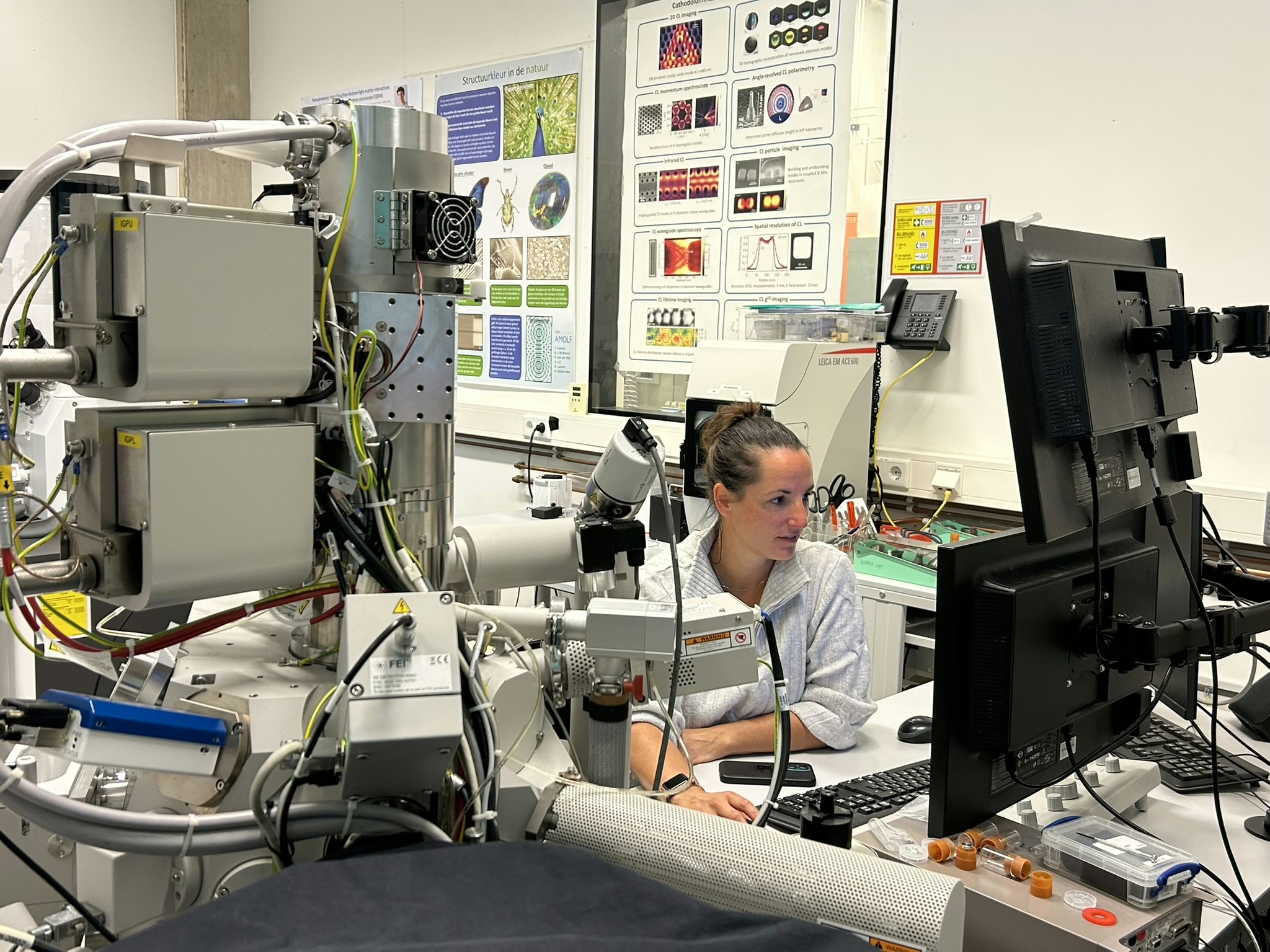
Researchers in the Photonic Materials group have published their latest findings using cathodoluminescence techniques to measure free electrons moving along a metal surface. The paper ‘Angle-resolved cathodoluminescence interferometry of plasmonic and dielectric scatterers’ is published in the journal Nano Letters on September 18th. The technique can be used for more precise measurements that will benefit computer chip production.
One rulebook to fold all proteins
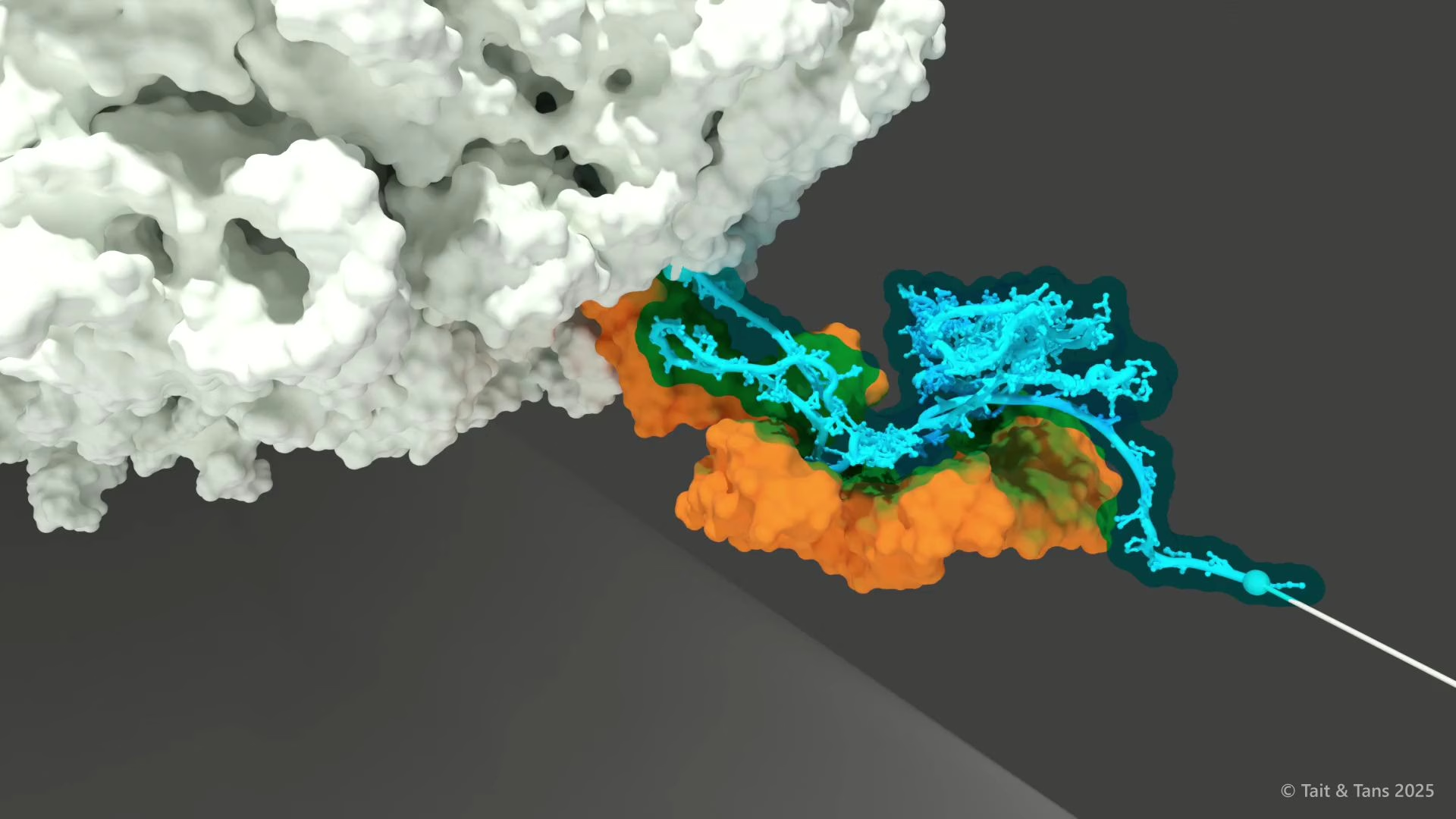
Inside living cells, ribosomes produce roughly five hundred brand-new protein chains every second, and each one must fold into the right 3D shape – or risk disease. New research shows that two helper molecules called ‘Trigger Factor’ and ‘DnaK’ use a surprisingly simple rulebook to fold all proteins in the cell, despite their strikingly different structures. A team from AMOLF and Heidelberg University reports these findings in two papers published in PNAS and Nature Communications.

Vibrant Metamaterials2025
The conference Metamaterials2025 brought together 400 researchers from around the world to share their results and vision. Metamaterials was held at Felix Meritis in Amsterdam from September 2 – 6.
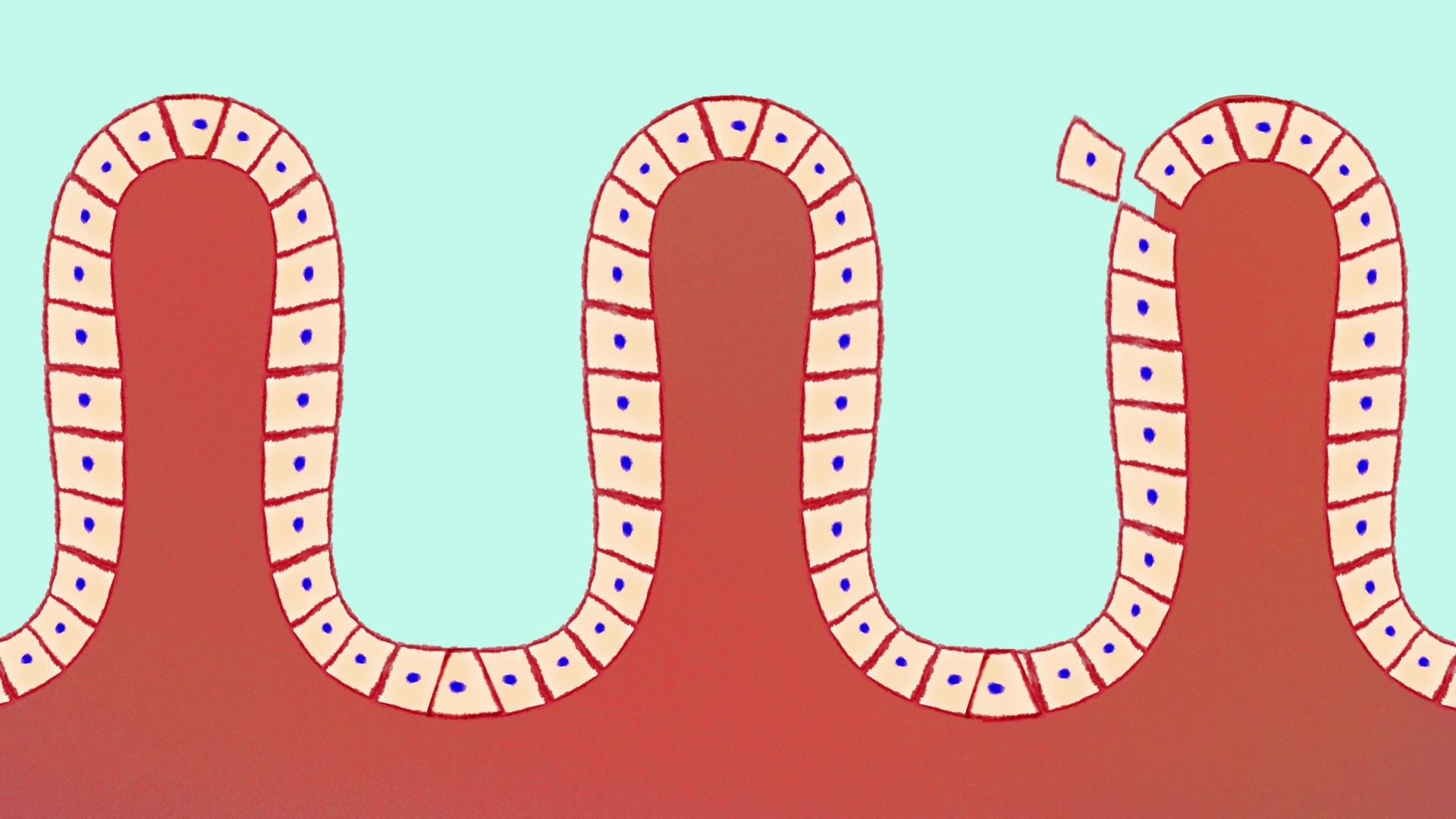
Intestinal surface cells pull rather than push
Cells on the inner surface of the intestine are replaced every few days. But, how does this work? It was always assumed that cells leave the intestinal surface because excess cells are pushed out. In a recent publication in the journal Science, researchers of the Hubrecht Institute and AMOLF show that this is not correct. In reality, the situation is exactly the opposite: the cells do not push, but pull at each other. These pulling forces lead to the removal of the weakest cells. This insight gives a new perspective on how a malfunctioning intestine can lead to disease or infection.
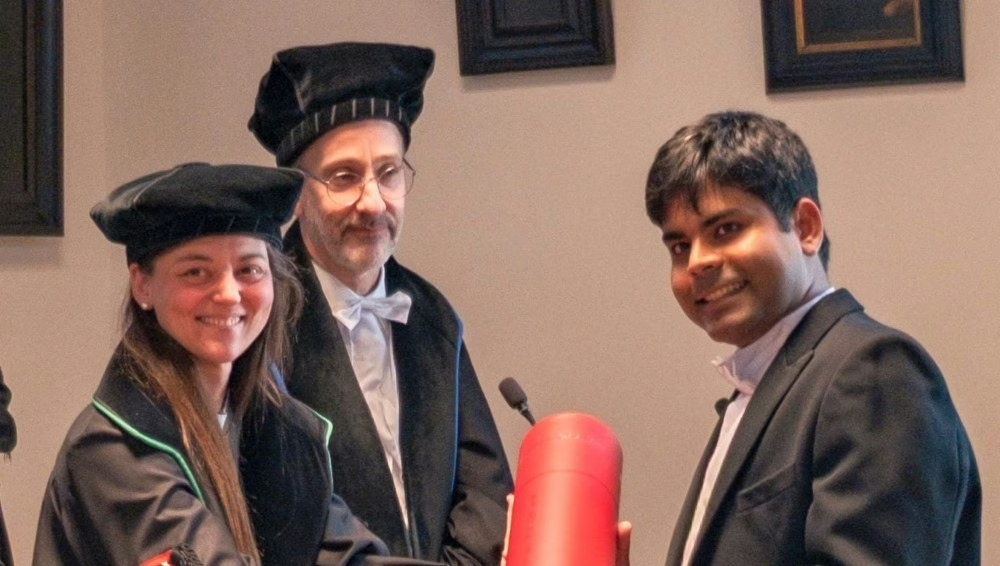
June and July doctorate celebrations
Fotios Avgidis - Criticality and Diversity in a Bacterial Sensory Network – June 6th [caption id="" align="alignright" width="160"] Fotios Avgidis after defending his thesis[/caption] Fotios Avgidis successfully defended his thesis…