
News & updates
Latest developments from our institute
Stay informed about new research results, awards, events, and collaborations across our scientific community.
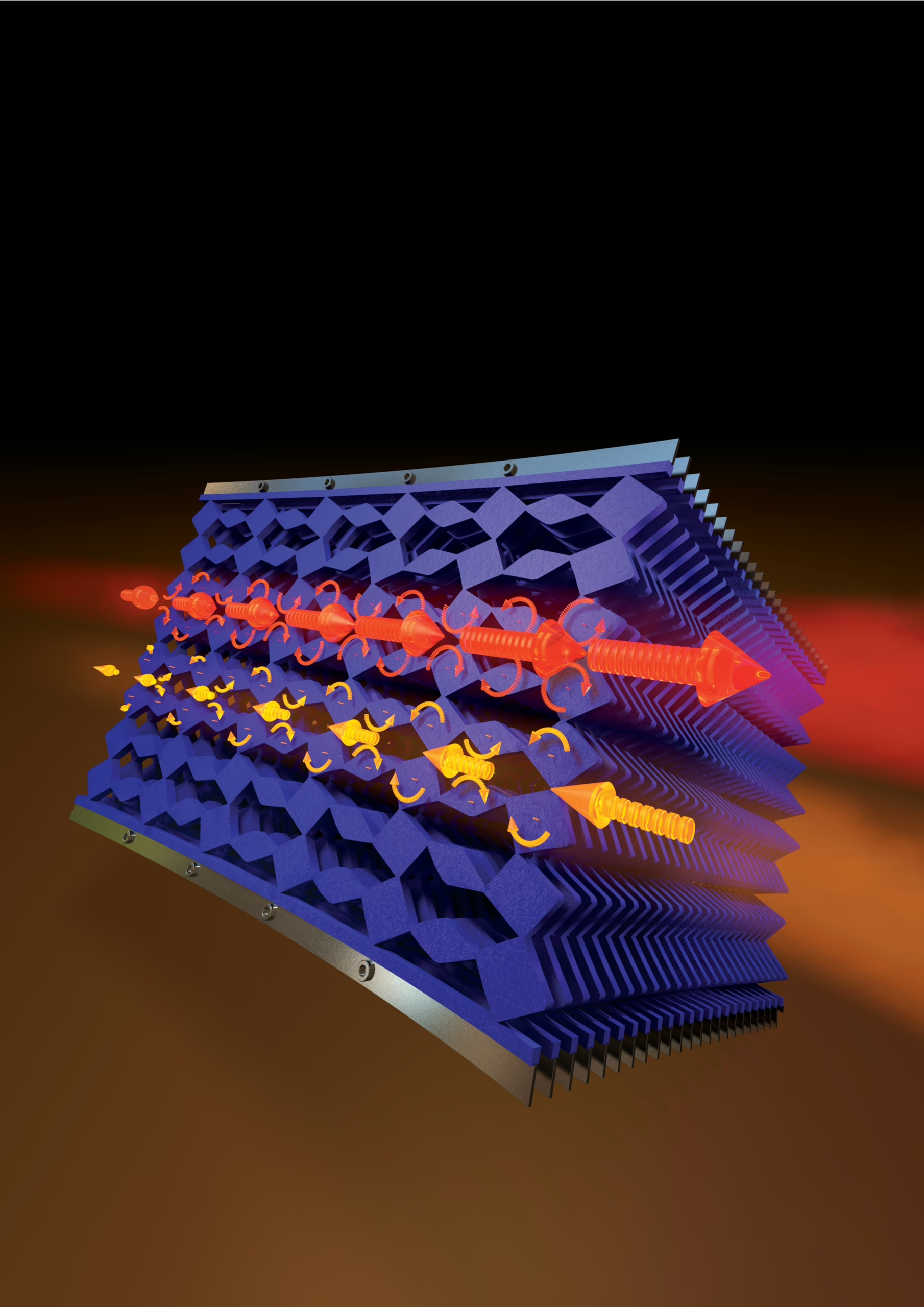
One-way traffic for motion in new material
Scientists have developed a material that breaks one of the fundamental principles governing many physical systems. Ordinary materials transmit external forces equally, no matter where the pressure comes from. The newly developed material breaks this rule and could potentially be of interest in soft-robotics or shock absorption related applications. The research team from AMOLF, Leiden University and the University of Texas at Austin published their findings on 13 February in Nature.
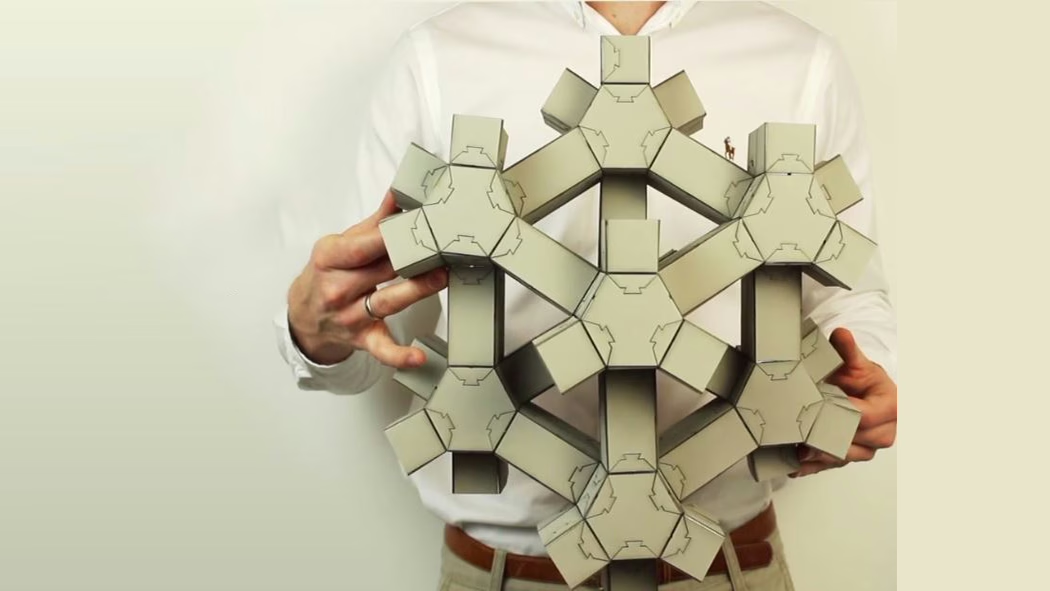
Folding reconfigurable materials : Toolkit to design metamaterials with programmable shape and function
During his PhD research at Harvard University, AMOLF group leader Bas Overvelde developed a smart method for designing and investigating new metamaterials. For such materials the microstructure determines the function, rather than the molecular composition. The ideal metamaterial changes shape autonomously to achieve the desired functionality. Overvelde and his American colleagues developed a toolkit to design such metamaterials that can assume different shapes in a manner reminiscent of origami. They published their research on 19 January 2017 in Nature.
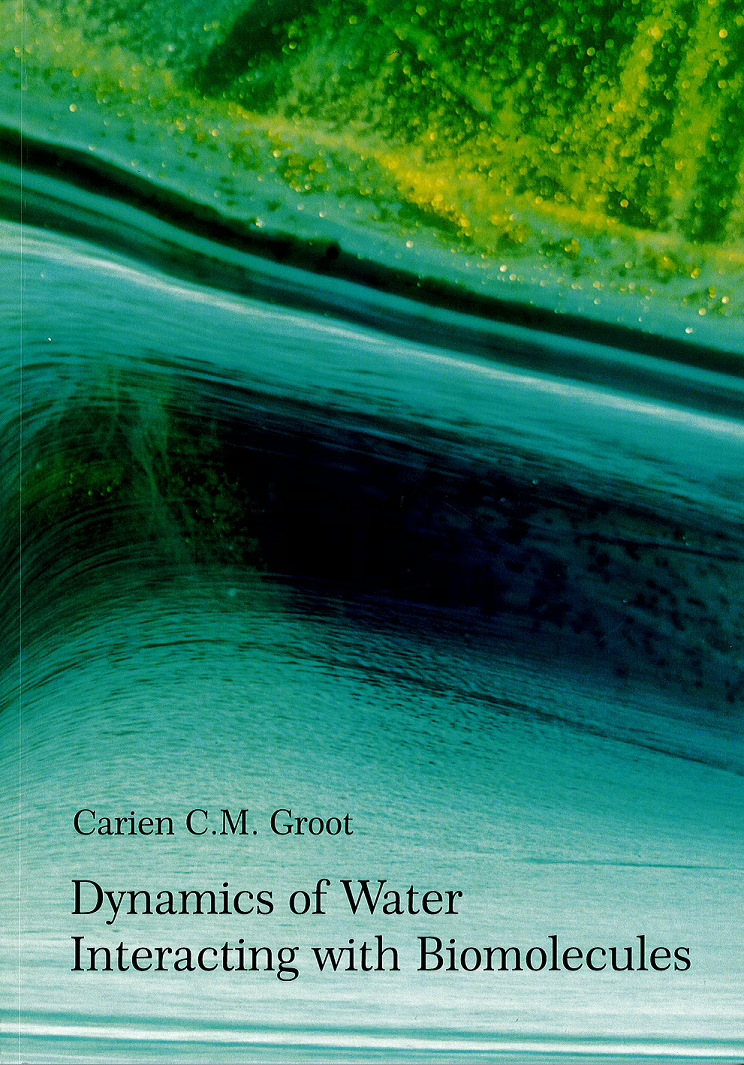
Cum laude defense Carien Groot
On January 13th Carien Groot successfully defended her PhD thesis Dynamics of water interacting with biomolecules at the University of Amsterdam. She obtained the cum laude degree for her doctorate research in the Ultrafast Spectroscopy group of Huib Bakker. This degree is reserved for the top 5% of students.
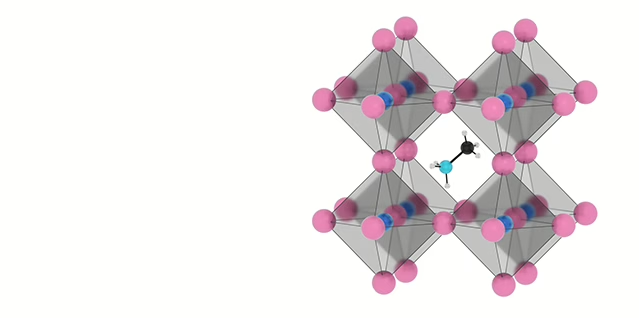
Solar cell wonder material surprises researchers : Unexpected experimental results lead to a better understanding of promising perovskite
Physicists at AMOLF have unraveled the mysterious working mechanism of a promising new class of materials for solar cells. Their pressure experiments with perovskite semiconductors had very counter-intuitive results, which could not be explained by the theory for conventional semiconductors. However, the results matched surprisingly well with a novel theory developed at Imperial College in London, predicting a peculiar band structure in perovskite materials. “Theory and experiments came together perfectly and helped us solve an important part of the perovskite puzzle”, says AMOLF group leader Bruno Ehrler, who published the results in Energy & Environmental Science on 23 December 2016.
FOM transforms into NWO
‘FOM Institute AMOLF’ becomes ‘AMOLF’ After a long preparation period FOM will discontinue on January 1st, 2017. The present FOM organization will form a new organization together with other parts…
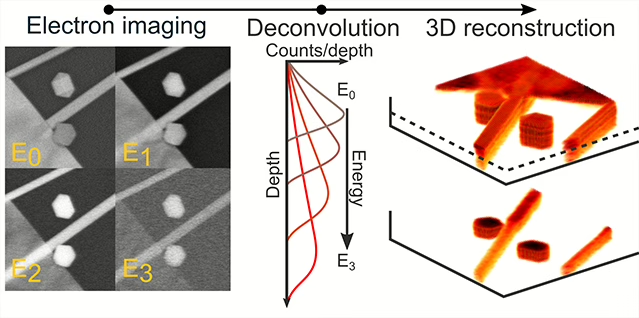
New imaging techniques
Researchers in the Nanoscale Solar Cells group at AMOLF have recently published two papers, one in Nature Communications and one in Nanoscale, demonstrating new imaging techniques for investigating the nanoscale properties of materials.
Cum laude defense Sander Mann
On December 6th Sander Mann successfully defended his PhD thesis Quantifying limits and losses in nanoscale photovoltaics at the University of Amsterdam. He obtained the cum laude degree for his doctorate research in the Nanoscale Solar Cells group led by Erik Garnett. This degree is reserved for the top 5% of students. Mann was Garnett’s first PhD student.
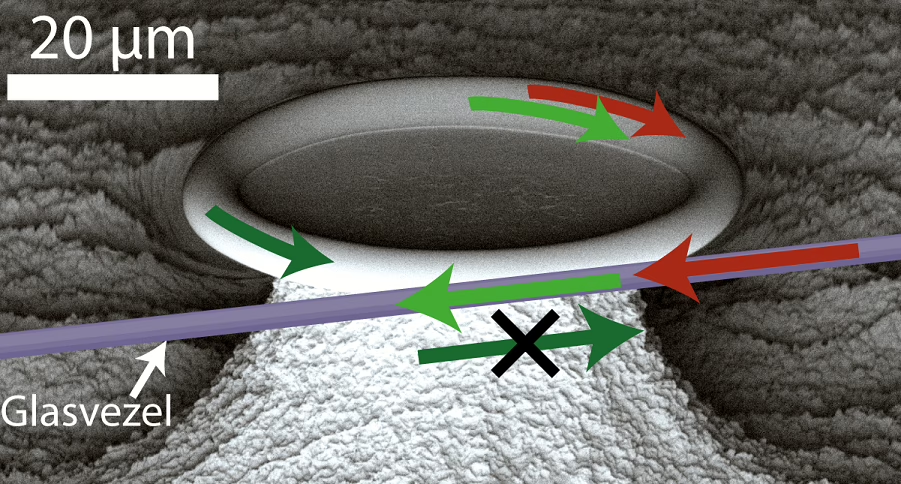
AMOLF researchers make one-way street for light
Researchers at FOM institute AMOLF and the University of Texas at Austin have created a compact one-way street for light. That is remarkable because light waves can generally move in both directions inside a material. Optical chips could benefit from the new functionality, as it enables a new way to route data encoded in the light signals. The researchers published their results in Nature Communications on 29 November.