
News & updates
Latest developments from our institute
Stay informed about new research results, awards, events, and collaborations across our scientific community.
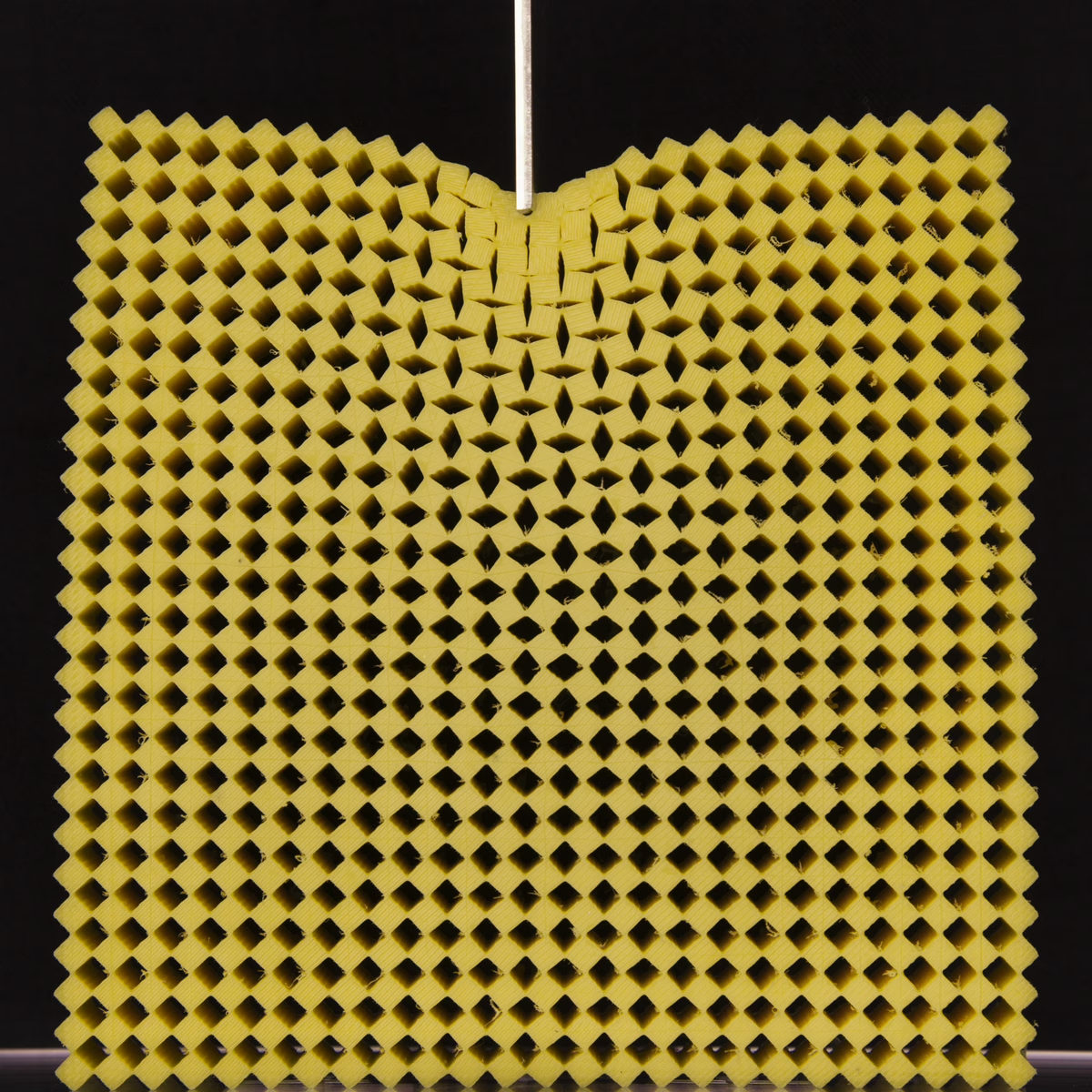
‘Bigger is different’ – the unusual physics of mechanical metamaterials exposed
Mechanical metamaterials, which exhibit unusual properties such as shape morphing and programmability, have been found to display further surprising features. When the materials are a step in size larger, new rules seem to apply. This was discovered by AMOLF researchers and collaborators from Leiden University and the University of Amsterdam. Their findings are published in Nature Physics on 25 September.
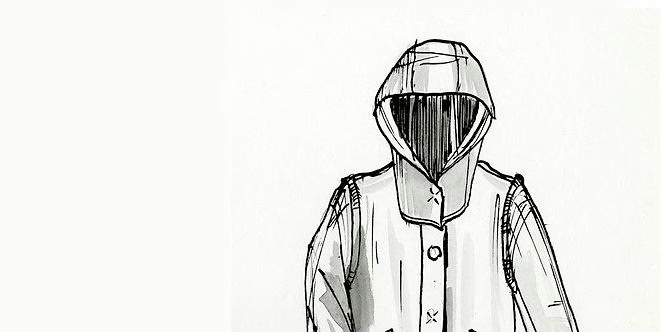
Who doesn’t want to wear a soft robotic jacket?!
AMOLF group leader Bas Overvelde has been awarded funding through the programme ‘Creatieve industrie – Kennis Innovatie Mapping’ (KIEM) from NWO Humanities. The funding will go to “Project Cairo: an intelligent soft robotic jacket”. Overvelde will work on this project with the Distributed and Interactive Systems group led by Pablo Cesar (CWI) and with Borre Akkersdijk (Byborre).
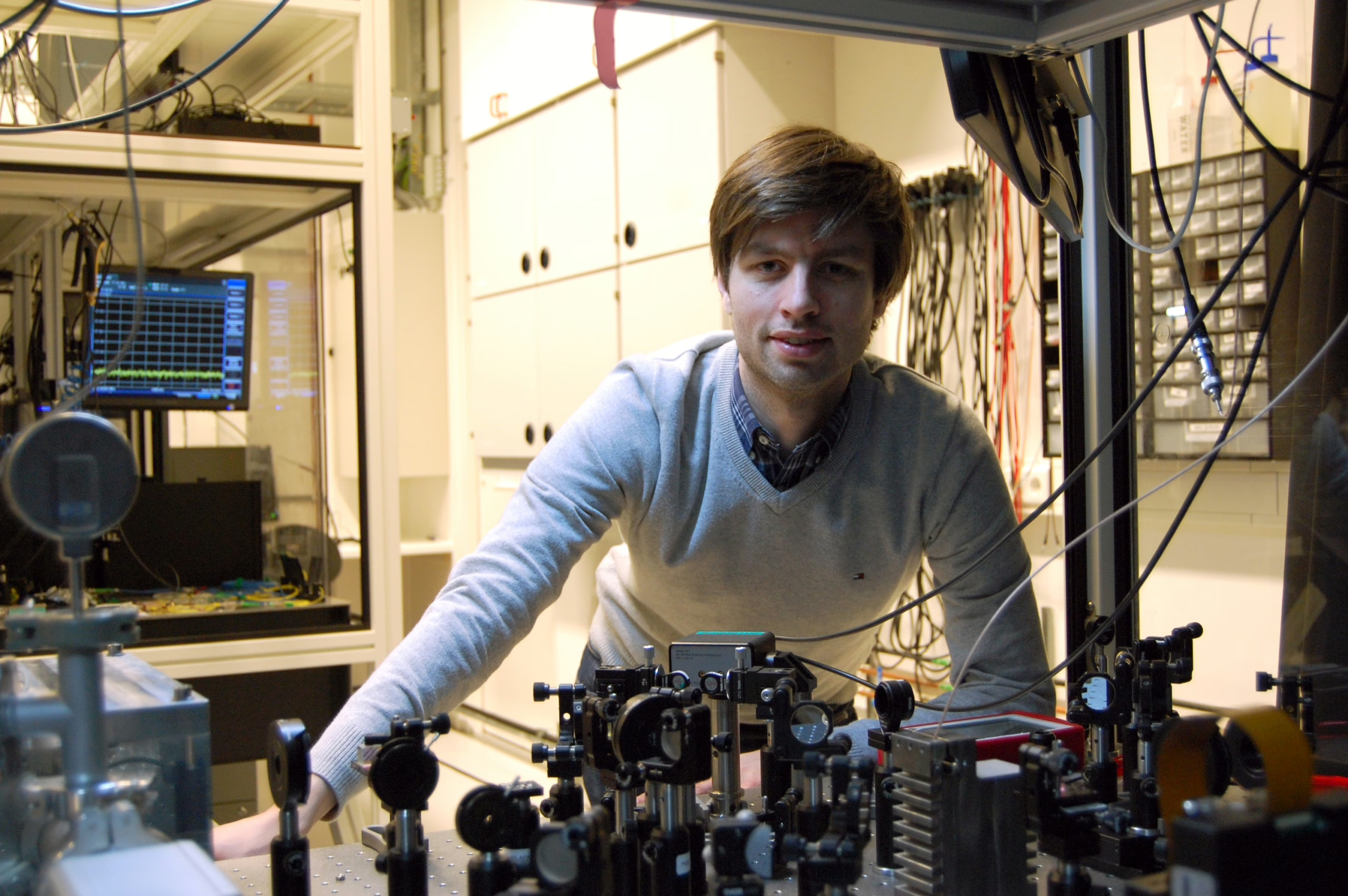
ERC Starting Grant for Ewold Verhagen
AMOLF group leader Ewold Verhagen (Photonic Forces) has received a Starting Grant of 1.5 million euros from the European Research Council (ERC). The ERC uses the Starting Grants to support talented scientists in the early stages of their career in pursuing ground-breaking projects for a duration of five years.
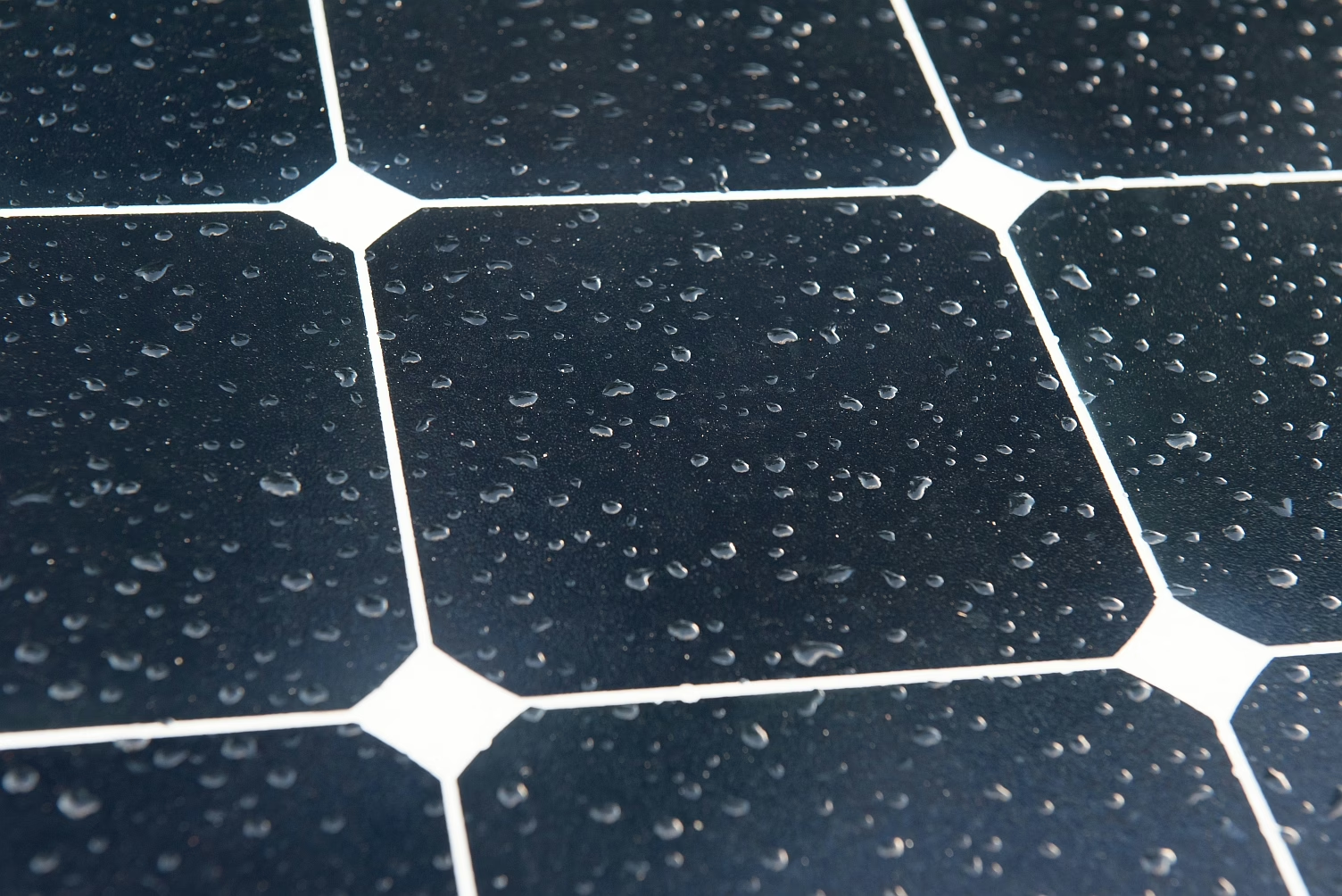
Newest solar cells underperform in cloudy countries
To determine how efficient new solar cells convert sunlight into electricity, small sample cells are tested under ideal conditions. However, the reported efficiency is not very representative of the actual annual yield when the cells are placed onto a rooftop and exposed to the Dutch weather. In a recent article in ACS Energy Letters, AMOLF researchers present a model that predicts how the next generation of solar cells will perform under realistic conditions.
Nanoparticles give solar panels a green color
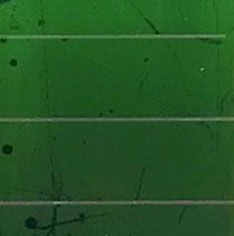
Researchers from AMOLF, the University of Amsterdam (UvA) and the Energy Research Centre of the Netherlands (ECN) have developed a technology to create efficient bright green colored solar panels. Arrays of silicon nanoparticles integrated in the front module glass of a silicon heterojunction solar cell scatter a narrow band of the solar spectrum and create a green appearance for a wide range of angles. The remainder of the solar spectrum is efficiently coupled into the solar cell. The current generated by the solar panel is only reduced by 10%. The realization of efficient colorful solar panels is an important step for the integration of solar panels into the built environment and landscape. The new design was published online on August 15, 2017, in the journal Applied Physics Letters.
Said Rodriguez starts new group on Interacting Photons
As of November 1st, Said Rodriguez will be appointed as AMOLF tenure track group leader. Rodriguez will start a new group on Interacting Photons in the Nanophotonics research theme.

Veni grants for Bas Overvelde and Cristina Martinez Torres
The Netherlands Organisation for Scientific Research (NWO) awarded Veni grants to AMOLF group leader Bas Overvelde (Soft Robotic Matter) and postdoc Cristina Martinez Torres (Biological Soft Matter).

The reason why small balls on a hot plate bounce and scream
Water droplets float in a hot pan because of the so-called Leidenfrost effect. Now physicists from AMOLF and Leiden University have discovered a variation: the Elastic Leidenfrost effect. It explains why so called hydrogel balls jump around on a hot plate making high pitched sounds. The explanation appears in Nature Physics on July 24.