
News & updates
Latest developments from our institute
Stay informed about new research results, awards, events, and collaborations across our scientific community.
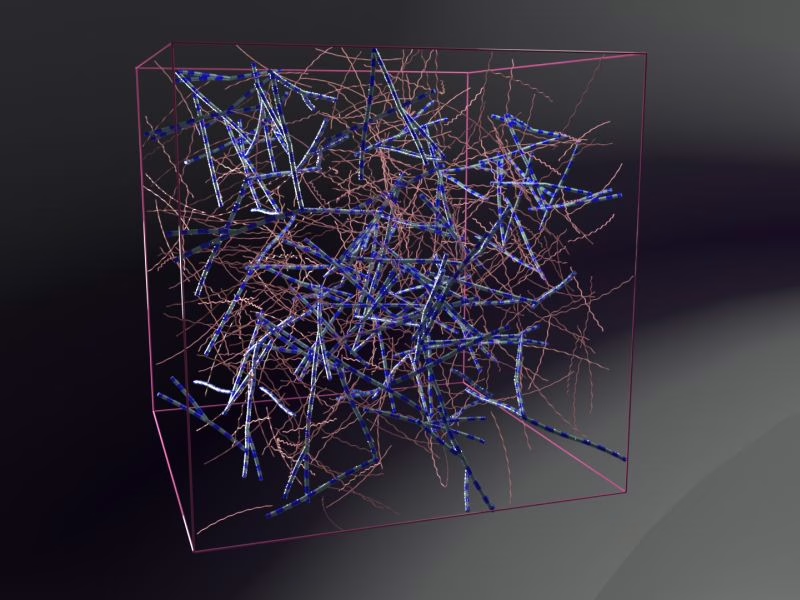
Under our skin: how hyaluronan regulates the stiffness of tissue
Our skin can switch from being soft to stiff if necessary. Other tissues, such as muscle tissue and cartilage, can likewise change their stiffness in a way that is tailored to their function in the body. Scientists from AMOLF and Wageningen University recently discovered that these stiffness changes are regulated by a crucial biomolecule known as hyaluronan. The researchers published their findings on 25 February in the prestigious journal Nature Physics.
AMOLF pleased and proud about results portfolio evaluation
AMOLF is very pleased about the conclusions of the committee that evaluated all NWO and KNAW institutes in the past months on their national role and added value to the Dutch scientific landscape. The committee chaired by Prof. Daan Frenkel (Cambridge University) concluded that AMOLF clearly has added value to the Netherlands.
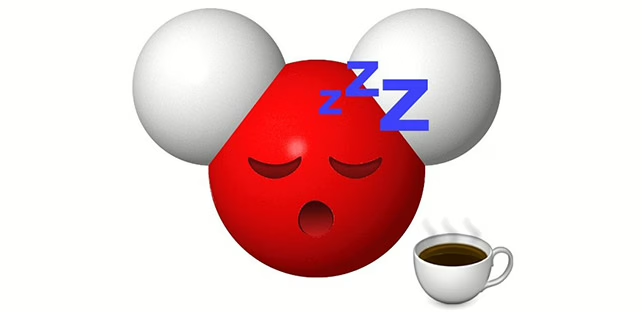
Caffeine makes water fall asleep
Contrary to the well-known stimulating effect on humans, caffeine slows down the movement of water molecules. Researchers from the NWO Institute AMOLF in Amsterdam and the ESPCI in Paris report this in a recent publication in the Journal of Physics Communications.
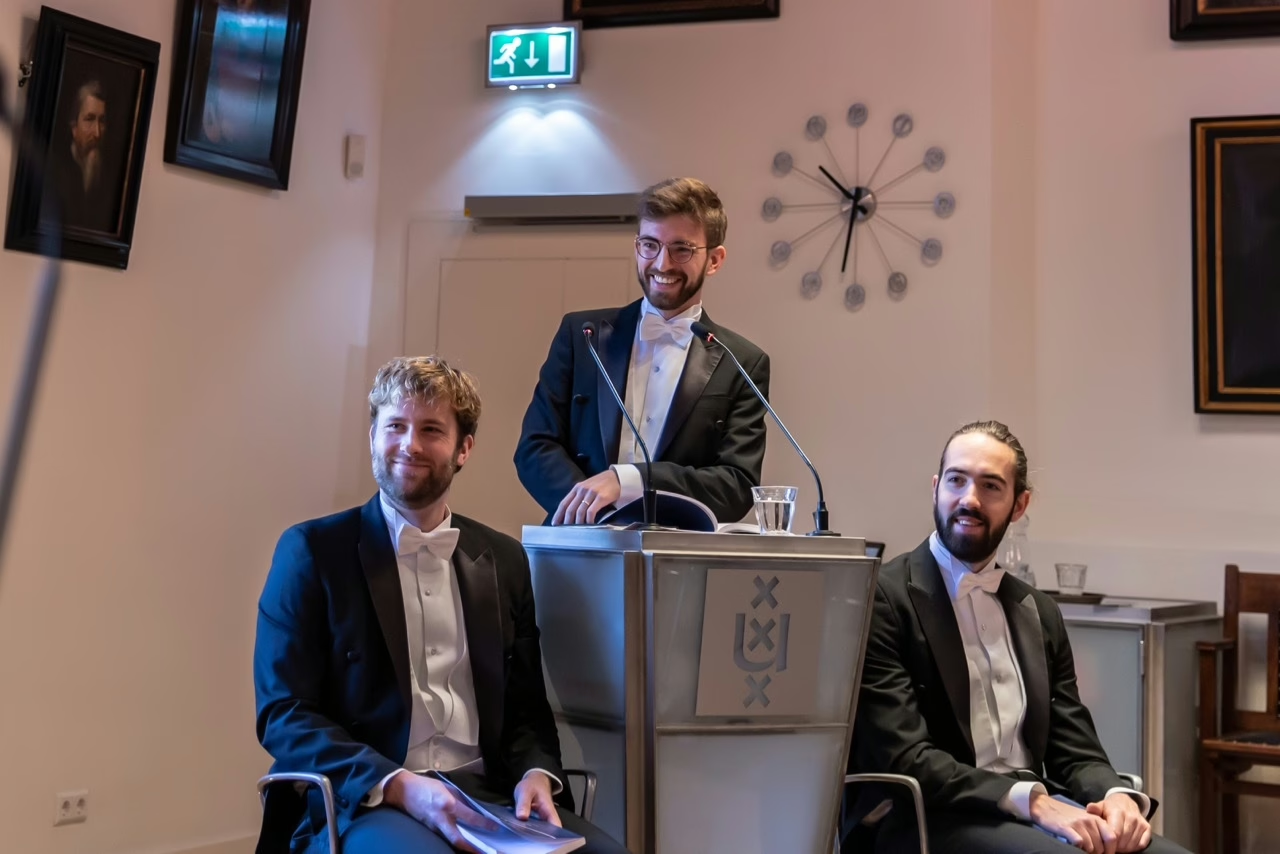
Cum Laude for Hugo Doeleman
On January 18th Hugo Doeleman defended his PhD thesis ‘Hybrid resonators for light trapping and emission control’ at the University of Amsterdam.
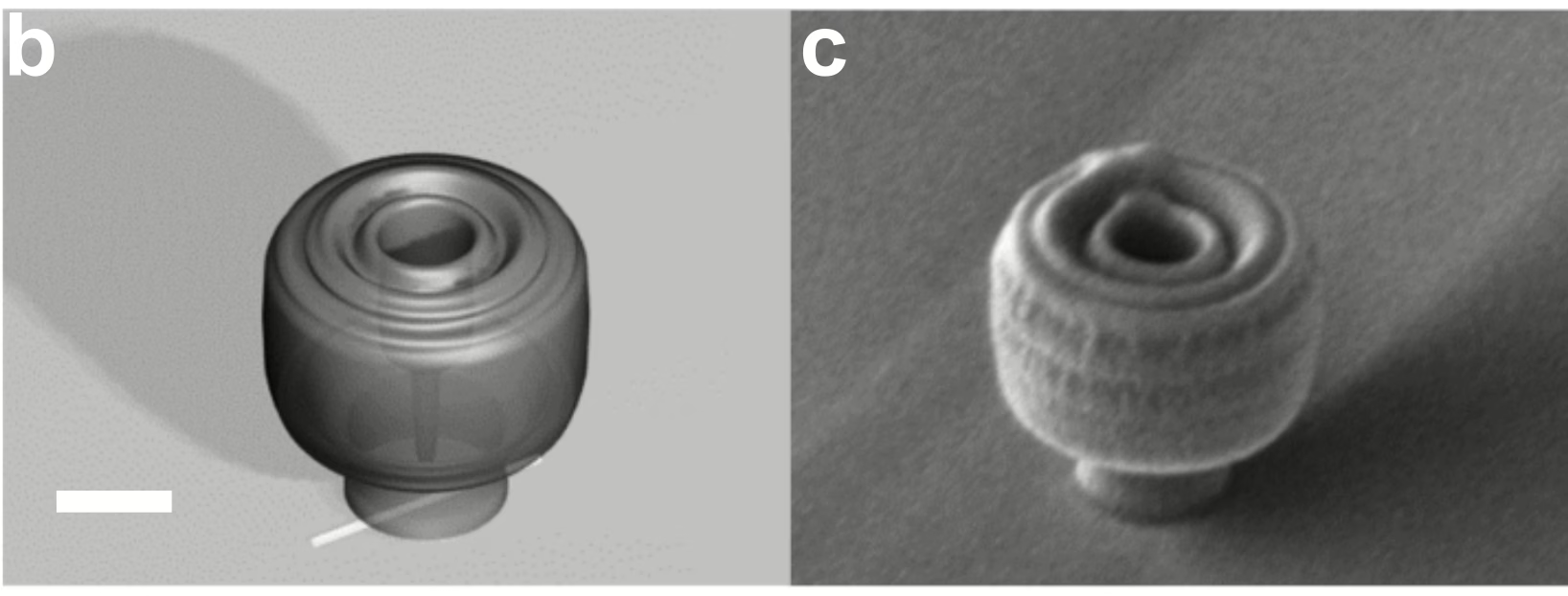
Directivity to improve optical devices
A team of researchers from AMOLF, Western University (Canada), and the University of Texas (USA) recently demonstrated the use of algorithmic design to create a new type of nanophotonic structure. This is good news for researchers in optical quantum computing and photovoltaics, because the structure is able to greatly improve the directivity of nanoscale emitters (in light emitting diodes, or single photon sources) and absorbers (in solar cells or photodetectors). The researchers publish their findings online in Nature Communications on November 9th, 2018.
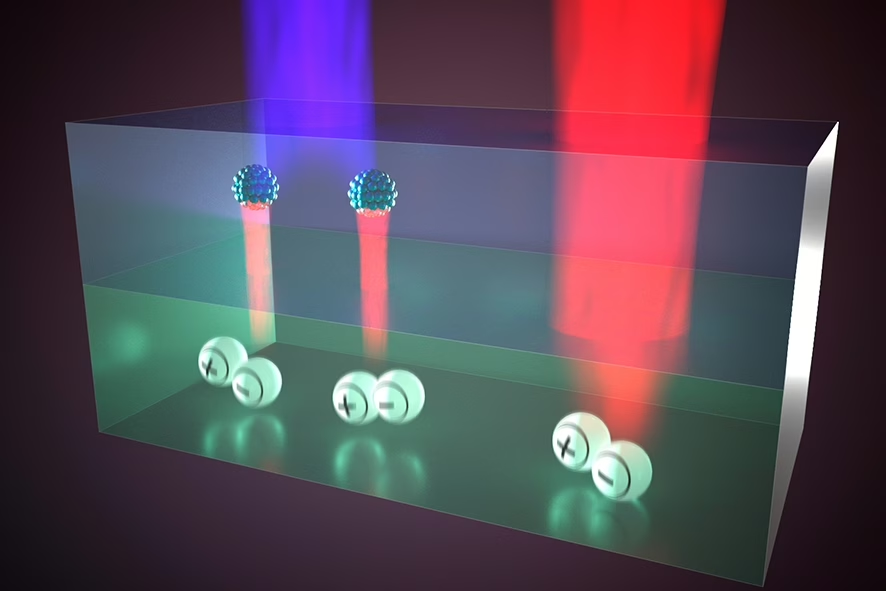
Light multiplication for stable improvement of solar cells
By converting one high-energy light particle into two low energy particles, singlet fission makes high energy photons available for solar cells
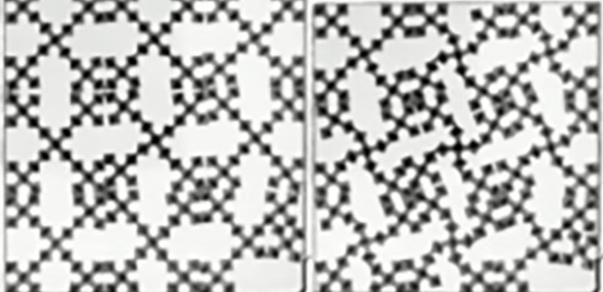
Self-folding metamaterial
The more complex the object, the harder it is to fold up. Space satellites often need many small motors to fold up an instrument, and people have difficulty simply folding up a roadmap. Physicists from Leiden and Amsterdam have now designed a structure that folds itself up in several steps. The results from this research will be published in Nature on September 27, 2018.

WISE fellow Kristina Ganzinger starts new research group at AMOLF
On September 1st, Kristina Ganzinger will start as tenure track group leader. Ganzinger comes to AMOLF with a WISE fellowship, which is part of an NWO program for excellent female researchers. With her research group Physics of Cellular Interactions, she reinforces the Living Matter department headed by Gijsje Koenderink.