
News & updates
Latest developments from our institute
Stay informed about new research results, awards, events, and collaborations across our scientific community.

Molecular device turns infrared into visible light
Researchers at EPFL, China, Spain and AMOLF have built a micro-device that uses vibrating molecules to transform invisible mid-infrared light into visible light. The breakthrough ushers in a new class of compact sensors for thermal imaging and chemical or biological analysis. The team publishes their findings in Science.
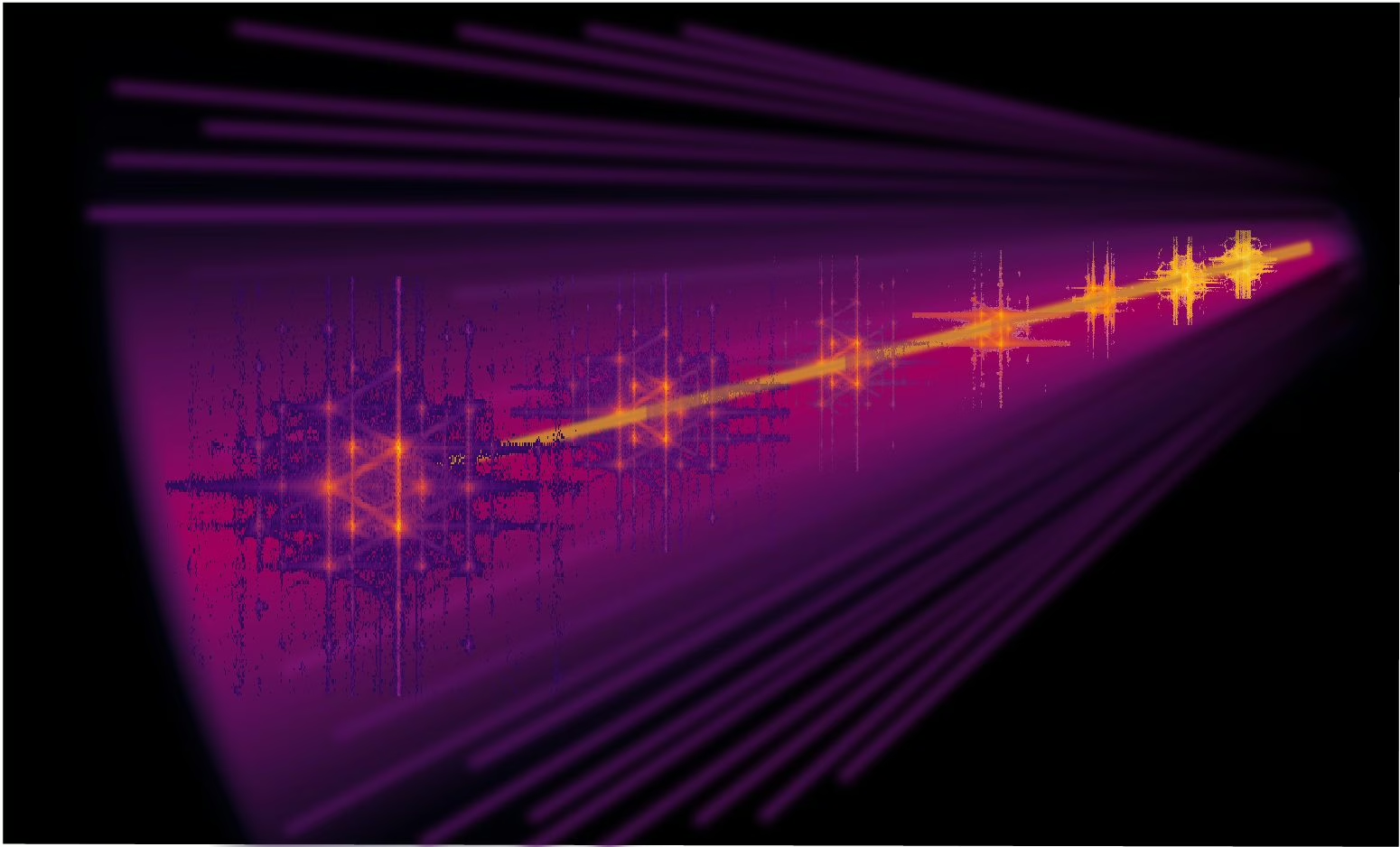
Quantifying topological protection of light on a chip
Photonic topological insulators are currently at the forefront of on-chip photonic research due to their potential for loss-free information transport. Realized in photonic crystals, they enable robust propagation of optical states along domain walls. But how robust is robust? In order to answer this, researchers from AMOLF and TU Delft quantified photonic edge state transport using phase-resolved near-field optical microscopy. The findings provide a crucial step towards error-free integrated photonic quantum networks. The results were published in the journal Light Science & Applications.
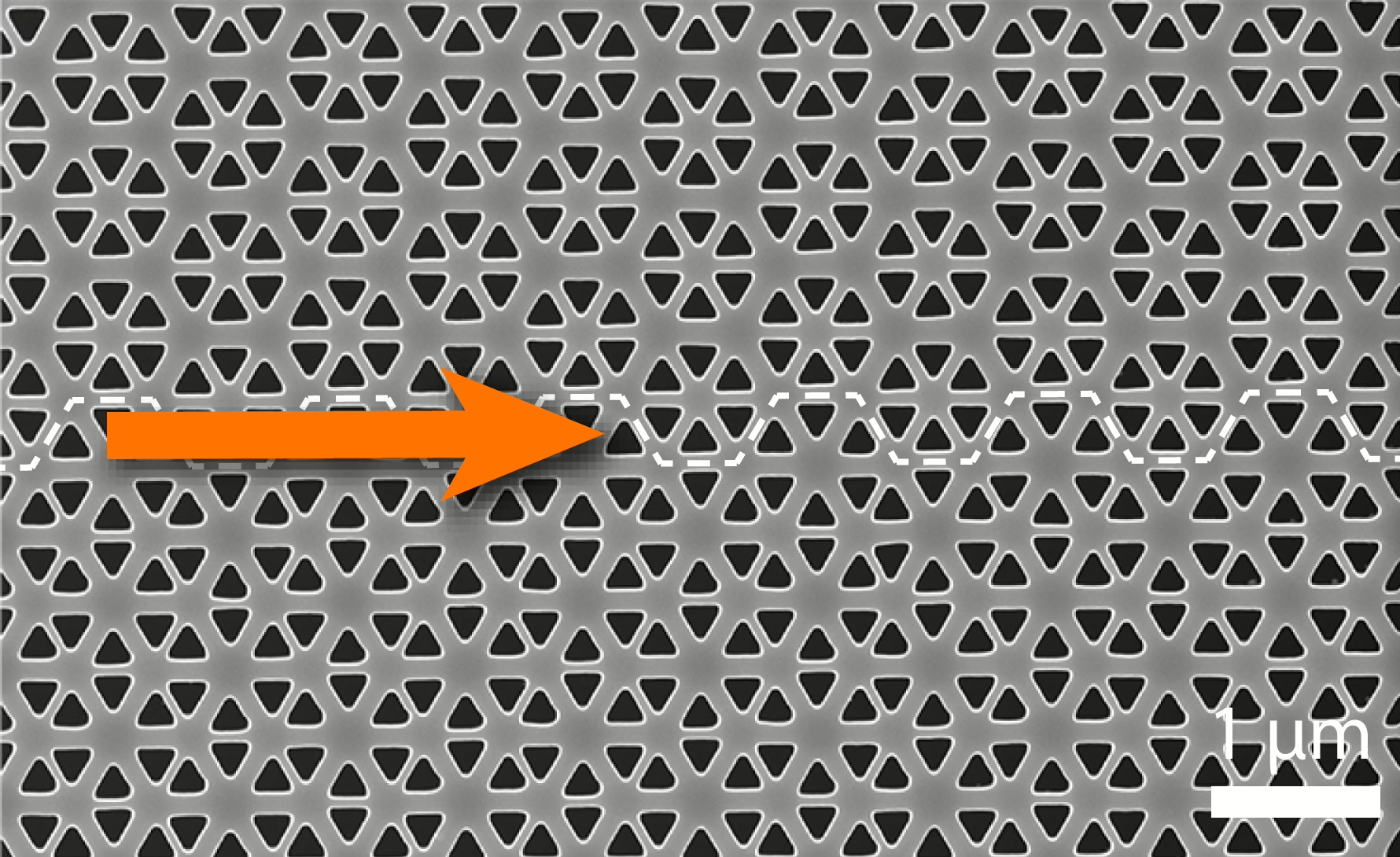
Topology protects light propagation in photonic crystal
Researchers of AMOLF and TU Delft have seen light propagate in a special material without it suffering from reflections. The material, a photonic crystal, consists of two parts that each have a slightly different pattern of perforations. Light can propagate along the boundary between these two parts in a special way: it is ‘topologically protected’ and, therefore, does not bounce back at imperfections. Even when the boundary forms a sharp corner, the light follows it without a problem. “For the first time, we have seen these fascinating light waves move at the technologically relevant scale of nanophotonics,” says Ewold Verhagen, group leader at AMOLF. The results are published on March 6th in the scientific journal Science Advances.
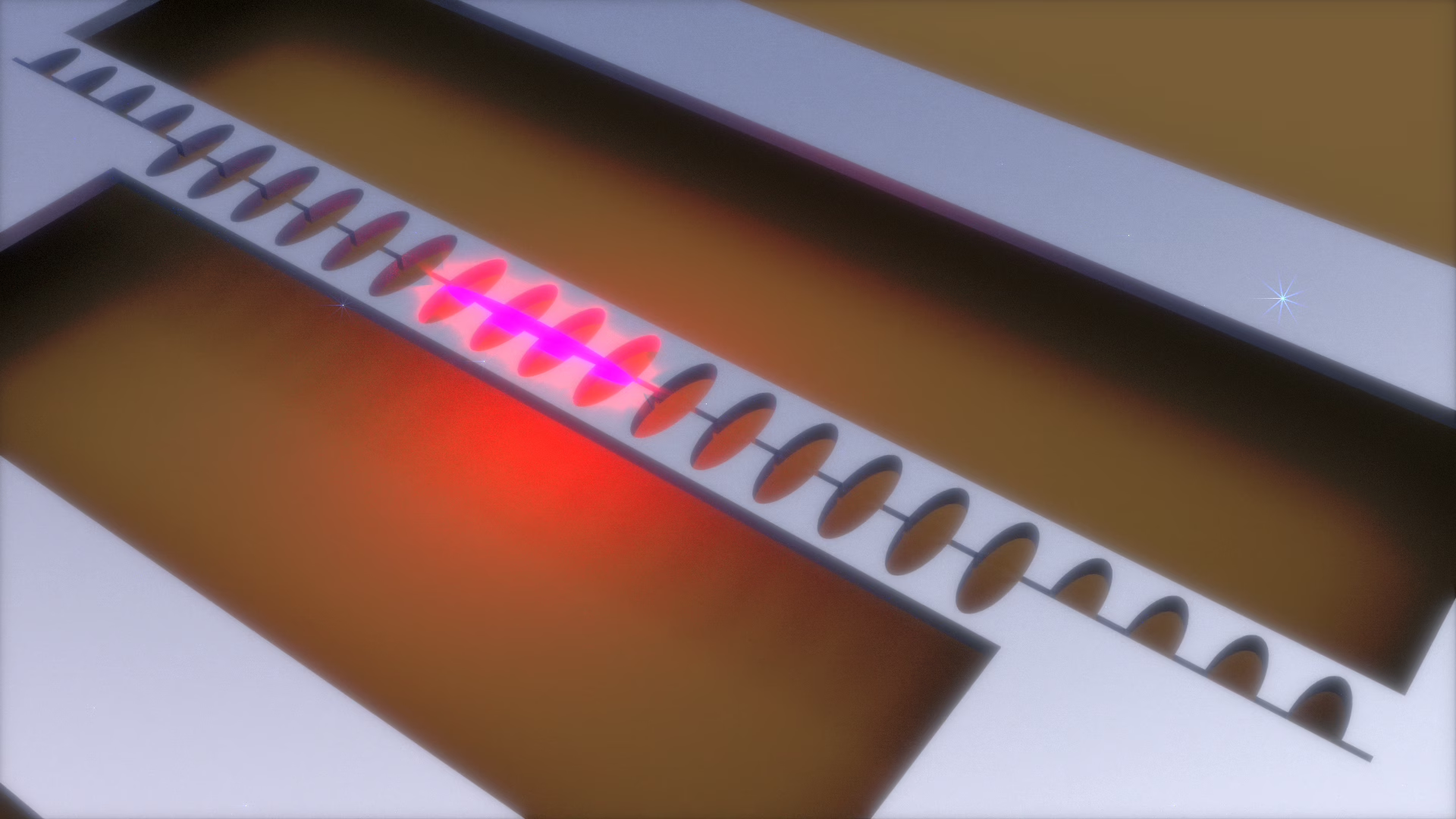
Vibrations on a chip feel a magnetic field
AMOLF physicists have made mechanical vibrations on a chip behave as if they were electrical currents flowing in a magnetic field. Because of their charge, electrons are influenced by magnetic fields, which curve their trajectories. Sound waves or more precisely the propagating mechanical vibrations don’t feel a magnetic field, because they don’t carry charge. By illuminating strings with laser light the researchers have found a way to make mechanical vibrations hop from one nanoscale string to another. Thus, these vibrations behave like electrons in a magnetic field. This unlocks new ways to manipulate sound waves and the information they can carry on chips. They publish their findings in Nature Nanotechnology on 3 February 2020.
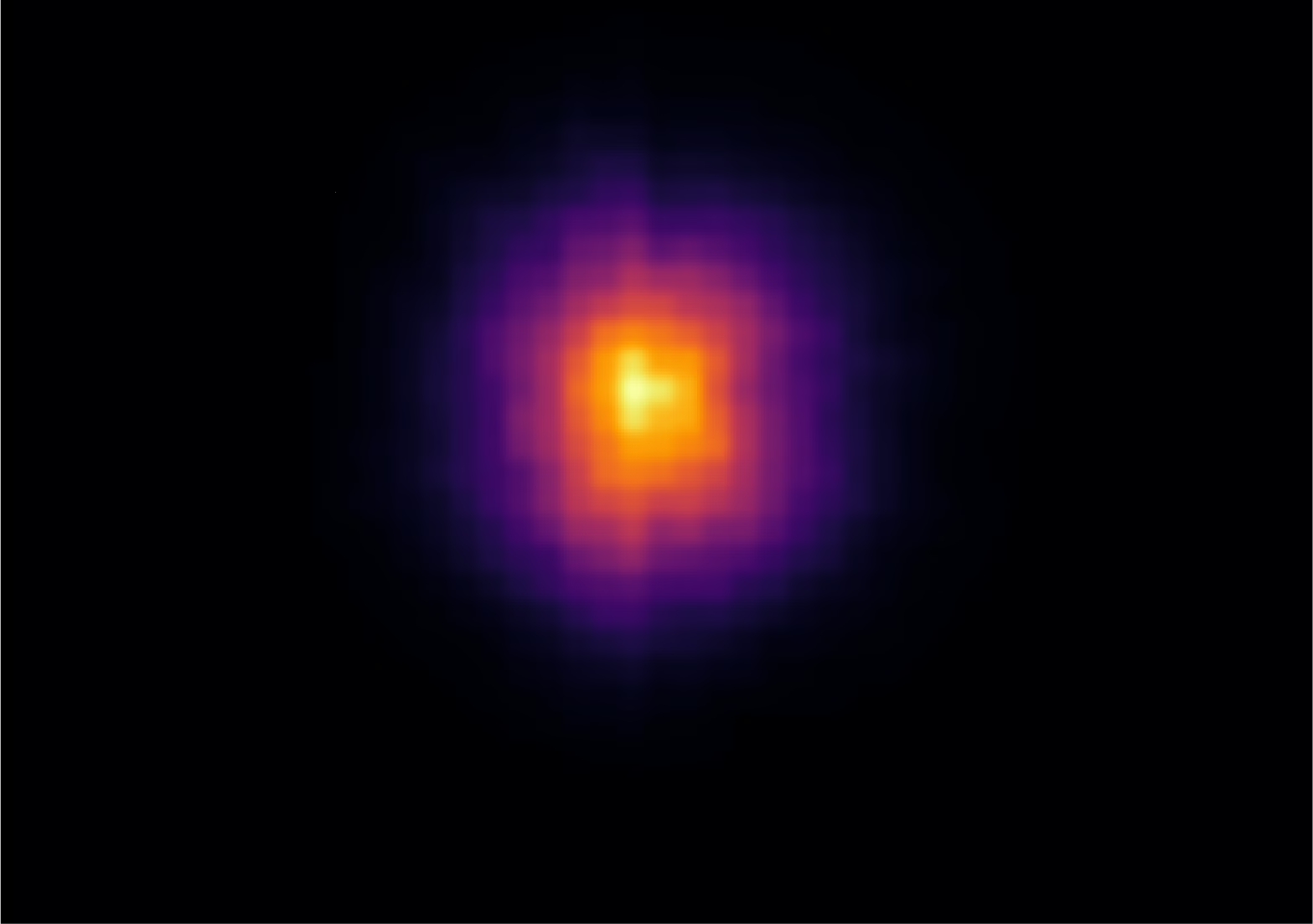
Snapshots freezing a nanoswing : Accurate position measurement overcomes thermal fluctuations
Physicists at AMOLF have managed to cool a swinging nanosized string to near-zero temperature without using external refrigeration. In their experiment, the cooling is an intrinsic result of the ‘snapshot’ position measurement they did on a specially designed nanostructure. The snapshot method, developed in AMOLF’s Photonic Forces group, offers opportunities for new applications in quantum sensing with unprecedented sensitivity.
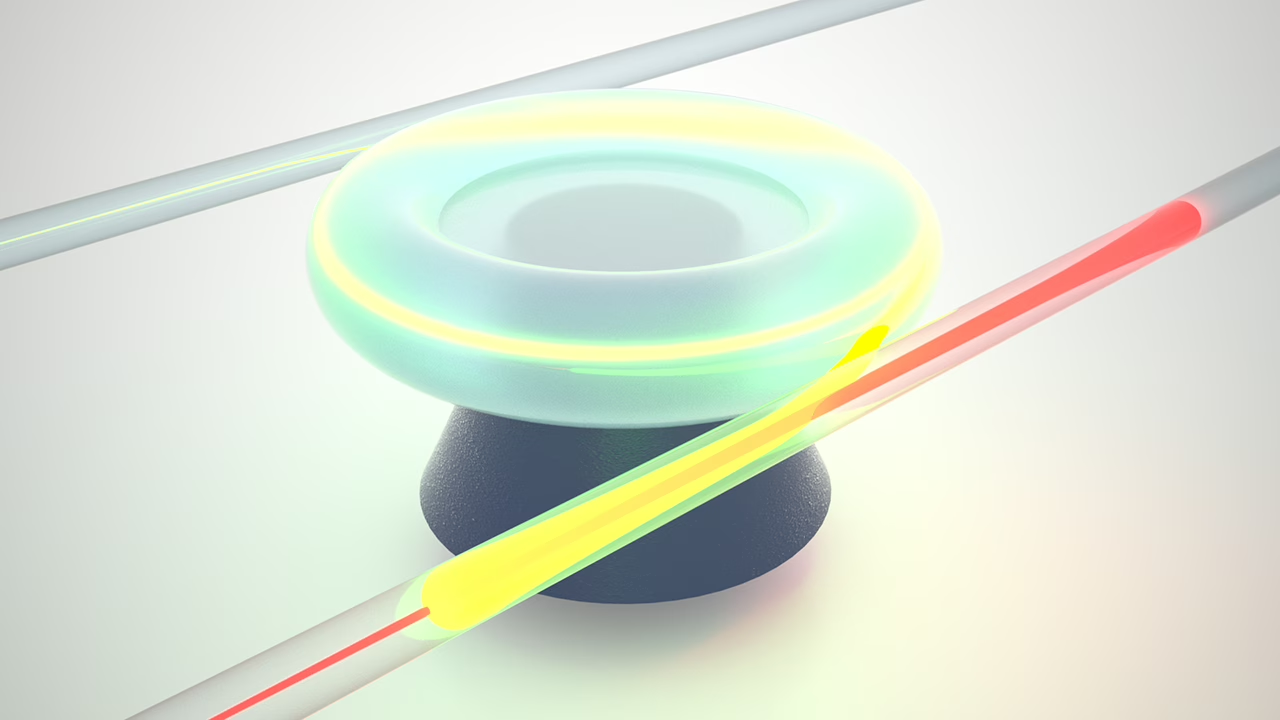
A Microscopic Roundabout for Light
AMOLF develops a magnet-free optical circulator Circulators are important components in communication technology. Their unique way of routing light usually requires centimeter-sized magnets, which are difficult to miniaturize for use on optical chips. Researchers at AMOLF and the University of Texas have circumvented this problem with a vibrating glass ring that interacts with light. They thus created a microscale circulator that directionally routes light on an optical chip without using magnets. The researchers publish their work in Nature Communications on 4 May 2018.
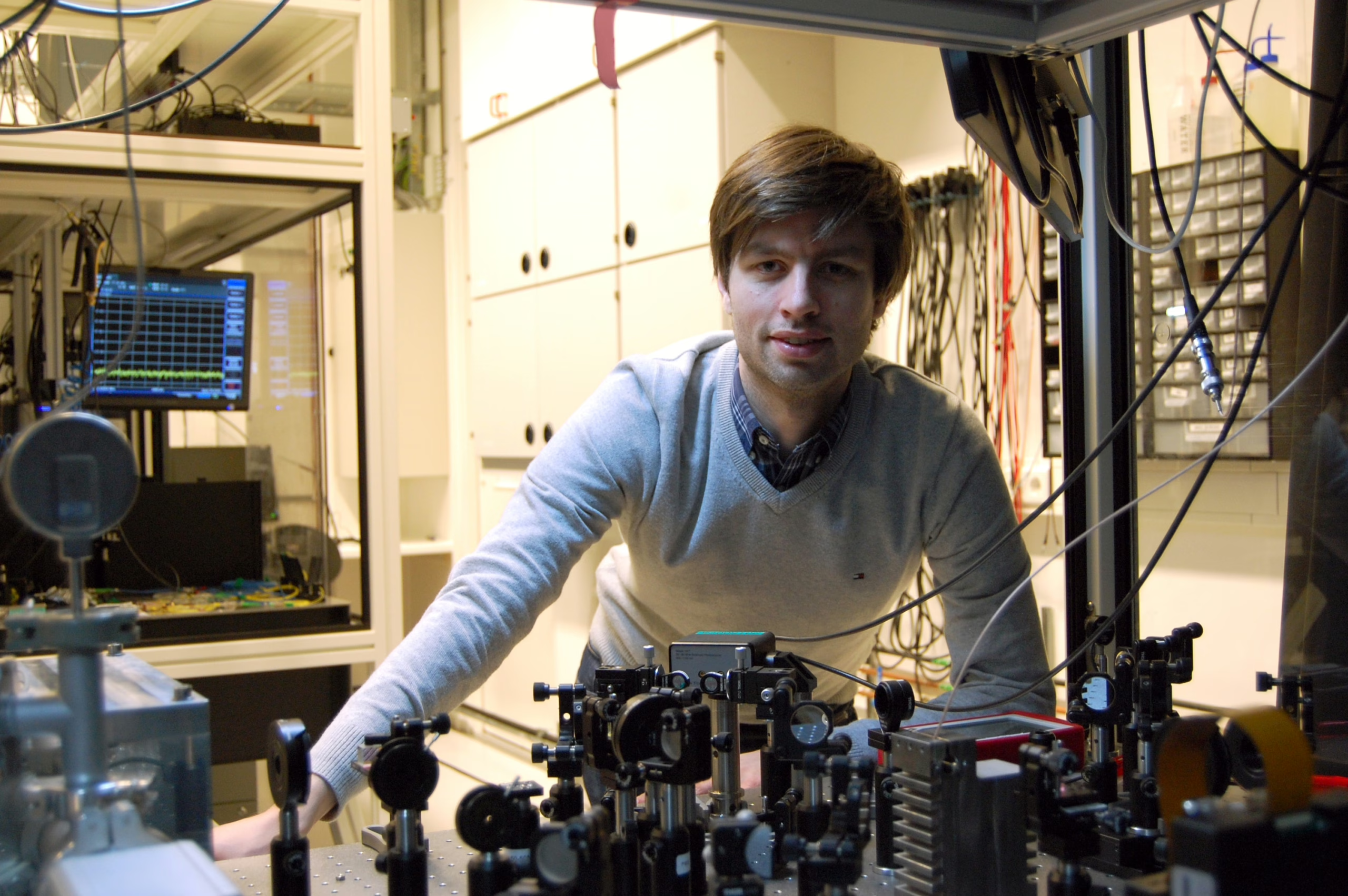
ERC Starting Grant for Ewold Verhagen
AMOLF group leader Ewold Verhagen (Photonic Forces) has received a Starting Grant of 1.5 million euros from the European Research Council (ERC). The ERC uses the Starting Grants to support talented scientists in the early stages of their career in pursuing ground-breaking projects for a duration of five years.

Ewold Verhagen appointed professor at Eindhoven University of Technology
On July 1st, Ewold Verhagen was appointed professor of Nano-optomechanics at Eindhoven University of Technology (TU/e). At TU/e Verhagen is part of the research group Photonics and Semiconductor Nanophysics (PSN) within the department of Applied Physics. Verhagen will continue working at AMOLF as group leader of the Photonic Forces group. AMOLF and TU/e expect the appointment to further strengthen their research collaboration.