
News & updates
Latest developments from our institute
Stay informed about new research results, awards, events, and collaborations across our scientific community.
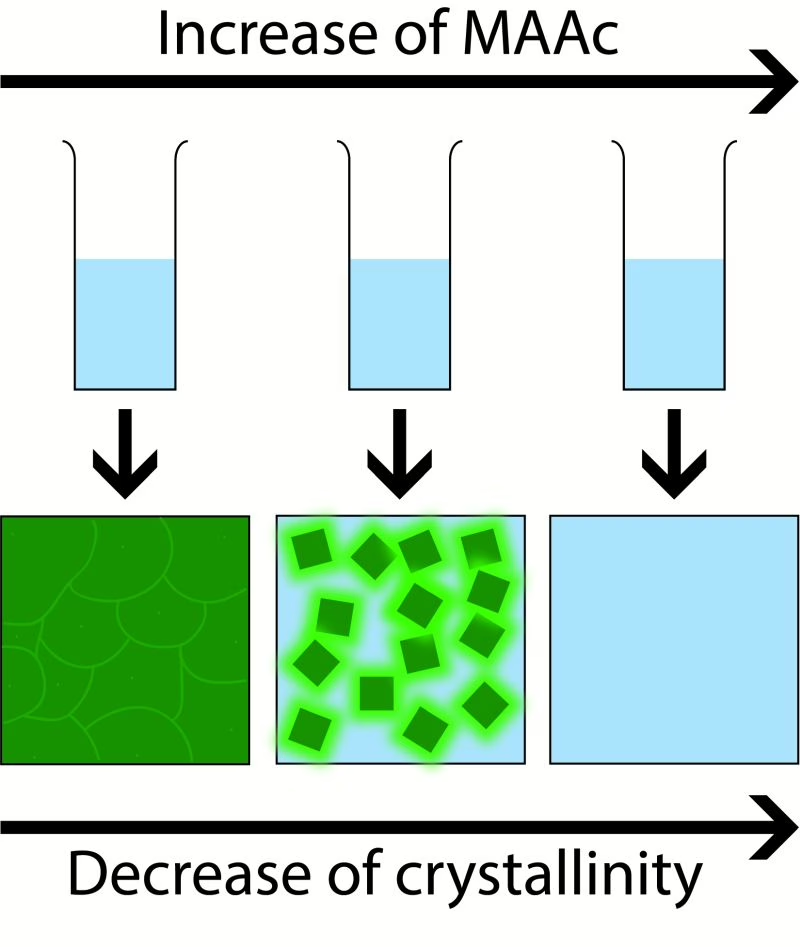
Mystery of amorphous perovskite solved
AMOLF researchers Erik Garnett, Susan Rigter, and colleagues are the first to have irrefutably demonstrated that amorphous perovskite exists. The material can significantly increase the efficiency of solar cells produced from perovskite. The research is published today online in the journal Advanced Functional Materials.

MRS Fall Meeting prizes for Susan Rigter
At the 2020 Virtual MRS Fall Meeting, PhD student Susan Rigter has won two awards with her poster Amorphous Halide Perovskite Thin Films. First, the Materials Research Society announced that she had won the Best Poster Award in the symposium, followed by the news that she was also shortlisted for best poster at the overall conference sponsored by ACS Energy Letters. Like a cherry on the cake, Rigter also received this second prize for her poster.

Veni grants for Eline Hutter and Sven Askes
The Dutch Research Council (NWO) awarded Veni grants to AMOLF postdocs Eline Hutter (Hybrid Solar Cells group) and Sven Askes (Nanoscale Solar Cells group).

Phys.org: Engineers design nanostructured diamond metalens for compact quantum technologies
The practical challenge of collecting information from a single atom deep inside a crystal is a daunting one, however. Penn Engineers addressed this problem in a recent study in which they devised a way to pattern the surface of a diamond that makes it easier to collect light from the defects inside. Called a metalens, this surface structure contains nanoscale features that bend and focus the light emitted by the defects, despite being effectively flat. Source: Phys.org
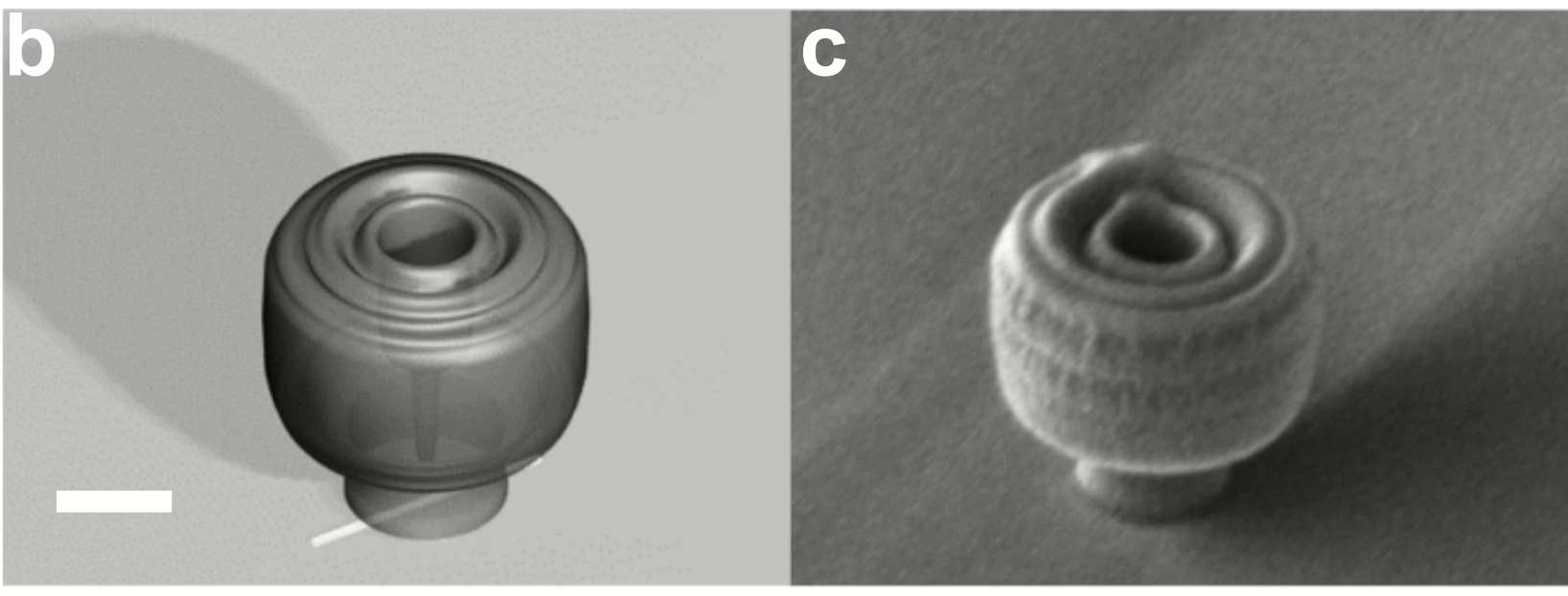
Directivity to improve optical devices
A team of researchers from AMOLF, Western University (Canada), and the University of Texas (USA) recently demonstrated the use of algorithmic design to create a new type of nanophotonic structure. This is good news for researchers in optical quantum computing and photovoltaics, because the structure is able to greatly improve the directivity of nanoscale emitters (in light emitting diodes, or single photon sources) and absorbers (in solar cells or photodetectors). The researchers publish their findings online in Nature Communications on November 9th, 2018.
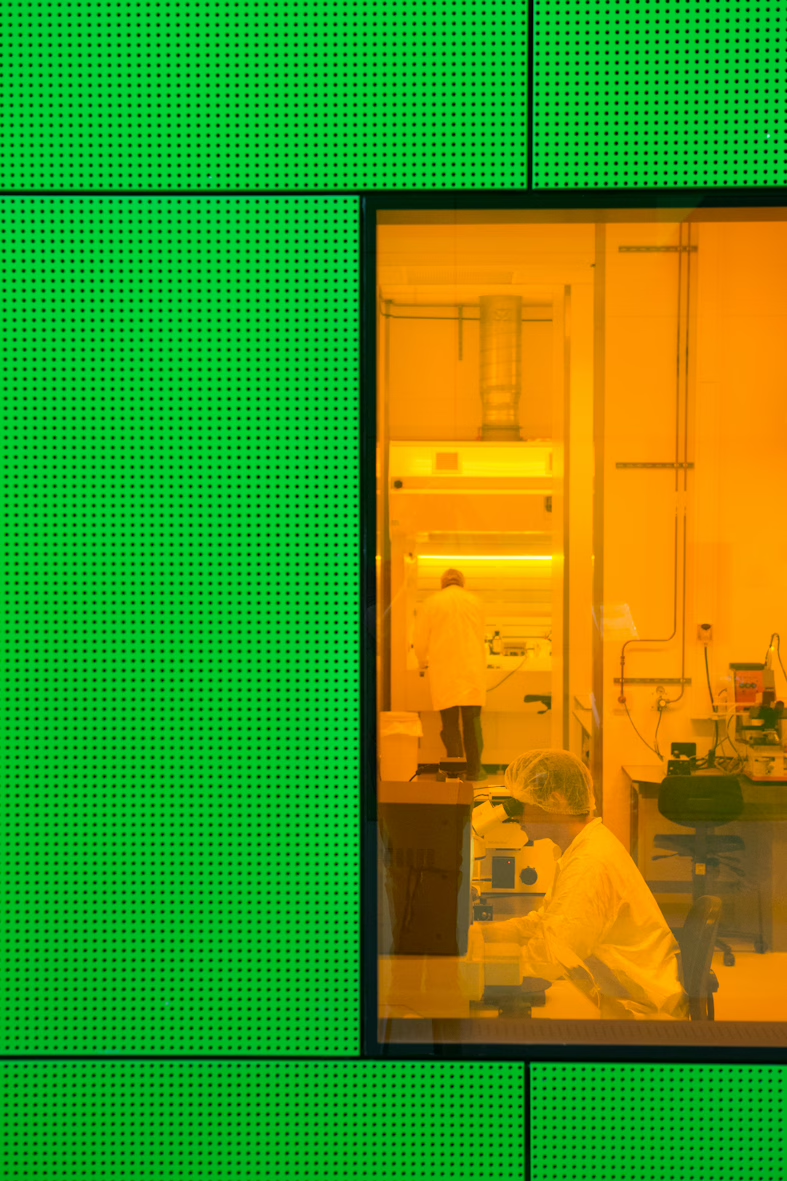
Nanoscale solar cells benefit from transistor technique
An international team of scientists has investigated a new type of charge carrier-selective contact for nanowire solar cells based on the surface-gate effect. Those contacts make use of an effect that is ubiquitous in every computer chip. In a field-effect transistor, a surface gate modulates the conductivity of the underlying semiconductor, allowing control over the current flow between the source and drain terminals. Now, the scientists are able to translate this concept to nanowire solar cells by making use of a surface layer to control the conductivity of the nanowire next to a metal point contact. The researchers from AMOLF, the University of Oregon, Eindhoven University of Technology and Delft University of Technology published their results on August 14th, 2018 in the journal Nature Communications.

Researchers combine spintronics and nanophotonics in 2D material
Spintronics in materials of just a few atoms thick is an emerging field in which the ‘spin’ of electrons is used to process data, rather than the charge. Unfortunately, the spin only lasts for a very short time, making it (as yet) difficult to exploit in electronics. Researchers from the Kavli Institute of Nanoscience at TU Delft and the AMOLF group Nanoscale Solar Cells have now found a way to convert the spin information into a predictable light signal at room temperature. The discovery brings the worlds of spintronics and nanophotonics closer together and might lead to the development of an energy-efficient way of processing data, in data centres, for example. The researchers have given an account of their results in Science
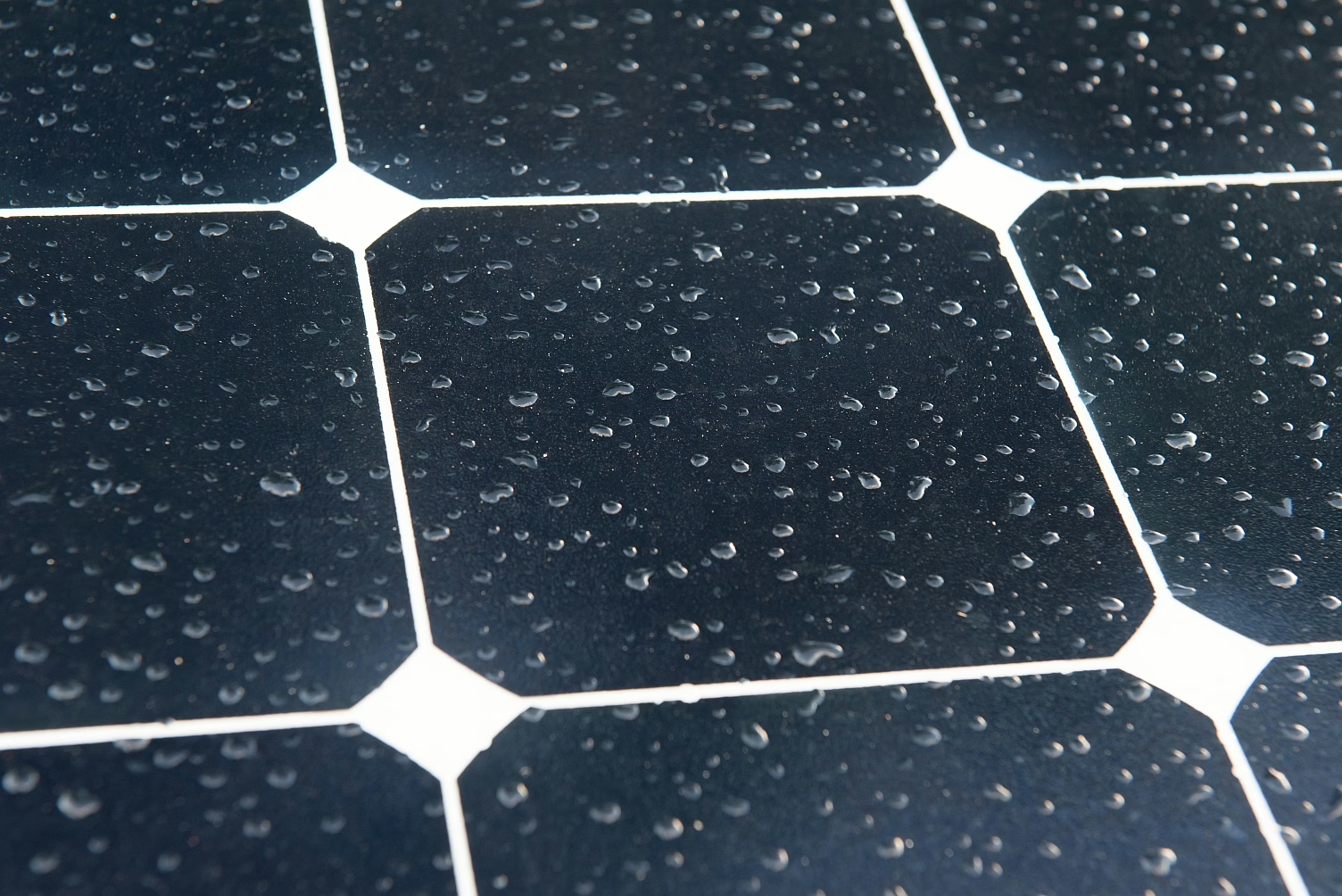
Three AMOLF projects in NWO program Materials for Sustainability
AMOLF participates in three new research projects that will start with funding through NWO’s program Materials for Sustainability (Mat4Sus). To enable a smooth transition from fossil fuels to a more sustainable source of energy we need a wide range of materials. The AMOLF groups contribute to the energy transition by enlarging the efficiency of solar cells and developing thinner foils and colored panels.