
News & updates
Latest developments from our institute
Stay informed about new research results, awards, events, and collaborations across our scientific community.
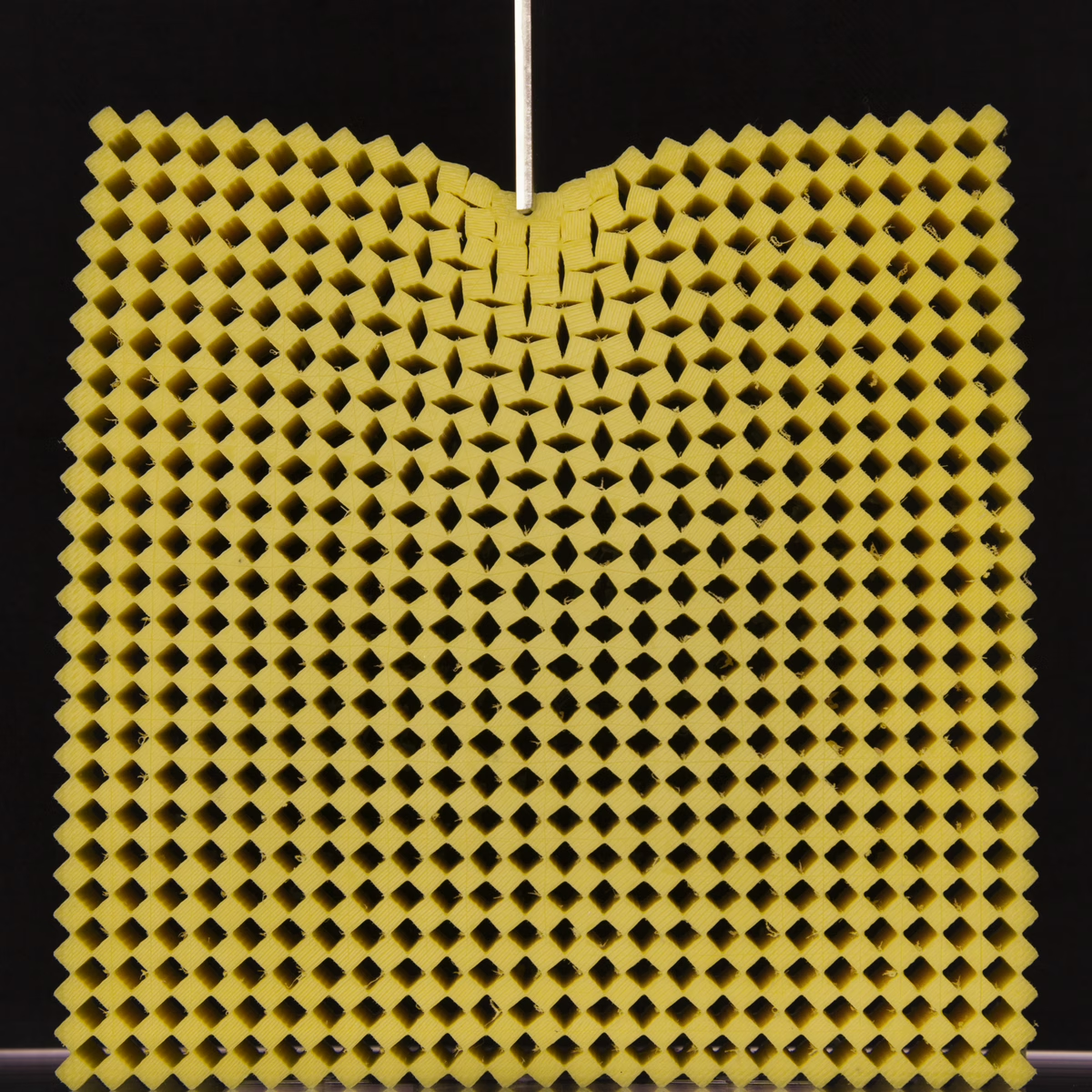
‘Bigger is different’ – the unusual physics of mechanical metamaterials exposed
Mechanical metamaterials, which exhibit unusual properties such as shape morphing and programmability, have been found to display further surprising features. When the materials are a step in size larger, new rules seem to apply. This was discovered by AMOLF researchers and collaborators from Leiden University and the University of Amsterdam. Their findings are published in Nature Physics on 25 September.

The reason why small balls on a hot plate bounce and scream
Water droplets float in a hot pan because of the so-called Leidenfrost effect. Now physicists from AMOLF and Leiden University have discovered a variation: the Elastic Leidenfrost effect. It explains why so called hydrogel balls jump around on a hot plate making high pitched sounds. The explanation appears in Nature Physics on July 24.
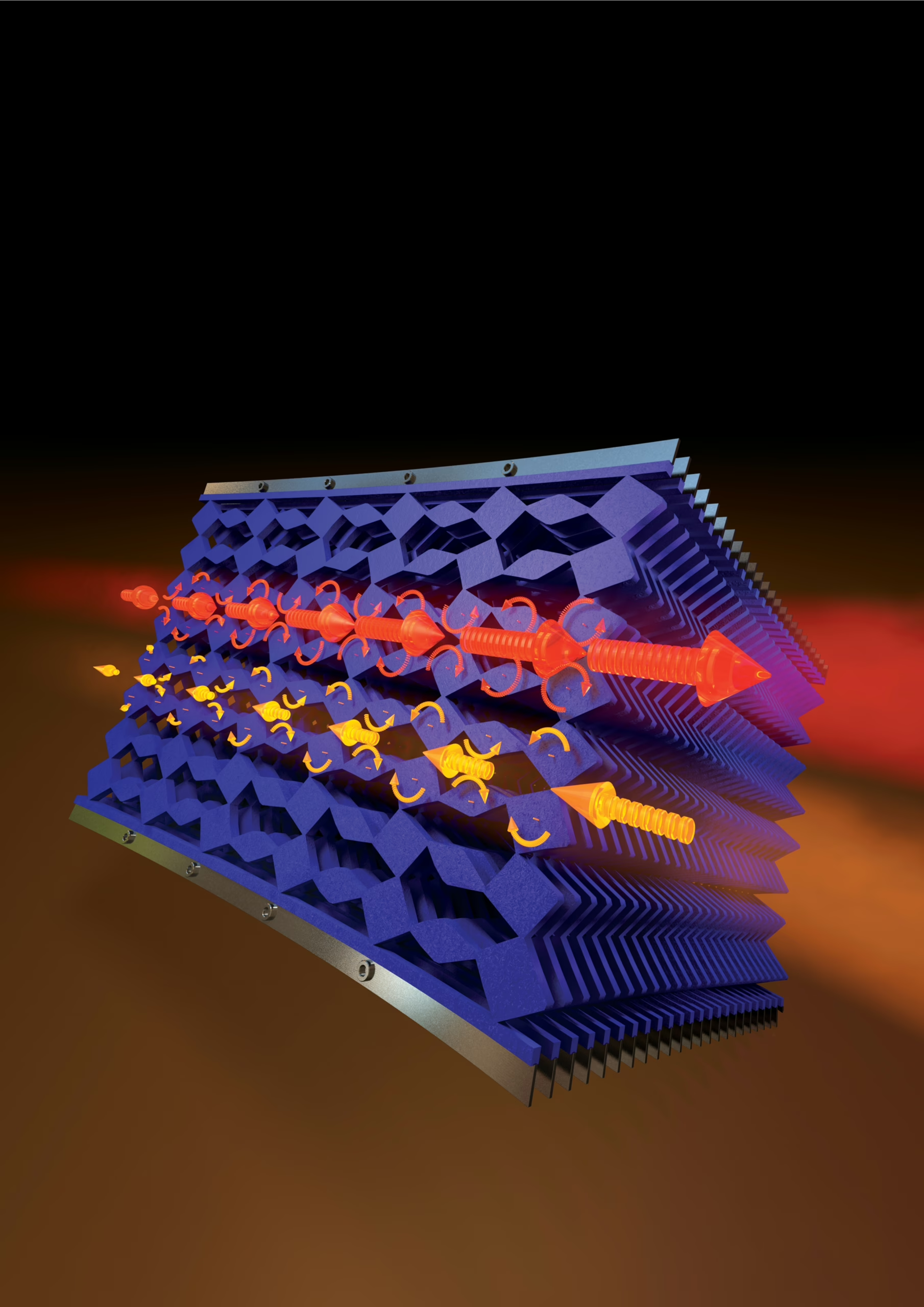
One-way traffic for motion in new material
Scientists have developed a material that breaks one of the fundamental principles governing many physical systems. Ordinary materials transmit external forces equally, no matter where the pressure comes from. The newly developed material breaks this rule and could potentially be of interest in soft-robotics or shock absorption related applications. The research team from AMOLF, Leiden University and the University of Texas at Austin published their findings on 13 February in Nature.
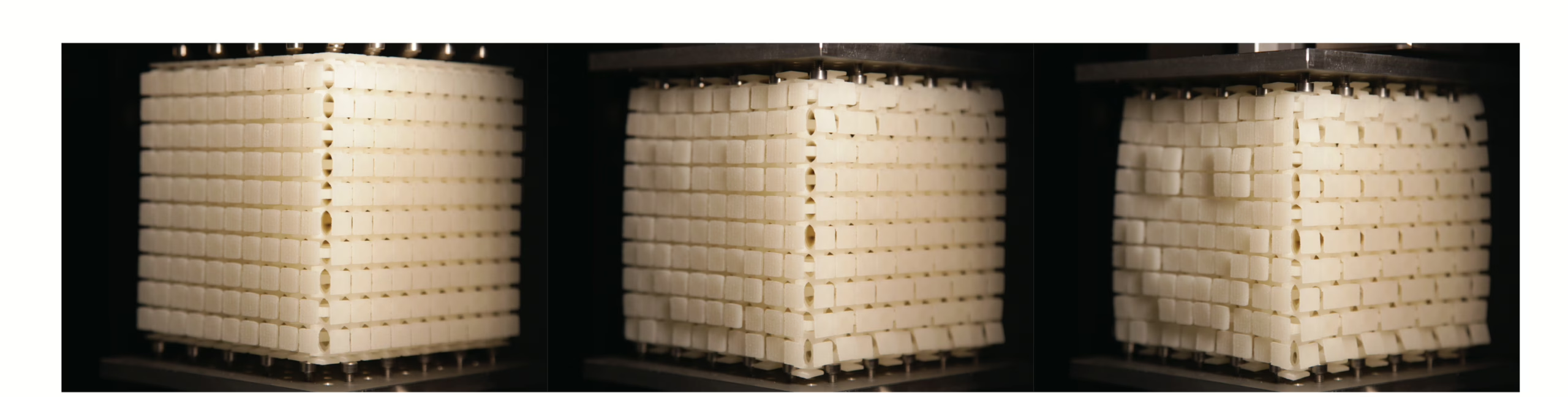
Building with flexible blocks
On an apparently normal cube a pattern of hollows and bulges appears when the cube is compressed. Physicists from FOM Institute AMOLF and Leiden University together with colleagues from Tel Aviv University have developed a method to design such three-dimensional structures and to construct these using simple building blocks. This paves the way for the use of ‘machine materials’ in, for example, prostheses and wearable technology. The researchers published their findings on 28 July in an article in Nature.

Veni grants for Scott Waitukaitus & Andrew Musser
The Netherlands Organisation for Scientific Research (NWO) awarded Veni grants to the AMOLF researchers Scott Waitukaitus and Andrew Musser. In total 158 researchers received a Veni grant with a maximum of 250.000 euro.
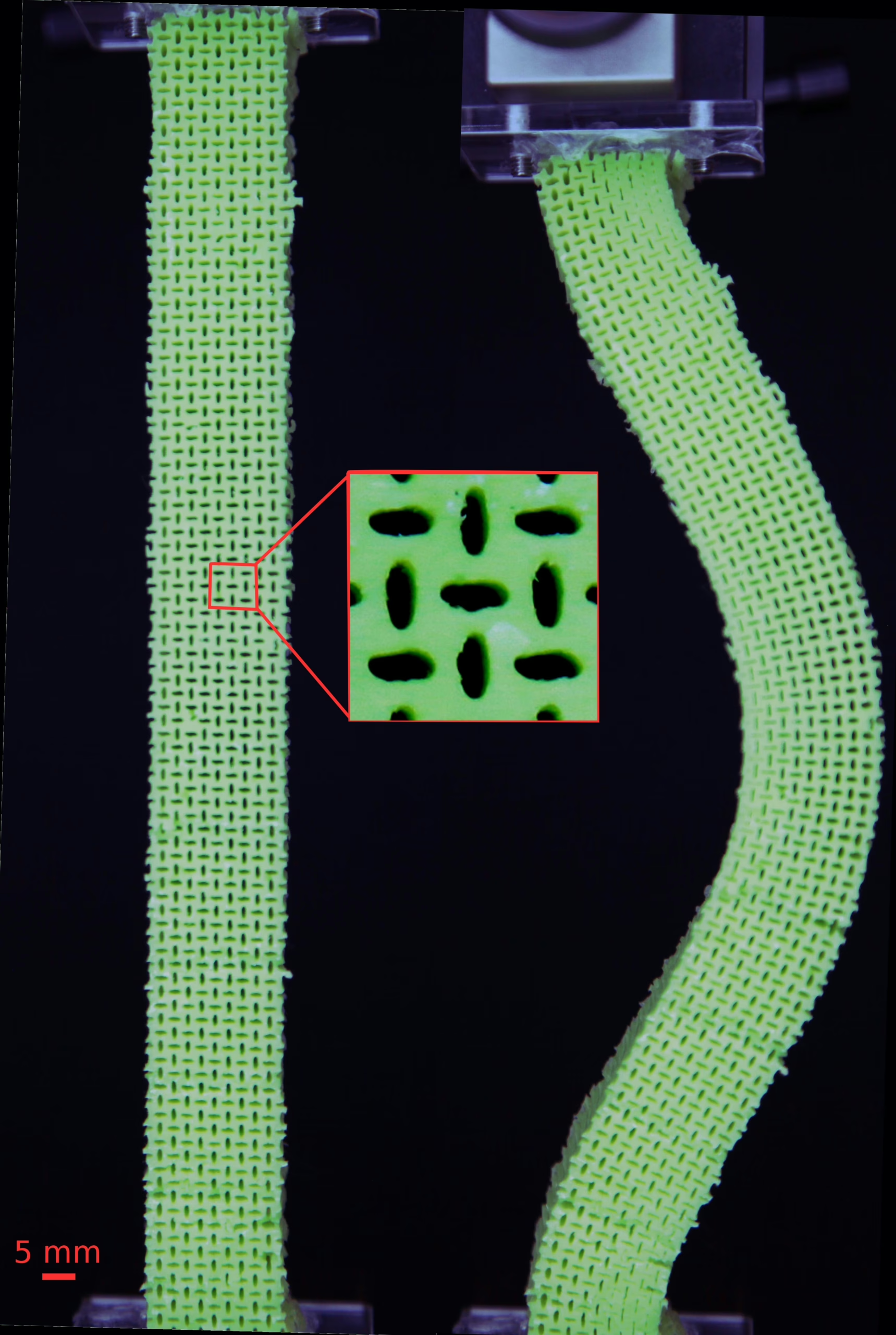
Metamaterial undermines 250-year-old construction principles
Researchers from the Mechanical Metamaterials group have demonstrated how a rubber beam subjected to less pressure bends faster.This behaviour defies our expectations and appears to undermine the centuries-old bending laws. The beam is made from a metamaterial, which gives it the name metabeam. Metamaterials have special properties that do not occur in nature. By providing the metabeam with a carefully chosen pattern of small holes, the researchers managed to cause the strange behaviour. They published their work, a collaboration with Leiden Insitute of Physics and Harvard University, on 21 July online in Physical Review Letters.

Veni grant for Corentin Coulais
The Netherlands Organisation for Scientific Research (NWO) awarded a Veni grant to Corentin Coulais for his proposal on Aperiodic Mechanical Metamaterials. Coulais is postdoc in the group Mechanical Metamaterials. In total, 161 researchers receive a Veni grant with a maximum of 250.000 euro.
Designer Matter Workshop
From June 22nd until June 24th the new research field of Designer Matter organized a workshop at AMOLF bringing together exciting work in the physics, engineering and design communities.