
News & updates
Latest developments from our institute
Stay informed about new research results, awards, events, and collaborations across our scientific community.
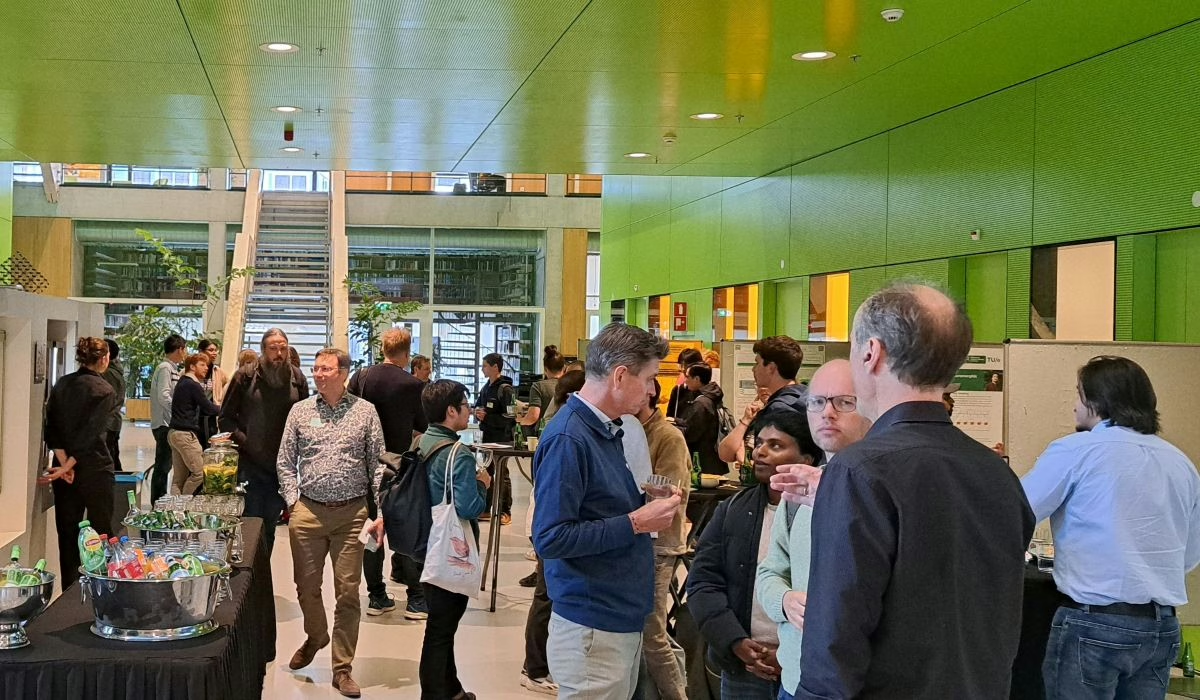
Infomatter symposium: taking advantage of information in a system
On Thursday, May 22nd, AMOLF organized the Infomatter Symposium to discuss exciting developments in information processing — ranging from biochemical to mechanical and optical systems. What these systems share is that they do not rely on conventional computers. This is a significant advantage, given that the energy cost of computing is rising much faster than that of energy production.
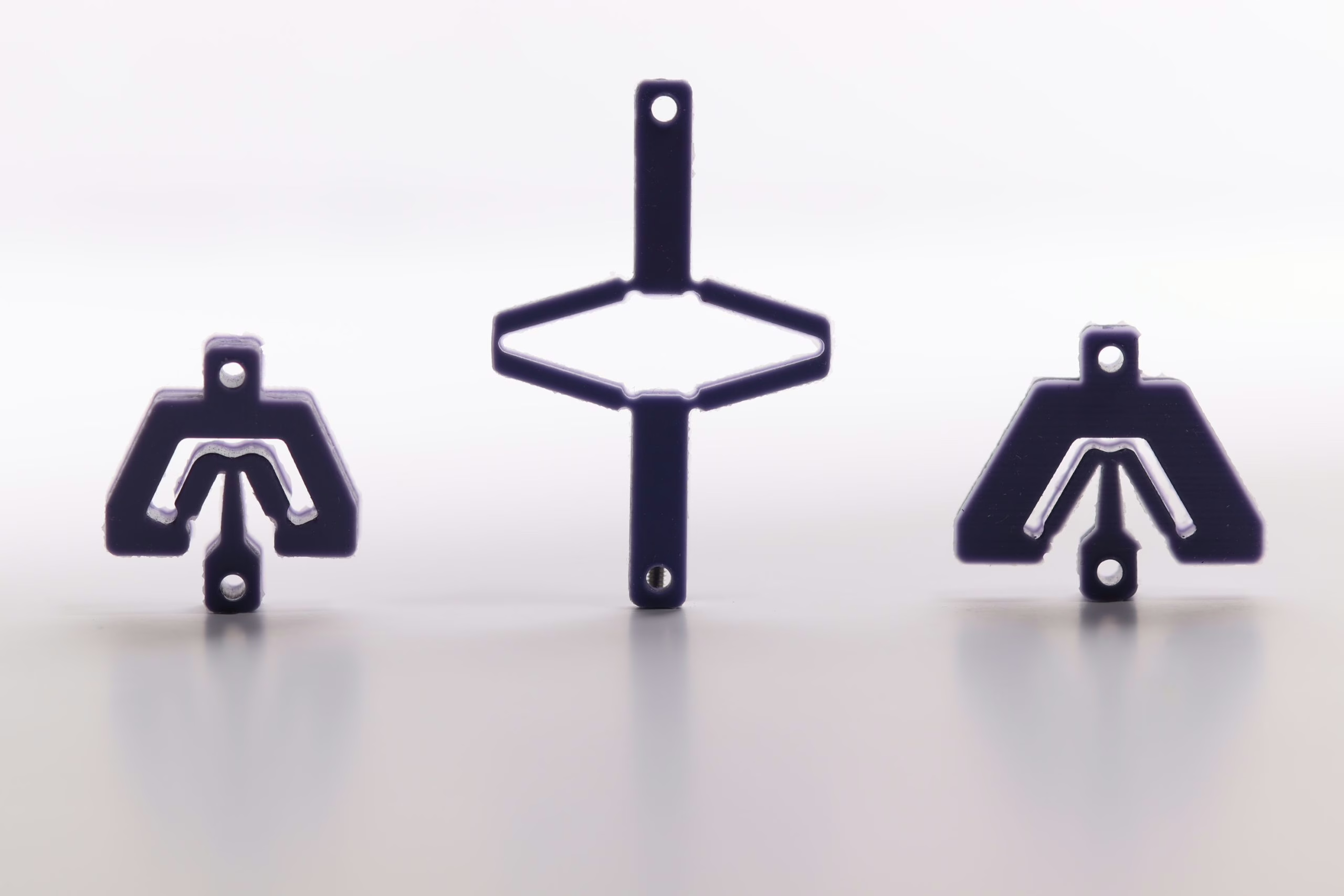
These structures shrink when pulled
Discovery unlocks new exotic properties for soft robotics, smart devices, and more. When you pull something—like a rubber band—you expect it to get longer. But what if it did the…

Computing with rubber
Without electronics carrying out computational tasks our daily lives would look very different. Devices such as elevators, vending machines, turnstiles, washing machines and even traffic lights use a simple form of electronic computing to switch from state to state. But, what if power supply is not available to operate these devices? A research team led by Martin van Hecke from Leiden University and AMOLF has now demonstrated how smart rubber structures can carry out such computational tasks. “We now know how to design simple materials so they can process information.” The study was published in the journal PNAS on May 20th.
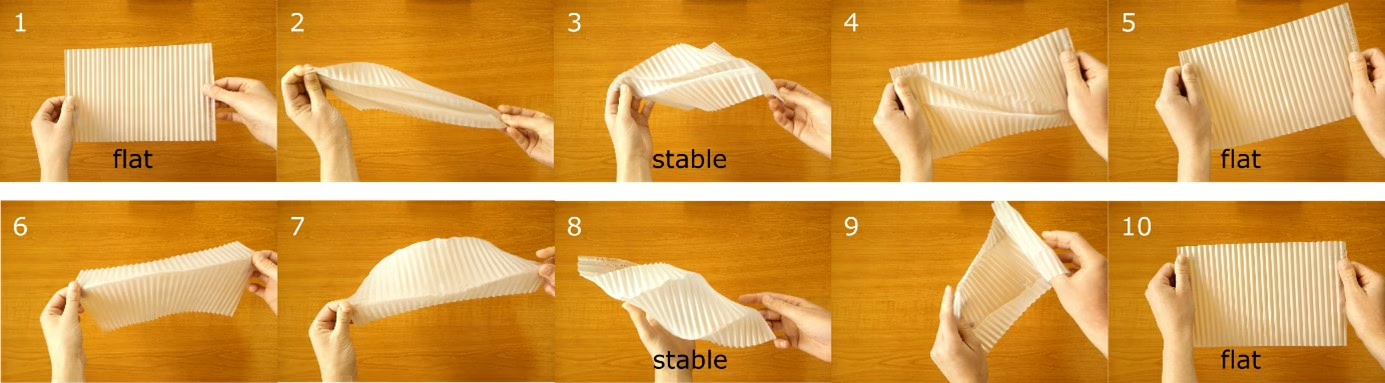
Corrugated plastic unveils a new design principle for programmable materials
Corrugated plastic turns out to be exemplary of a new class of ‘multistable’ metamaterials that can reversibly change shape. This insight can lead to new applications, from robots to medical devices. Physicists Anne Meeussen (previously AMOLF/Leiden University, now Harvard University) and Martin van Hecke (AMOLF/Leiden University) describe these materials in a Nature publication that is published on 20 September 2023.
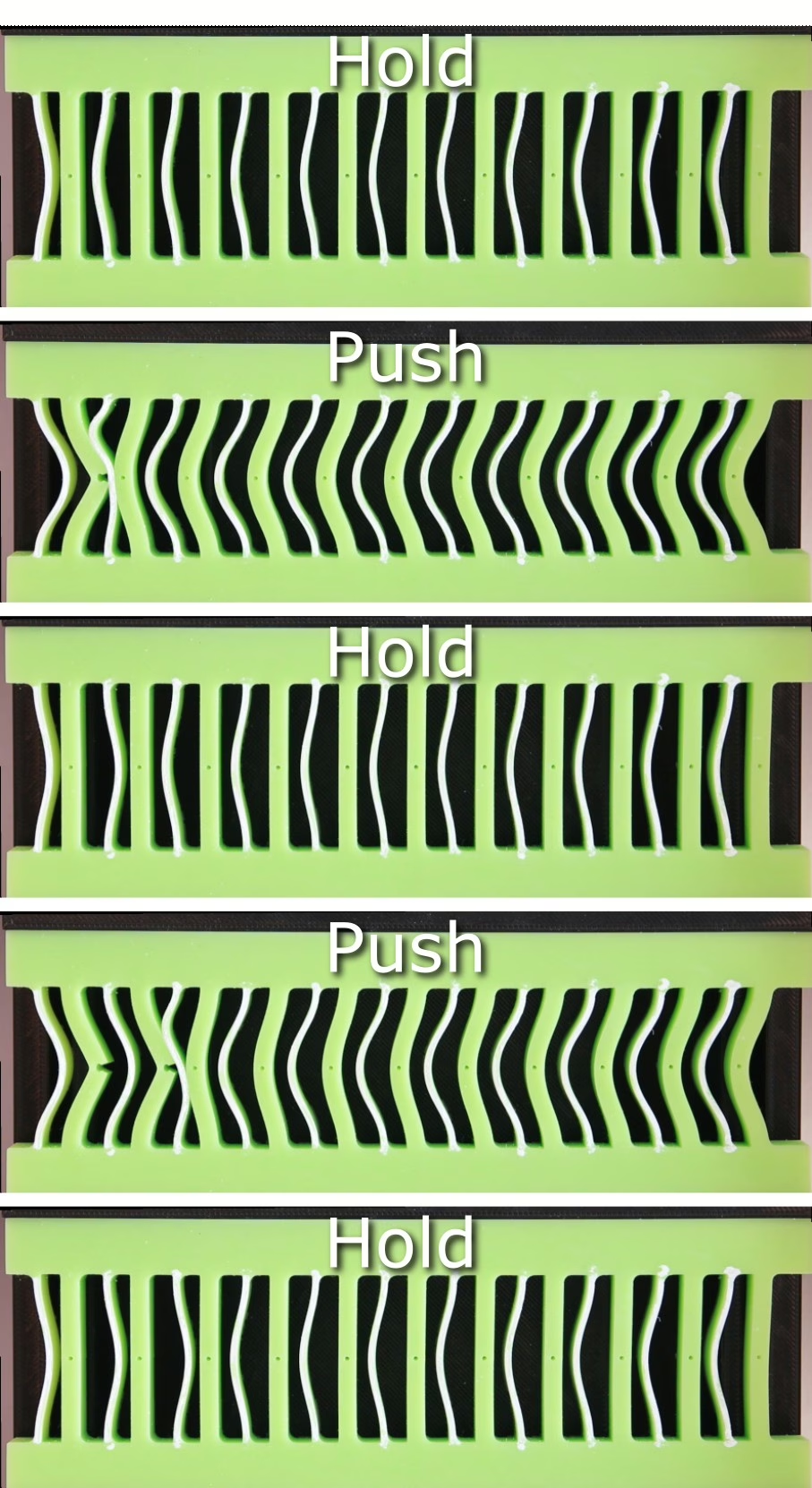
How to make a block of rubber count to ten
A block of rubber that counts to ten and even remembers in which sequence it was compressed. Physicists Martin van Hecke and Lennard Kwakernaak (Leiden and AMOLF Amsterdam) share a fascination for complexity in simple objects. They wrote an article about a counting block of rubber, which they classify as a metamaterial, and published it in the journal Physical Review Letters.
Floppy or not: artificial intelligence predicts properties of complex metamaterials
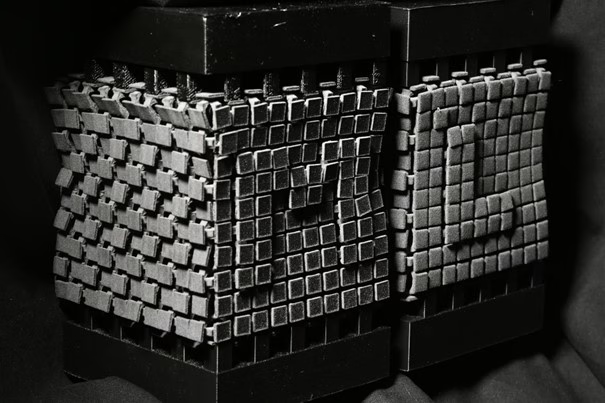
Given a 3D piece of origami, can you flatten it without damaging it? Just by looking at the design, the answer is hard to predict, because each and every fold in the design has to be compatible with the flattening process. This is an example of a combinatorial problem. New research led by the University of Amsterdam and AMOLF has demonstrated that machine learning algorithms can accurately and efficiently answer these kinds of questions. This is expected to give a boost to the artificial intelligence-assisted design of complex and functional (meta)materials.
New puppeteering: streamlined control of material deformation
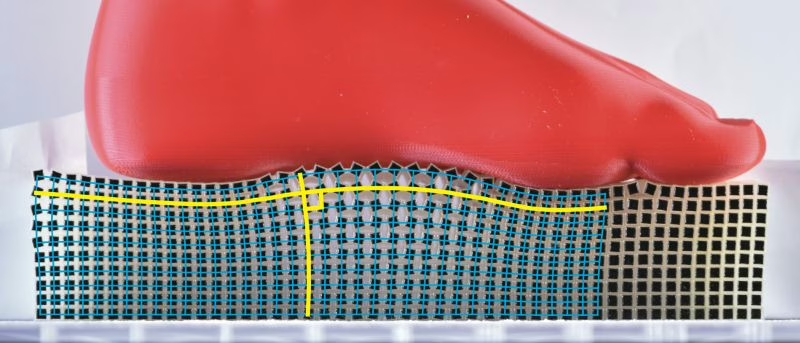
In a new publication in Nature Communications, a team of physicists from Amsterdam, Leiden and Georgia (USA) show how to ‘puppeteer’ lab-designed metamaterials. By only touching these materials from the outside, they are able to predict and perform precise deformations of the whole material.
A computer made of rubber
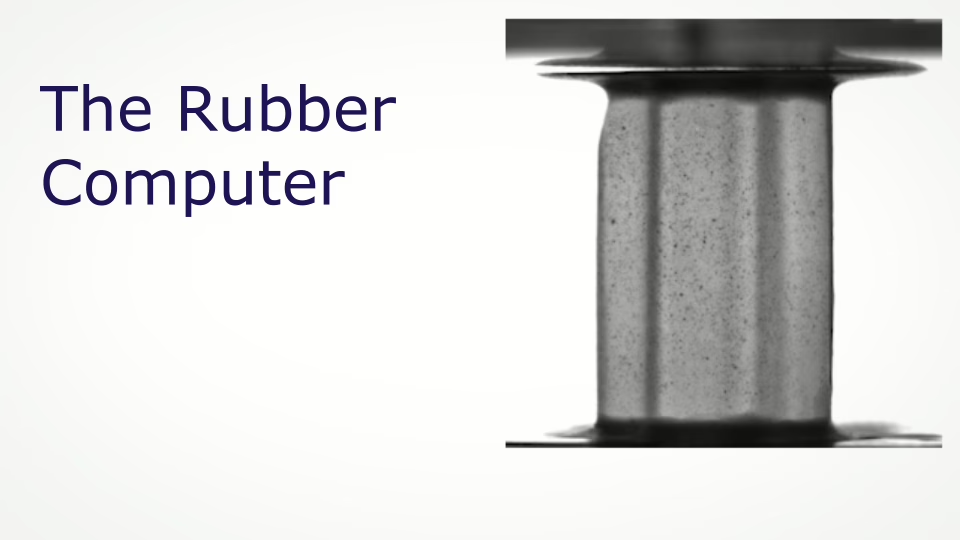
A piece of corrugated rubber can function as a simple computer, displaying memory and dis-playing the ability to count to two. Physicists from Leiden University and AMOLF published about the computing rubber in the journal PNAS. ‘Simple materials can process information, and we want to find the principles behind that.’