What are M cells?
M cells are rare cells found in the gut lining. Changes in the number and activity of these cells are linked to conditions such as inflammation and immune dysfunction. Understanding which signals drive a cell to become an M cell, and when, is therefore crucial, both for understanding these conditions and for developing more effective oral vaccines.
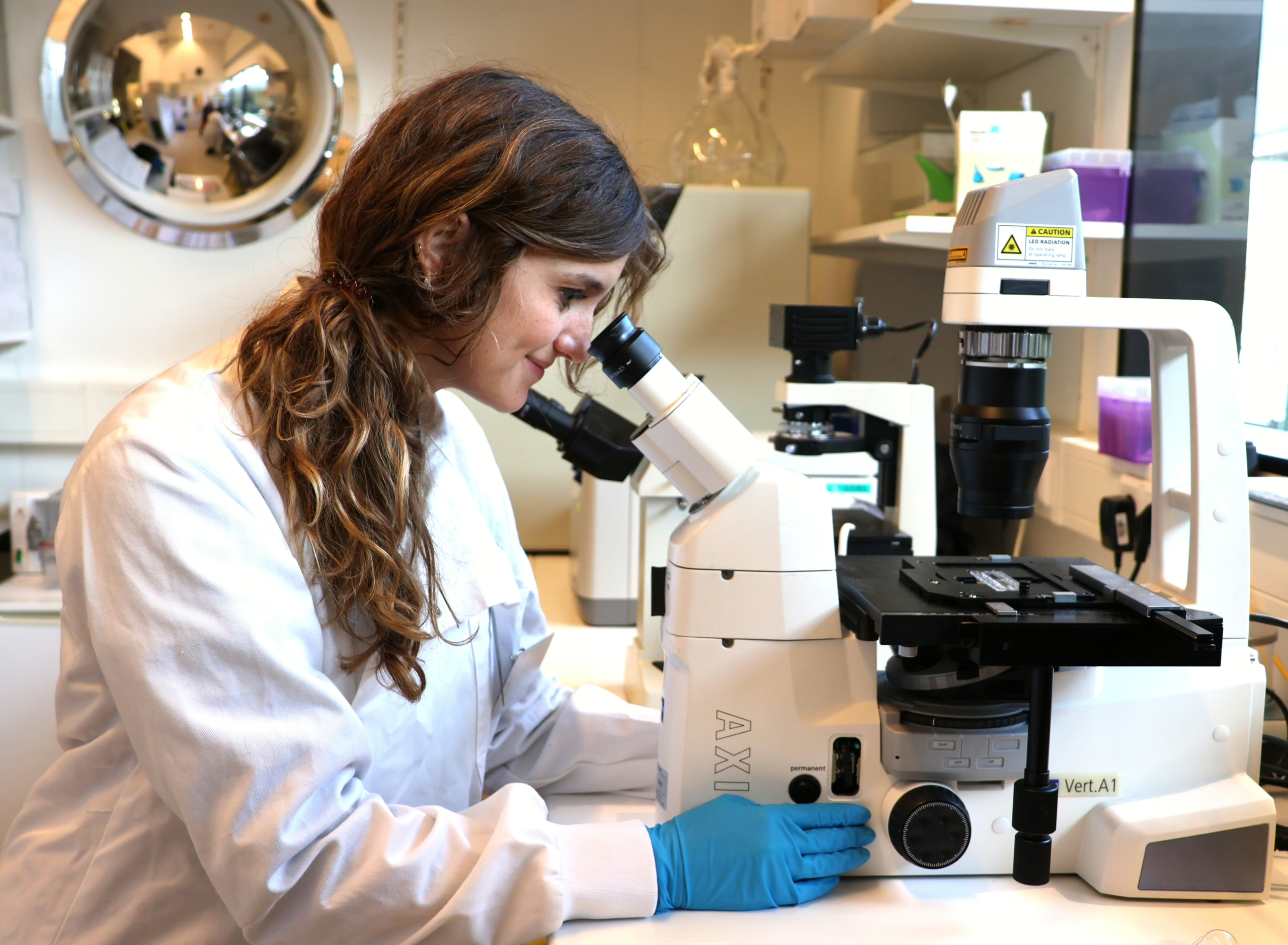
Using mini-guts grown from stem cells (organoids), confocal microscopy, and AI-based cell tracking, Susanna will follow individual cells over several days to reveal how, when, and where these decisions are made.
The project
In current models, the signals that trigger M-cell formation are delivered uniformly to the cells. The new model developed in this project will instead deliver these signals in a precise spatial pattern that mimics how the body controls M-cell formation. For the first time, this will make it possible to study how cells respond to signals in both time and space.
“I am thrilled to take on the challenge of uncovering how our intestine and immune system communicate, by expanding current in vitro models one step further.”.
Off Road program
The project was selected for the Off Road program, which supports bold, out-of-the-box ideas within the field of (bio)medical science and healthcare. Susanna will carry out her work in the research groups Quantitative Developmental Biology (Professor Jeroen van Zon), Biophysics (Professor Sander Tans) and Physics of Cellular Interactions (Dr. Kristina Ganzinger).
Learn more
To find out more about organoid research at AMOLF, read the news item ‘Everything you need to know about organoids’.