
News & updates
Latest developments from our institute
Stay informed about new research results, awards, events, and collaborations across our scientific community.
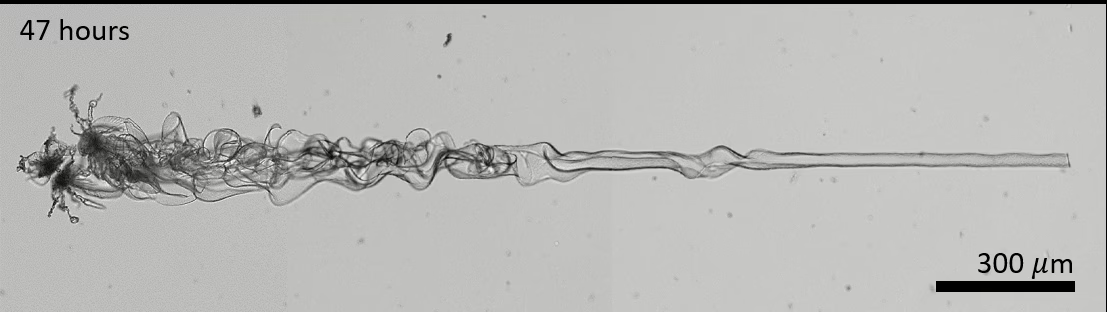
Crystals beneath a sunbed
Light-controlled spontaneous growth of nanostructures PhD student Marloes Bistervels from the Self-Organizing Matter research group at AMOLF has managed to use light to very precisely control the formation of nanocomposites in the shape of corals and vases. By illuminating a solution of the right ingredients with UV light, she can control where, when and which structures arise at the micrometer scale. This week, she published her findings in the scientific journal Advanced Materials.
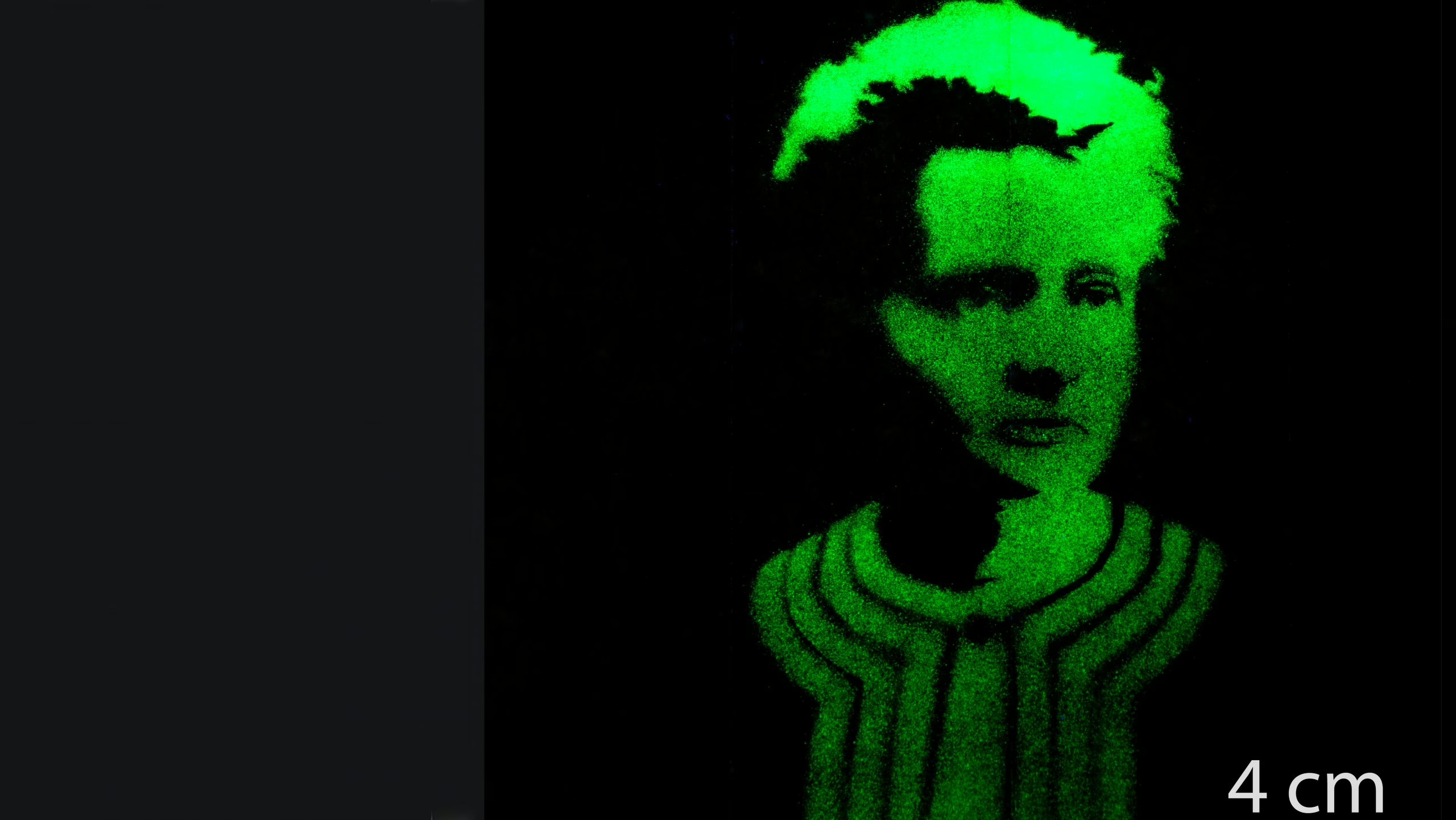
Painting with semiconductors
AMOLF researchers Lukas Helmbrecht and Wim Noorduin have developed a reactive ink that can be painted on an equally reactive canvas. The ink reacts with the material on the canvas to become a semiconductor that emits colored light, an essential part of electronic components such as LEDs. Consequently, a new way of producing these electronic components is now within reach. The results of the research, a collaboration between the AMOLF groups Self-Organizing Matter and Hybrid Solar Cells, are published this week in the journal ‘Advanced Materials’.
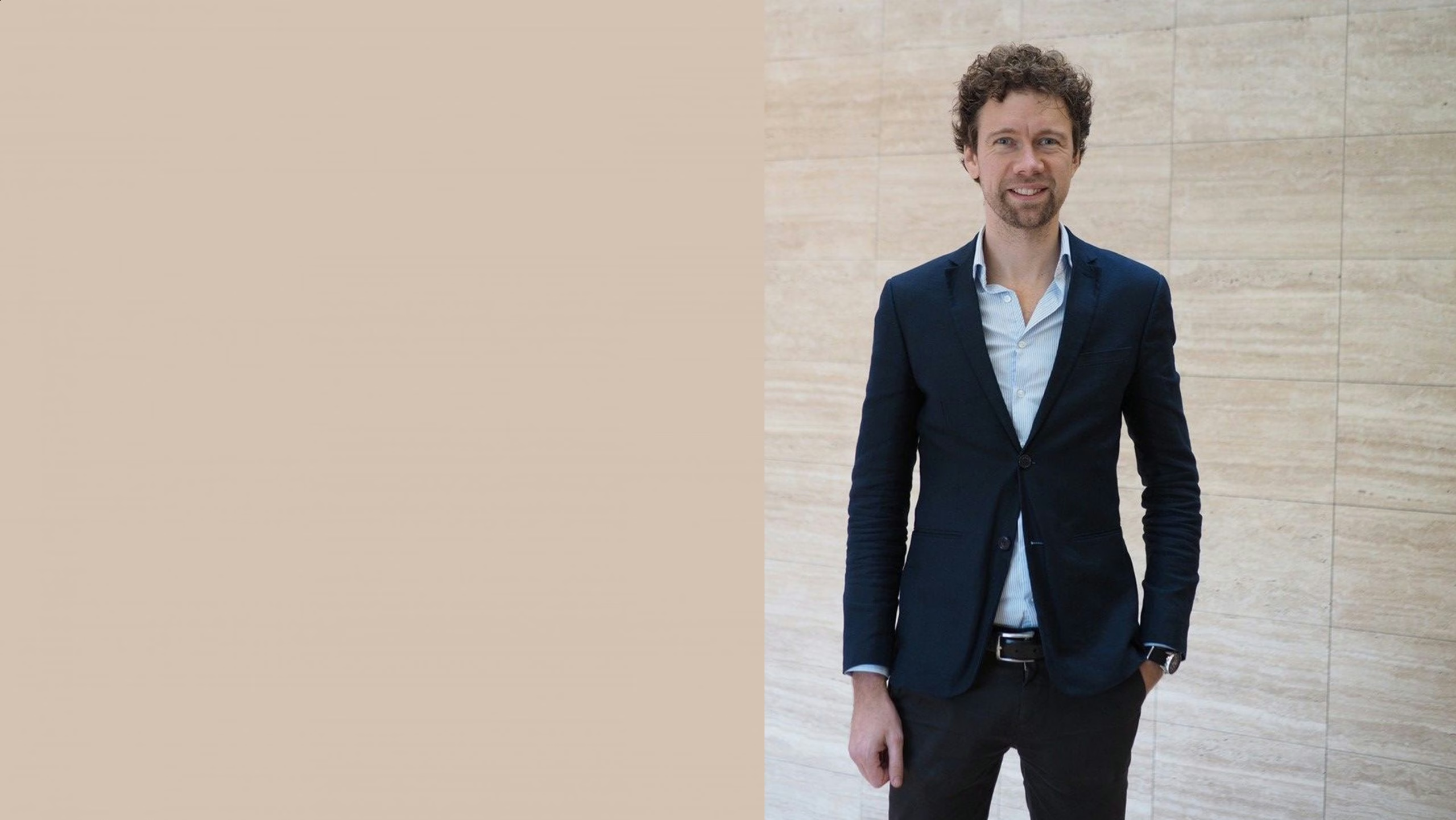
Wim Noorduin appointed professor by special appointment at the University of Amsterdam
Wim Noorduin has been appointed professor by special appointment of Self-Organizing Matter at the Faculty of Science at the University of Amsterdam (UvA). The chair was established on behalf of the Foundation for the Advancement of Atomic and Molecular Physics (‘Stichting tot bevordering van de Atoom- en Molecuulfysica’). Noorduin will continue at AMOLF as leader of the Self-Organizing Matter group.
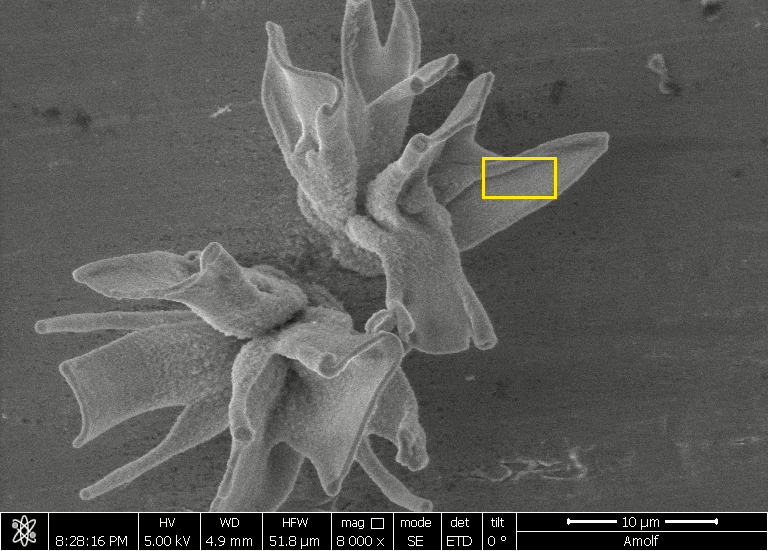
Transforming Self-Assembled Architectures into Functional Materials
Imagine if a material would arrange itself into a shape suited for its application. It may result in a catalyst that maximizes its own surface area for improved efficiency or a micro-actuator that forms appendages to grab nearby objects. This is the promise that self-assembly holds: making complex, functional materials by letting matter shape itself. Yet, not all matter that self-assembles into interesting forms turns out to have a useful function in its final shape. Researchers of the Self-Organizing Matter group recently discovered that ion exchange allows them to separate the self-assembly process from the resulting material. Their findings were published in Advanced Materials on November 16th and highlighted in Nature and Nature Reviews Materials.
From sea urchin skeleton to semiconductor
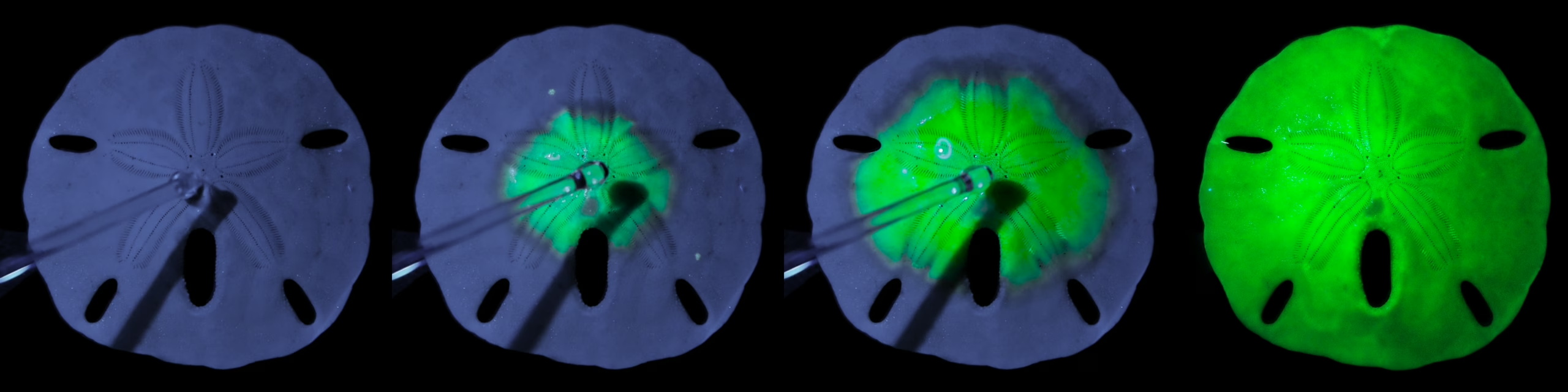
Researchers at AMOLF have found a way of making calcium carbonate structures, such as a sea urchin skeleton, suitable for use in electronics. They do this by modifying the composition of the material so that it becomes a semiconductor without losing its shape. This research was published in the journal Nature Chemistry on June 4th 2018.
NWO Vidi grant awarded to Wim Noorduin
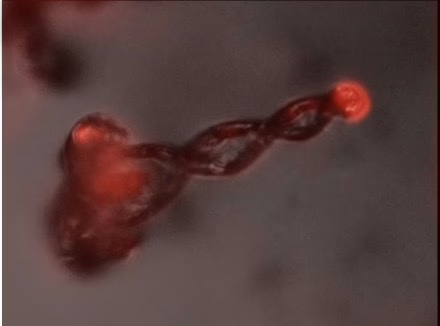
AMOLF group leader Wim Noorduin is one of the 86 researchers who received a NWO Vidi grant that is worth 800.000 euros. This grant allows Noorduin to further expand his research on versatile growth for functional materials.
Versatile crystal growth for functional materials
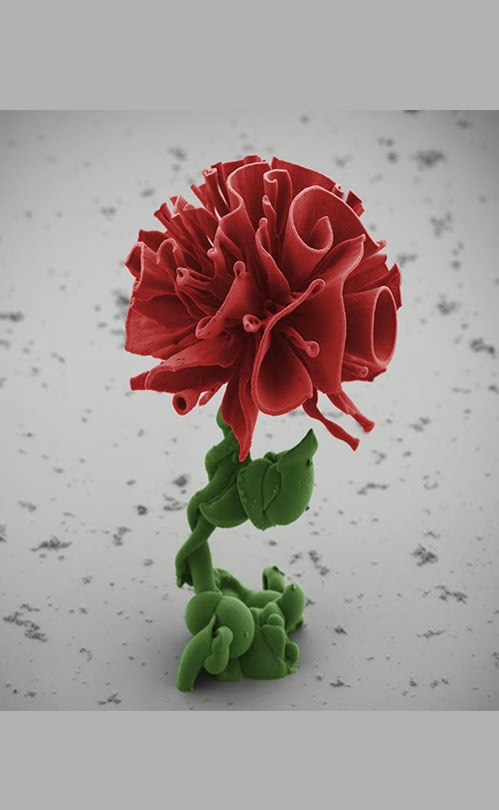
AMOLF researcher Wim Noorduin and fellow scientists Nadir Kaplan, Joanna Aizenberg and L. Mahadevan of Harvard University have developed a model that can be used to accurately describe and predict the formation of a broad range of exquisite three-dimensional crystal structures. This provides the basis for a new, cheap and versatile production method for the manufacture of functional materials, such as light guides for solar cells. The research team presents its results on March 31st in Science.
Wim Noorduin starts new research group on Self-Organizing Matter
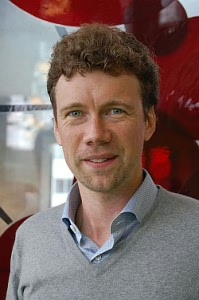
As of August 1st, Wim Noorduin has been appointed as AMOLF group leader. Noorduin is the second group leader hired in the Designer Matter group, a recently started line of research at AMOLF. His Self-Organizing Matter group focuses on the dynamic interplay between chemical reactions and crystallization phenomena to control the emergence of complexity in the solid state. In particular, the group aims to develop physical-chemical schemes to rationally self-organize microscale devices and functional molecules.