
News & updates
Latest developments from our institute
Stay informed about new research results, awards, events, and collaborations across our scientific community.
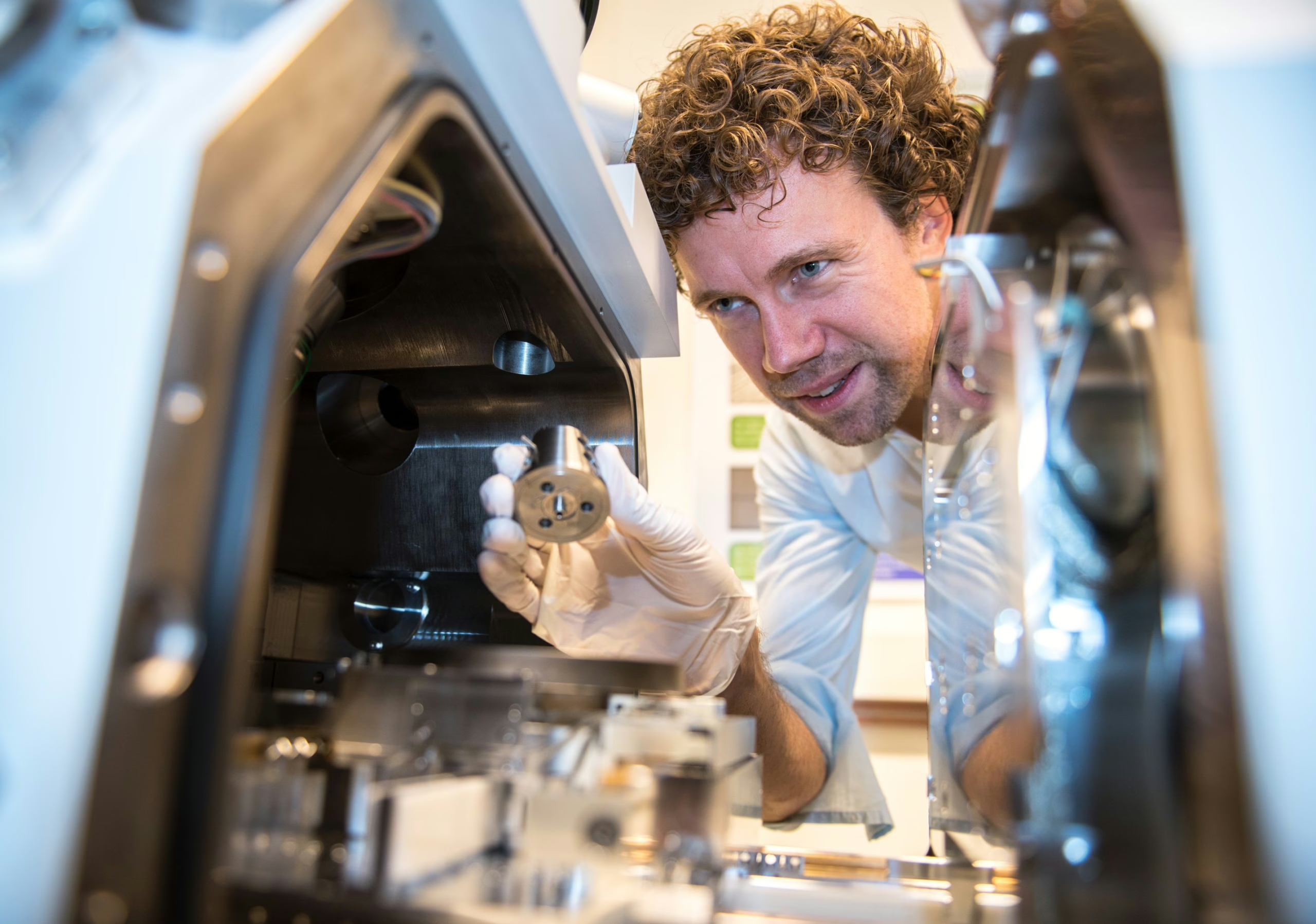
AMOLF group leader Wim Noorduin wins prestigious NWO Stairway to Impact Award
Wim Noorduin (AMOLF group leader / UvA professor) has been awarded the prestigious NWO Stairway to Impact Award for his success in translating fundamental research into a societal application. In close collaboration with his group members Wim developed a lead detection test and started the company Lumetallix to address global lead poisoning.
Wim Noorduin about taking to market his research invention
On Monday 4 November, AMOLF researcher Wim Noorduin participated in the NWO debate “Science Works! The future of research and innovation in the Netherlands” in Nieuwspoort, The Hague.

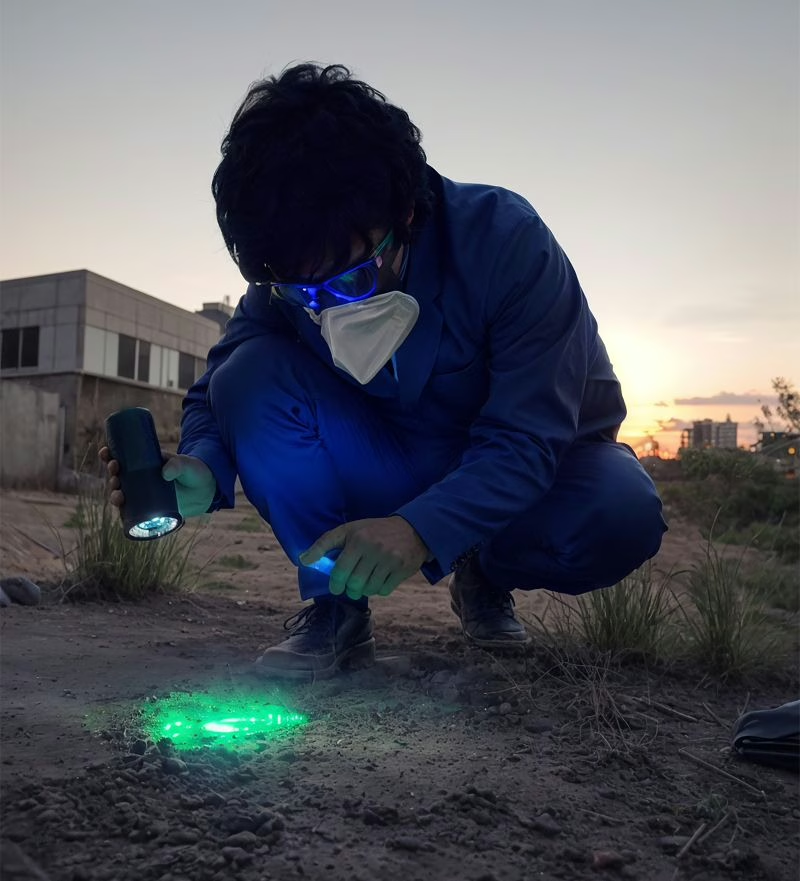
A lead test based on solar cell technology
AMOLF researchers have used the special properties of perovskite semiconductors to develop a simple spray test to demonstrate the presence of lead. Perovskite is a material suitable for use in LEDs and solar cells, for example. A lead-containing surface shines bright green when it is sprayed with the test. This test is 1000 times more sensitive than existing tests and the researchers found no false positive or false negative results. The study was published on November 27th in the scientific journal Environmental Science and Technology.
Hot crystals through laser light
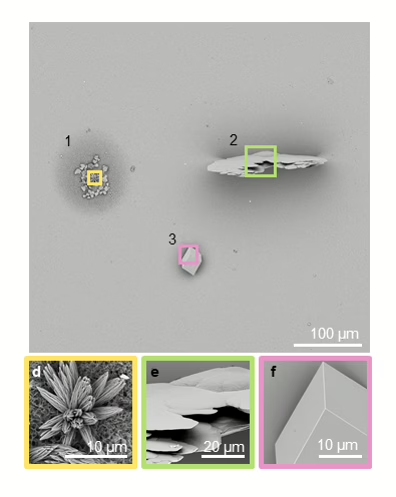
Shells, skeletons, and bones are all made of crystals. To function properly these crystals need to grow at the right time and place. Inspired by these natural processes, AMOLF researchers have developed a new method to control crystallization under artificial conditions using near-infrared laser light.
A low-tech way to create high-tech materials
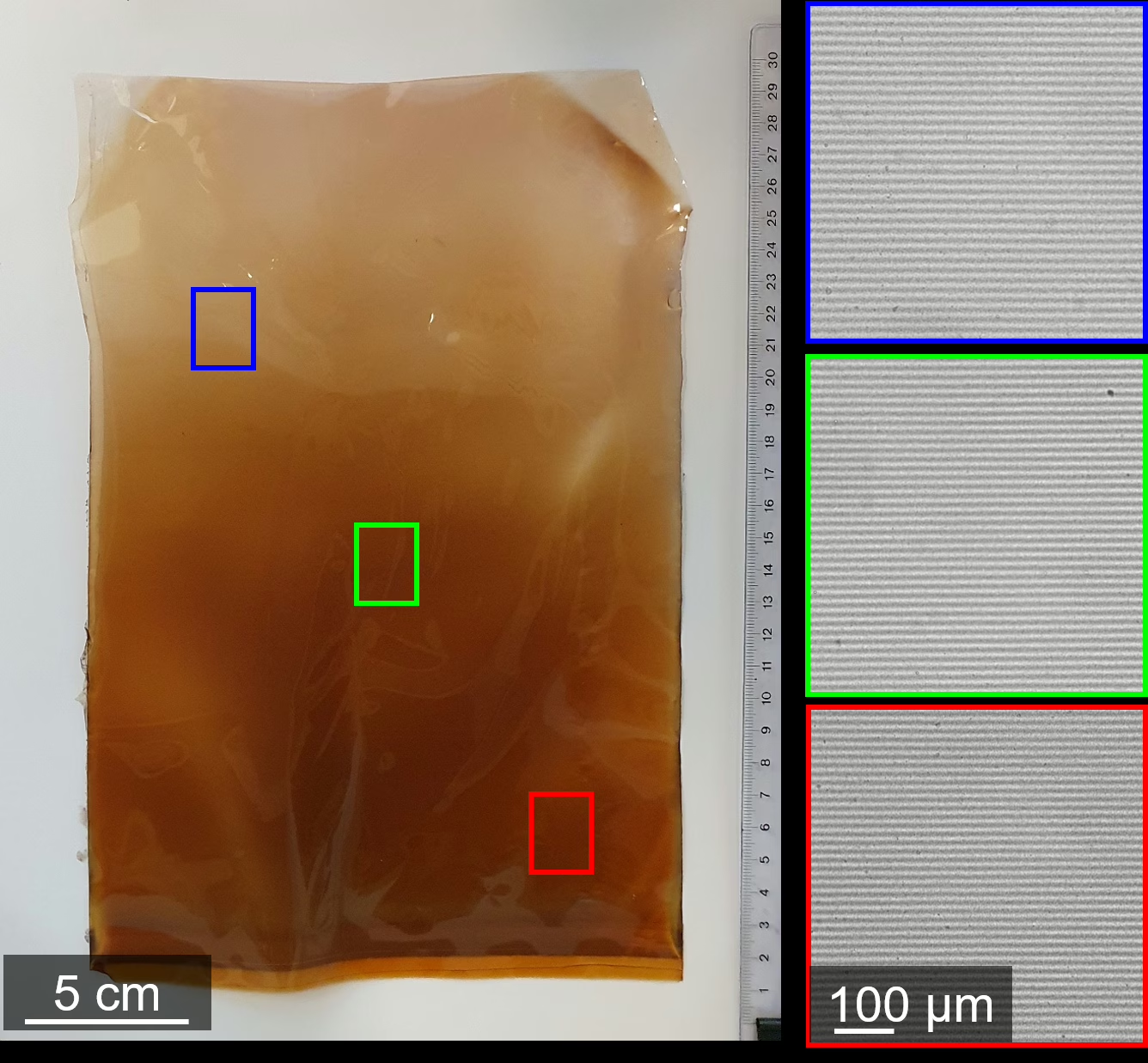
AMOLF researcher Christiaan Van Campenhout has found a new, simple method to create a material with a regular pattern of crystalline bands. The pattern formed by the crystals is not a coincidence. With a simple setup, the researchers can precisely control the width of the bands and their spacing. This could be a straightforward and cost-effective way to produce optics, electronics, or sensors. The research was published in the journal Advanced Materials on August 2, 2023.
SHINE consortium receives NWO funding to combine the best of two worlds
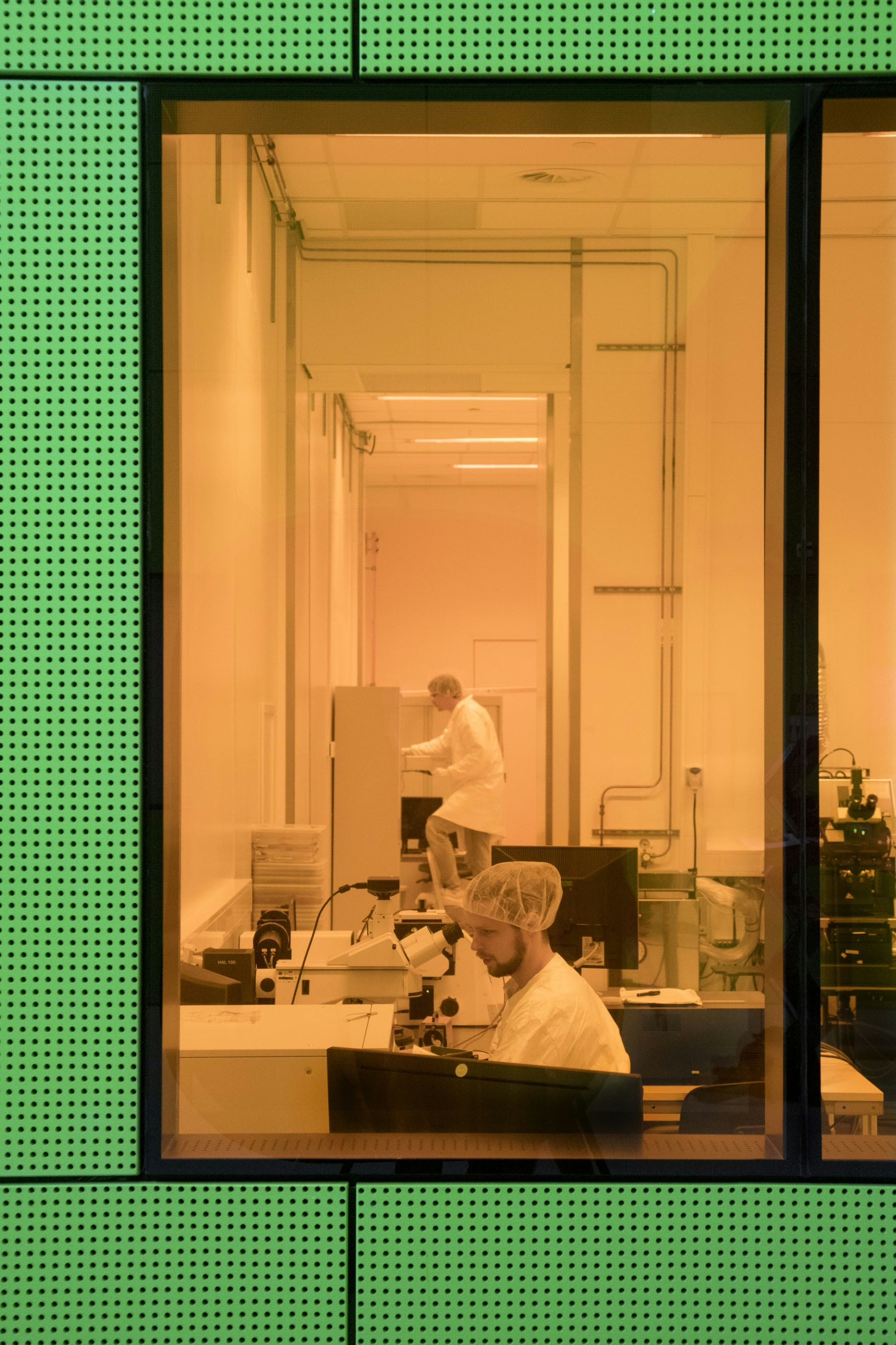
A consortium consisting of AMOLF and other academic partners in the Netherlands receives funding from the NWO Research Infrastructure (RI) call for the project ‘Shining light on atomic-scale processes’ (SHINE). AMOLF’s group leader Wiebke Albrecht (Hybrid Nanosystems) is the principal investigator. The total budget for the duration of the project is 3 million euros.
Regular patterns – like those found in nature – now also produced in the lab
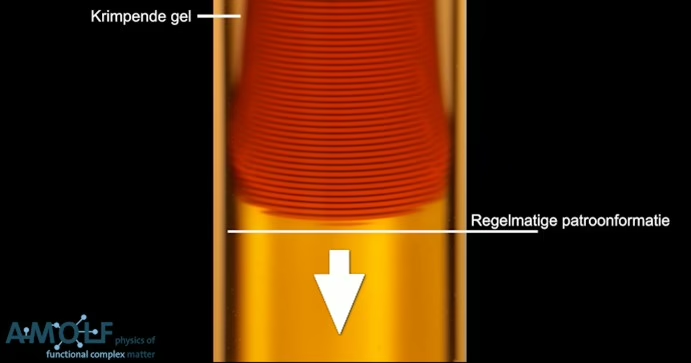
AMOLF researchers have found a new method for producing layered materials. Inspired by nature, they developed a physical-chemical process that yields highly regular microstructures. They describe this in a paper that was published this week in the journal PNAS. It offers the prospect of a relatively simple way to manufacture advanced, functional materials. Furthermore, the research can help us to better understand the genesis of natural patterns.
ERC Consolidator grants for Wim Noorduin and Erik Garnett
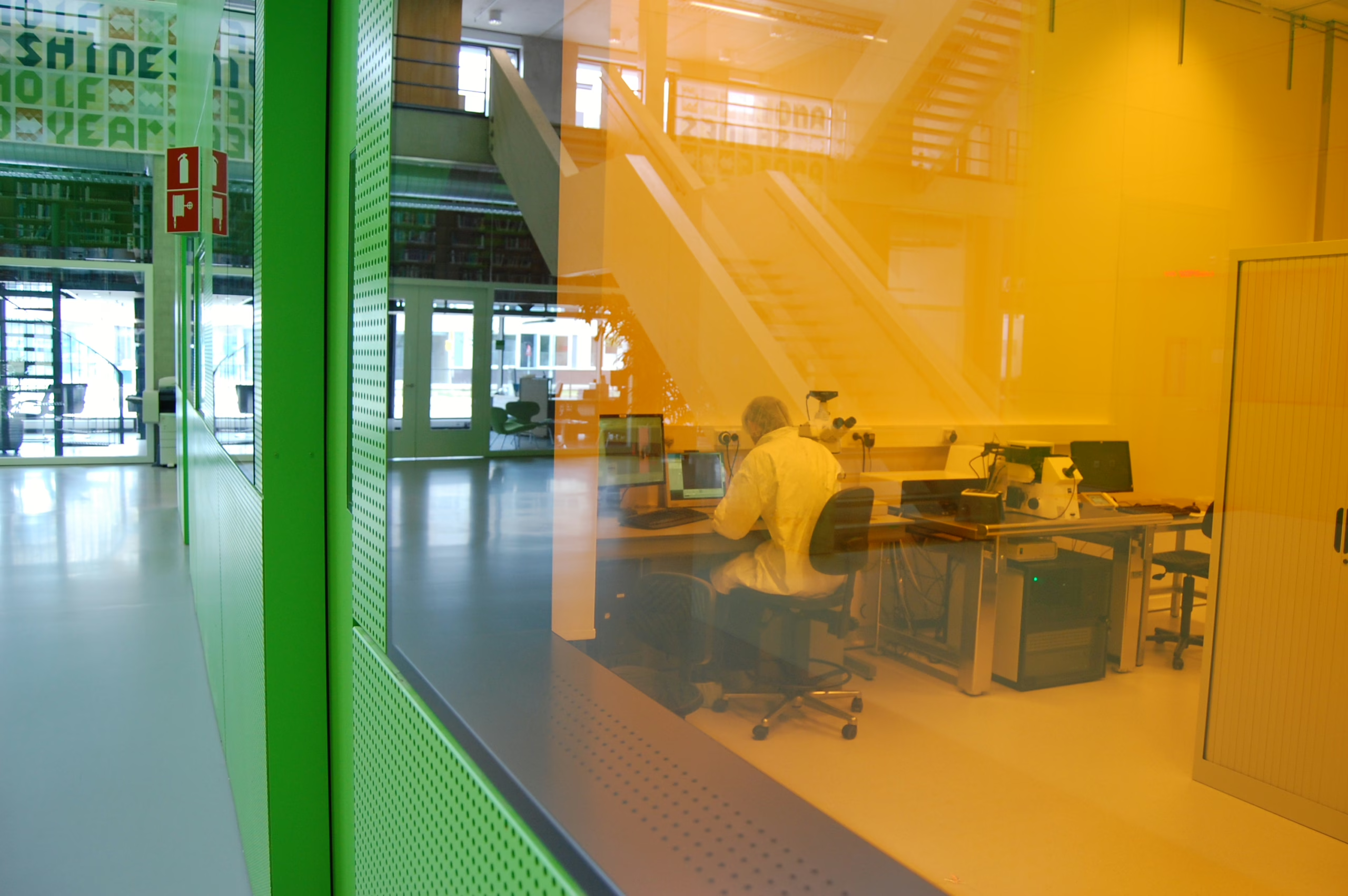
AMOLF group leaders Erik Garnett (Nanoscale Solar Cells) and Wim Noorduin (Self-Organizing Matter) have received an ERC Consolidator grant from the European Research Council (ERC). They have been granted respectively 3.0 and 2.4 million euros to carry out their research plans. In addition to being an AMOLF group leader, Garnett and Noorduin both hold a professorship by special appointment at the University of Amsterdam (UvA).