
News & updates
Latest developments from our institute
Stay informed about new research results, awards, events, and collaborations across our scientific community.
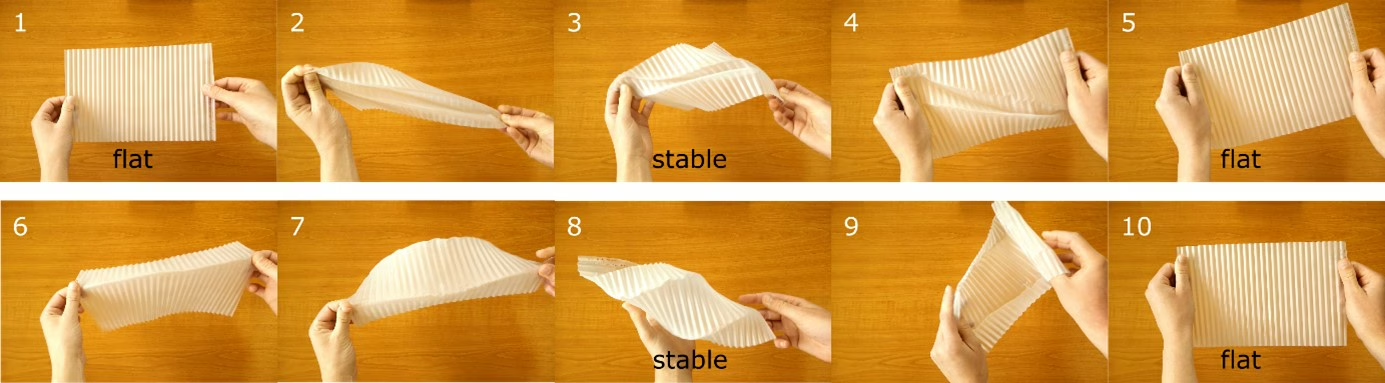
Corrugated plastic unveils a new design principle for programmable materials
Corrugated plastic turns out to be exemplary of a new class of ‘multistable’ metamaterials that can reversibly change shape. This insight can lead to new applications, from robots to medical devices. Physicists Anne Meeussen (previously AMOLF/Leiden University, now Harvard University) and Martin van Hecke (AMOLF/Leiden University) describe these materials in a Nature publication that is published on 20 September 2023.
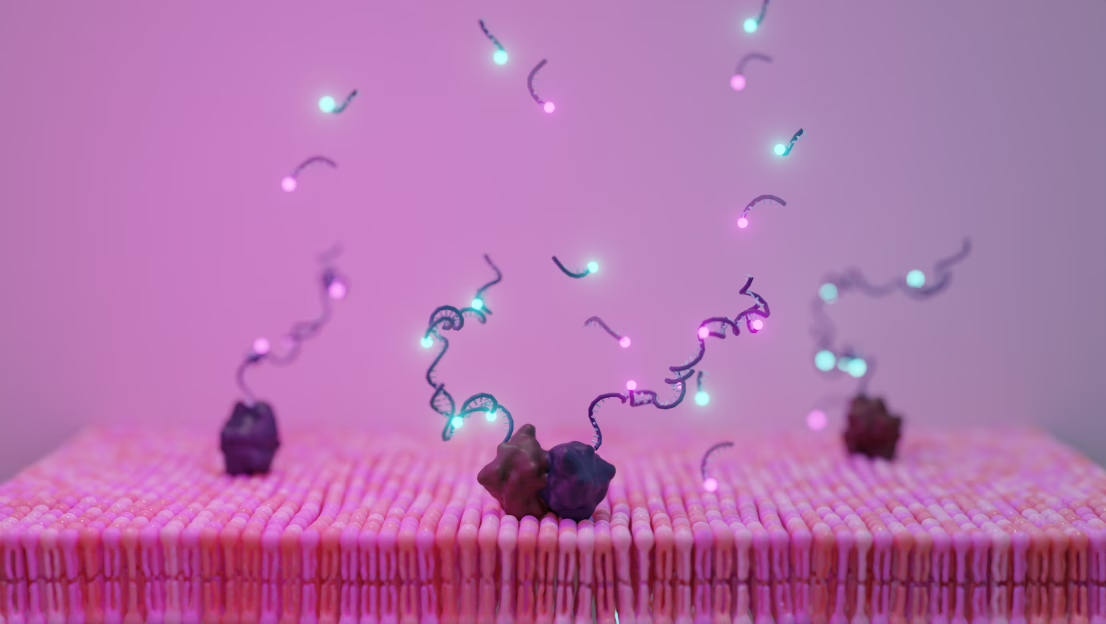
Studying individual molecules to understand how a cell’s inner life makes cells function
To understand the fundamental processes of life we need to understand the language that cells use to communicate with each other and to orchestrate their joint behavior. This is important for vital processes such as DNA replication, protein synthesis and signal transmission. Since cells communicate through interactions of molecules, researchers at AMOLF and the Max-Planck Institute of Biochemistry in Munich developed a technique to study individual molecules in model membranes. They first published the results in 2021 (see reference below). Using self-renewing DNA-based fluorescent labels, they were able to observe them for extended times. Overcoming the constraints of conventional fading fluorescent markers, the new technique enables unprecedented quantitative studies of molecular interactions in living systems. Now, their latest advancements on this DNA-PAINT based single-particle tracking method (DNA-PAINT-SPT) also enables them to see individual molecules binding to each other in live cells. This study was published in Nature Communications on July 19th (see reference below).
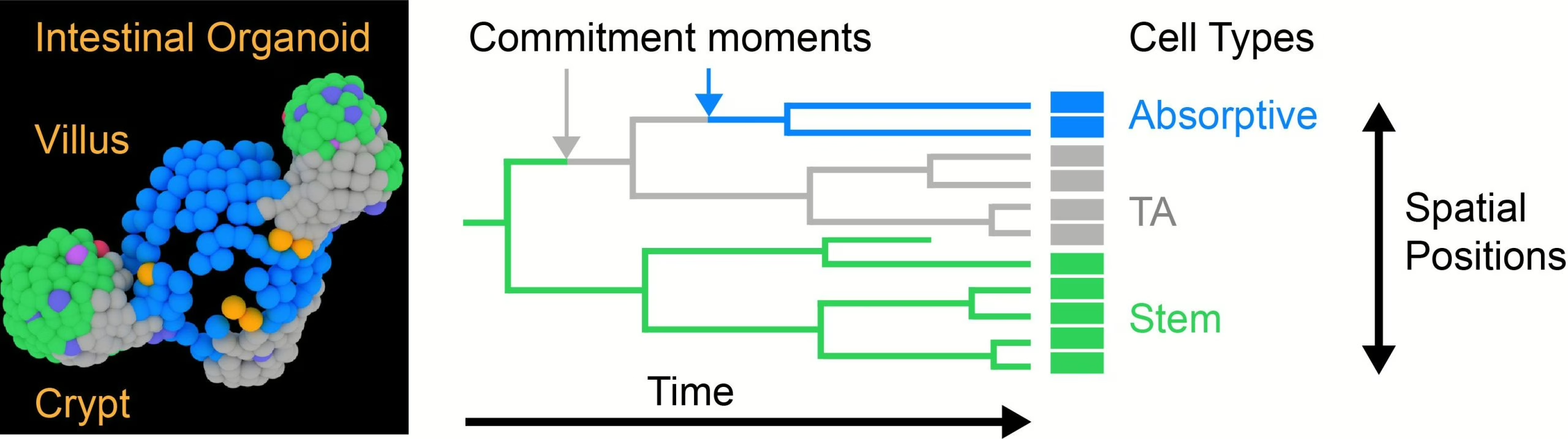
How do stem cells choose their identity?
AMOLF researchers discovered that stem cells first specialize into a functional cell and then move to the proper location – rather than the other way around.
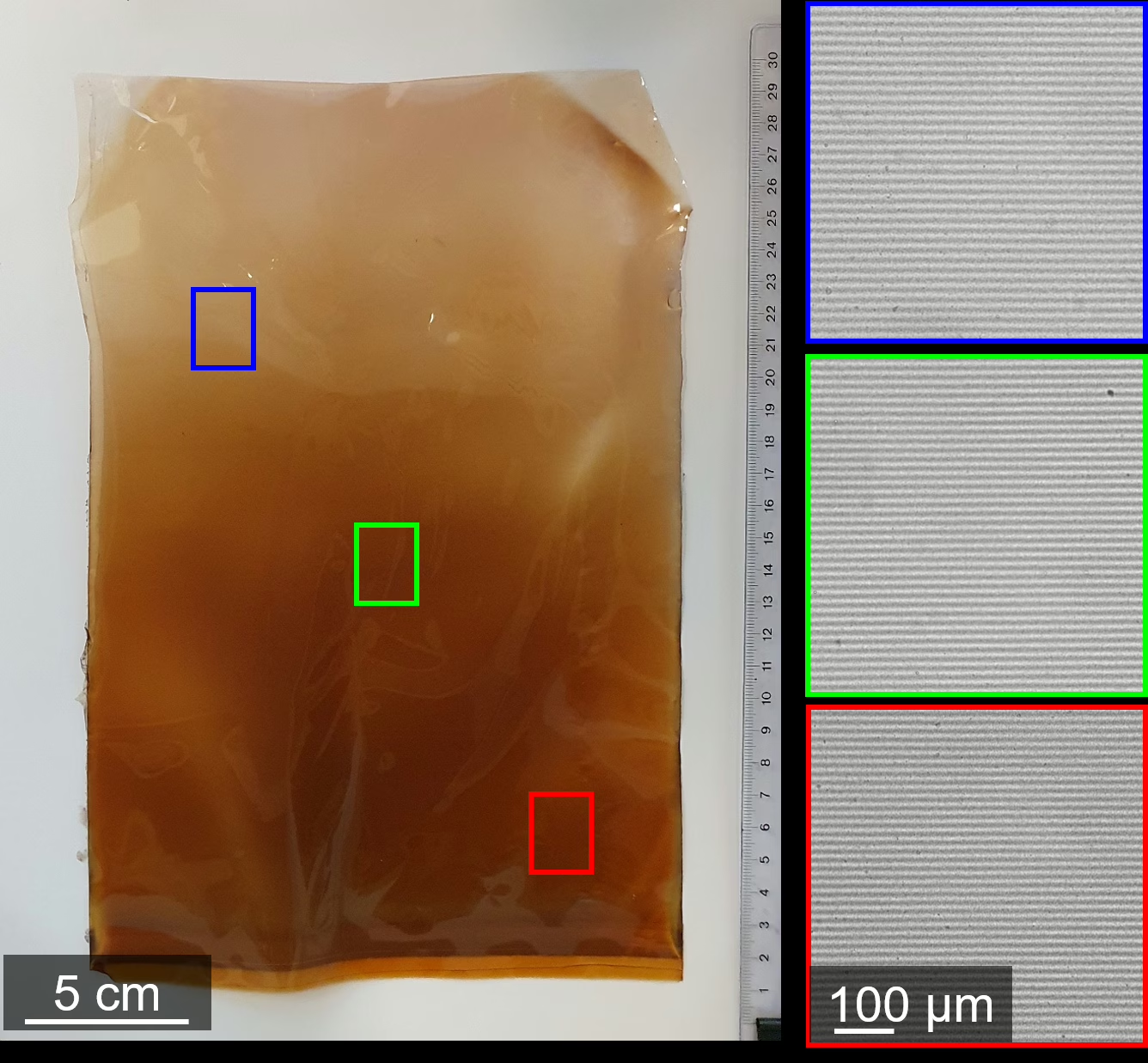
A low-tech way to create high-tech materials
AMOLF researcher Christiaan Van Campenhout has found a new, simple method to create a material with a regular pattern of crystalline bands. The pattern formed by the crystals is not a coincidence. With a simple setup, the researchers can precisely control the width of the bands and their spacing. This could be a straightforward and cost-effective way to produce optics, electronics, or sensors. The research was published in the journal Advanced Materials on August 2, 2023.
Rubicon for Andrea Cordaro
Former AMOLF Phd student Andrea Cordaro receives an NWO Rubicon grant to start his research project ‘Mathematics at the speed of light’ at the Harvard John A. Paulson School of Engineering and Applied Sciences in the United States.

Engineering dual carriageways for signals
Routing signals and isolating them against noise and back-reflections are essential in many practical situations in classical communication as well as in quantum processing. In a theory-experimental collaboration, a team led by Andreas Nunnenkamp from the University of Vienna and AMOLF group leader Ewold Verhagen has achieved unidirectional transport of signals in pairs of “one-way streets”. This research published in Nature Physics opens up new possibilities for more flexible signaling devices.
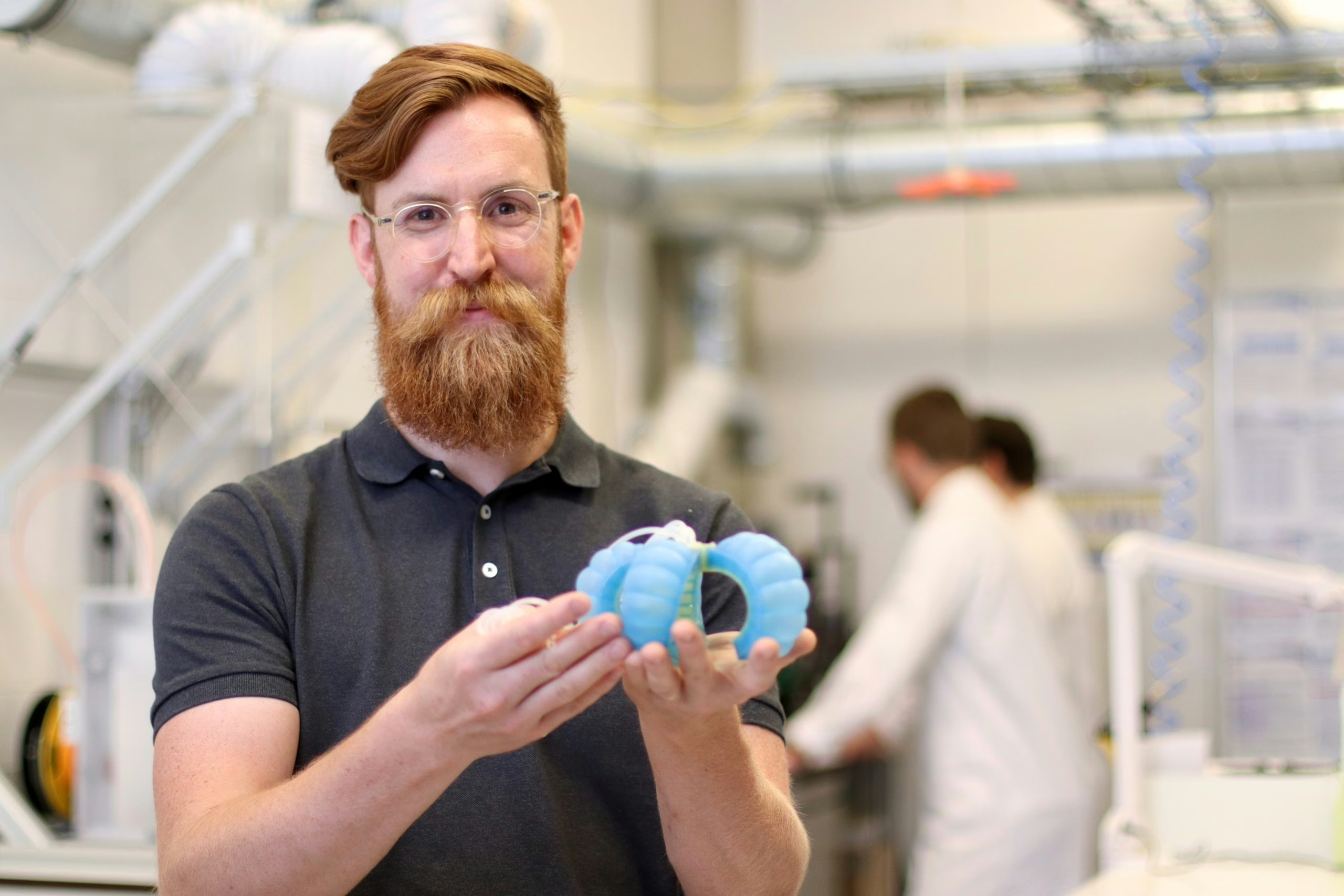
Research on Soft Robotic Heart receives NWA funding
The consortium Holland Hybrid Heart (HHH), which includes Soft Robotic Matter group leader Bas Overvelde (AMOLF and TU/e), has received 10 million euro in funding from the Dutch Research Agenda (NWA-ORC). The total budget for the project is 11 million euro. The team will use the funding to take a new step in the development of a soft robotic heart for people with severe heart failure. In the consortium, universities and universities of applied sciences, companies, and patient organizations collaborate on developing a soft robotic heart that can be implanted in patients’ chests to take over from the real heart. Worldwide, there are over 23 million people with heart failure, for which the best treatment is receiving a donor heart, of which there is a severe shortage.
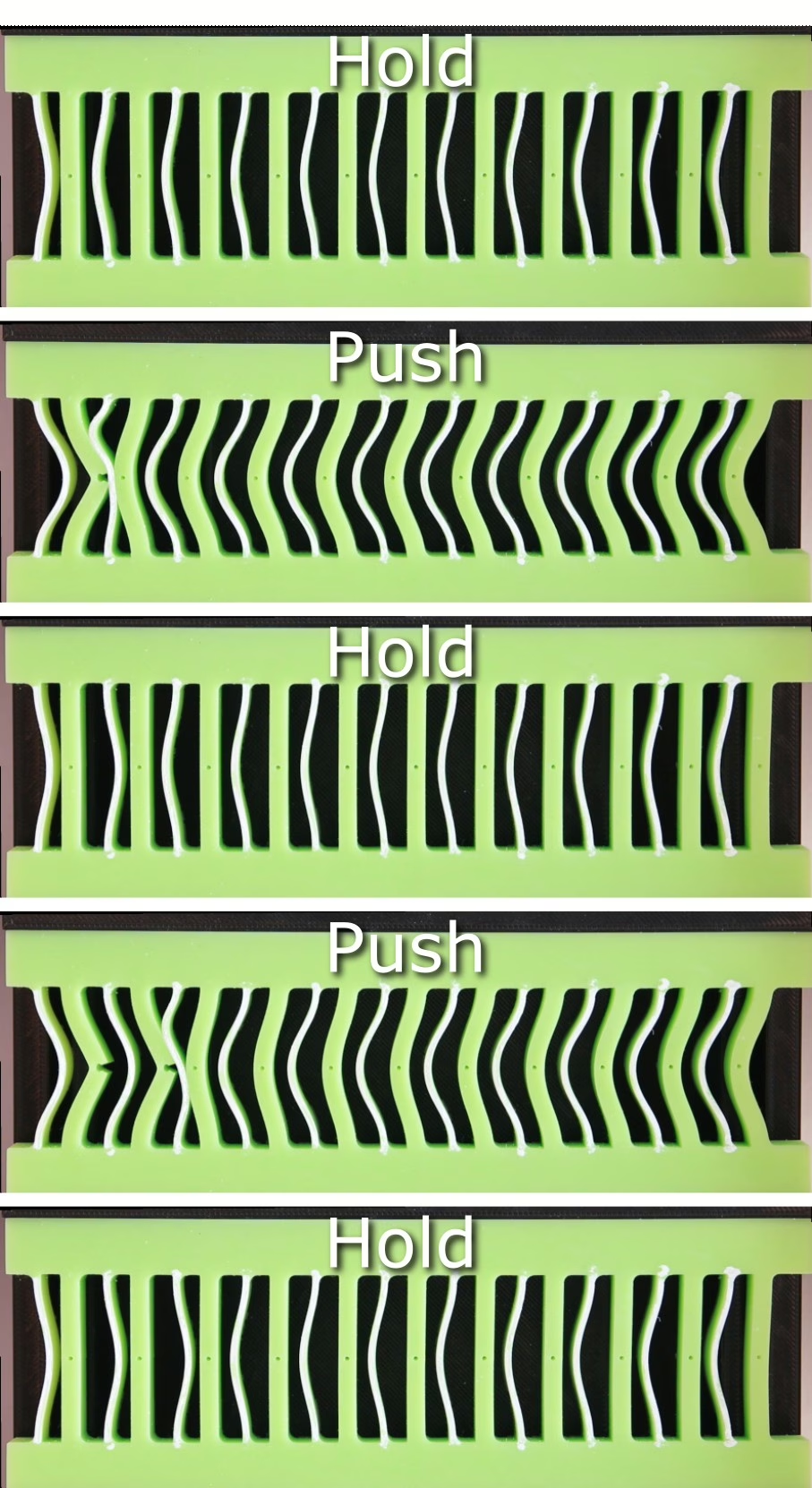
How to make a block of rubber count to ten
A block of rubber that counts to ten and even remembers in which sequence it was compressed. Physicists Martin van Hecke and Lennard Kwakernaak (Leiden and AMOLF Amsterdam) share a fascination for complexity in simple objects. They wrote an article about a counting block of rubber, which they classify as a metamaterial, and published it in the journal Physical Review Letters.