
News & updates
Latest developments from our institute
Stay informed about new research results, awards, events, and collaborations across our scientific community.
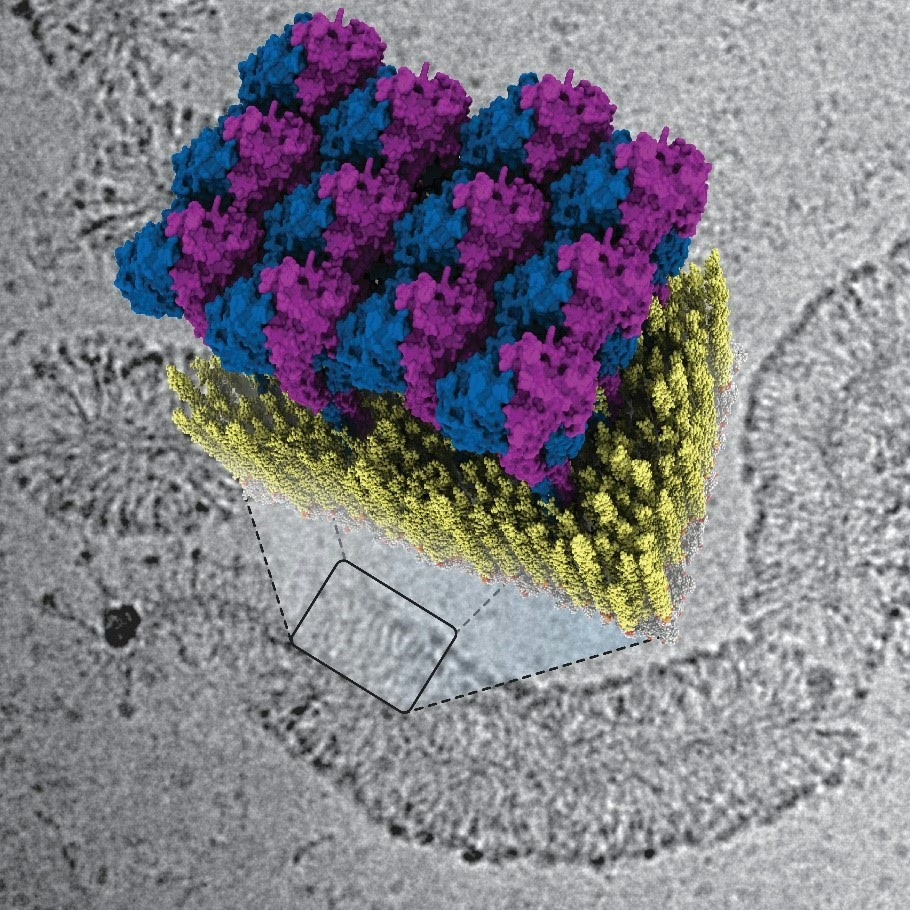
Scientists discover how cells envelop bacteria
The protein GBP1 is a vital component of our body’s natural defence against pathogens. This substance fights against bacteria and parasites by enveloping them in a protein coat, but how the substance manages to do this has remained unknown until now. Researchers from Delft University of Technology and the AMOLF have now unravelled how this protein operates. This new knowledge, published in Nature Structural & Molecular Biology, could aid in the development of medications and therapies for individuals with weakened immune systems.
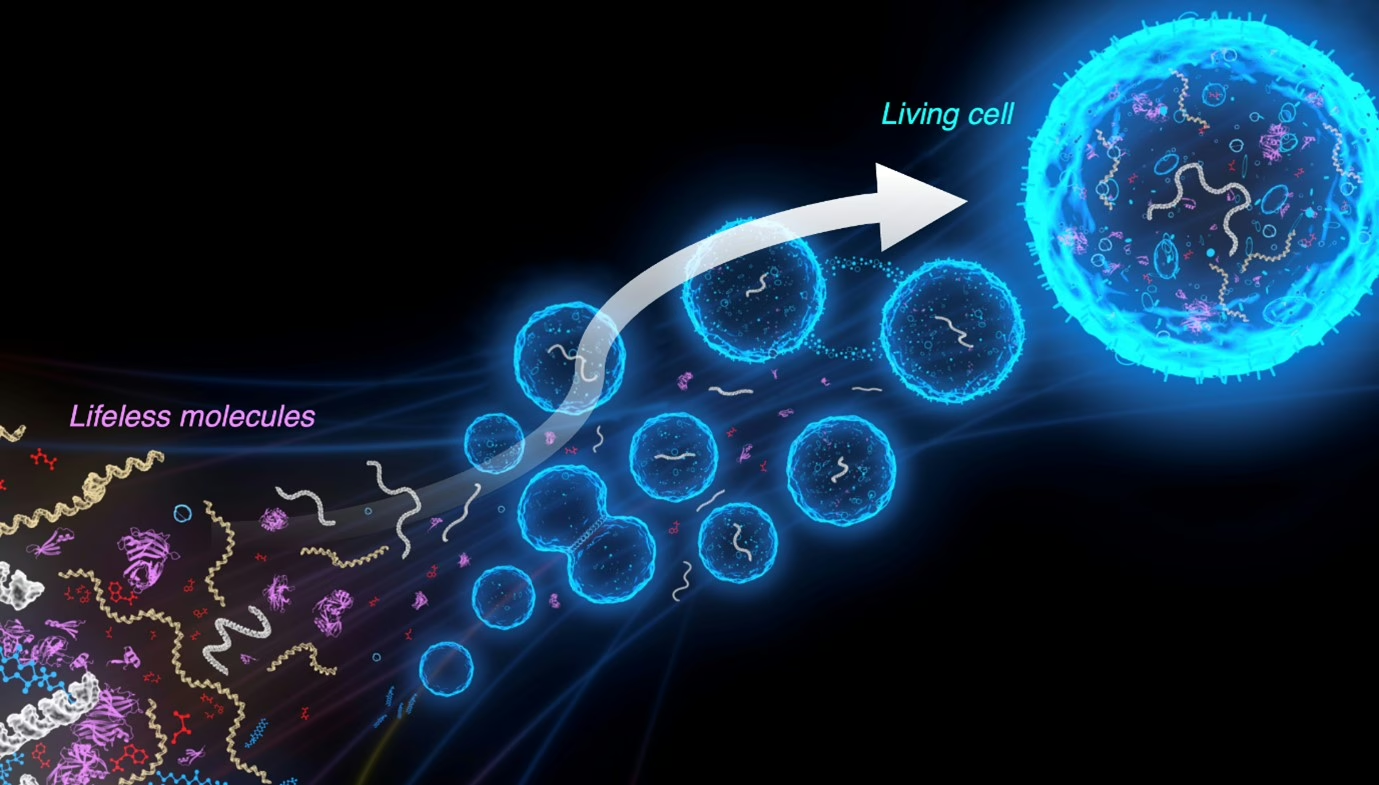
Creating life from lifeless biomolecules with AI and lab evolution
“What is life? How does a living cell emerge from lifeless molecules?” wondered a multidisciplinary team of Dutch scientists. To answer these questions the research team, with three AMOLF research groups and led by TU Delft, aims to build a living synthetic cell from lifeless biomolecules, using laboratory evolution and artificial intelligence for the first time. The ten-year research program to do so, entitled “Evolving life from non-life” or simply “EVOLF”, was awarded 40 million euro by the Dutch Research Council (NWO) as part of the Summit grants scheme.

Computing with rubber
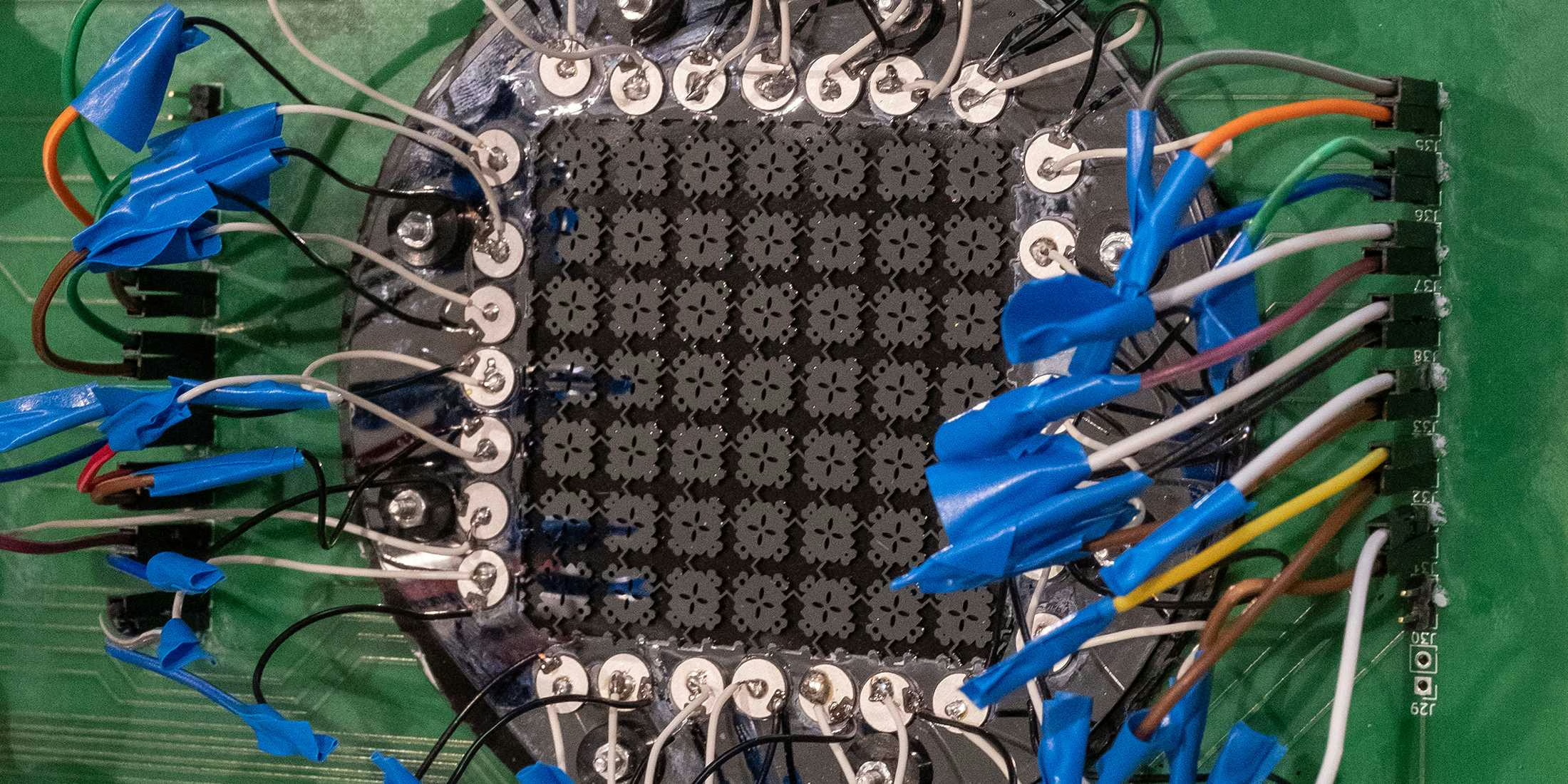
Without electronics carrying out computational tasks our daily lives would look very different. Devices such as elevators, vending machines, turnstiles, washing machines and even traffic lights use a simple form of electronic computing to switch from state to state. But, what if power supply is not available to operate these devices? A research team led by Martin van Hecke from Leiden University and AMOLF has now demonstrated how smart rubber structures can carry out such computational tasks. “We now know how to design simple materials so they can process information.” The study was published in the journal PNAS on May 20th.
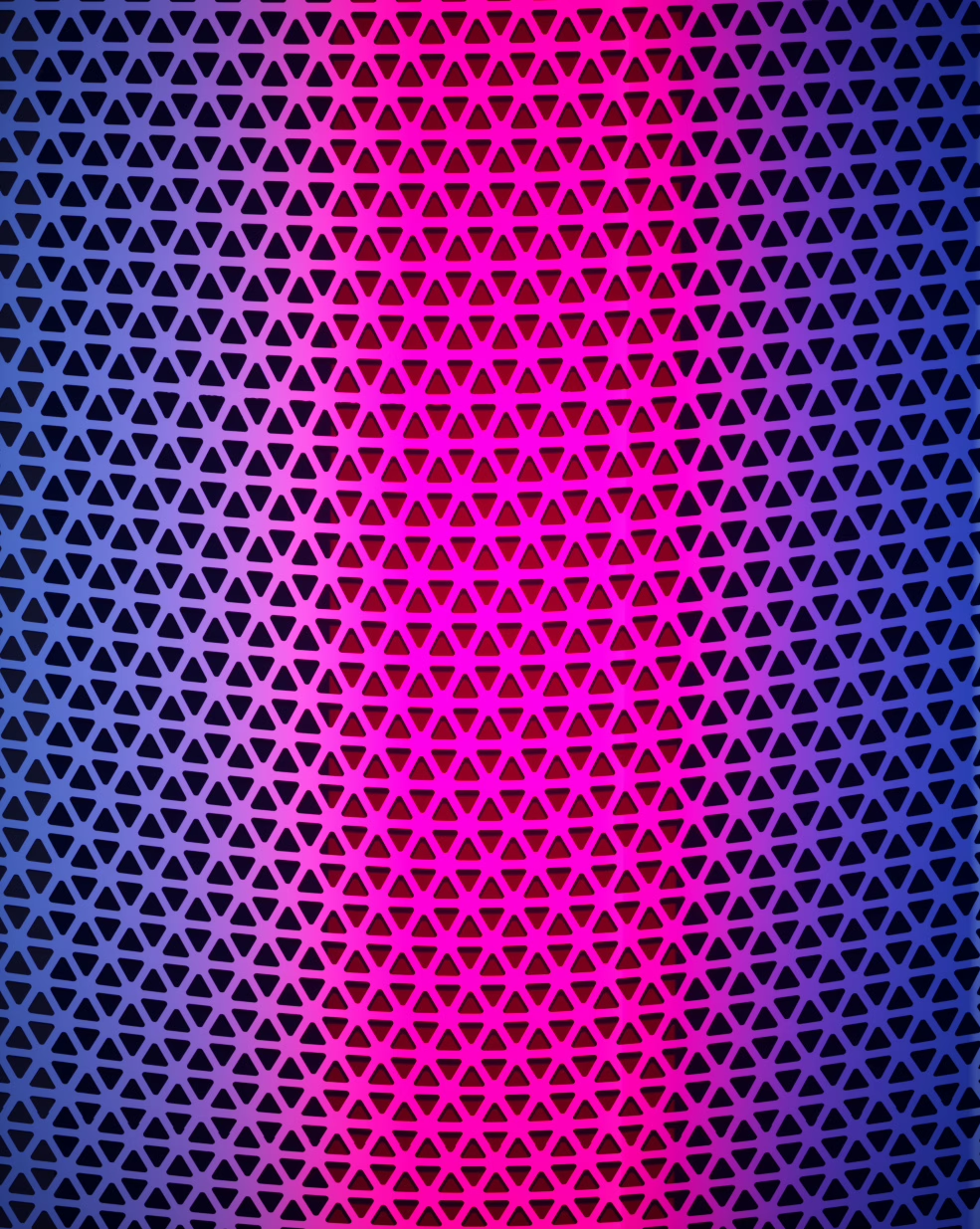
Light stands still in a deformed crystal
AMOLF researchers, in collaboration with Delft University of Technology, succeeded to bring light waves to a halt by deforming the two-dimensional photonic crystal that contains them. The researchers showed that even a subtle deformation can have a substantial effect on photons in the crystal. This resembles the effect that a magnetic field has on electrons. “This principle offers a new approach to slow down light fields and thereby enhance their strength. Realizing this on a chip is particularly important for many applications”, says AMOLF-group leader Ewold Verhagen. The researchers publish their findings in the scientific journal Nature Photonics on April 23rd (online). Simultaneously, a research team from Pennsylvania State University publishes an article in this journal about how they demonstrated – independently from the Dutch team – an identical effect.

Gravitation proposal ANION honored
The consortium Advanced Nano electrochemistry Institute Of the Netherlands (ANION) receives a Graviation subsidy of 23,6 million euro for research on the fundamental properties of electro chemical processes. The consortium is being led by Leiden University. AMOLF is one of the main participants.

New topological metamaterial amplifies sound waves exponentially
Researchers at AMOLF, in collaboration with partners from Germany, Switzerland, and Austria, have realized a new type of metamaterial through which sound waves flow in an unprecedented fashion. It provides a novel form of amplification of mechanical vibrations, which has the potential to improve sensor technology and information processing devices. This metamaterial is the first instance of a so-called ‘bosonic Kitaev chain’, which gets its special properties from its nature as a topological material. It was realized by making nanomechanical resonators interact with laser light through radiation pressure forces. The discovery, which is published on March 27 in the renowned scientific journal Nature, was achieved in an international collaboration between AMOLF, the Max Planck Institute for the Science of Light, the University of Basel, ETH Zurich, and the University of Vienna.
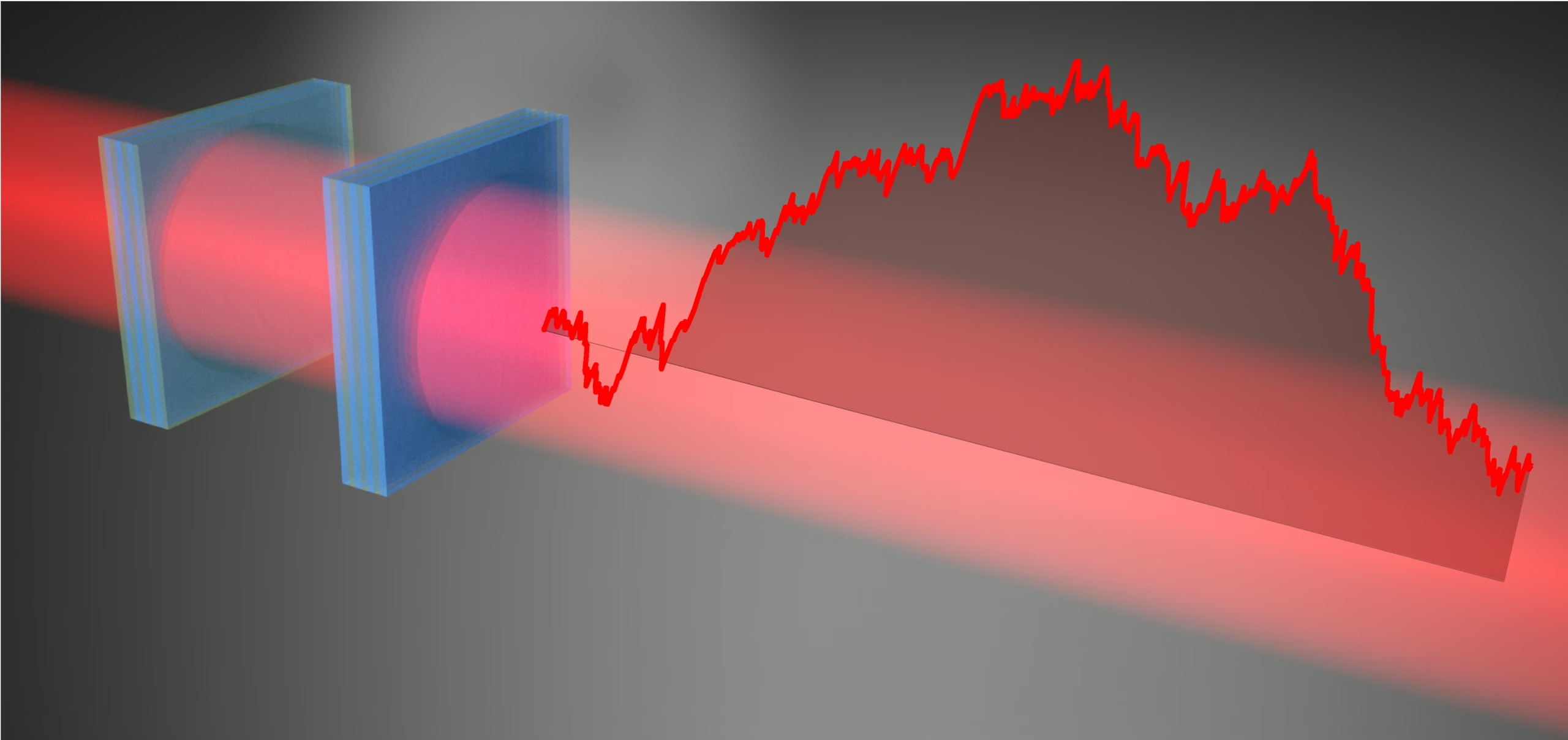
Light prefers the extremes
From monitoring pregnancies to distance detection in cars, light sensors are a workhorse of modern technology. But do we really understand the data they give us? In a surprising find, three AMOLF researchers show evidence of a tendency to detect extreme values more often than average ones, caused by the way our sensors work. This so-called arcsine behavior causes lows and highs to occur much more often than the average in between. The finding may have a great impact on sensing technology, write Vashist Ramesh, Kevin Peters and Said Rodriguez in the prominent scientific journal Physical Review Letters.
Sound-powered sensors stand to save millions of batteries
Researchers from AMOLF and ETH Zurich have developed a sensor that utilizes energy from sound waves to control electronic devices. This could one day save millions of batteries. Sensors that monitor infrastructure, such as bridges or buildings, or are used in medical devices, such as prostheses for the deaf, require a constant supply of power. The energy for this usually comes from batteries, which are replaced as soon as they are empty. This creates a huge waste problem. An EU study forecasts that in 2025, 78 million batteries will end up in the rubbish every day.