
News & updates
Latest developments from our institute
Stay informed about new research results, awards, events, and collaborations across our scientific community.
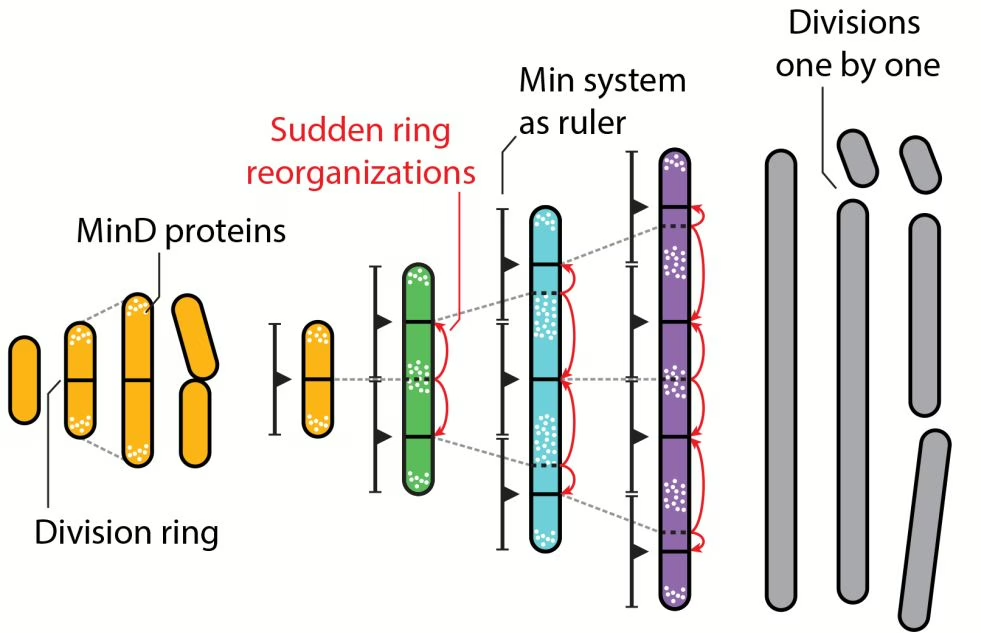
Stressed-out bacteria do measure up : As they grow, E. coli cells constantly mark sites where they can divide once the period of stress is over
When E. coli bacteria are physically distressed, they switch to stress mode and postpone cell division. But they still keep on growing, thus forming long filaments. AMOLF researchers discovered that these bacteria ‘know’ how long they are, which enables them to move protein rings to the sites where they will have to divide once the period of stress is over. The researchers involved published their findings in Current Biology, on 1 March 2018.
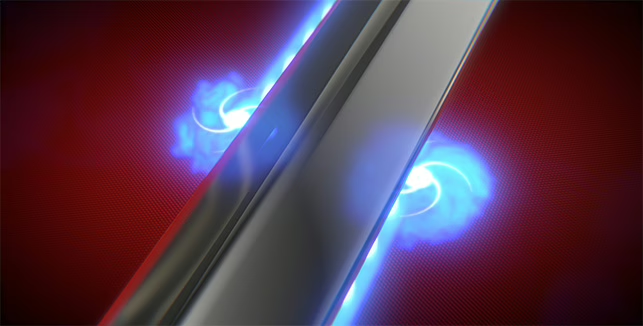
Researchers combine spintronics and nanophotonics in 2D material
Spintronics in materials of just a few atoms thick is an emerging field in which the ‘spin’ of electrons is used to process data, rather than the charge. Unfortunately, the spin only lasts for a very short time, making it (as yet) difficult to exploit in electronics. Researchers from the Kavli Institute of Nanoscience at TU Delft and the AMOLF group Nanoscale Solar Cells have now found a way to convert the spin information into a predictable light signal at room temperature. The discovery brings the worlds of spintronics and nanophotonics closer together and might lead to the development of an energy-efficient way of processing data, in data centres, for example. The researchers have given an account of their results in Science
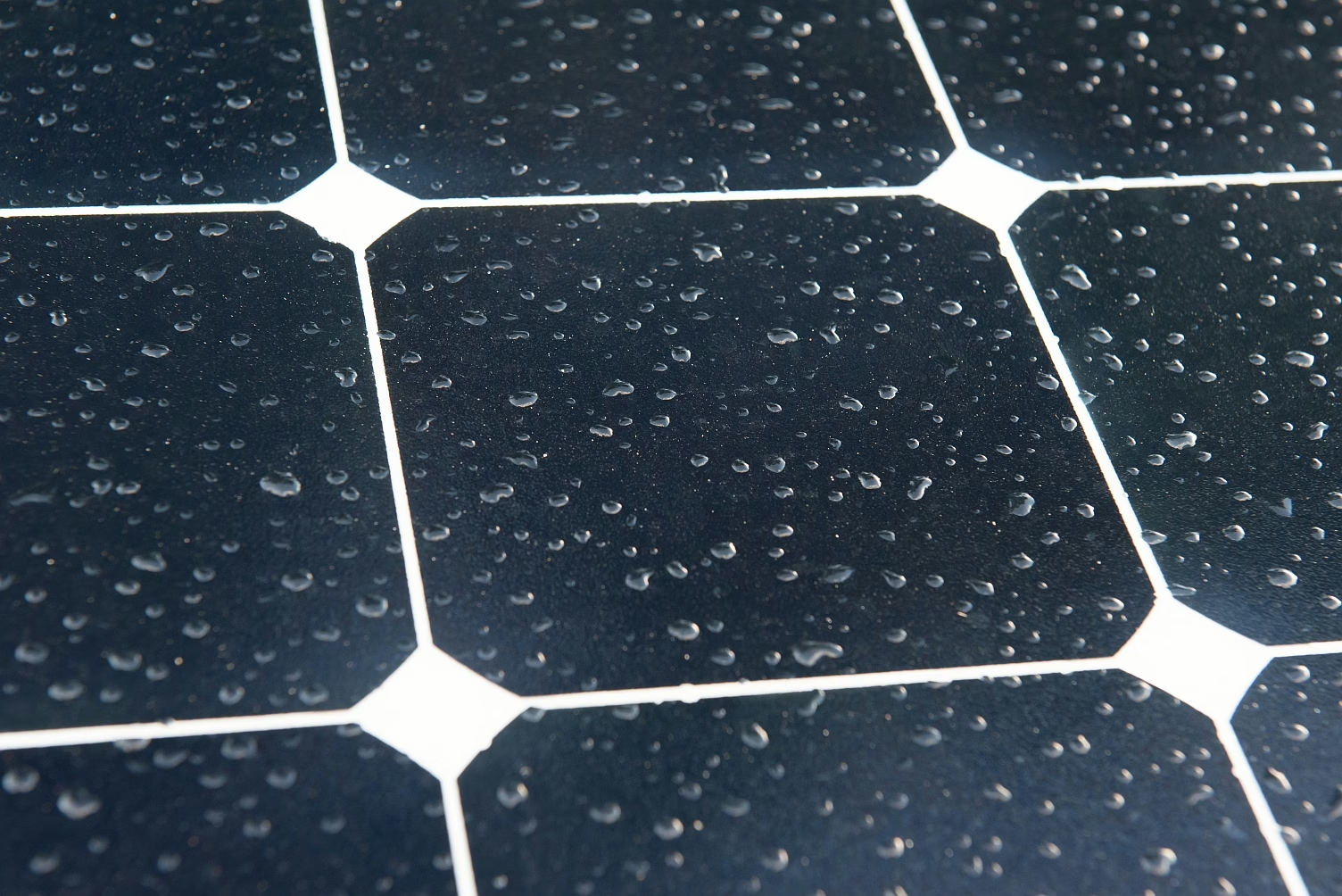
Three AMOLF projects in NWO program Materials for Sustainability
AMOLF participates in three new research projects that will start with funding through NWO’s program Materials for Sustainability (Mat4Sus). To enable a smooth transition from fossil fuels to a more sustainable source of energy we need a wide range of materials. The AMOLF groups contribute to the energy transition by enlarging the efficiency of solar cells and developing thinner foils and colored panels.
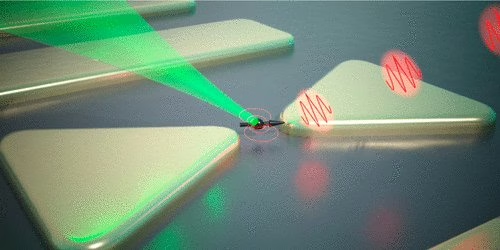
Perspective by Femius Koenderink most read in ACS Photonics in 2017
On January 2nd, ACS Photonics announced on Twitter that “Single-photon nanoantennas” is their most read publication in 2017. AMOLF group leader Femius Koenderink is the author of this review article.
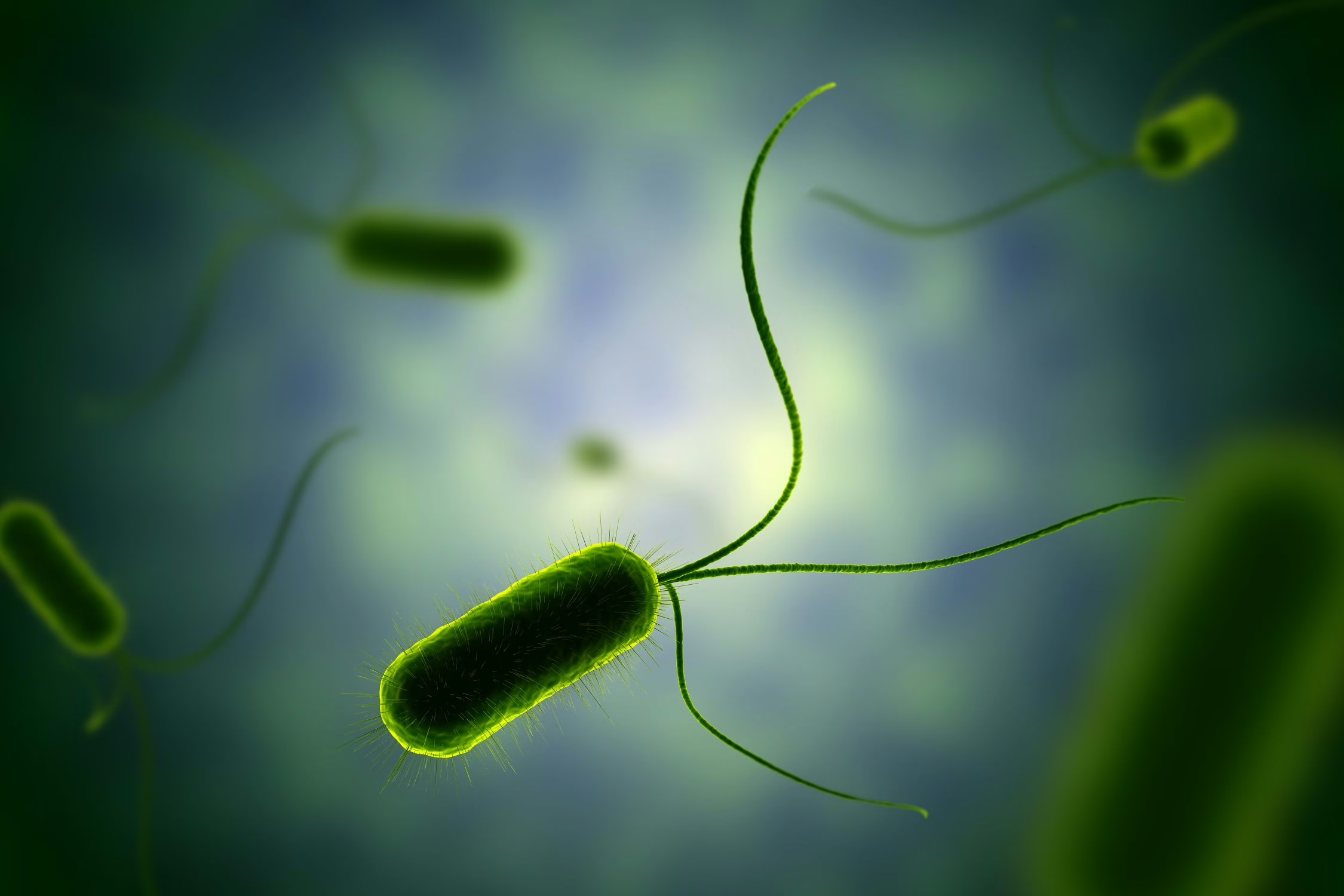
Personality and mood swings in bacteria
Bacteria can control where they go using a signaling network of protein molecules. Scientists at AMOLF have developed a microscopy method that allows them to see how individual bacteria use this network to make decisions.They discovered that bacteria are surprisingly diverse in personality and mood. The team publishes its findings in the scientific journal eLife on December 12, 2017.
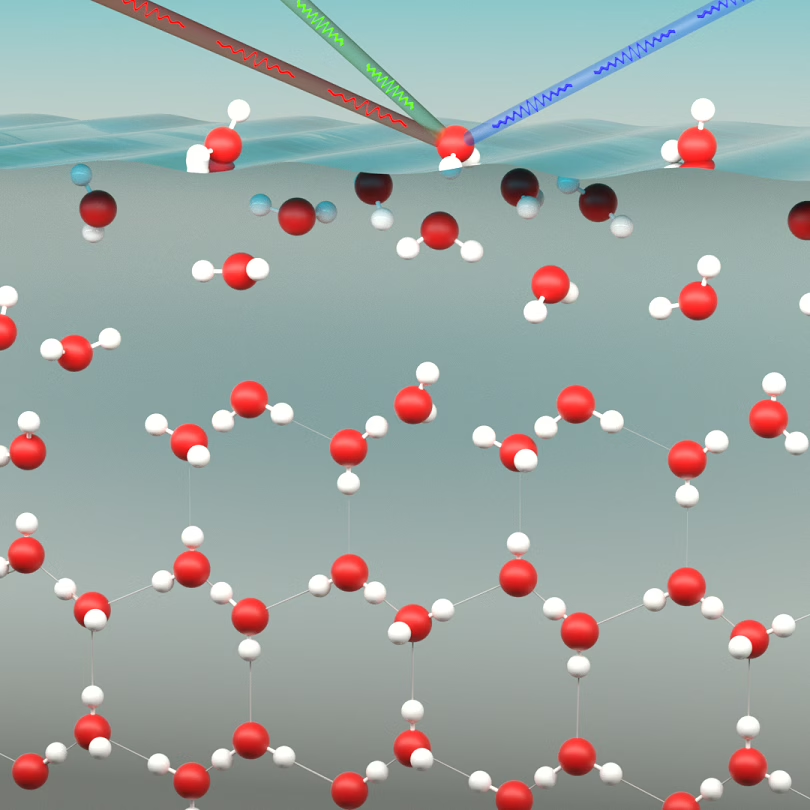
Ice skating on water, even when it is really cold
The outermost layer of ice behaves like liquid water, even at a temperature of –30°C. Physicists at AMOLF have irrefutably demonstrated this using a modern surface-sensitive measuring technique. At lower temperatures, however, the layer of water becomes increasingly thin. The researchers report their findings on 27 November in the journal Angewandte Chemie.
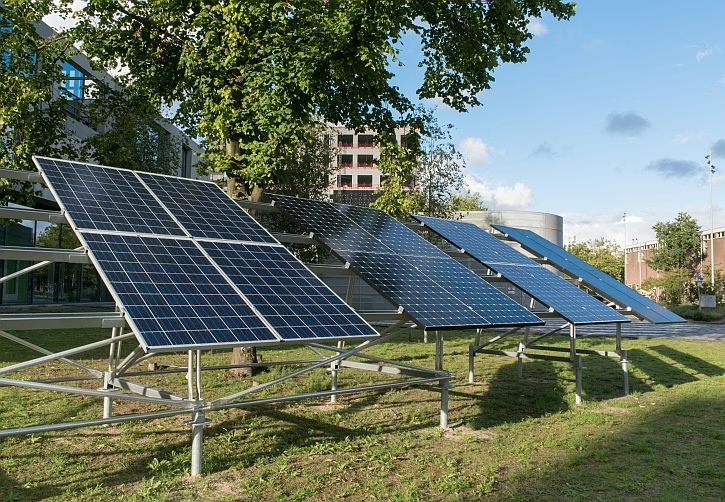
Nature Energy highlights three terminal configuration publication
On November 9th the journal Nature Energy highlighted a Nano Letters publication of the Nanoscale Solar Cells group in which they present a new type of tandem solar cell: the three terminal configuration. In the highlight with the ominous title ‘Dawn of the three-legged beast’, the author Elsa Couderc explains the purpose of introducing a third configuration, in addition to the two existing ones. She also touches on the design of the new device and its accomplishments, such as reaching an efficiency of up to 32,9%.
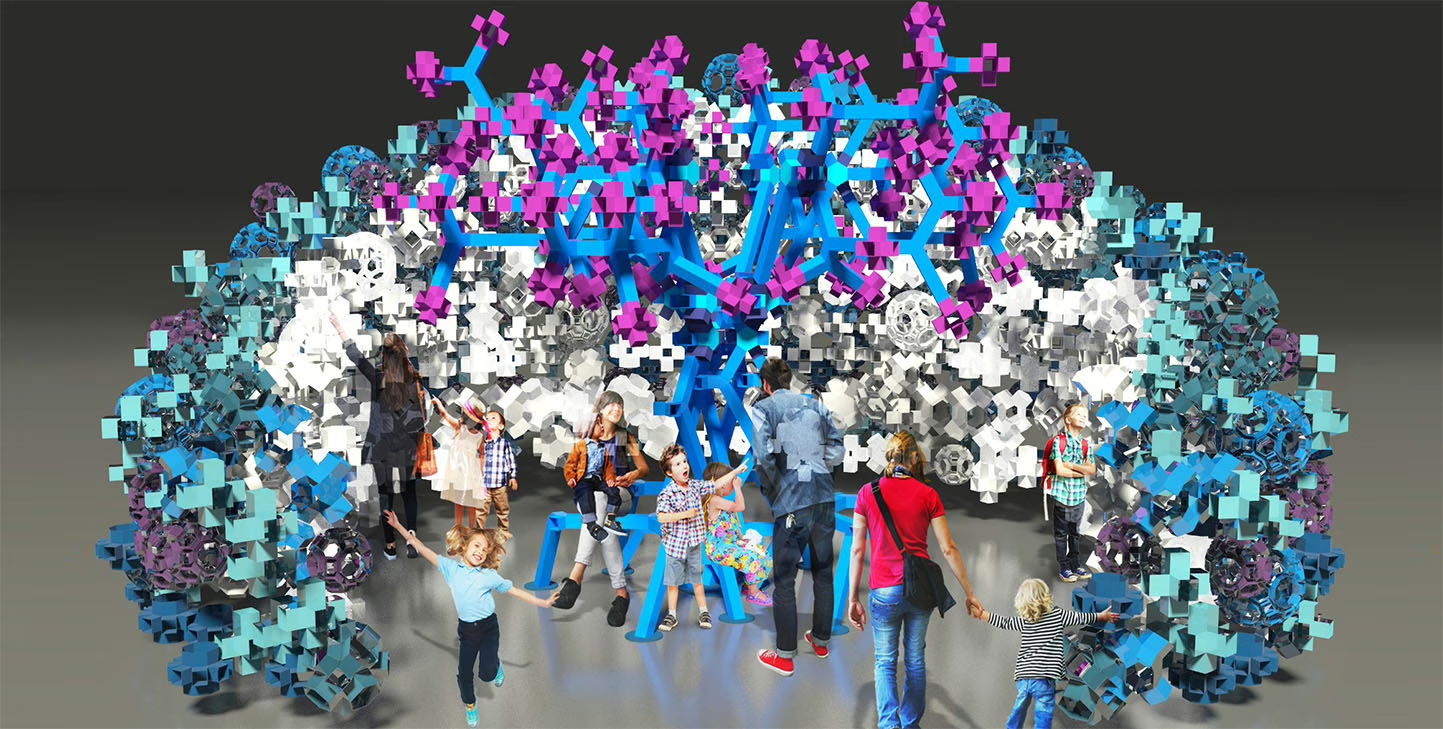
Overvelde connects Science & Art
On October 25th at the Cinekid Festival in Amsterdam, AMOLF scientific group leader Bas Overvelde received a grant to build an interactive art installation. It is one of three original media artworks that will be produced following the “Supernatural: stories of worlds to come” international call for projects (les voyages de capitaine future). The installation is called “The Edge of Chaos” and is designed by the Soft Robotic Matter Group (Amsterdam). Bas Overvelde and designers Vasilija Abramovic, Ruari Glynn from the Interactive Lab are stoked about the news and are gearing up to start building the structure. Upon completion, the art installation will go on tour in Europe (Paris, Amsterdam, Namur) to be exhibited by all four organizers of the competition: Cinekid, la Gaîté Lyrique, KIKK and WoeLab.