
News & updates
Latest developments from our institute
Stay informed about new research results, awards, events, and collaborations across our scientific community.
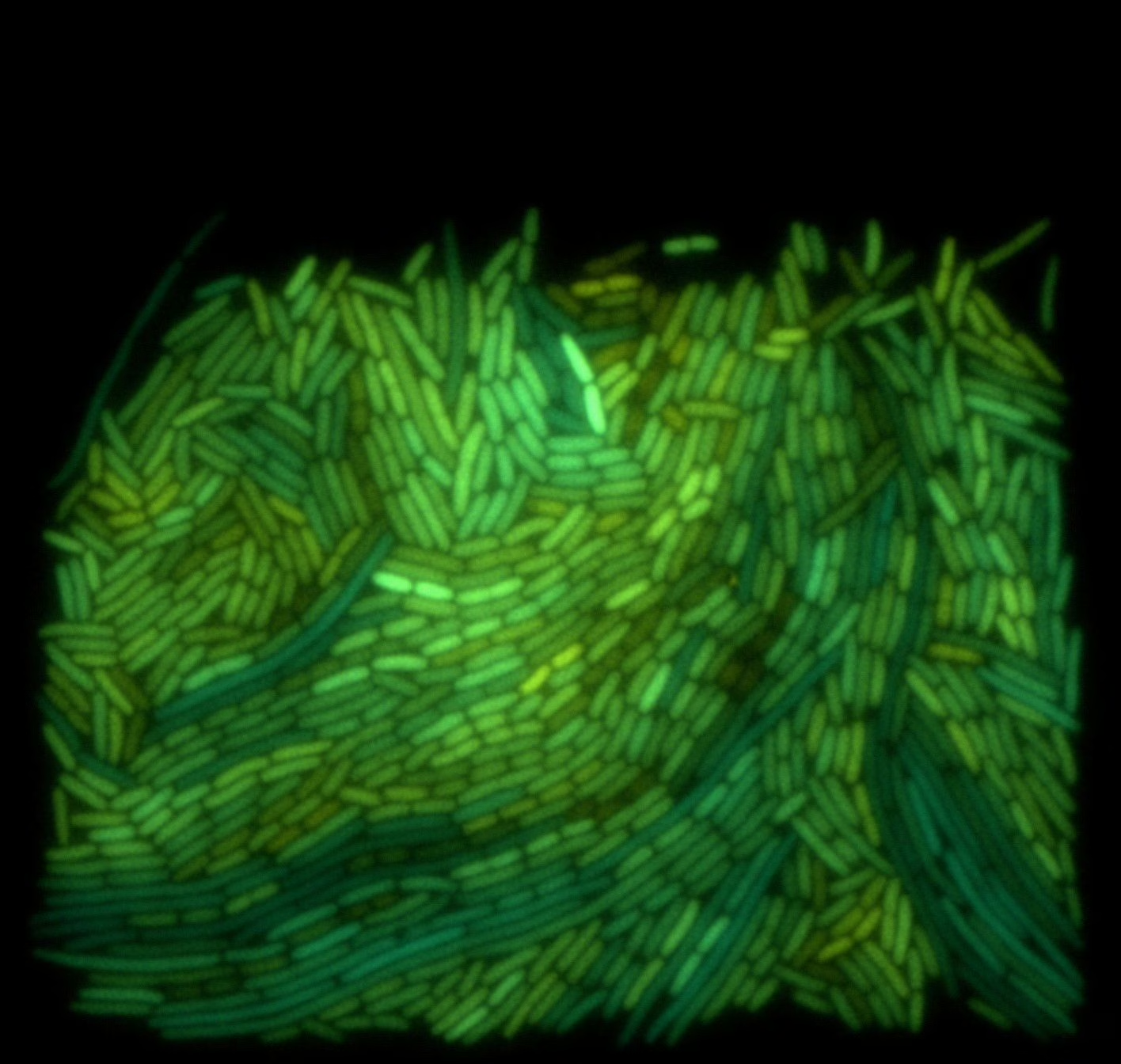
Signal discovered that connects cell size with cell growth
The mechanisms connecting growth with cell size have been mysterious – up till now: in a recent publication in Current Biology, researchers from AMOLF and TU Delft have uncovered that the signaling molecule ppGpp is essential to regulate cell size. Surprisingly, they also discover cells adjust their sizes to concentrations of ppGpp, rather than strictly according to growth rate.
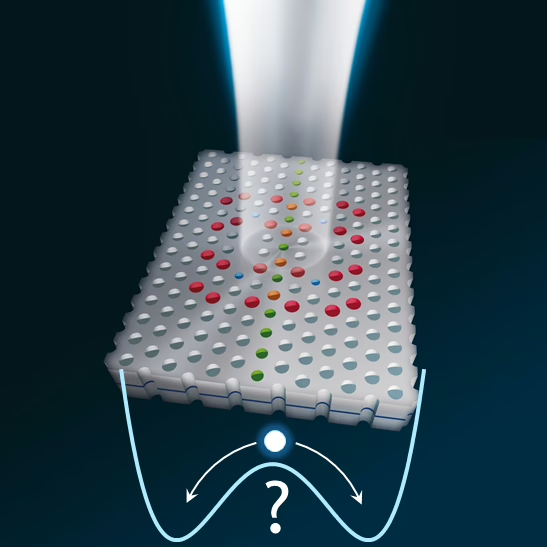
A Better Understanding of Symmetry Breaking
In an international collaboration, AMOLF researchers have theoretically described and experimentally observed spontaneous symmetry breaking (SSB) in two laser-driven coupled optical cavities. SSB is a universal phenomenon that occurs in many physical systems. It is at the heart of the laser, superconductivity, and the Higgs mechanism, for example. In the case of laser-driven systems like optical cavities, it was not yet understood how SSB occurs. Because laser-driven systems are always in a state imposed by the laser, the nature and manifestation of SSB is completely different from other systems.
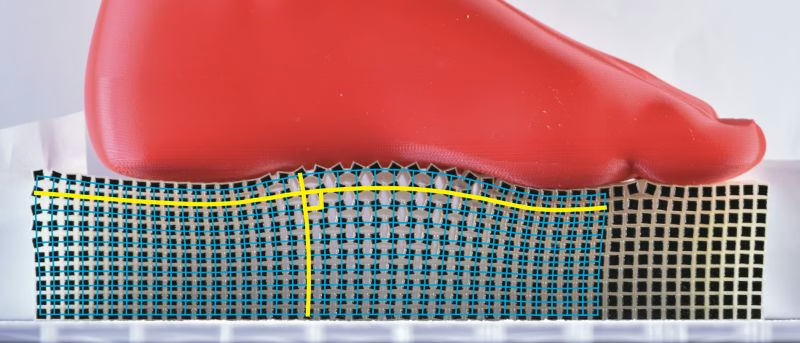
New puppeteering: streamlined control of material deformation
In a new publication in Nature Communications, a team of physicists from Amsterdam, Leiden and Georgia (USA) show how to ‘puppeteer’ lab-designed metamaterials. By only touching these materials from the outside, they are able to predict and perform precise deformations of the whole material.
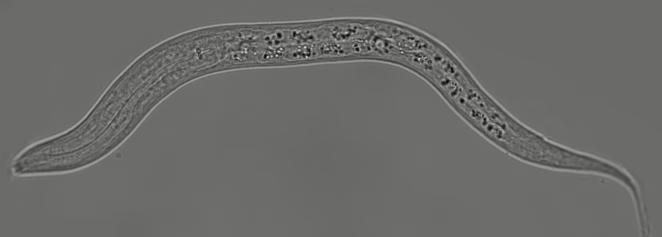
C. elegans does not accidentally switch off its ability to detect salt
AMOLF researchers, collaborating with researchers from the Erasmus MC, have discovered a genetic mechanism that ensures that a nerve cell retains its identity once it has differentiated. This concerns a neuron in the worm C. elegans that can detect salt. Its identity is activated by a genetic switch during the cell’s development. Jeroen van Zon and his colleagues have discovered how it is possible that this switch never spontaneously switches off again. The research was published today in the scientific journal eLife.
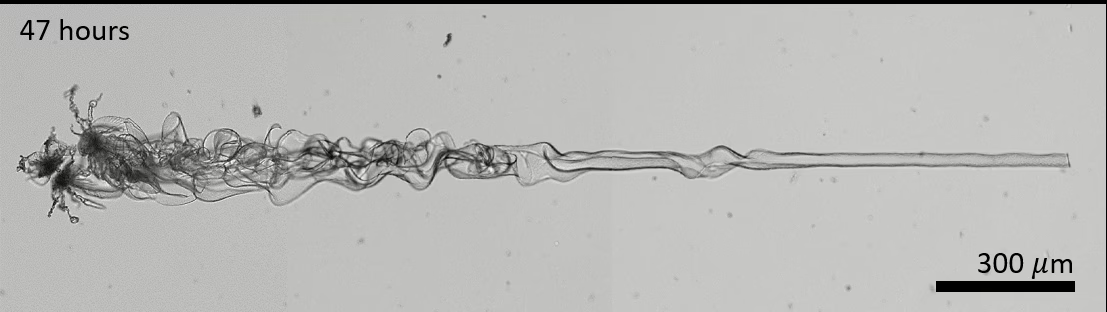
Crystals beneath a sunbed
Light-controlled spontaneous growth of nanostructures PhD student Marloes Bistervels from the Self-Organizing Matter research group at AMOLF has managed to use light to very precisely control the formation of nanocomposites in the shape of corals and vases. By illuminating a solution of the right ingredients with UV light, she can control where, when and which structures arise at the micrometer scale. This week, she published her findings in the scientific journal Advanced Materials.
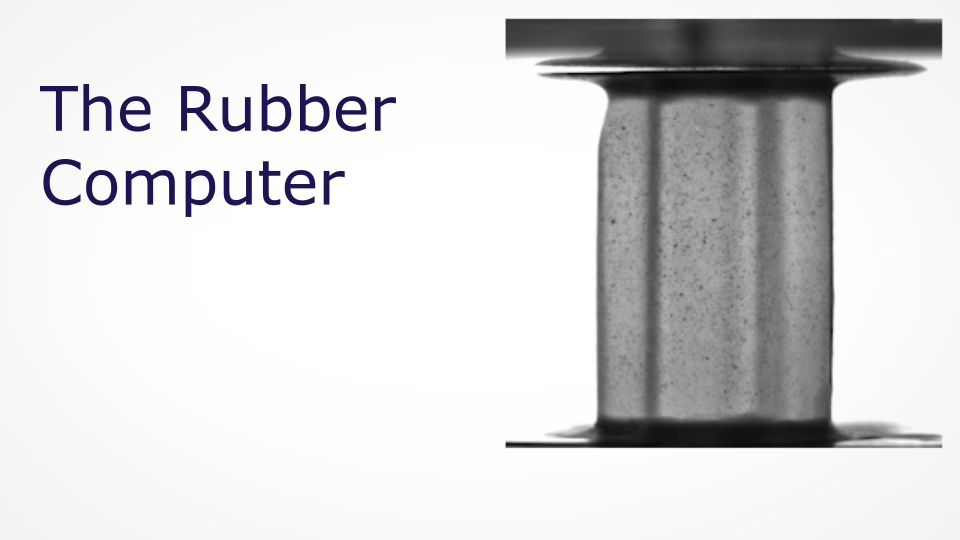
A computer made of rubber
A piece of corrugated rubber can function as a simple computer, displaying memory and dis-playing the ability to count to two. Physicists from Leiden University and AMOLF published about the computing rubber in the journal PNAS. ‘Simple materials can process information, and we want to find the principles behind that.’
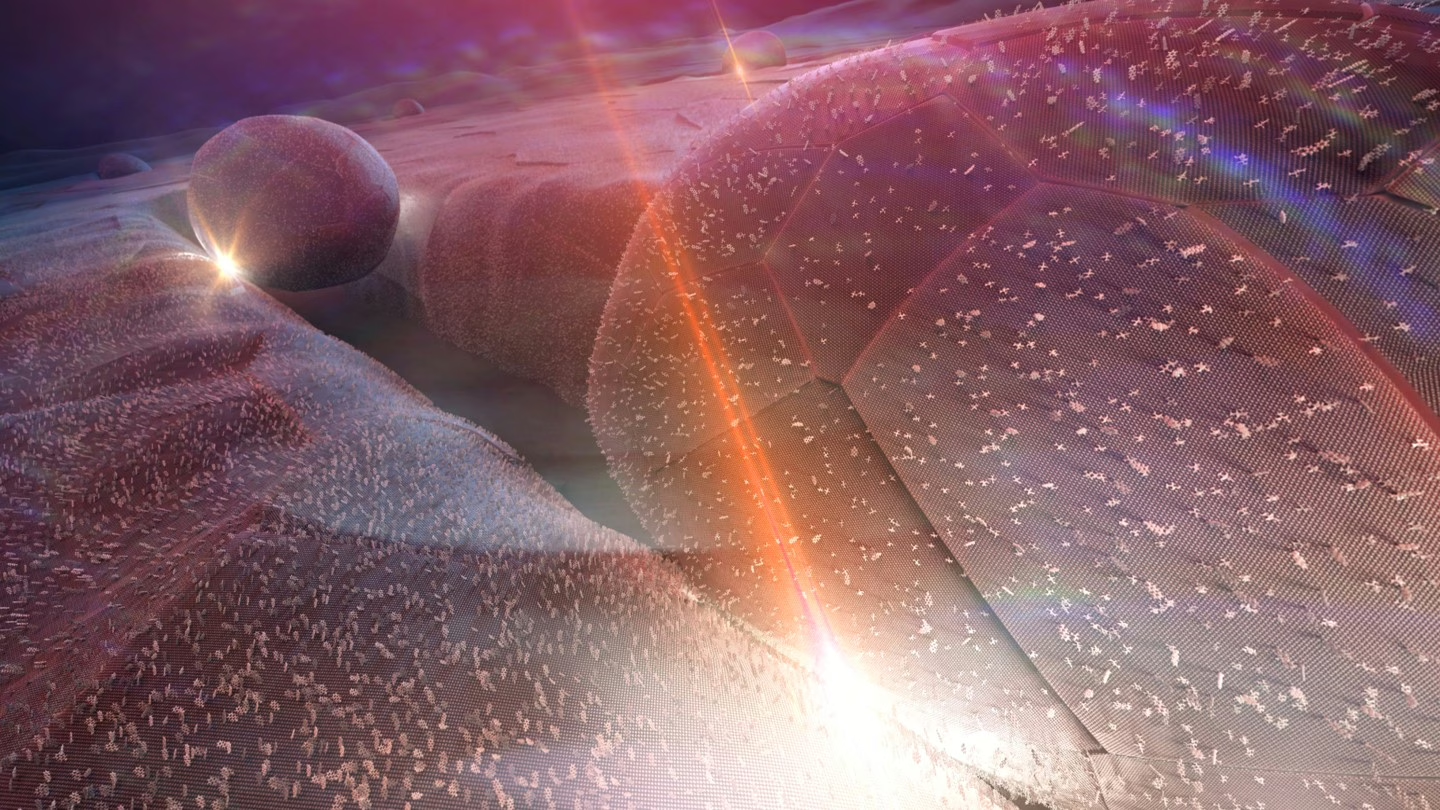
Molecular device turns infrared into visible light
Researchers at EPFL, China, Spain and AMOLF have built a micro-device that uses vibrating molecules to transform invisible mid-infrared light into visible light. The breakthrough ushers in a new class of compact sensors for thermal imaging and chemical or biological analysis. The team publishes their findings in Science.
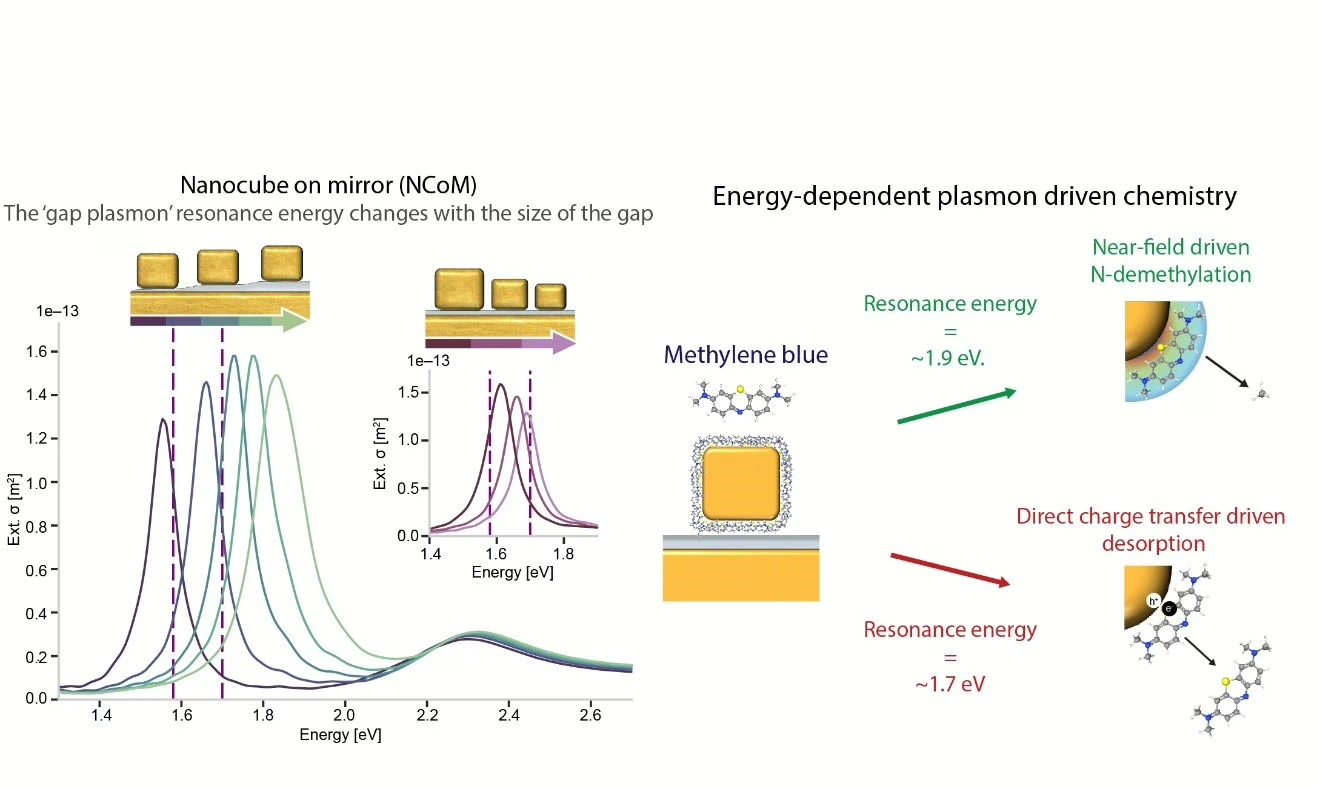
Tuning chemical reactions with light
AMOLF researchers unravel how nano-antennas enhance chemical reactions The chemical industry consumes a lot of energy, not only to initiate reactions but also to separate products from by-products. In a promising emerging field of research, scientists worldwide are trying to use nanoscale antennas to capture and concentrate light into tiny volumes in order to initiate chemical reactions more efficiently and sustainably.