
News & updates
Latest developments from our institute
Stay informed about new research results, awards, events, and collaborations across our scientific community.
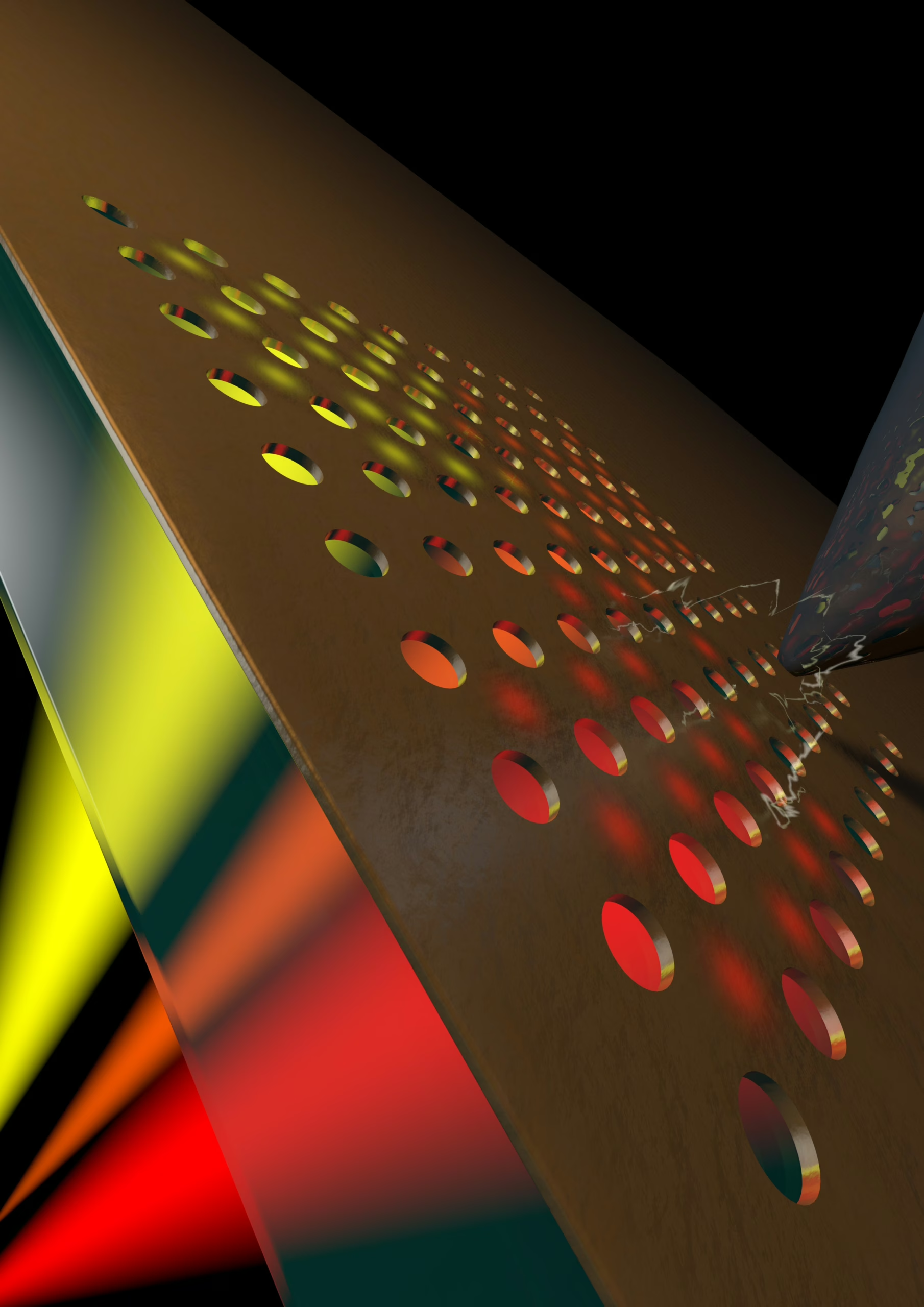
New mechanism to convert light into electricity: the ‘plasmo-electric effect’
Researchers of the FOM Institute AMOLF and the California Institute of Technology have discovered a new method to generate electrical potentials using light. Using precisely sculpted metal nanocircuits they found that light can be effectively captured and converted to an electrical potential as high as 100 millivolt. The research was published on 30 October 2014 in the journal Science. The AMOLF-Caltech team, who have been collaborators for many years, give the newly discovered effect the name “plasmo-electric effect”. Albert Polman, the leader of the AMOLF-part of the team: “This is an entirely new way to convert light into electricity. We have now shown that we can create a voltage; the next step is to see if we can also collect current and generate electrical power.”
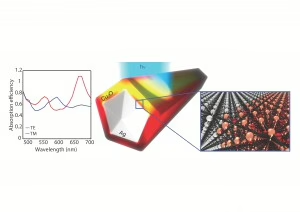
Core-shell nanowire antennas boost absorption for solar cells
Researchers at the FOM Institute AMOLF have taken the first steps towards making a high performance solar cell by coating metal nanowire electrodes with an ultrathin shell of the absorbing material copper oxide. Such “solar highways” may provide an ideal geometry for future high efficiency solar cells. This work was published in Nano Letters on September 18, 2014
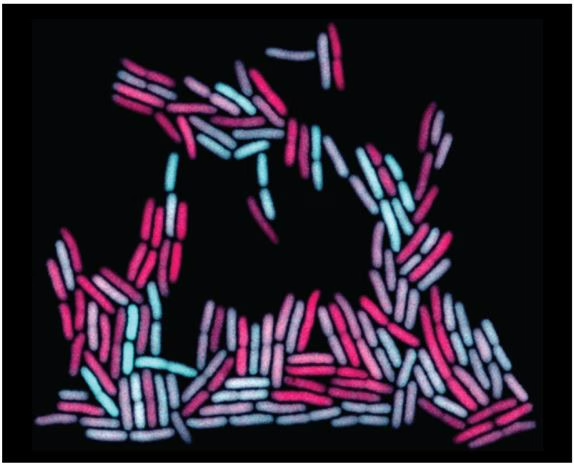
Cell factory runs with fits and starts
Researchers from FOM institute AMOLF have discovered that metabolism, the process that converts molecules in a cell, proceeds irregularly. As metabolism is the motor that drives all biological activity in cells this instability may play a role in diseases such as cancer. The researchers will publish their study on 3 September 2014 in Nature.

Martin van Hecke starts new research group on ‘Mechanical Metamaterials’
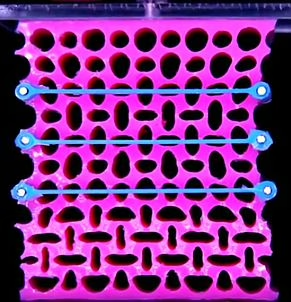
As of September 1, Martin van Hecke starts a new research group on Mechanical Metamaterials. These forms of matter derive their transnatural functionalities from their structure rather than composition — examples range from elastic media with carefully designed cavities to Origami. Main research themes are to explore programmable, active and intelligent metamaterials, as well as to discover their design rules (“the inverse problem”).
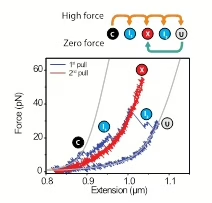
Observing the misfolding of a single protein
Researchers from FOM institute AMOLF have directly observed the misfolding of a protein chain. Protein chains are thought to fold into the wrong structure sometimes, and thus cause neurodegenerative diseases. It has now become possible to follow this crucial process directly, by mechanically manipulating single proteins. The paper reporting on this work is published online on 14 August in Angewandte Chemie.
Infrared-activated fuel cells
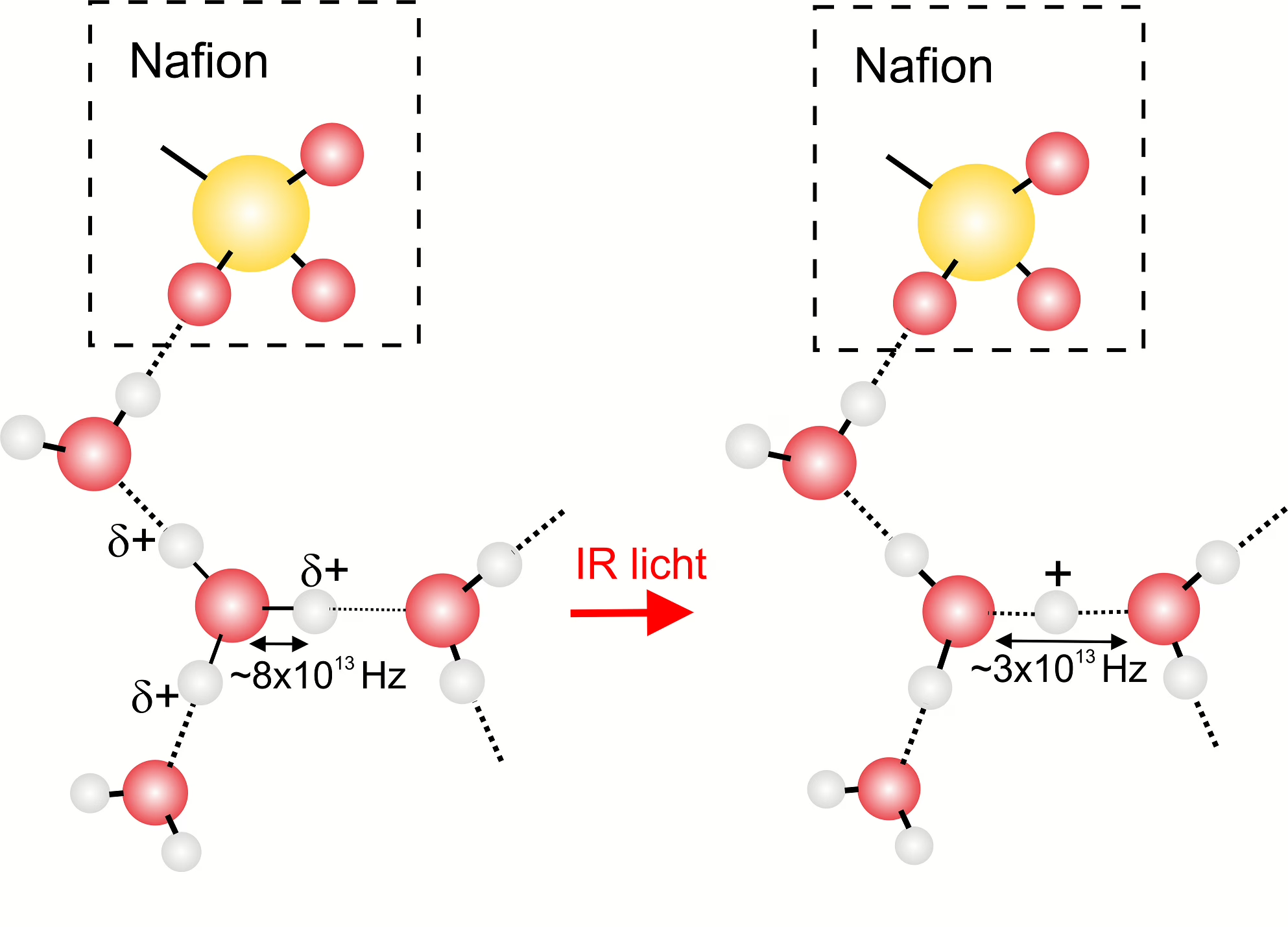
Researchers from FOM Institute AMOLF have discovered that infrared light strongly stimulates the transport of protons (H+ ions) in hydrogen fuel cells. Hydrogen fuel cells are an alternative, clean source of energy: hydrogen and oxygen are directly converted into electricity with clean water as the sole waste product. A good proton conduction increases the efficiency and yield of these cells. The researchers published their results online on June 26, 2014 in Physical Review Letters.
AMOLF to pursue Designer Matter
Arrival of Martin van Hecke initiates a new line of research. FOM Institute AMOLF is launching a new line of research in designer matter, aimed at the design of new forms of functional matter. Professor Martin van Hecke (Leiden University) will lead a new research group at AMOLF, with effect from 1 September 2014, in the area of mechanical metamaterials. Together with Van Hecke, AMOLF will further expand the broad line of research into designer matter over the next few years. Van Hecke will continue to spend half of his time at Leiden University.
MRS 2014 Innovation in Materials Characterization Award for Albert Polman
AMOLF group leader Albert Polman receives the 2014 Innovation in Materials Characterization Award of the Materials Research Society (MRS) “for the development, application and commercialization of Angle-Resolved Cathodoluminescence Imaging Spectroscopy (ARCIS) as a new tool for optical imaging at the nanoscale, with applications in nanophotonics and materials science in general.”