
News & updates
Latest developments from our institute
Stay informed about new research results, awards, events, and collaborations across our scientific community.
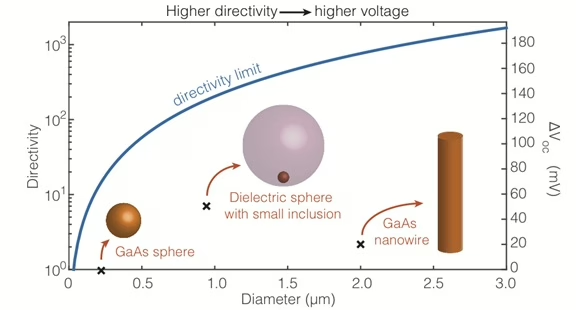
Nanotechnology can improve solar cell efficiencies via directional emission
Researchers from the Nanoscale Solar Cells group at AMOLF together with collaborators from the University of Texas, Austin, and Columbia University, New York, found that nanostructures can enable efficiencies above the so-called “Shockley-Queisser” limit, which limits the efficiency of a normal solar cell to 34%. These results were published in ACS Nano on September 1, 2016.
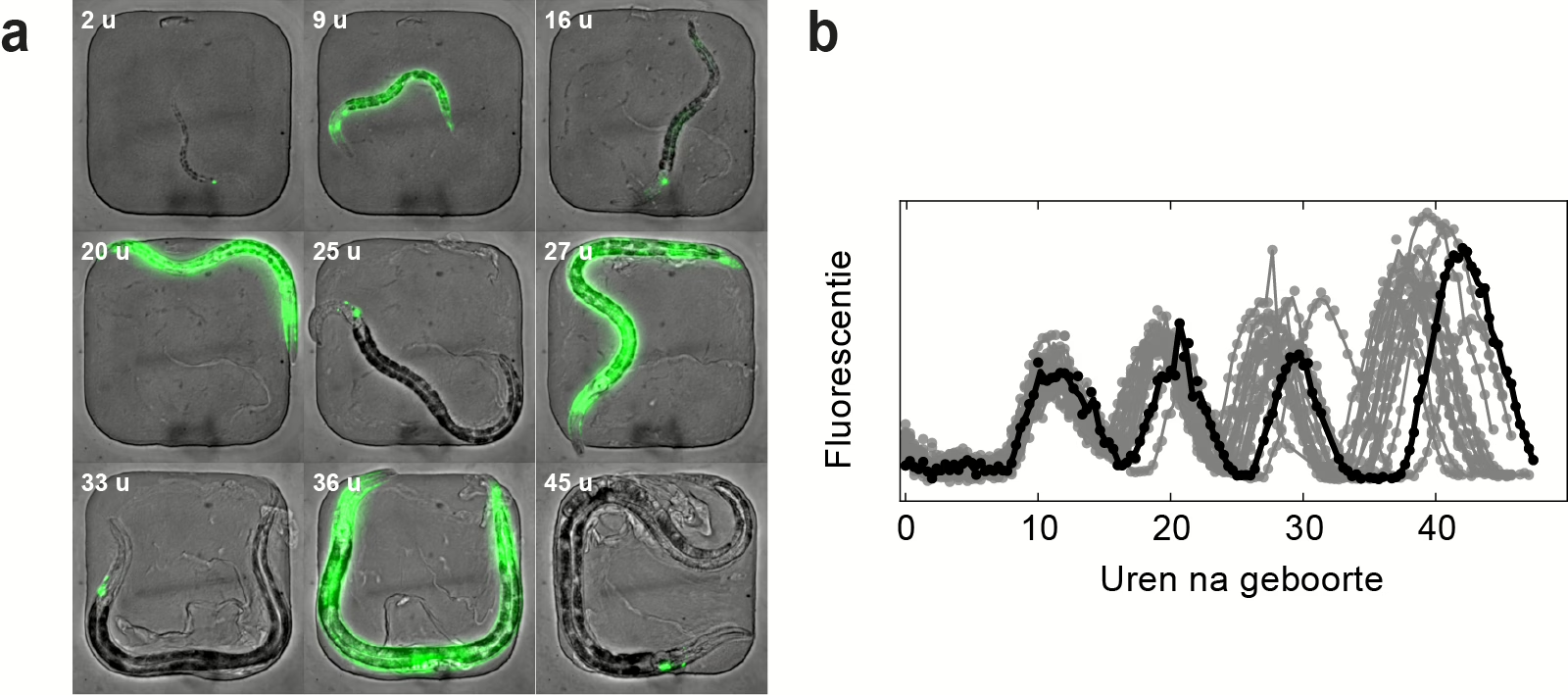
Premiere: watch the development of a larva into an adult worm live
Researchers from FOM institute AMOLF have developed a microscopy technique for the live tracking of development in the individual cells of a growing, eating and moving organism, the nematode worm Caenorhabditis elegans. The next step is to find out how environmental factors affect development. The researchers will publish their findings in Nature Communications, on August 25, 2016.
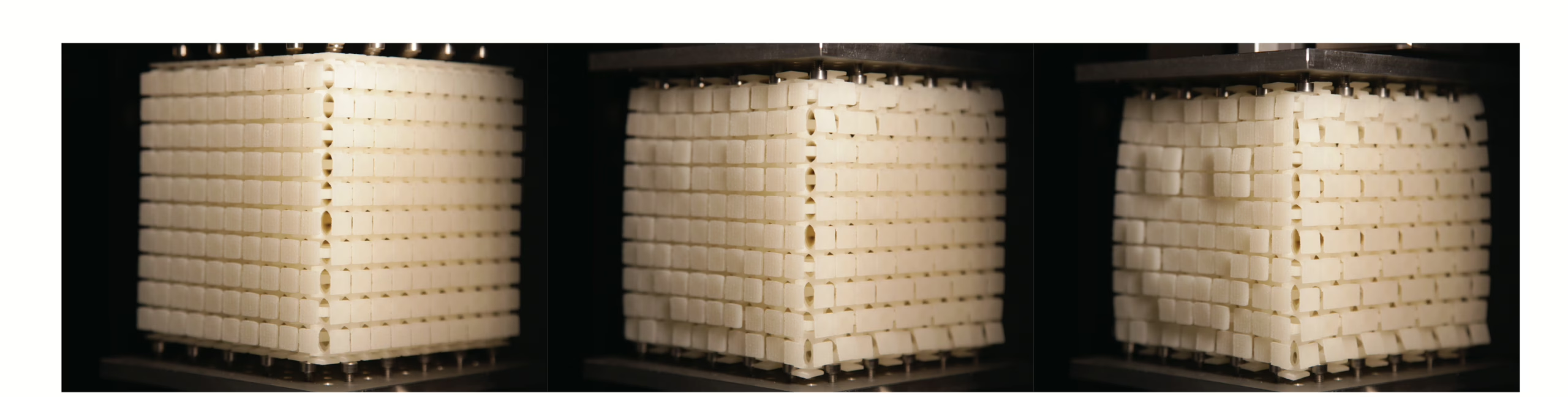
Building with flexible blocks
On an apparently normal cube a pattern of hollows and bulges appears when the cube is compressed. Physicists from FOM Institute AMOLF and Leiden University together with colleagues from Tel Aviv University have developed a method to design such three-dimensional structures and to construct these using simple building blocks. This paves the way for the use of ‘machine materials’ in, for example, prostheses and wearable technology. The researchers published their findings on 28 July in an article in Nature.

Veni grants for Scott Waitukaitus & Andrew Musser
The Netherlands Organisation for Scientific Research (NWO) awarded Veni grants to the AMOLF researchers Scott Waitukaitus and Andrew Musser. In total 158 researchers received a Veni grant with a maximum of 250.000 euro.
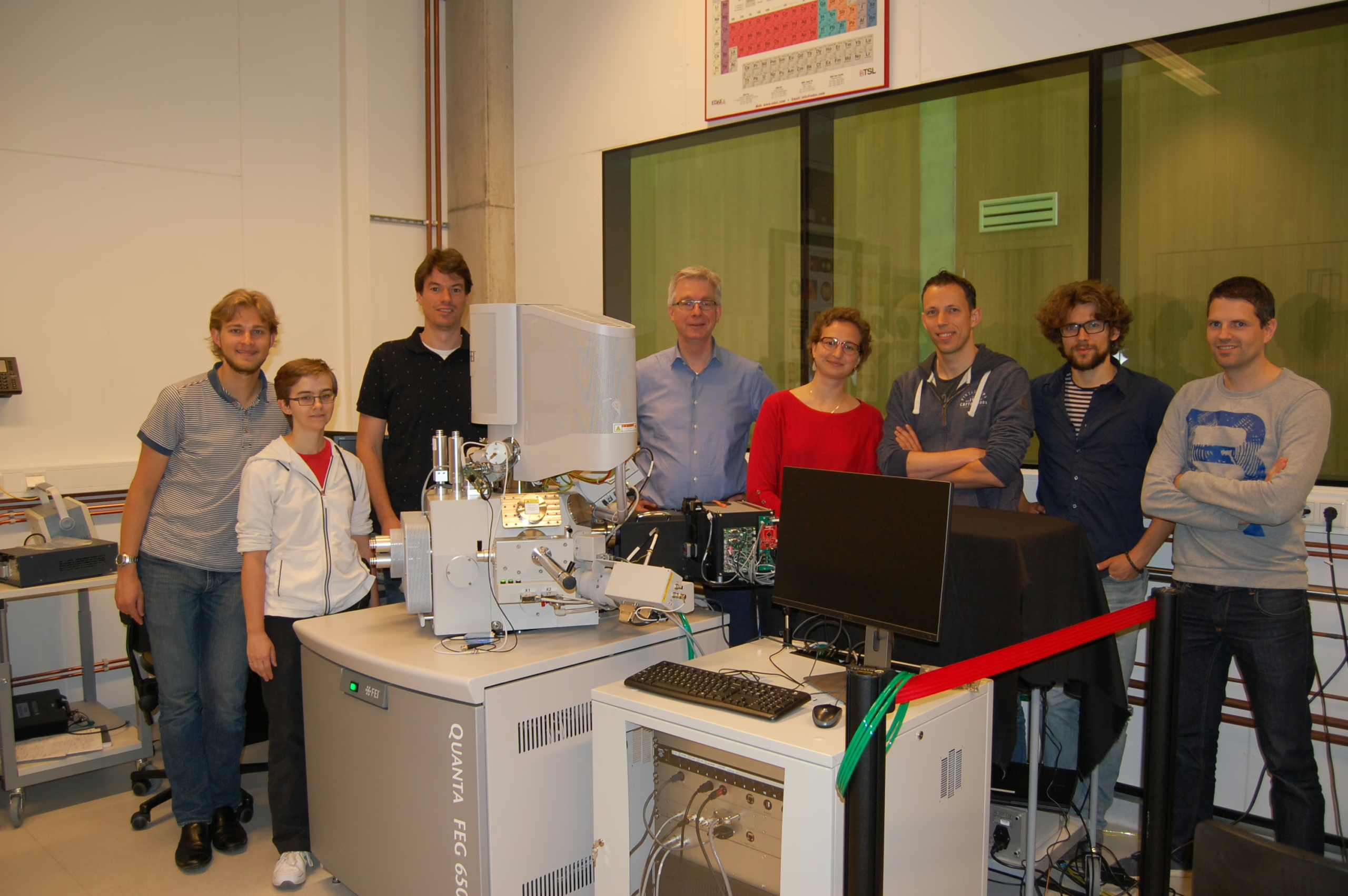
AMOLF opens new ultrafast cathodoluminescence microscope
During a festive celebration on June 22, AMOLF has officially opened a new cathodoluminescence microscope in Albert Polman’s group that enables ultrafast optical measurements with a spatial resolution of 10 nanometer.
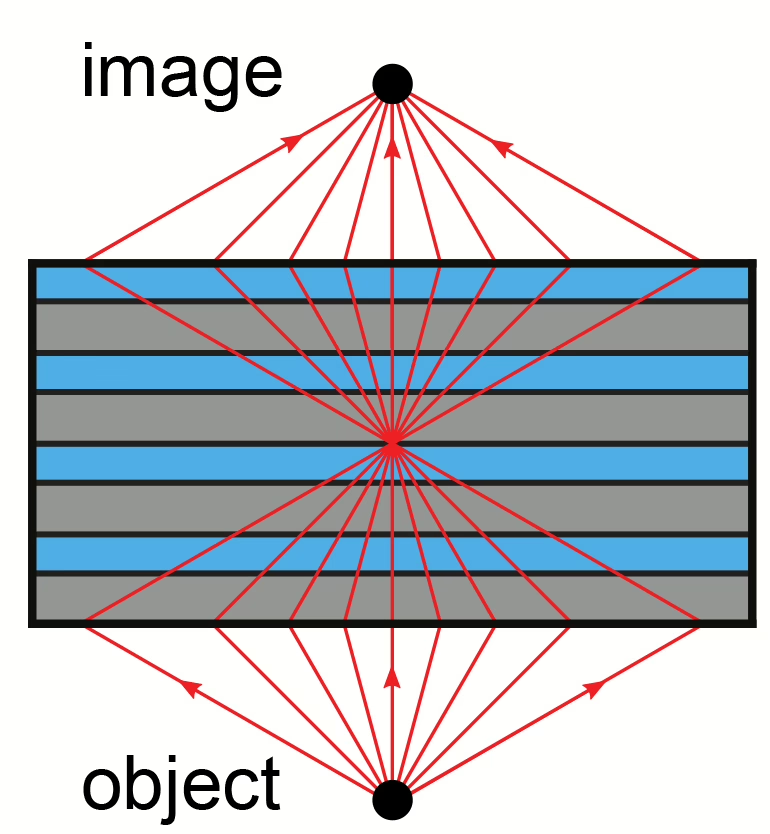
Demonstration of a flat lens for ultraviolet light
AMOLF researchers have created a new optical lens that is flat, rather than curved like a traditional glass lens. The lens operates by the mechanism of negative refraction, that was first predicted by Veselago in 1968 and focuses ultraviolet light to a diffraction-limited spot. It can find applications in ultracompact optical storage devices and ultrasmall microscopy instruments.
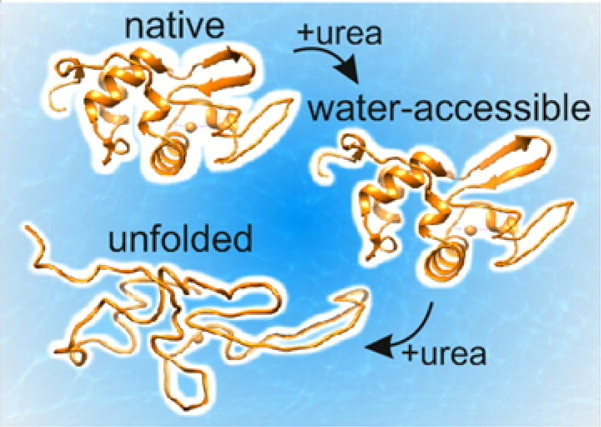
Proteins absorb water before unfolding
Proteins perform specific biological functions for which they strongly depend on their three-dimensional structure that results from the folding of the polypeptide chain. The mechanisms by which proteins fold and unfold are still not fully understood.

Vidi grants for Erik Garnett and Yves Rezus
AMOLF group leaders Erik Garnett and Yves Rezus have received an NWO Vidi grant. NWO has awarded 87 experienced researchers a Vidi grant worth 800,000 euros. The grant enables them to develop their own innovative line of research.