
News & updates
Latest developments from our institute
Stay informed about new research results, awards, events, and collaborations across our scientific community.
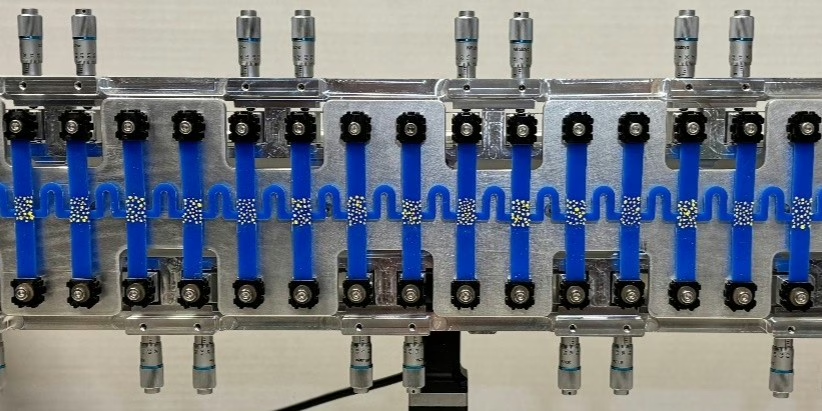
Material that can both store and process information for low-energy computing
Researchers at AMOLF and the University of Konstanz have developed a mechanical material that can store, move, and process information within the same physical structure. The findings, published in Physical Review Letters, could help inspire future computing technologies that use far less energy than conventional computers.
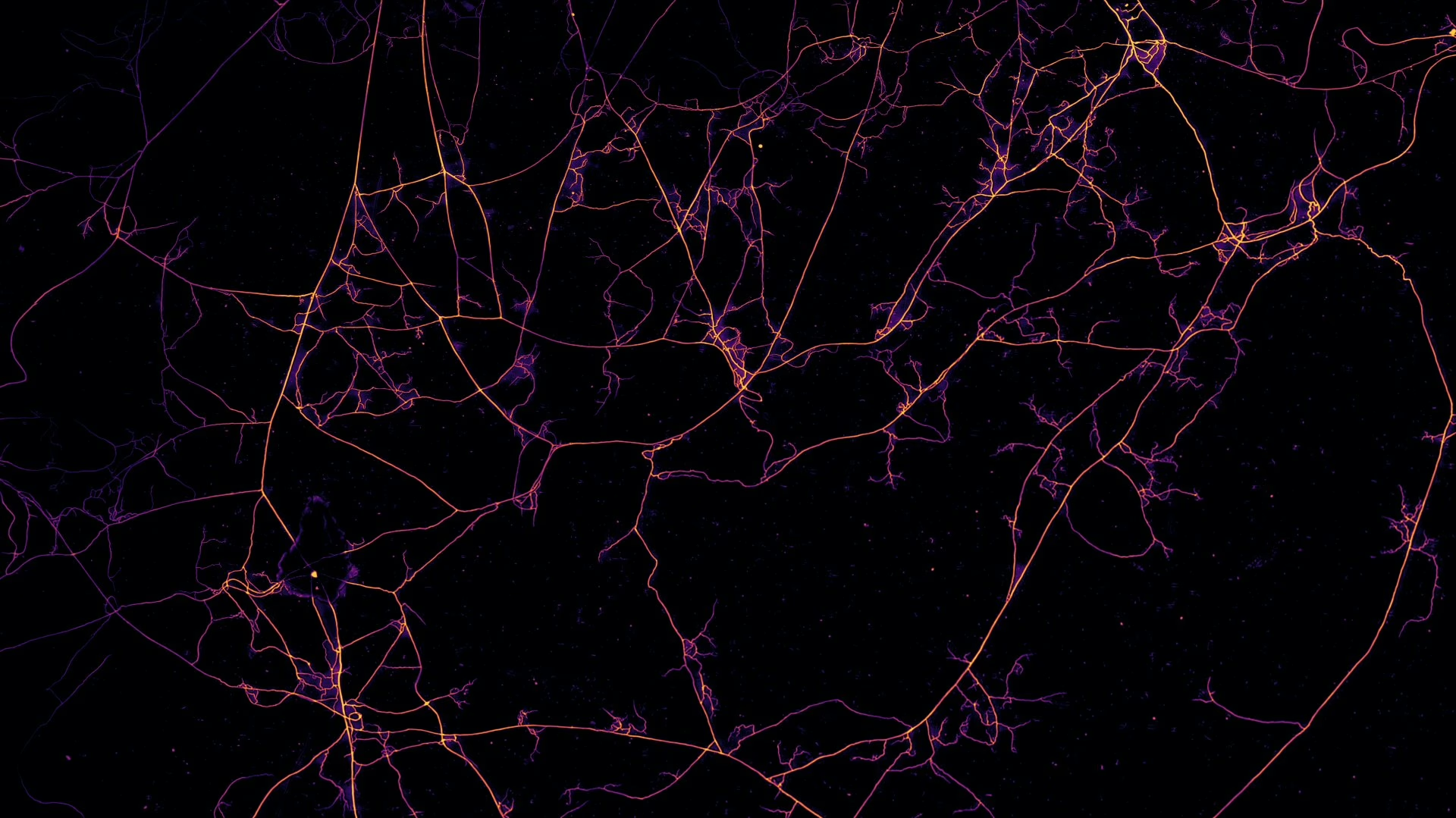
Researchers publish first global maps of the underground networks formed by mycorrhizal fungi
Arbuscular mycorrhizal fungi are soil fungi that form symbiotic relationships with the roots of land plants. Together, they create vast underground networks that sustain plant life and help regulate Earth’s climate by drawing carbon into soils. An international team of researchers has produced the first global maps estimating the distribution and mass of these networks. The study, published on June 11, in Science, includes AMOLF researchers Dr. Corentin Bisot and Prof. dr. Tom Shimizu as authors.
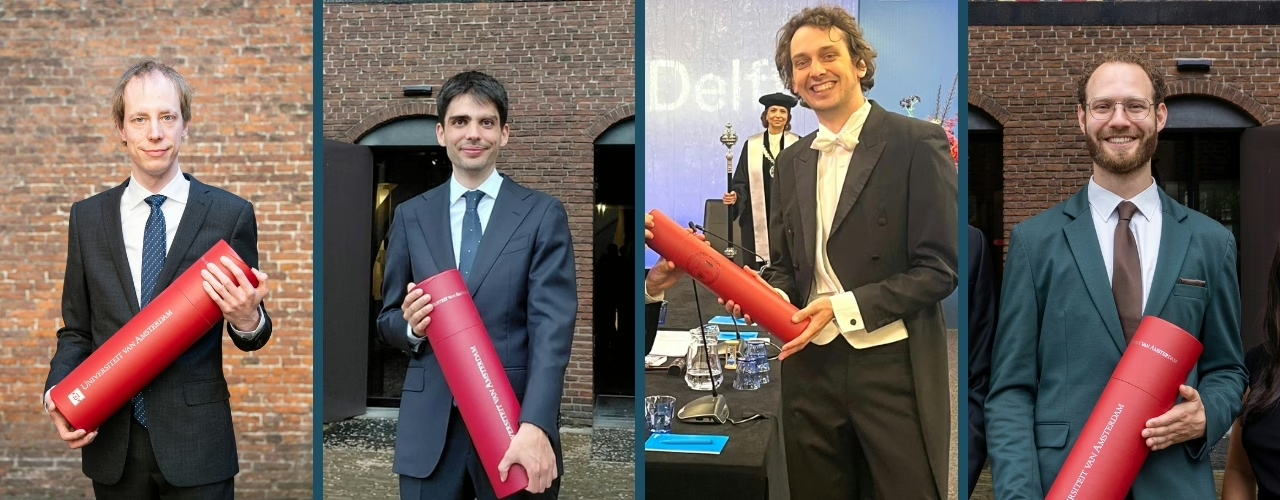
Four PhD candidates close their AMOLF chapter
[caption id="" align="alignnone" width="1280"] Left to right: Sjoerd van Dongen (cum laude), Paul Ducarme, Max Betjes (cum laude), and Mees Dieperink.[/caption] Sjoerd van Dongen (cum laude) At AMOLF, Sjoerd worked…
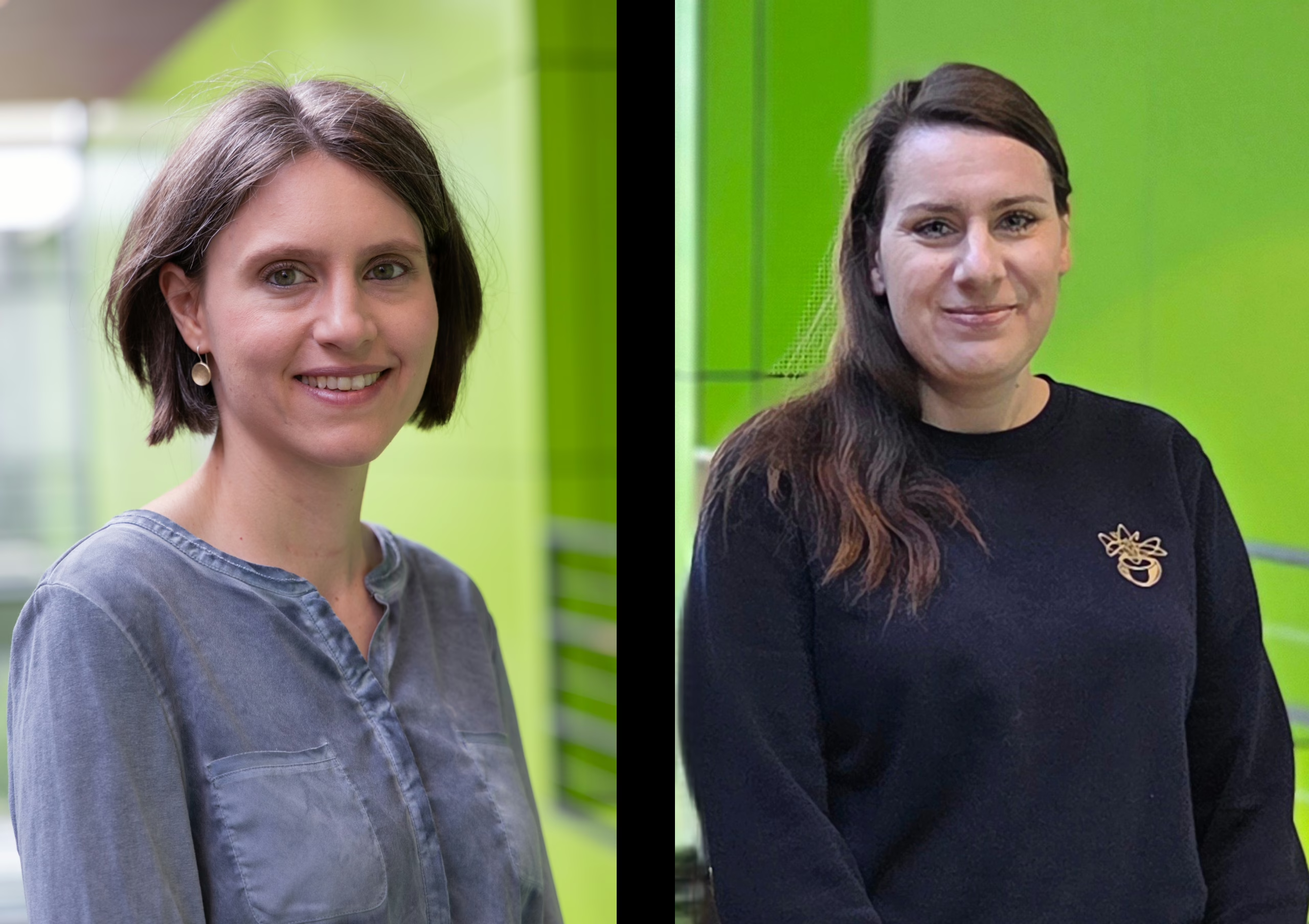
Three grants, three paths toward impact
Wiebke Albrecht AMOLF group leader Wiebke Albrecht has been awarded an NWO XS grant for the project ‘Mapping nanoscale heat generation and dissipation around plasmonic nanoparticles.’ …
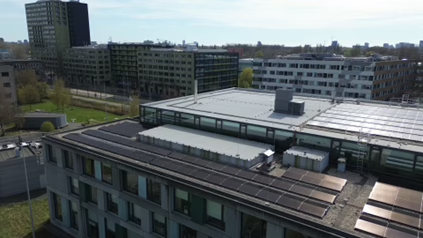
Solar panels on AMOLF building
AMOLF recently switched on its own solar panels on its roof. During a live interview at an internal meeting, facilities manager Nik Noest appeared on a big screen live from the AMOLF roof while switching on the solar panels. His project colleague Cees van der Ven was present in the AMOLF canteen to show the output dashboard. Under loud applause, the solar panels were put into operation, providing electricity to cover part of AMOLF’s demand.
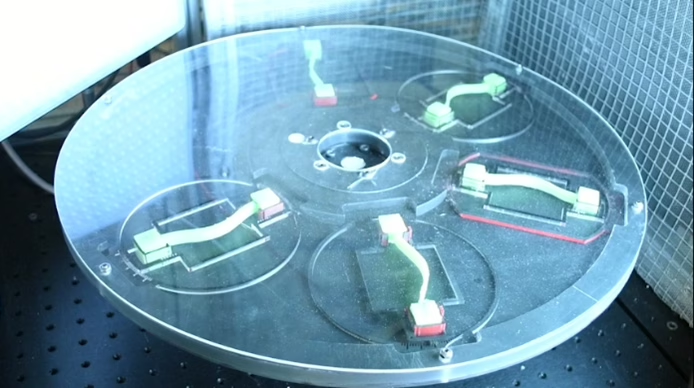
Writing words into smart materials
Researchers at AMOLF, EPFL, and Leiden University have developed a new way to store information in mechanical metamaterials. These are artificial materials that have been engineered to exhibit unique properties. In a paper published in Science Advances on May 6, the team shows how one simple signal can cause a response in multiple mechanical elements (material bits) simultaneously. This extraordinary level of control allows them to write all letters of the alphabet into a mechanical system. The discovery could help create future smart materials, soft robots, and remotely controlled devices.
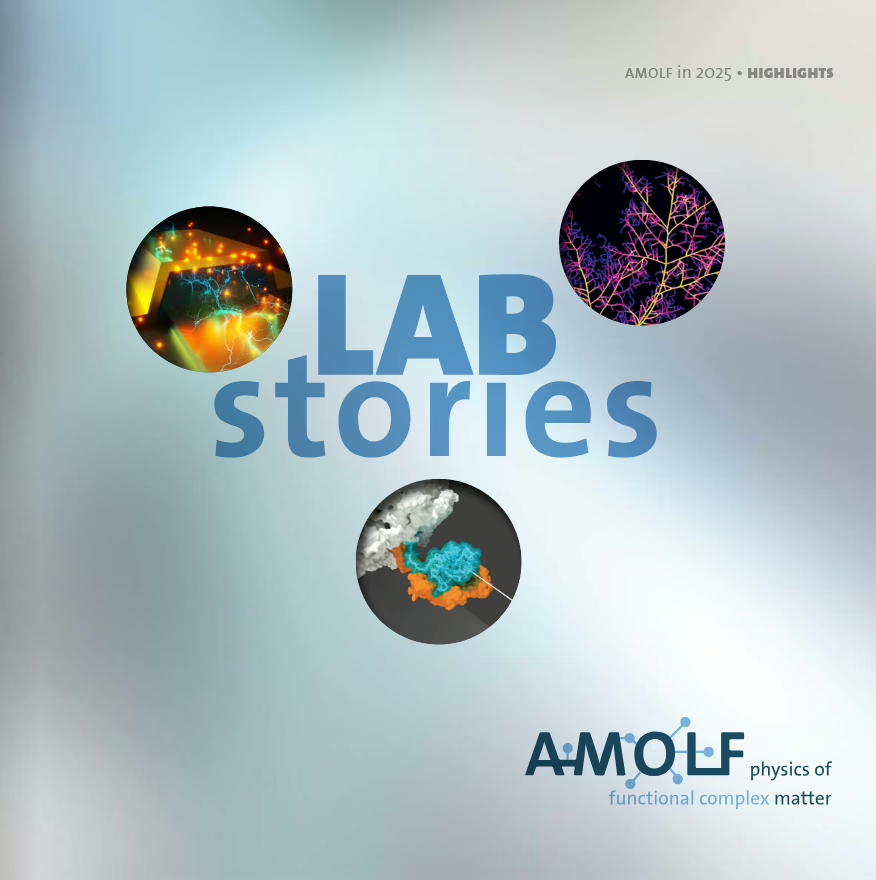
New publication showcases highlights from AMOLF in 2025
AMOLF has launched the first edition of Lab Stories, a new publication presenting a selection of scientific achievements and technical innovations from 2025. It offers a broad overview of the diversity of research at AMOLF, ranging from sustainable energy materials and information processing in matter to autonomous and adaptive systems. It also highlights the people, technical expertise, and collaborations that enable the institute’s science.
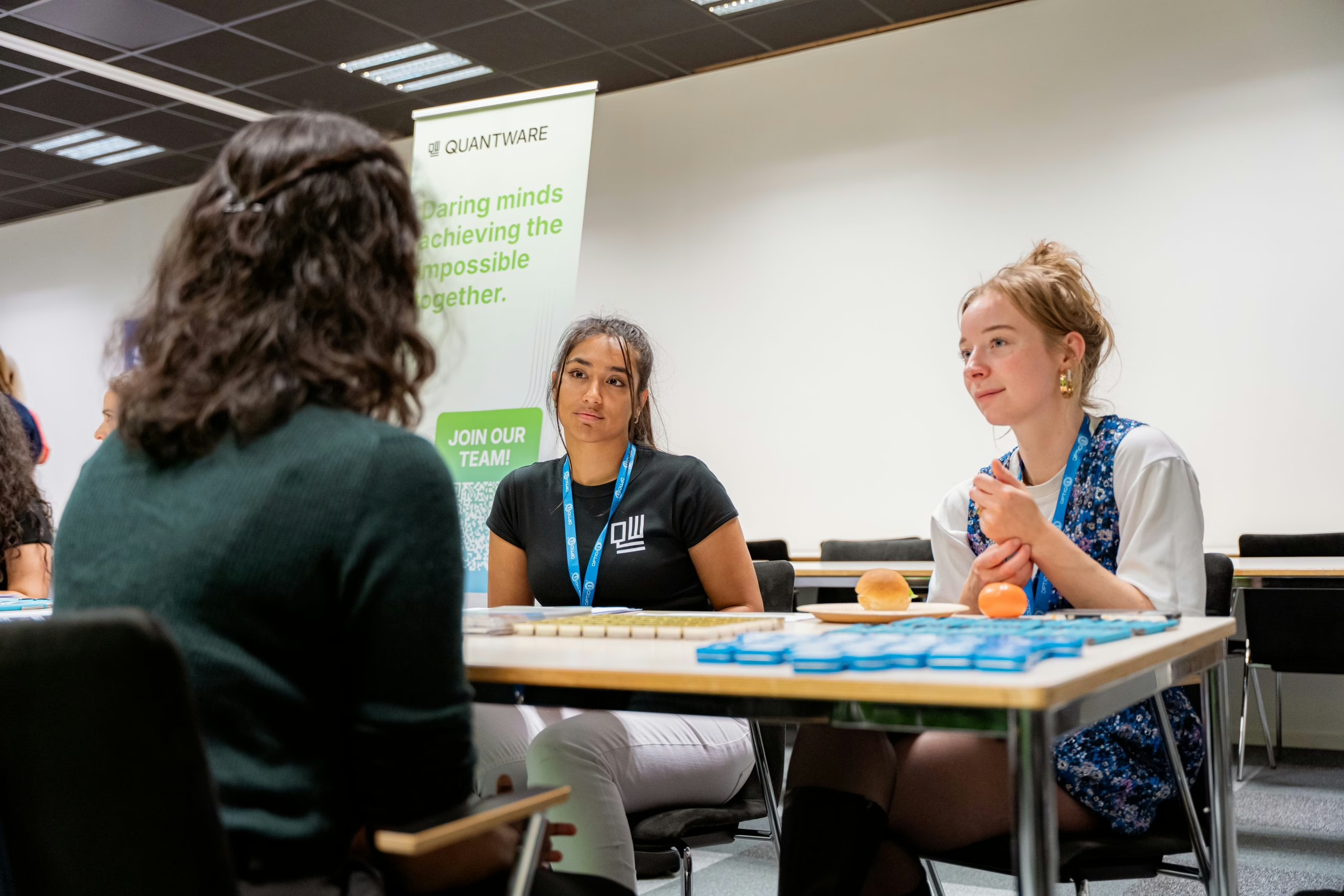
WomenNetPhysics symposium fosters inclusivity in the physics community
On May 8, a group of 120 young researchers came to Amsterdam Science Park for the third edition of WomenNetPhysics (WNP), the largest Dutch networking event for women in physics. Bringing together both women and men, the event united participants through a shared interest in improving the position of women in the field. WomenNetPhysics 2026 was organized by: AMOLF, UvA IoP, ARCNL, and NIKHEF.