
News & updates
Latest developments from our institute
Stay informed about new research results, awards, events, and collaborations across our scientific community.
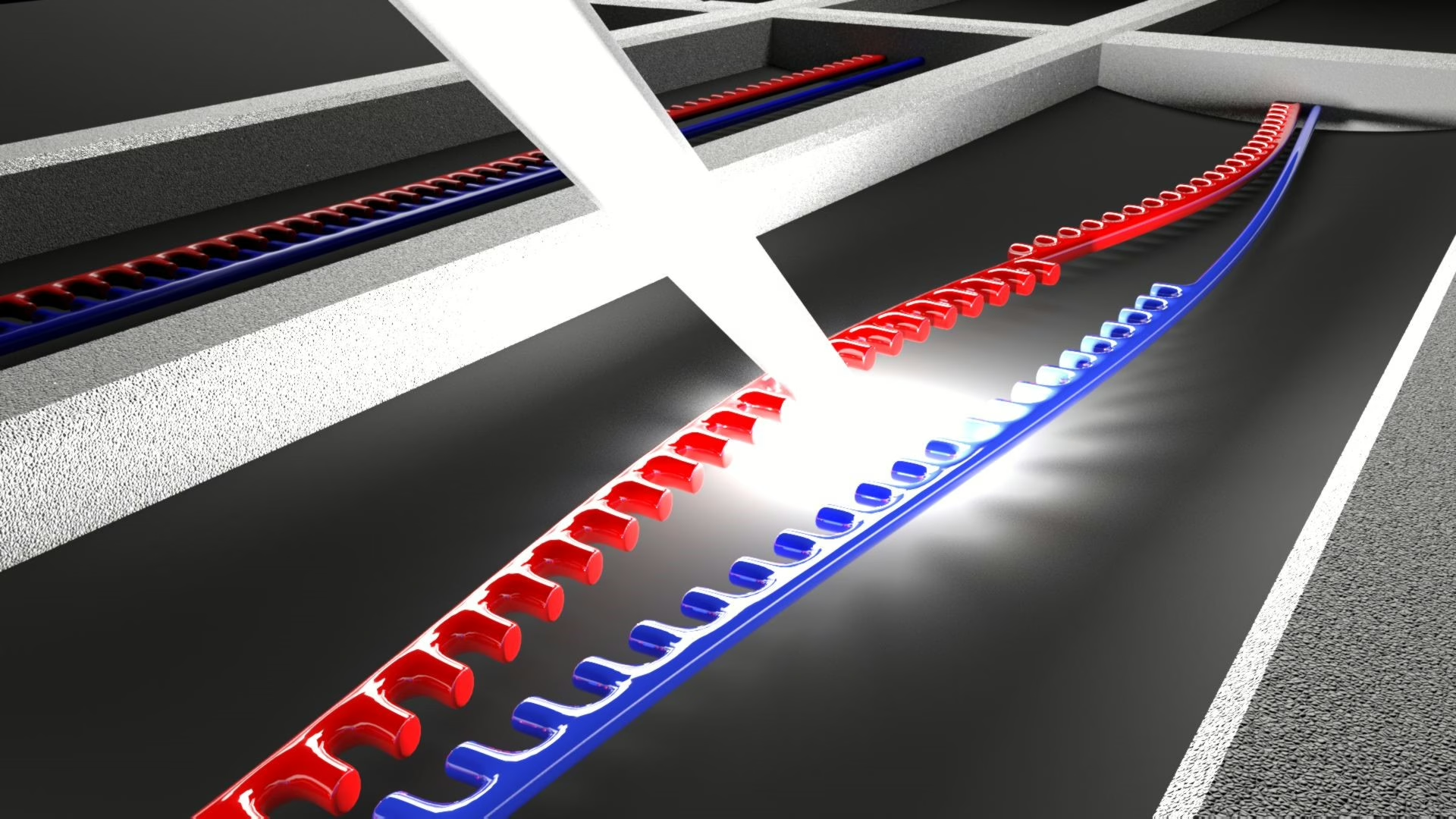
Discovery of new mechanisms to control the flow of sound
Using a network of vibrating nano-strings controlled with light, researchers from AMOLF have made sound waves move in a specific irreversible direction and attenuated or amplified the waves in a controlled manner for the first time. This gives rise to a lasing effect for sound. To their surprise, they discovered new mechanisms, so-called ‘geometric phases’, with which they can manipulate and transmit sound in systems where that was thought to be impossible. “This opens the way to new types of (meta)materials with properties that we do not yet know from existing materials,” says group leader Ewold Verhagen who, together with shared first authors Javier del Pino and Jesse Slim, publishes the surprising results on June 2 in Nature.
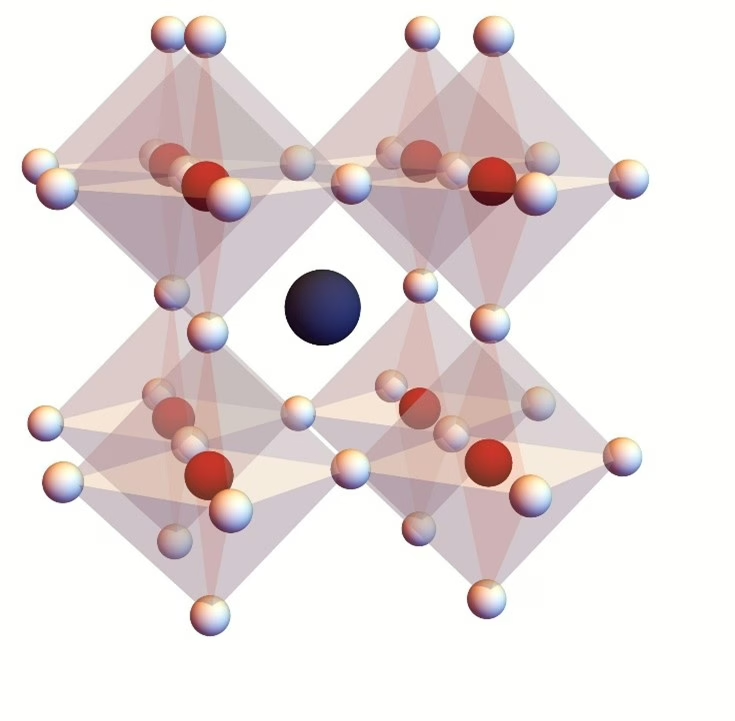
Open Technology Programme (OTP) funding
In the Open Technology Programme (OTP) call for proposals of NWO, Bruno Ehrler and Erik Garnett have received funding to carry out the research plan ‘Achieving Semiconductor Stability from the Ground Up’. The OTP call for proposals is open to excellent research aimed at the possible implementation of the results. In addition to the scientific contribution carried out by AMOLF, the following companies are involved: EDAX (subsidiary of Ametek), CL Solutions (part of Delmic), and Amsterdam Scientific Instruments (ASI). The total project receives 1.1 million euros.
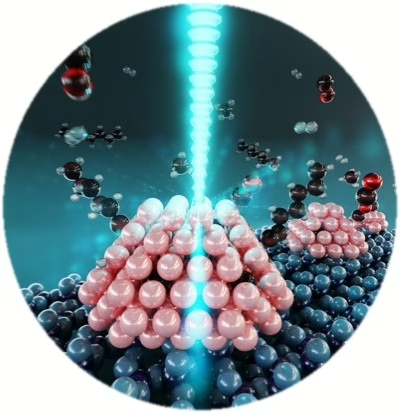
Light-Catalyst Interactions to Sense and Steer Chemical Reactions
AMOLF and Utrecht University have been awarded a 1.9 million euro research project by the Dutch Research Council (NWO) Key Technologies 2020-2023 programme to develop radically new catalytic reactors using plasmonic systems. The project entitled “Sensing and Steering Catalytic Reactions with Light” (CatLight) is a multidisciplinary collaboration between AMOLF (Alarcon-Llado, Albrecht, Ehrler, Garnett and Polman), Utrecht University (Weckhuysen, Hutter, Rabouw), and industrial partners BASF, ExxonMobil, Shell, Toyota Motor Europe, DENSsolutions, and Delmic.
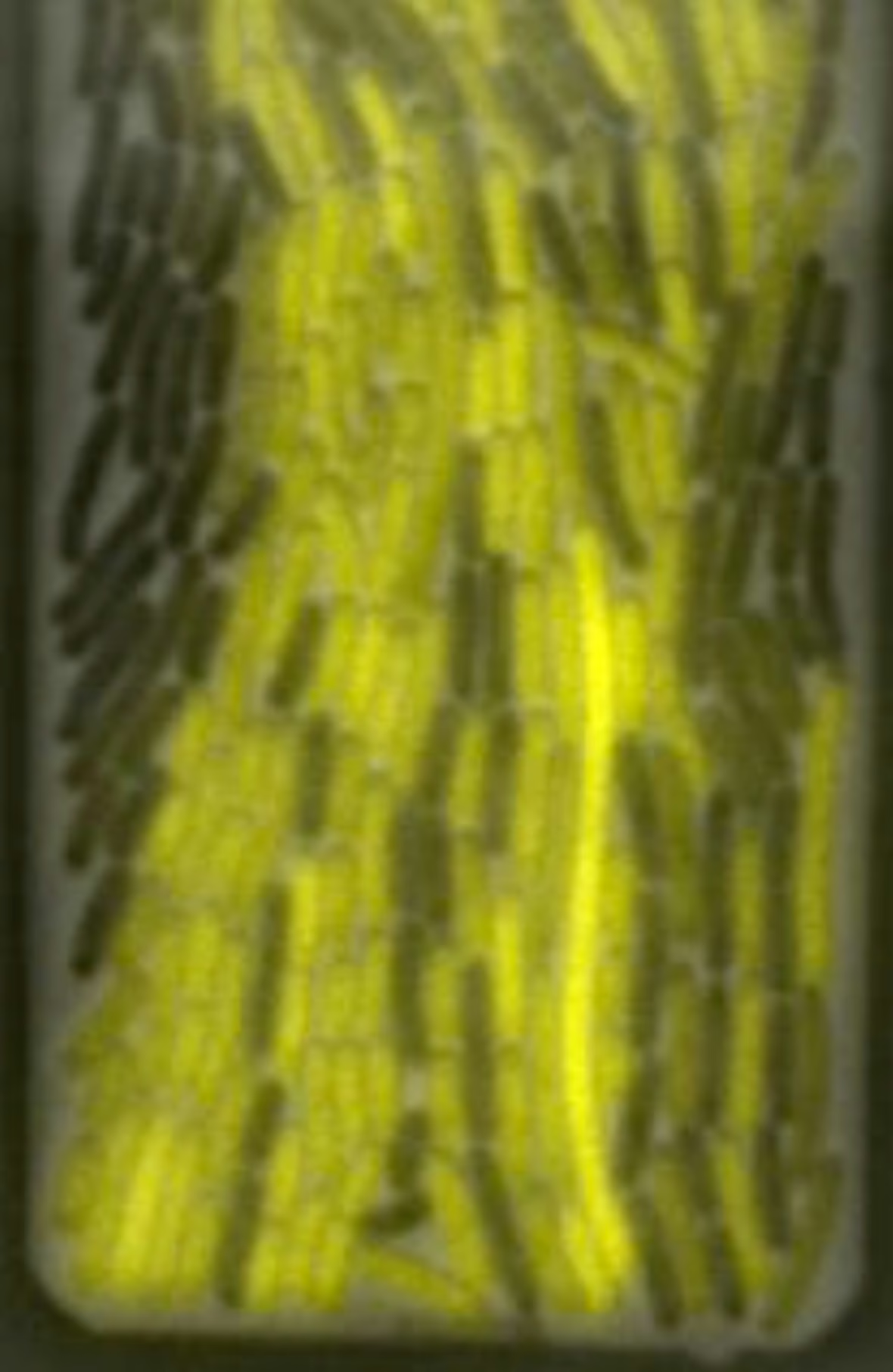
First study of CRISPR-Cas defense in individual cells shows remarkable variability
Specialists in single cell dynamics of research institute AMOLF together with CRISPR-Cas researchers of TU Delft were able to measure for the first time how quickly a single cell can build new memory and remove invading DNA using the CRISPR Cas system. Remarkably, they noted a large variability between individual cells in different populations. The results were published on April 25, 2022 in the open access scientific journal Molecular Systems Biology.

NWO funding for perovskite solar foil consortium
The Light Management in New Photovoltaic Materials (LMPV) Center at AMOLF starts a new solar consortium on perovskite solar foils by roll-to-roll manufacturing, which has recently been funded by NWO’s Knowledge and Innovation Convenant (KIC). The grant has been awarded as part of the ‘Innovations for wind and solar energy’ thematic call for proposals. The consortium consists of a mix of academic organizations and small and medium-sized enterprises. The total grant amount is 1,5 million euro.
Record efficiencies in thin film photovoltaic cells
Silicon solar cells have proven to be the champion photovoltaic technology, as they use earth abundant raw materials (i.e. Si) and perform with high efficiency. However, they are based on thick, rigid and heavy wafers and can therefore only be installed in a limited amount of places. One of the ways to overcome this disadvantage is to use thin membranes instead. This will reduce the amount of Si by more than 99% (dramatically saving in raw materials) and also make the cells flexible and lightweight. As such, these cells can be easily integrated into buildings, urban architecture and even small every day gadgets. The problem though, is that such thin Si membranes cannot absorb light as efficiently. In fact, only 25% of the sunlight is absorbed and you can even see through them!
ERC Consolidator grant for Erik Garnett
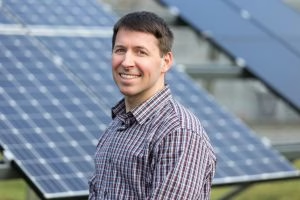
AMOLF group leader Erik Garnett (Nanoscale Solar Cells) has received an ERC Consolidator grant amounting 3.0 million euros from the European Research Council (ERC). In addition to being an AMOLF group leader, Garnett holds a professorship by special appointment at the University of Amsterdam (UvA).
ERC Consolidator grants for Wim Noorduin and Erik Garnett
AMOLF group leaders Erik Garnett (Nanoscale Solar Cells) and Wim Noorduin (Self-Organizing Matter) have received an ERC Consolidator grant from the European Research Council (ERC). They have been granted respectively 3.0 and 2.4 million euros to carry out their research plans. In addition to being an AMOLF group leader, Garnett and Noorduin both hold a professorship by special appointment at the University of Amsterdam (UvA).