
News & updates
Latest developments from our institute
Stay informed about new research results, awards, events, and collaborations across our scientific community.
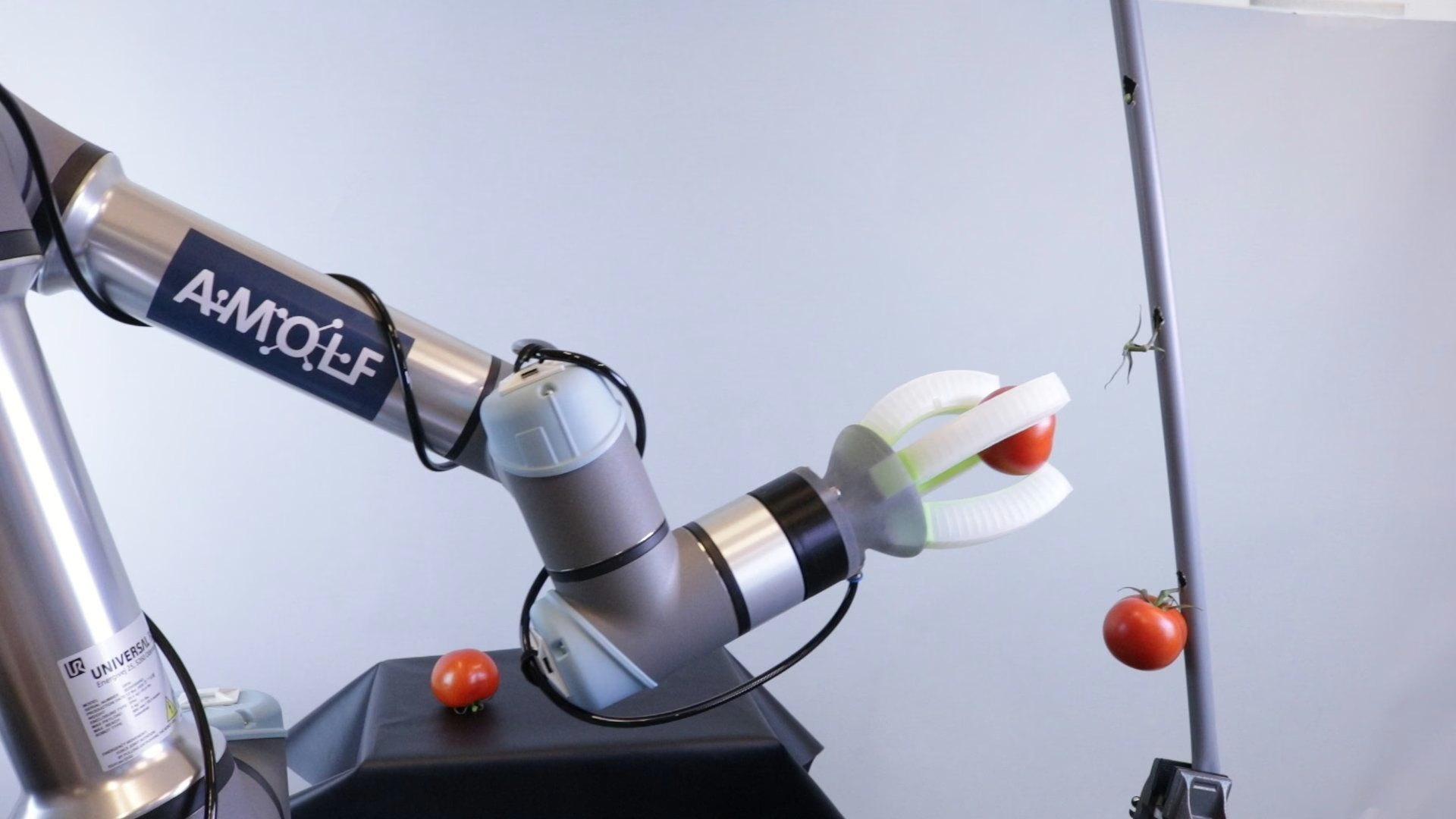
Soft robot fingers carefully squeeze without sensors
With a brief squeeze, you know whether an avocado, peach or tomato is ripe. This is what a soft robot hand also does, for example, during automated harvesting. However, up until now, such a gripper needed sensors in its ‘fingers’ to determine whether the fruit was ripe enough. Shibo Zou and Bas Overvelde from the AMOLF Soft Robotic Matter Group have developed an external method to measure the interaction of soft robots with their environment that does not require built-in sensors. Furthermore, the technique can be easily applied to a range of existing soft robots. The research was published on January 15, 2024, in the scientific journal Nature Communications.
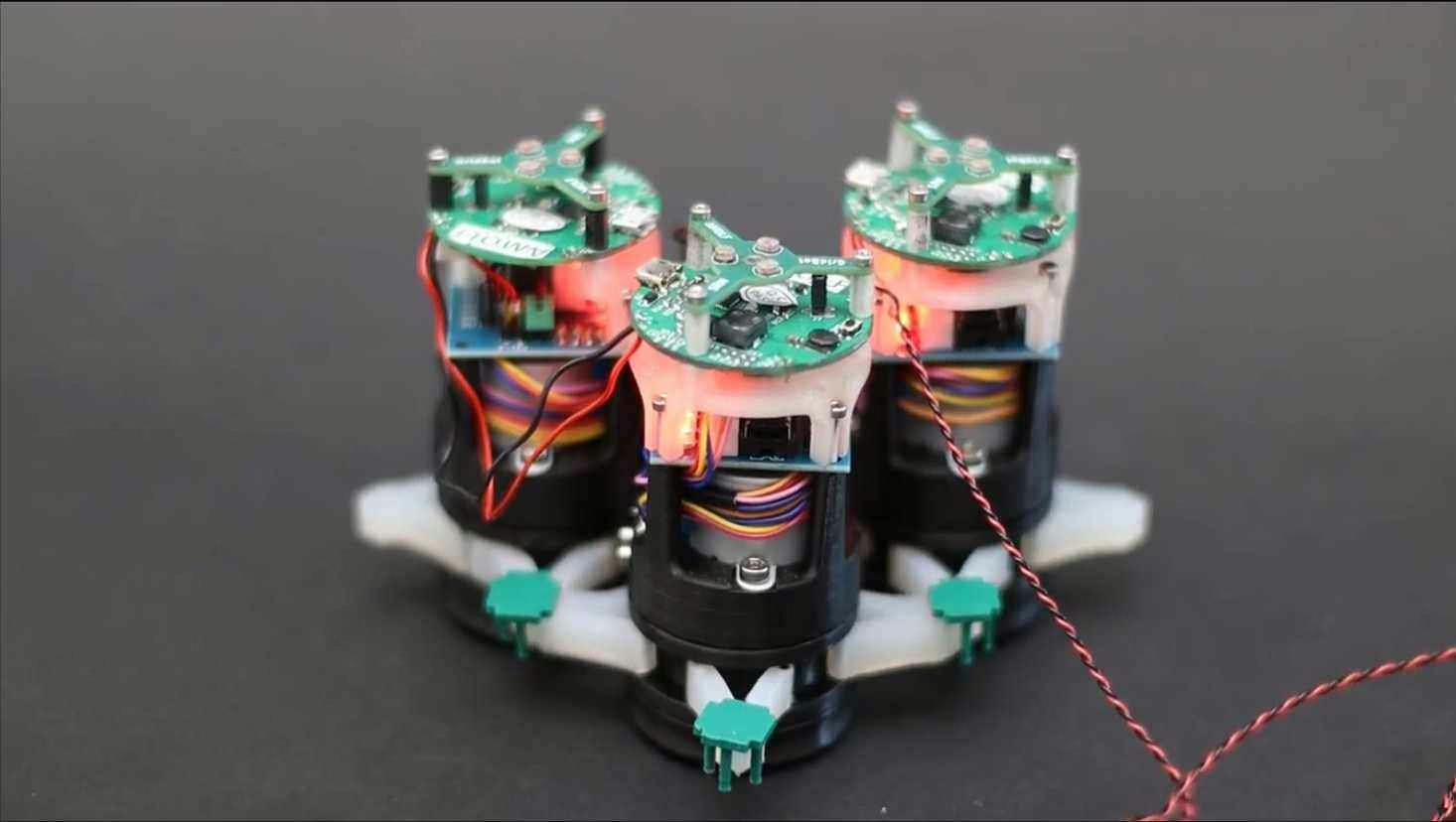
Soft robots that learn to follow the light
Soft robots made of simple, identical building blocks can learn to move toward a light source without a central controller or explicit communication, according to new research published in Advanced Functional Materials. The study shows how phototaxis, directed movement in response to light, can emerge from local sensing and learning alone. This finding is relevant because it demonstrates how adaptive, goal-oriented behavior can arise in robotic systems without centralized control.

Jesse Slim wins the Ehrenfest-Afanassjewa thesis award 2023
The winner of the Ehrenfest-Afanassjewa physics thesis prize 2023 is Jesse Slim. He carried out his PhD research in the group of Ewold Verhagen (AMOLF) and defended his thesis cum laude at Eindhoven University of Technology in March 2023.
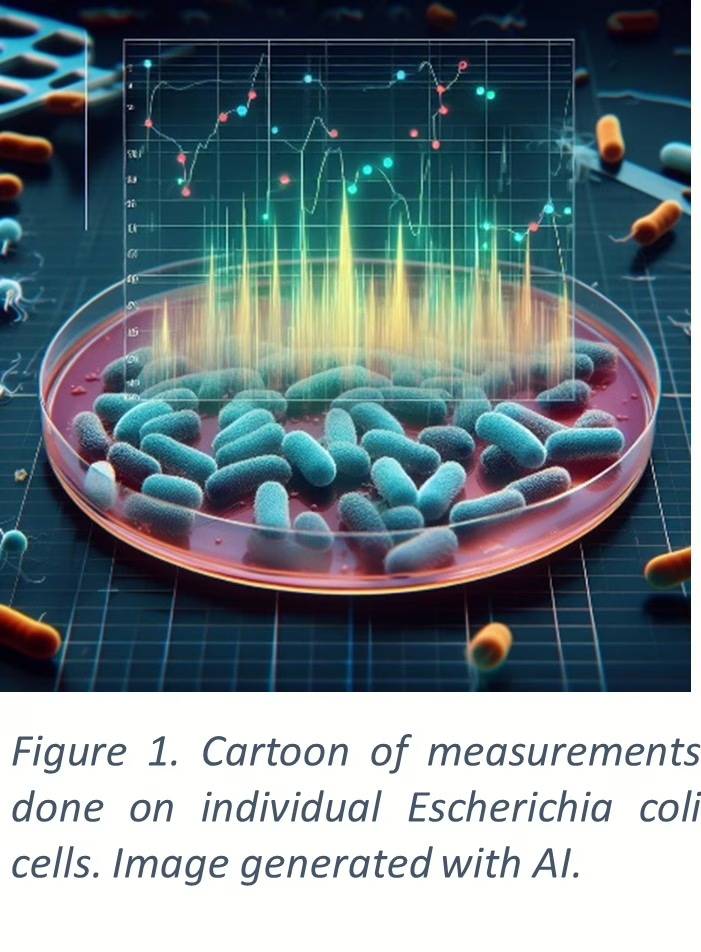
How bacteria cope with randomness
Bacterial behavior is profoundly influenced by continuous random perturbances in their regulatory pathways. Researchers from institute AMOLF and Utrecht University found a new way by which bacteria cope with these perturbances. By performing microscopy measurements on individual bacteria, and mathematical modeling, they found that a regulatory mechanism well-studied for its response to external conditions also has a previously unrecognized role in dealing with metabolic fluctuations. The study yields new insights into cellular homeostasis and regulatory interactions. The results were published in the journal Cell Reports.
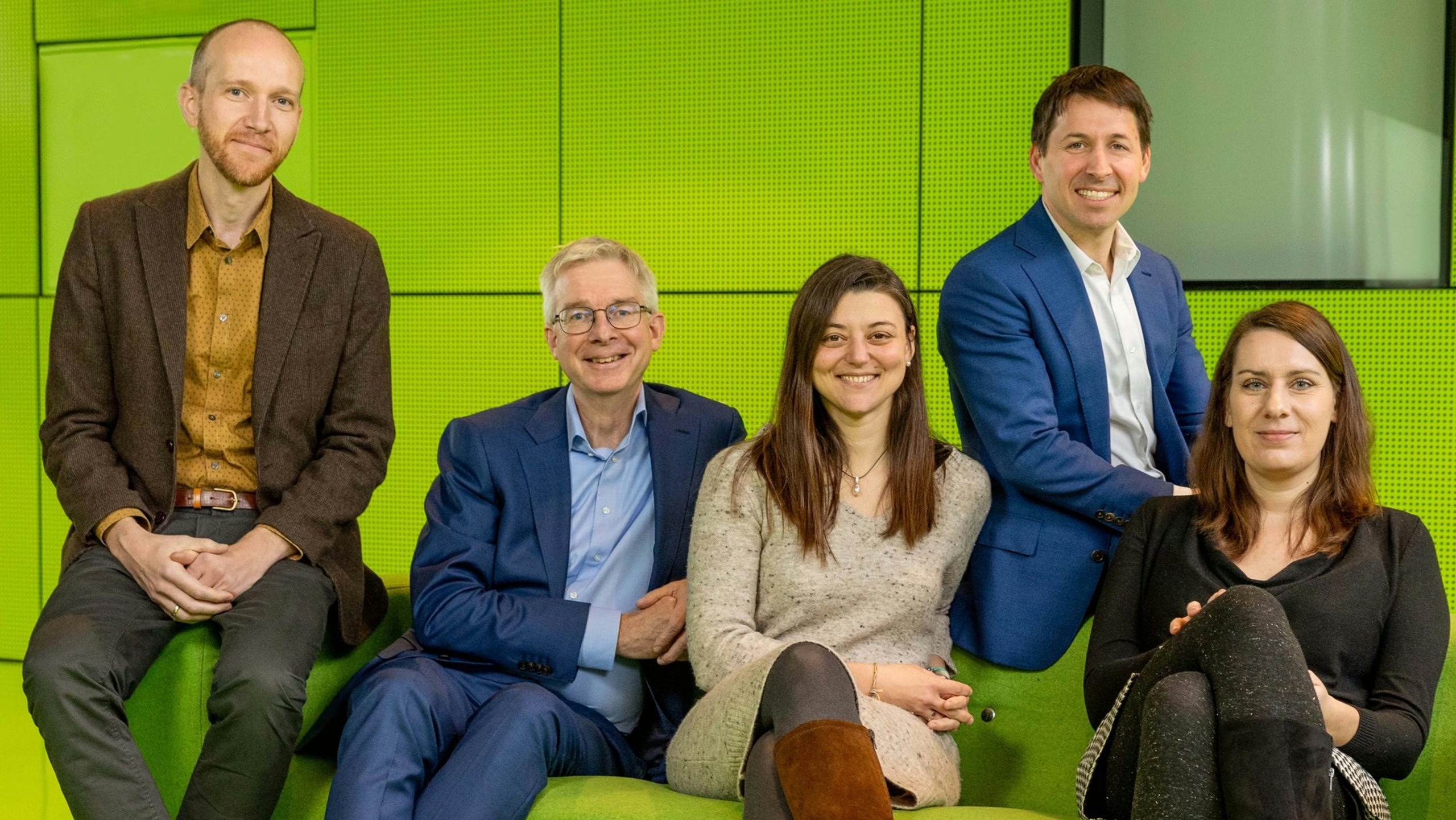
LMPV wins Team Science Award
The team of group leaders leading AMOLF’s Light Management in Photovoltaic Materials (LMPV) program has won the NWO Team Science Award 2023. With the award NWO rewards the most inspiring and successful team of researchers from various disciplinary fields, who jointly take on a scientific challenge in which their individual strengths and expertise demonstrably reinforce each other. The LMPV team will receive the prize money amounting 50.000 euro to be spend on team related activities.
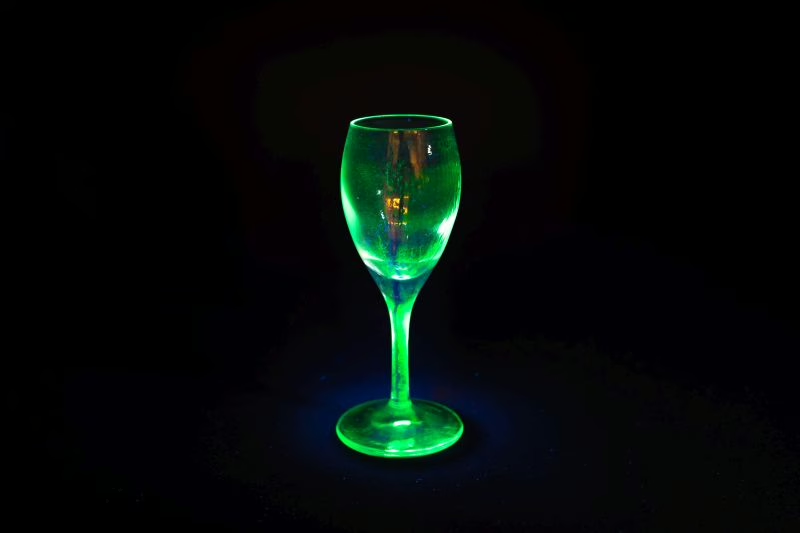
A lead test based on solar cell technology
AMOLF researchers have used the special properties of perovskite semiconductors to develop a simple spray test to demonstrate the presence of lead. Perovskite is a material suitable for use in LEDs and solar cells, for example. A lead-containing surface shines bright green when it is sprayed with the test. This test is 1000 times more sensitive than existing tests and the researchers found no false positive or false negative results. The study was published on November 27th in the scientific journal Environmental Science and Technology.

Kristina Ganzinger connected to Oncode Institute as Junior Investigator
AMOLF group leader Kristina Ganzinger has been selected by the Oncode Institute to join as Junior Investigator. The institute selected 10 junior investigators out of 72 applicants. The researchers were selected based on the quality of their science, expertise and potential to contribute to the mission of Oncode Institute: to accelerate breakthrough discoveries and speed up their translation into new diagnostics and treatments for cancer patients. Ganzinger will also continue her work at AMOLF leading the group Physics of Cellular Interactions.
Ewold Verhagen elected as Optica Fellow
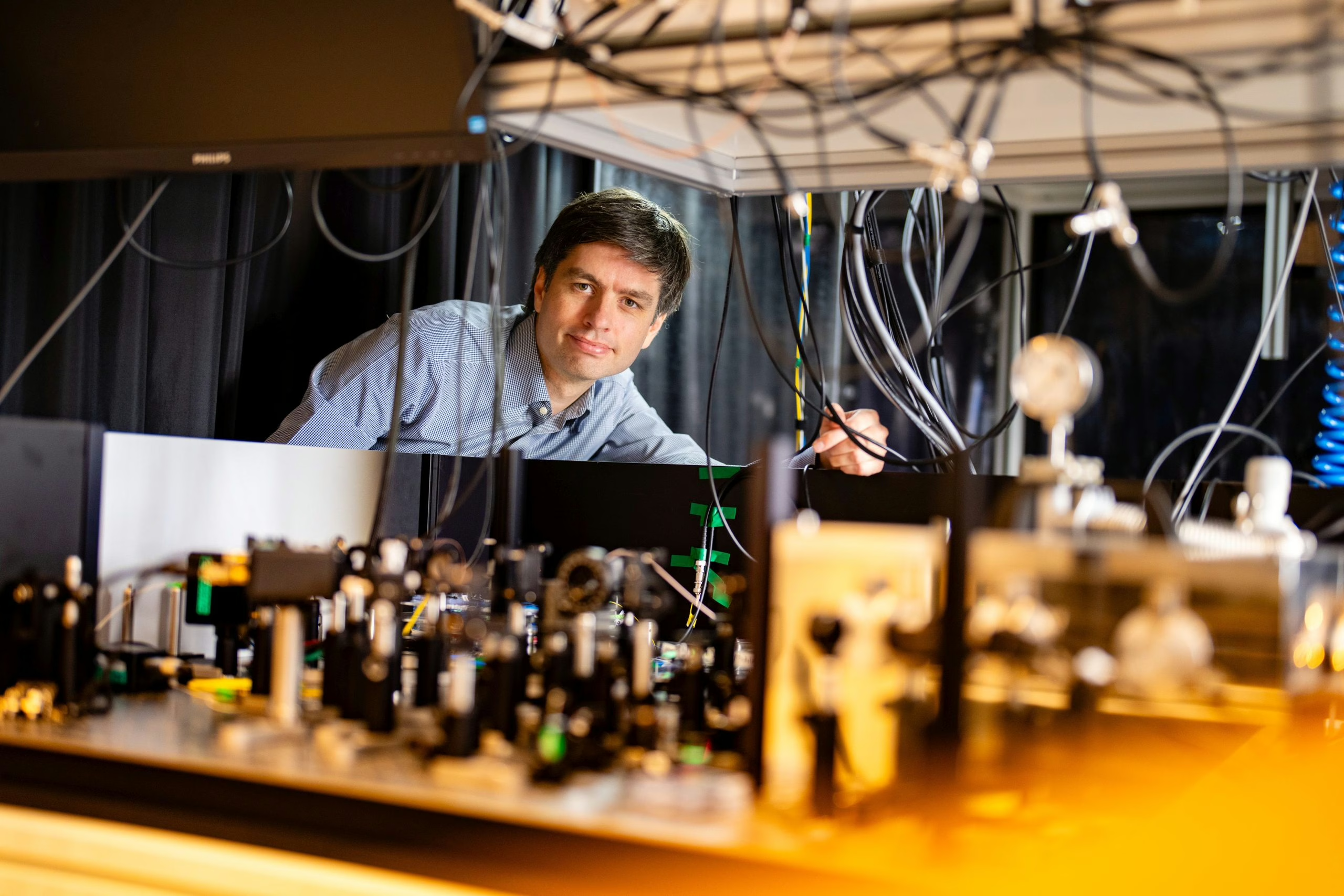
Optica (formerly OSA) has elected AMOLF group leader Ewold Verhagen as Fellow. Optica elected Verhagen for “outstanding contributions to nanophotonics and optomechanics, and to the understanding of photonic systems with broken spatiotemporal symmetries.” Optica Fellows are selected based on several factors, including outstanding contributions to research, business, education, engineering and service to Optica and the community. Candidates for Fellow Membership are nominated by current Optica Fellow members.