
News & updates
Latest developments from our institute
Stay informed about new research results, awards, events, and collaborations across our scientific community.
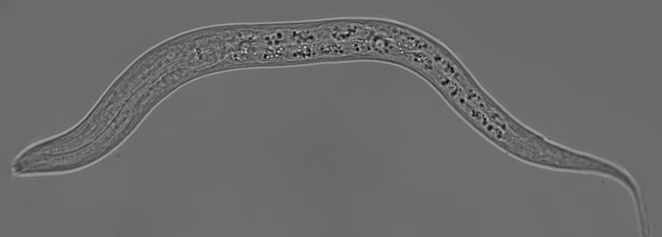
C. elegans does not accidentally switch off its ability to detect salt
AMOLF researchers, collaborating with researchers from the Erasmus MC, have discovered a genetic mechanism that ensures that a nerve cell retains its identity once it has differentiated. This concerns a neuron in the worm C. elegans that can detect salt. Its identity is activated by a genetic switch during the cell’s development. Jeroen van Zon and his colleagues have discovered how it is possible that this switch never spontaneously switches off again. The research was published today in the scientific journal eLife.
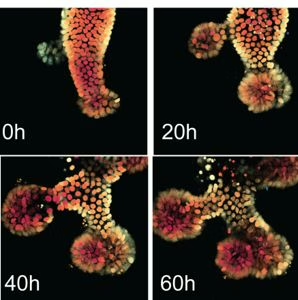
Organoid project granted in NWO Open Competition Domain Science
The project ‘Organoids in time’ is one out of twenty new consortia that can start thanks to NWO funding: the Open Competition Domain Science. The grant consists of a total of 2.5 million euros.
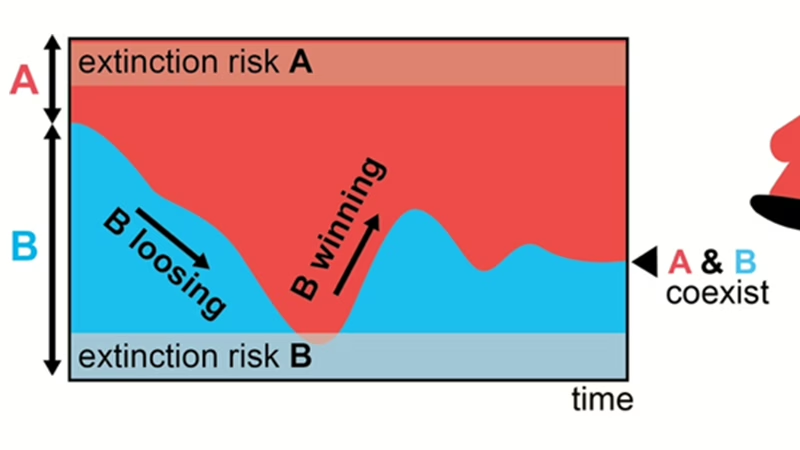
Researchers discover new mechanism for the coexistence of species
Researchers from AMOLF and Harvard University (USA) show how the ability of organisms to move around plays a role in stabilizing ecosystems. In their paper published 19 February 2020 in Nature, they describe how the competition between ‘movers’ and ‘growers’ leads to a balance in which both types of bacteria can continue to exist alongside each other.
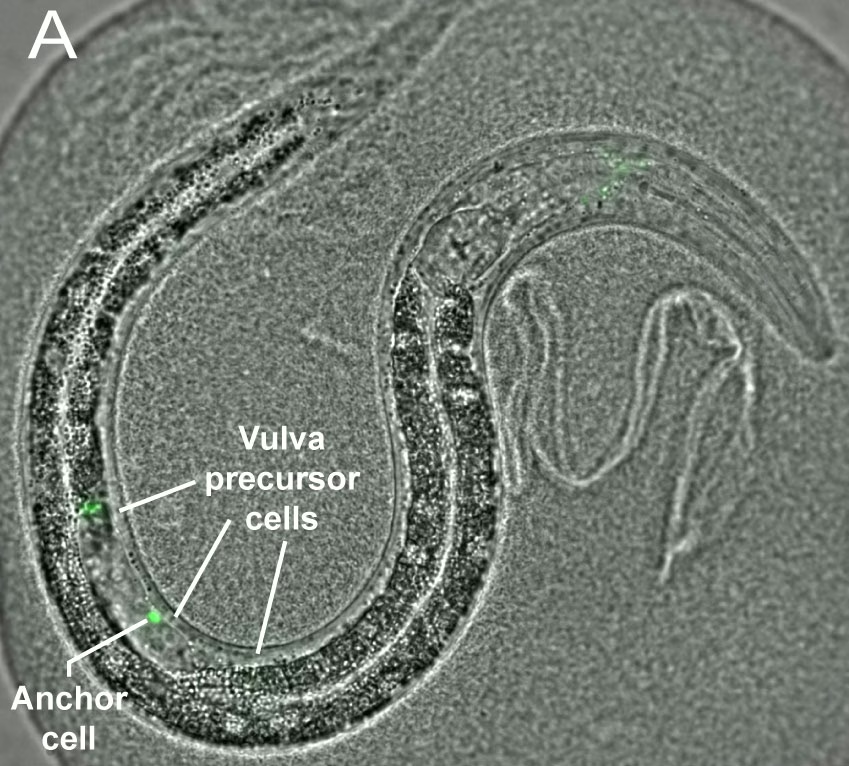
Adolescent worm provides insights into cell development : Canalisation of developing cells unravelled for the first time
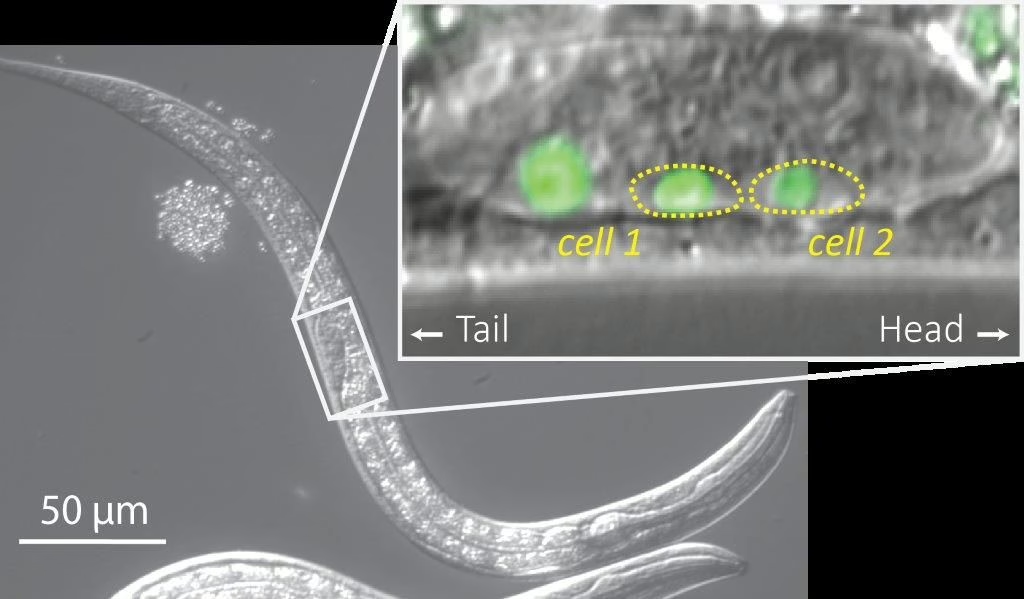
How embryos develop into complex, adult organisms is still a mystery, but researchers at AMOLF have managed to clarify a small part of it. While studying the nematode C. elegans, they discovered how a group of cells always develops into the same organ despite considerable variations at the cell level. With their experiments, group leader Jeroen van Zon and PhD researcher Guizela Huelsz-Prince have made the responsible feedback mechanism, also referred to as canalisation, visible for the first time. They published their results on February 22nd in the journal Cell Systems.
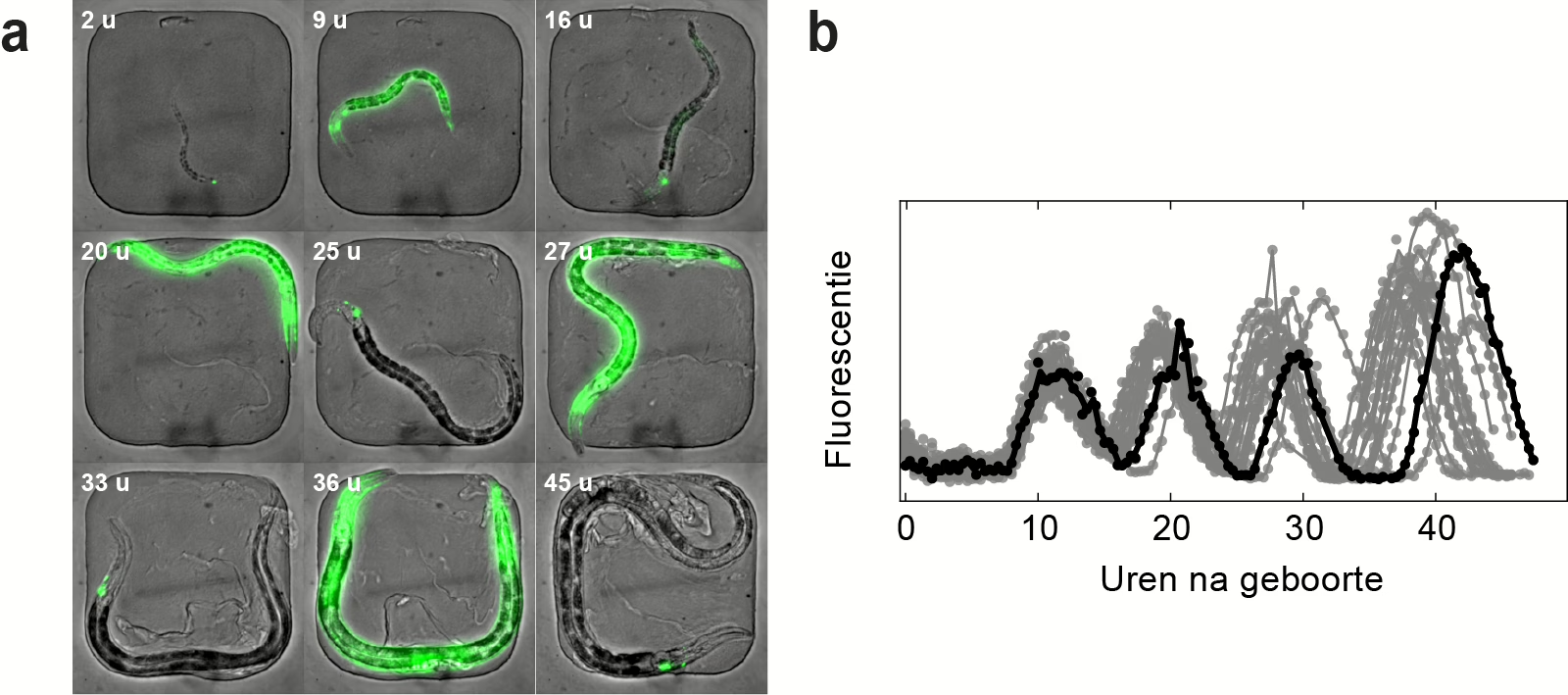
Premiere: watch the development of a larva into an adult worm live
Researchers from FOM institute AMOLF have developed a microscopy technique for the live tracking of development in the individual cells of a growing, eating and moving organism, the nematode worm Caenorhabditis elegans. The next step is to find out how environmental factors affect development. The researchers will publish their findings in Nature Communications, on August 25, 2016.
ERC Starting Grant for AMOLF group leader Jeroen van Zon
AMOLF group leader Jeroen van Zon has received a prestigious ERC Starting Grant.

Jeroen van Zon starts new research group on ‘Quantitative Developmental Biology’
As of March 1st, Jeroen van Zon has been appointed group leader within the Systems Biophysics department at AMOLF. His ‘Quantitative Developmental Biology’ research group will use a quantitative, physics-inspired approach to study problems in developmental biology, focusing on the small roundworm C. elegans. The aim of research is to elucidate how living organisms can reliably build their bodies during development, despite considerable underlying variability on the molecular level. The group will use a combination of fluorescence microscopy, microfluidics and mathematical modelling to study these questions.