
News & updates
Latest developments from our institute
Stay informed about new research results, awards, events, and collaborations across our scientific community.
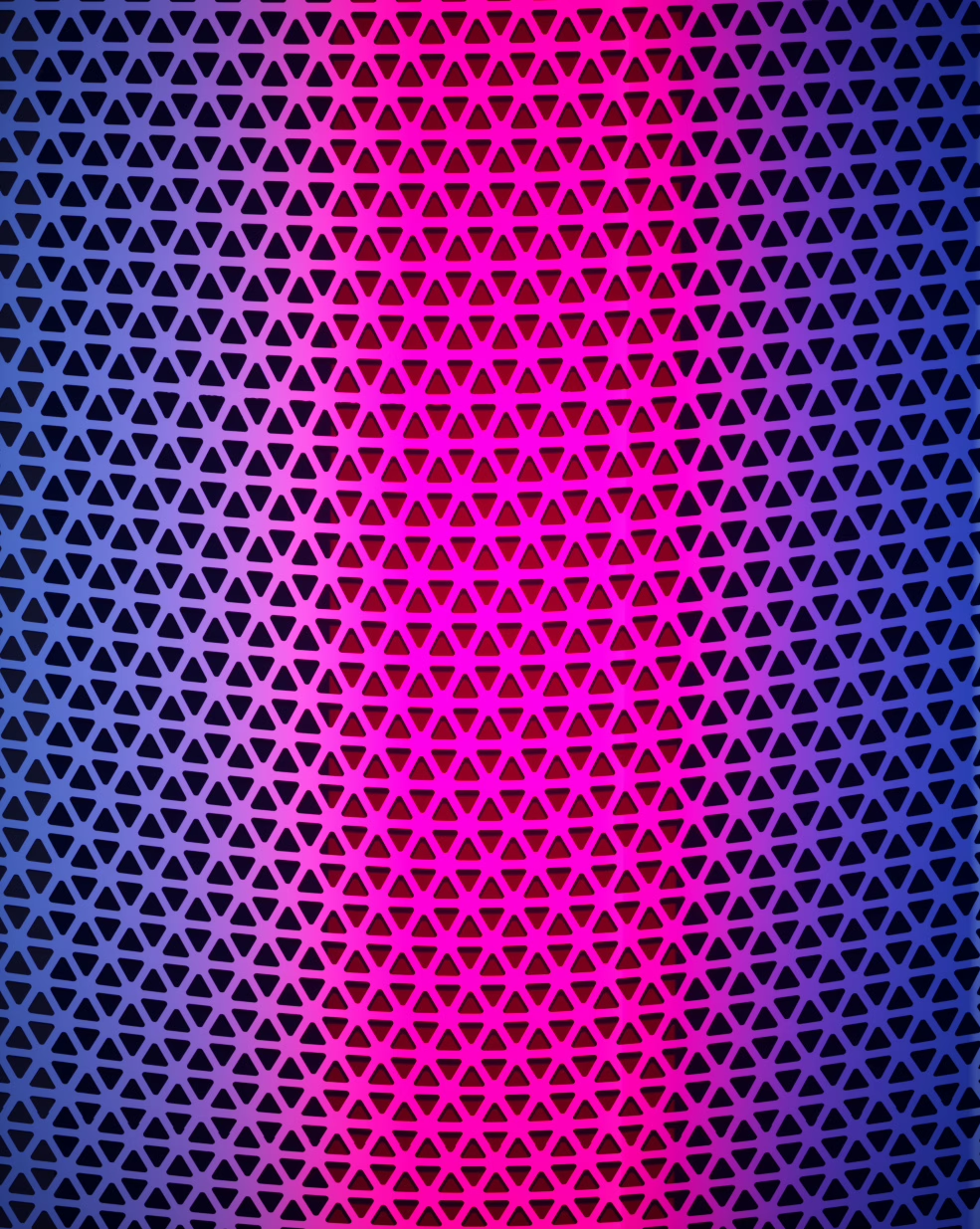
Light stands still in a deformed crystal
AMOLF researchers, in collaboration with Delft University of Technology, succeeded to bring light waves to a halt by deforming the two-dimensional photonic crystal that contains them. The researchers showed that even a subtle deformation can have a substantial effect on photons in the crystal. This resembles the effect that a magnetic field has on electrons. “This principle offers a new approach to slow down light fields and thereby enhance their strength. Realizing this on a chip is particularly important for many applications”, says AMOLF-group leader Ewold Verhagen. The researchers publish their findings in the scientific journal Nature Photonics on April 23rd (online). Simultaneously, a research team from Pennsylvania State University publishes an article in this journal about how they demonstrated – independently from the Dutch team – an identical effect.
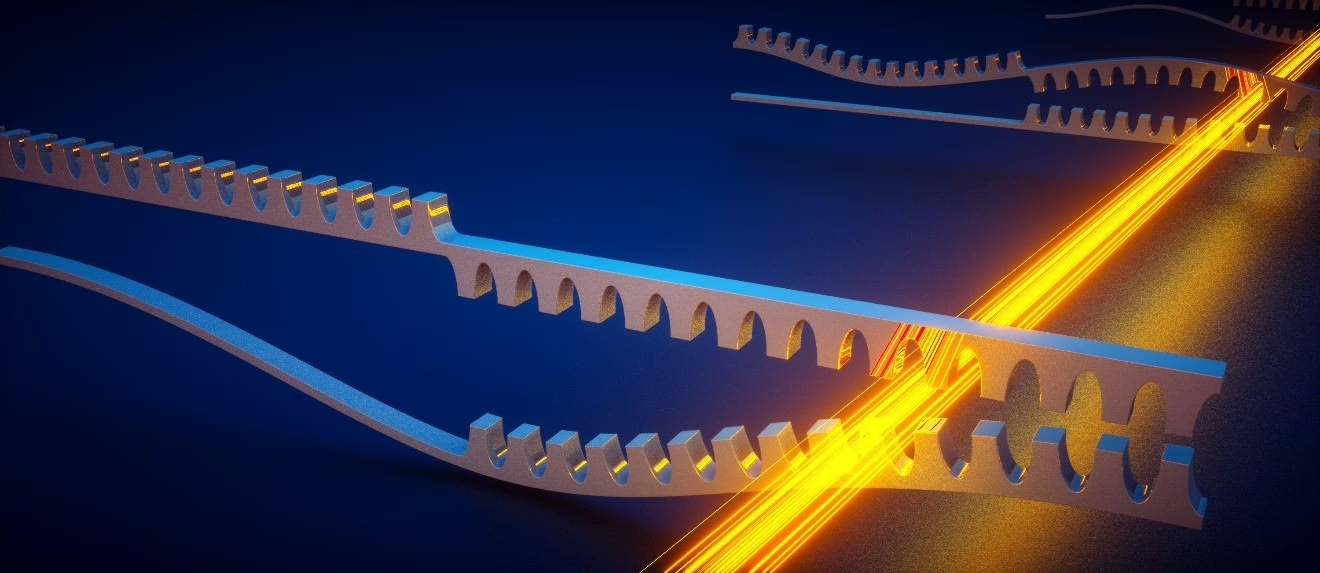
New topological metamaterial amplifies sound waves exponentially
Researchers at AMOLF, in collaboration with partners from Germany, Switzerland, and Austria, have realized a new type of metamaterial through which sound waves flow in an unprecedented fashion. It provides a novel form of amplification of mechanical vibrations, which has the potential to improve sensor technology and information processing devices. This metamaterial is the first instance of a so-called ‘bosonic Kitaev chain’, which gets its special properties from its nature as a topological material. It was realized by making nanomechanical resonators interact with laser light through radiation pressure forces. The discovery, which is published on March 27 in the renowned scientific journal Nature, was achieved in an international collaboration between AMOLF, the Max Planck Institute for the Science of Light, the University of Basel, ETH Zurich, and the University of Vienna.

Jesse Slim wins the Ehrenfest-Afanassjewa thesis award 2023
The winner of the Ehrenfest-Afanassjewa physics thesis prize 2023 is Jesse Slim. He carried out his PhD research in the group of Ewold Verhagen (AMOLF) and defended his thesis cum laude at Eindhoven University of Technology in March 2023.
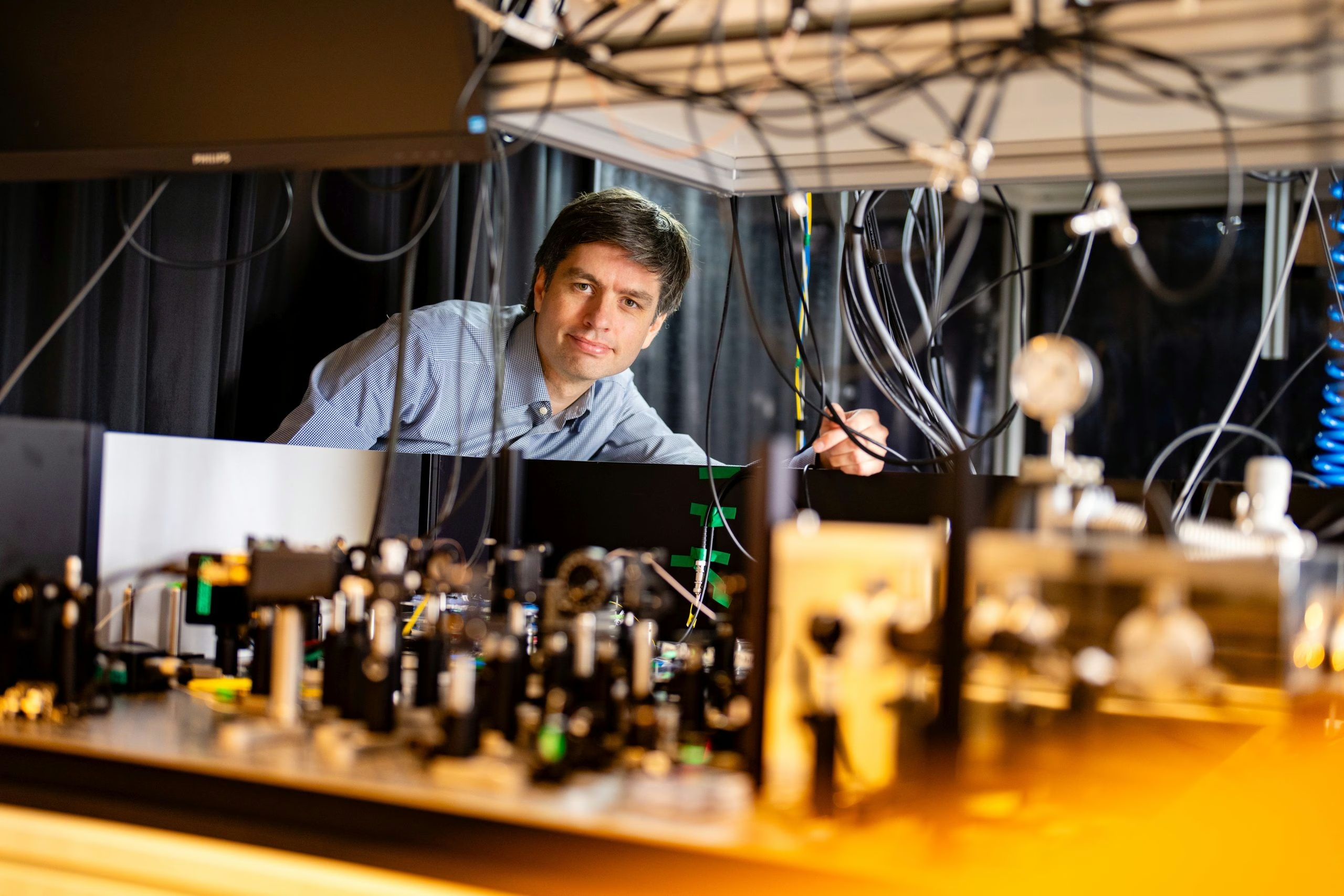
Ewold Verhagen elected as Optica Fellow
Optica (formerly OSA) has elected AMOLF group leader Ewold Verhagen as Fellow. Optica elected Verhagen for “outstanding contributions to nanophotonics and optomechanics, and to the understanding of photonic systems with broken spatiotemporal symmetries.” Optica Fellows are selected based on several factors, including outstanding contributions to research, business, education, engineering and service to Optica and the community. Candidates for Fellow Membership are nominated by current Optica Fellow members.

Engineering dual carriageways for signals
Routing signals and isolating them against noise and back-reflections are essential in many practical situations in classical communication as well as in quantum processing. In a theory-experimental collaboration, a team led by Andreas Nunnenkamp from the University of Vienna and AMOLF group leader Ewold Verhagen has achieved unidirectional transport of signals in pairs of “one-way streets”. This research published in Nature Physics opens up new possibilities for more flexible signaling devices.
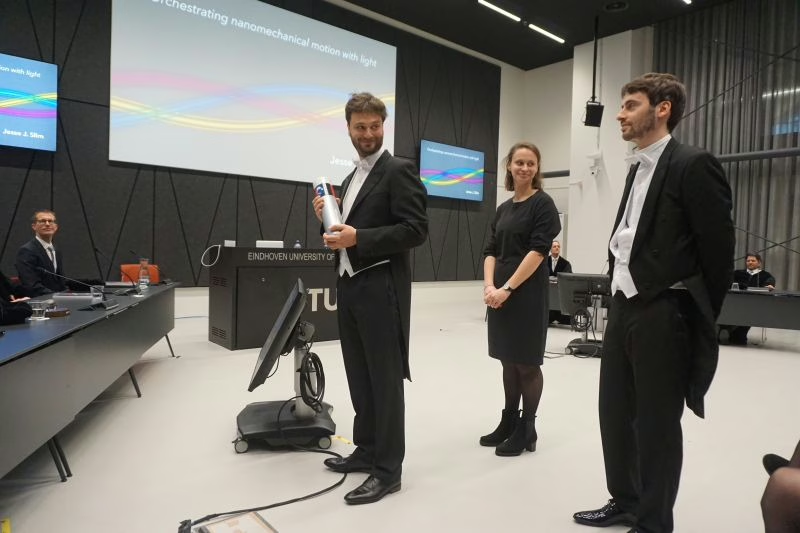
With honor PhD defense Jesse Slim
PhD student Jesse Slim received the qualification with honor (cum laude) for his PhD defense at Eindhoven University of Technology on March 9th. Slim did his doctoral research in the Photonic Forces group of his promotor Ewold Verhagen.
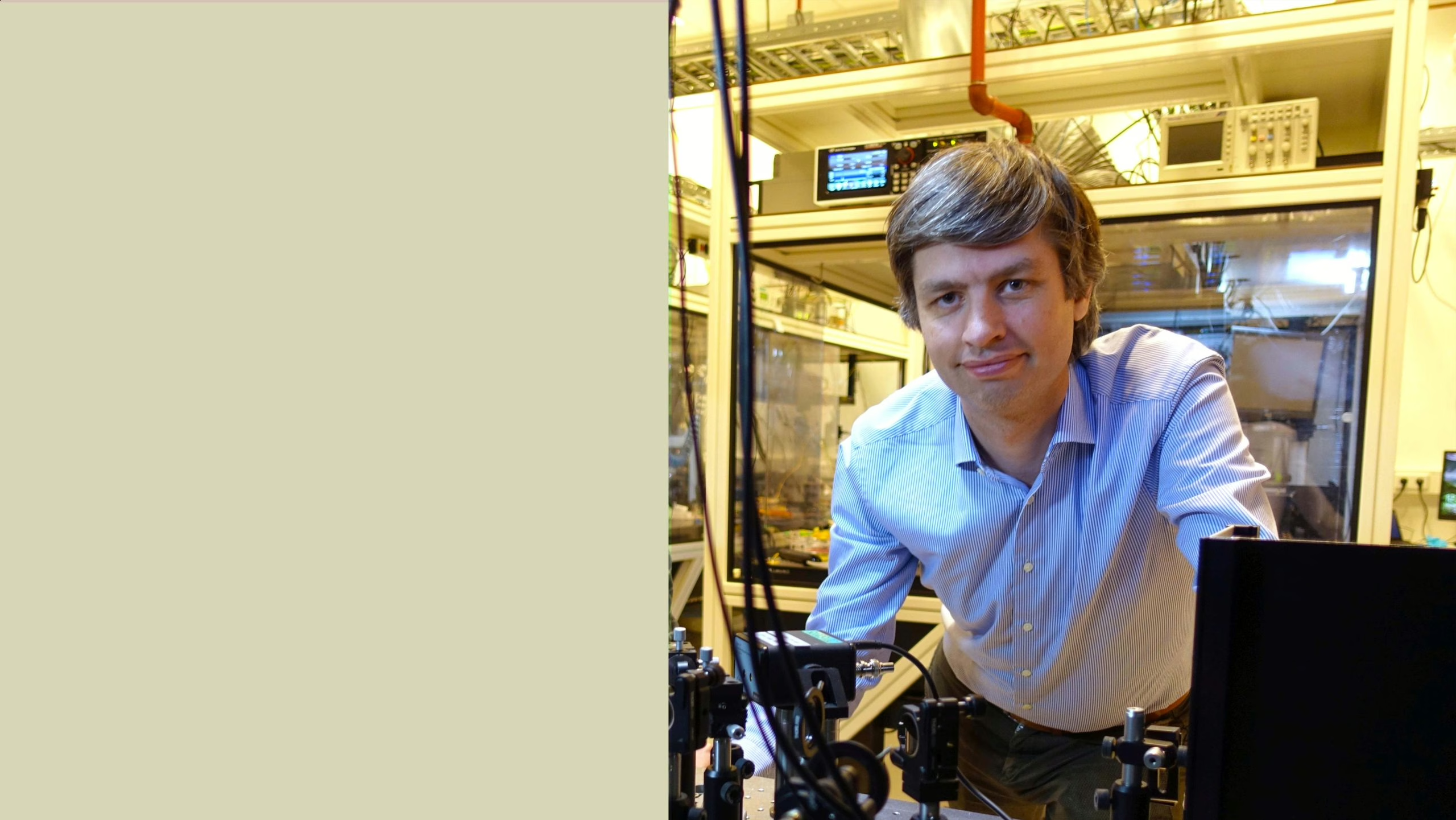
ERC Consolidator grant for Ewold Verhagen
AMOLF group leader Ewold Verhagen (Photonic Forces group) received an ERC Consolidator grant from the European Research Council (ERC). He has been granted 2.7 million euros to carry out his research plans. In addition to being an AMOLF group leader, Verhagen is part-time professor at Eindhoven University of Technology (TU/e).
Discovery of new mechanisms to control the flow of sound
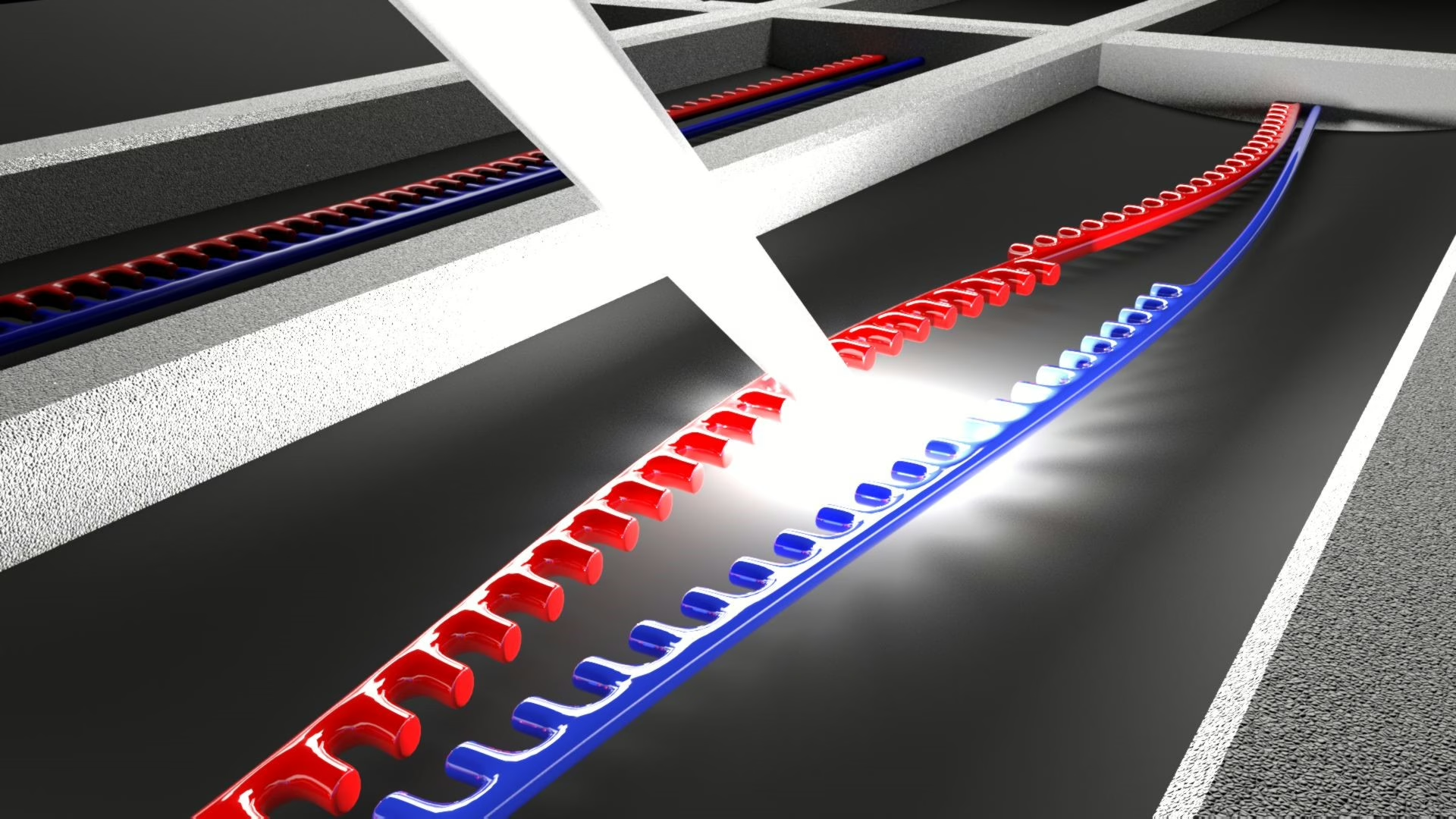
Using a network of vibrating nano-strings controlled with light, researchers from AMOLF have made sound waves move in a specific irreversible direction and attenuated or amplified the waves in a controlled manner for the first time. This gives rise to a lasing effect for sound. To their surprise, they discovered new mechanisms, so-called ‘geometric phases’, with which they can manipulate and transmit sound in systems where that was thought to be impossible. “This opens the way to new types of (meta)materials with properties that we do not yet know from existing materials,” says group leader Ewold Verhagen who, together with shared first authors Javier del Pino and Jesse Slim, publishes the surprising results on June 2 in Nature.