
News & updates
Latest developments from our institute
Stay informed about new research results, awards, events, and collaborations across our scientific community.
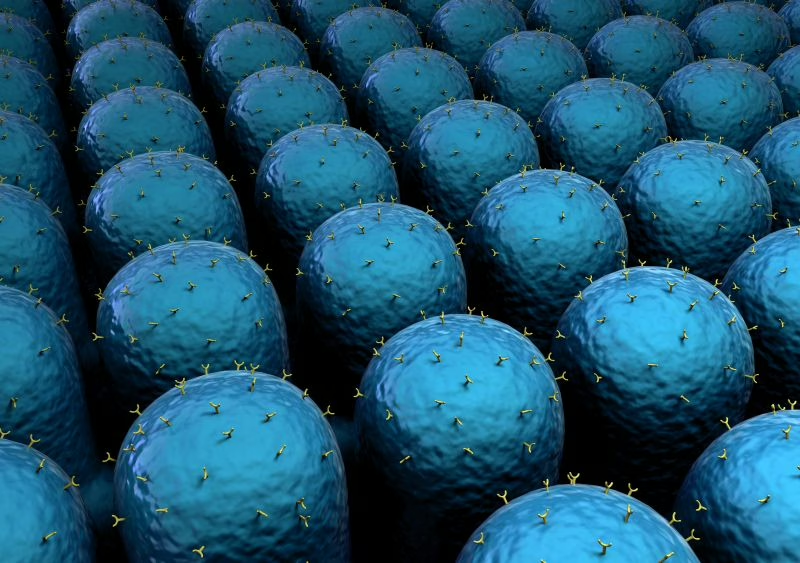
Dynamic risk management in cell populations
Much like investors on the stock market, cell populations prepare for changes in the environment by spreading the risk. The tool box they use contains a repertoire of sensory receptors on the surface of individual cells. These receptors can be tweaked to make individual members of the population responsive to different environmental signals. It was thought that cells could only modify this diversity relatively slowly, by producing new receptor proteins or degrading them. Scientists at AMOLF (Amsterdam, the Netherlands) and Yale University (New Haven, CT) now report the discovery of a mechanism that enables cell populations to tune their diversity much faster, by a combination of physical and chemical interactions between existing proteins. The findings are published in the journal Science Advances on November 13th.

Bas Overvelde appointed in Eindhoven
Bas Overvelde (Soft Robotic Matter) has been appointed as part-time associate professor at Eindhoven University of Technology (TU/e). While his group and lab will stay at AMOLF, he will spend one day a week at the Institute for Complex Molecular Systems (ICMS). Overvelde wishes to initiate new collaborations with TU/e researchers, especially in the field of Soft Robotics.
Bruno Ehrler appointed professor at University of Groningen
Group leader Bruno Ehrler has been named professor by special appointment for New Hybrid Material Systems for Solar-cell Applications at the University of Groningen. Ehrler will continue working at AMOLF leading the research group Hybrid Solar Cells.
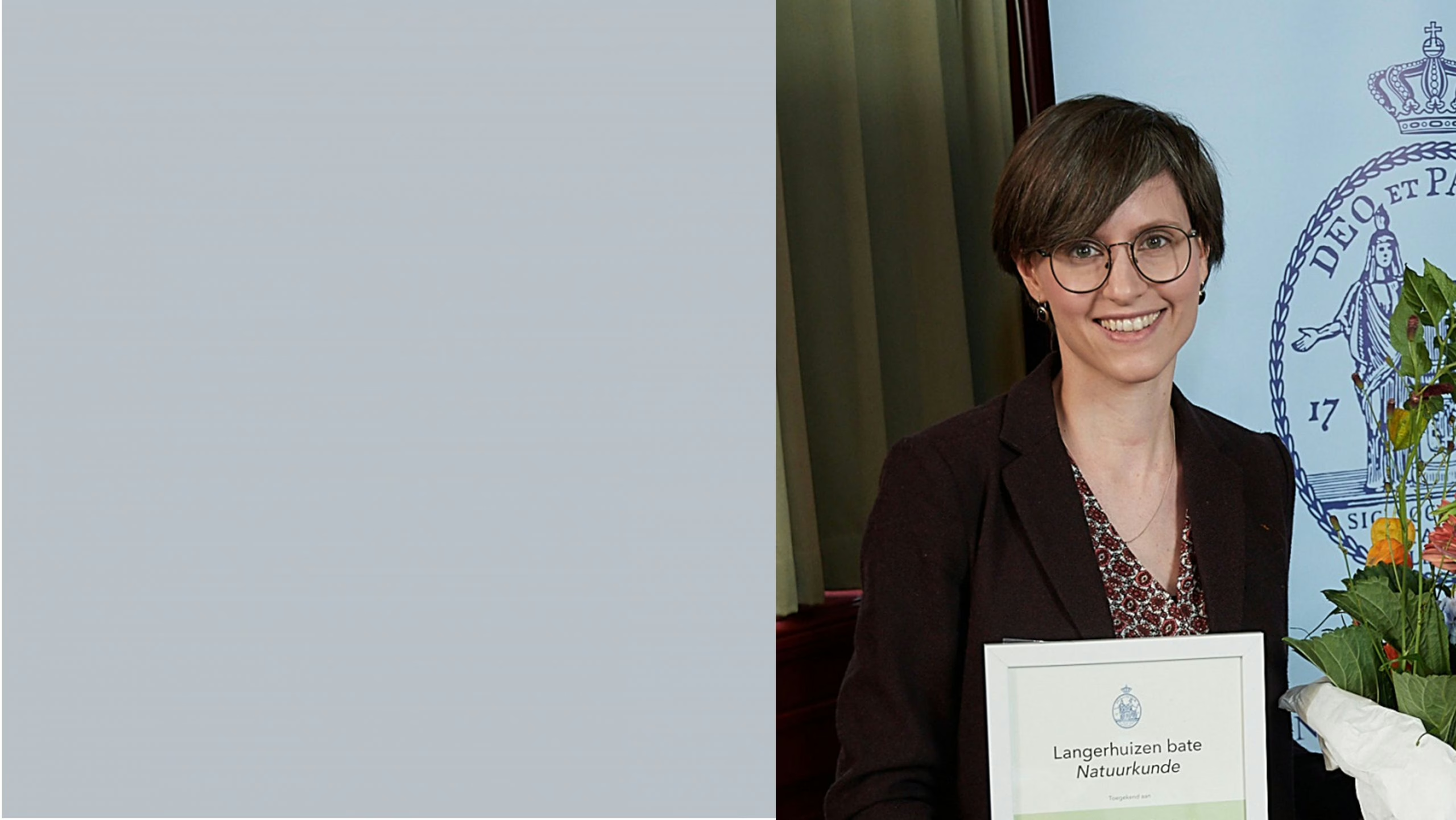
Kristina Ganzinger awarded by KHMW
On September 11th, group leader Kristina Ganzinger has been awarded this year’s Pieter Langerhuizen Lambertuszoon Fonds of the Koninklijke Hollandsche Maatschappij der Wetenschappen (KHMW).

ERC Starting Grant for Bruno Ehrler and Bas Overvelde
AMOLF group leaders Bruno Ehrler and Bas Overvelde have both received a Starting Grant of 1.5 million Euros from the European Research Council (ERC). The ERC uses this grant to support talented early-career scientists who have already produced excellent research, and show potential to be a research leader.
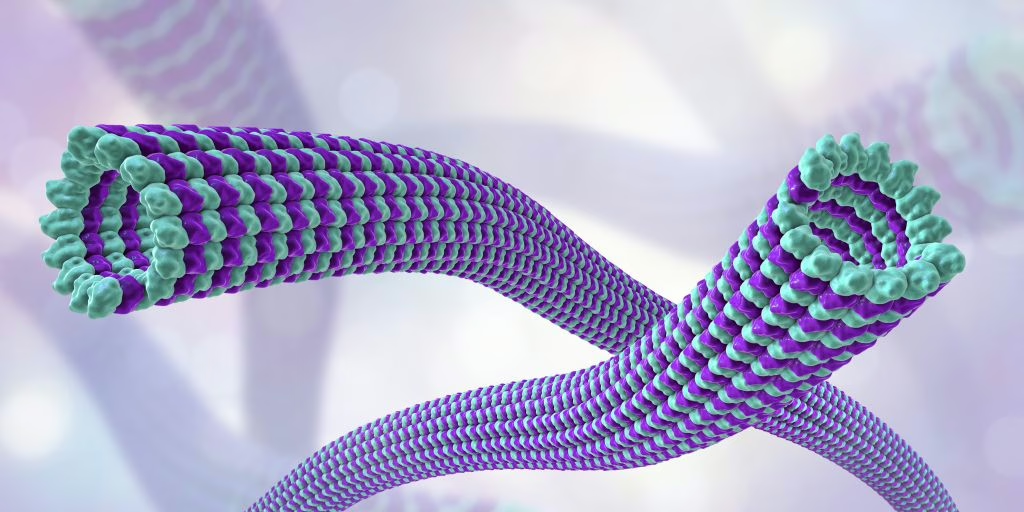
Exponential scaling of frictional forces in cells
AMOLF researchers present a theory that describes the friction between biological filaments that are crosslinked by proteins. Surprisingly, their theory predicts that the friction force scales highly non-linearly with the number of crosslinkers. The authors believe that cells use this scaling, not only to stabilize cellular structures but also to control their size. The new findings are important for our understanding of the dynamics of cellular structures such as the mitotic spindle, which pulls chromosomes apart during cell division.
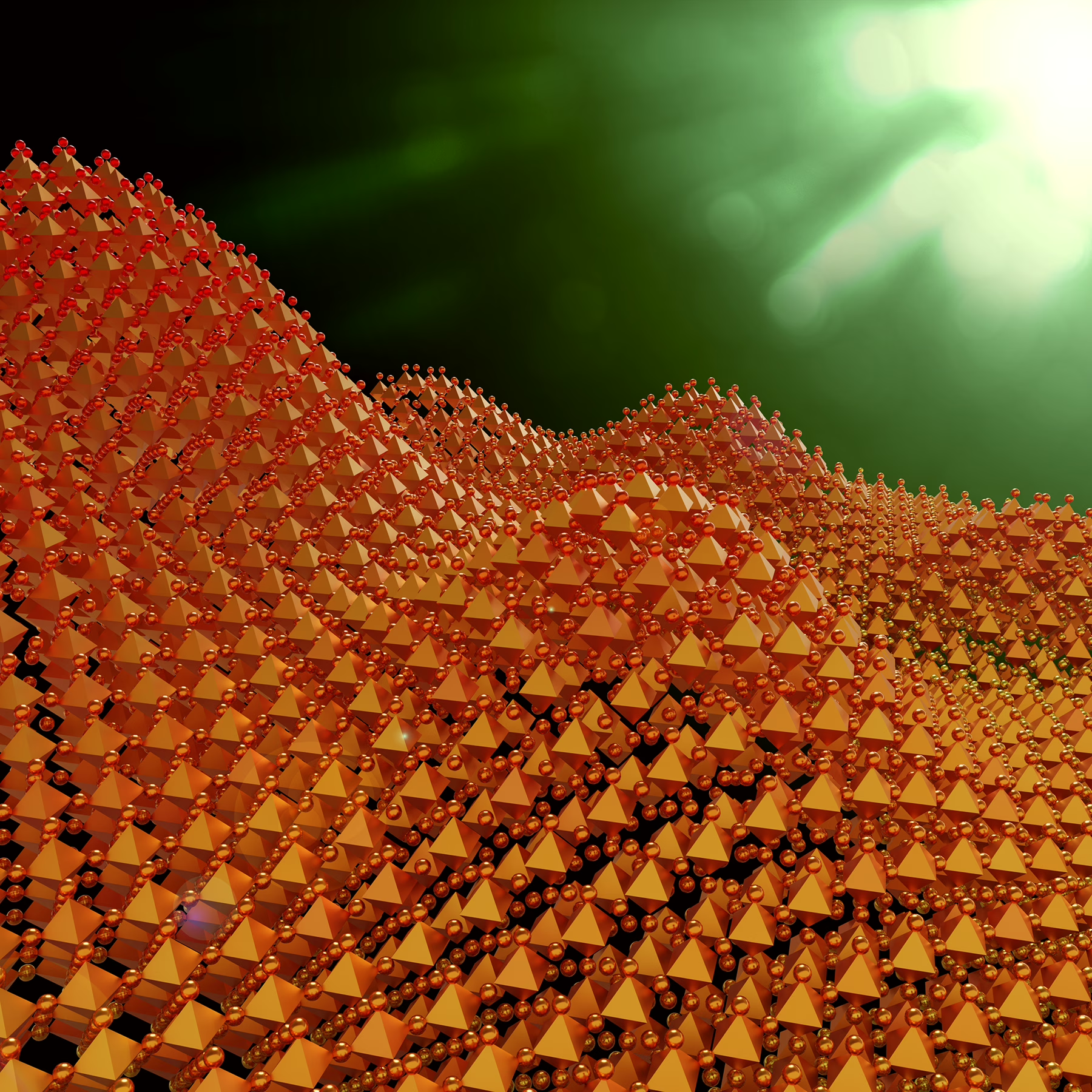
Solar cell material performs better under pressure
A novel and highly promising material for solar cells, halide perovskites, is more stable and consequently more efficient if just one ion is substituted. Researchers from AMOLF revealed in an unexpected manner why this is the case: pressure plays an important role. They published their findings on July 15th in Cell Reports Physical Science.
Cum laude for Federica Burla
On Friday, June 19th Federica Burla defended her PhD thesis Tailoring Extracellular Matrix Mechanics online at the Vrije Universiteit in Amsterdam. Burla obtained the cum laude degree for her doctorate research. This degree is reserved for the top 5% of the students. Gijsje Koenderink was the promotor. Until recently, Burla was a PhD student in the AMOLF research group of Gijsje Koenderink who left AMOLF to become full professor at TU Delft.