
News & updates
Latest developments from our institute
Stay informed about new research results, awards, events, and collaborations across our scientific community.
Tuning chemical reactions with light
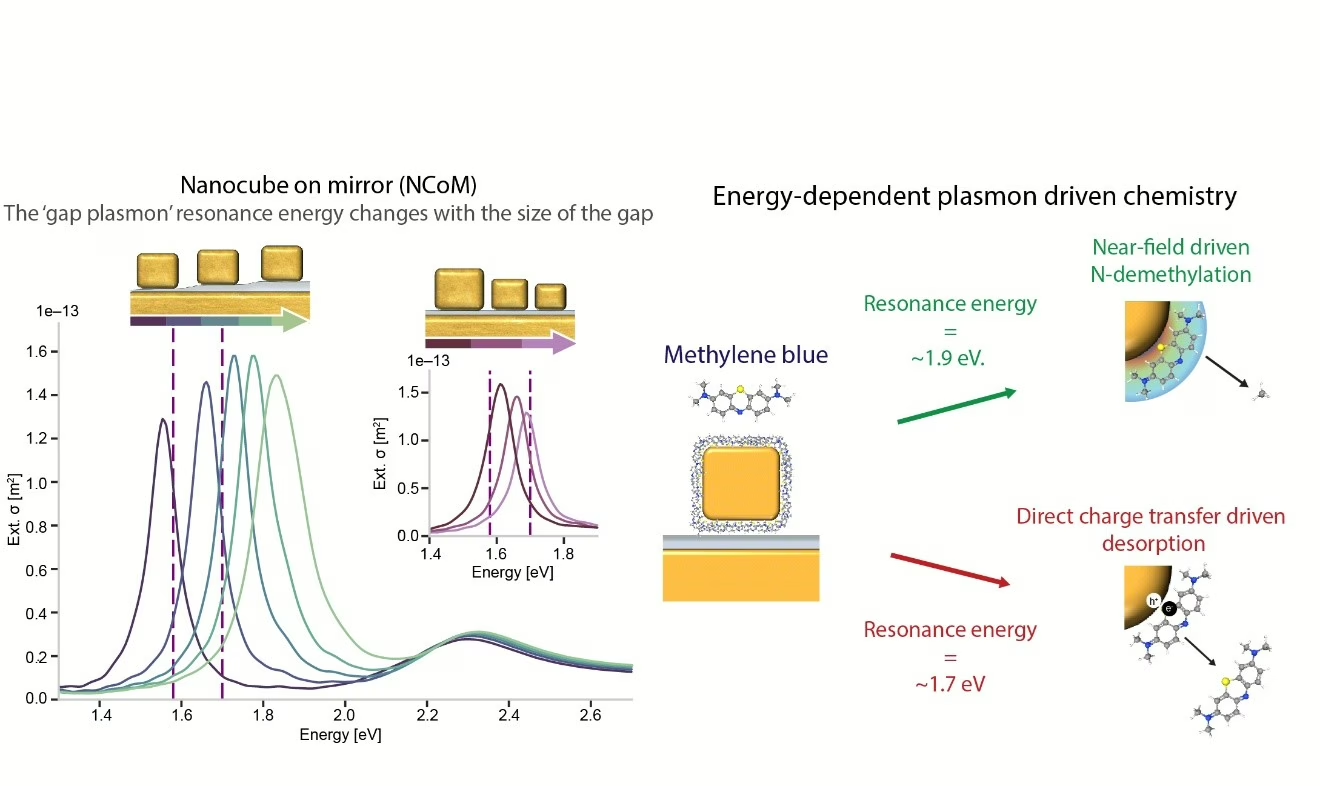
AMOLF researchers unravel how nano-antennas enhance chemical reactions The chemical industry consumes a lot of energy, not only to initiate reactions but also to separate products from by-products. In a promising emerging field of research, scientists worldwide are trying to use nanoscale antennas to capture and concentrate light into tiny volumes in order to initiate chemical reactions more efficiently and sustainably.

Vidi grant for Kristina Ganzinger
AMOLF group leader Kristina Ganzinger (Physics of Cellular Interactions) is one of the 78 researchers who received a NWO Vidi grant that is worth 800.000 euros. This grant allows Ganzinger to further expand her research on immune cell signaling using advanced microscopy and synthetic biology tools.
A new spin on making minimal cells
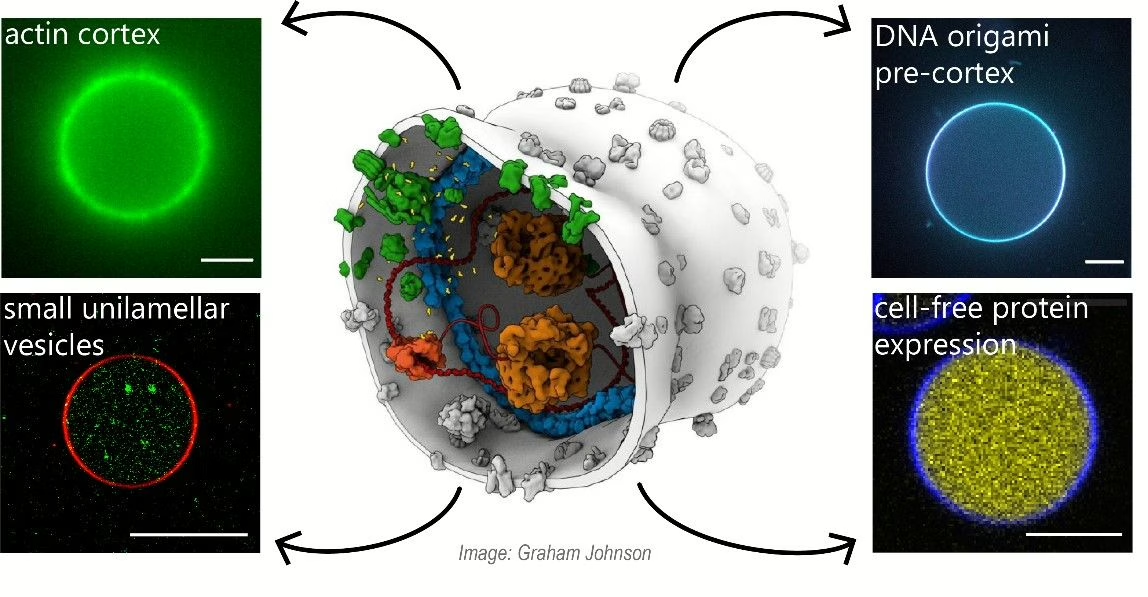
The ability of a cell to separate its own matter from its surroundings is a basic requirement for life. A team of researchers at AMOLF and Delft University of Technology have managed to create a synthetic container, or lipid vesicle, that is able to hold a range of different biological systems: from a cytoskeleton to entire E.coli bacteria. Their findings on this optimized cDICE method, which has the potential to reveal the inner workings of life, are published in ACS Synthetic Biology on June 29, 2021.
Two NWO Rubicon grants for AMOLF researchers
Former PhD students Anne Meeussen (Mechanical Metamaterials group) and Mario Avellaneda Sarrio (Biophysics group) are amongst the 31 researchers who have recently received a Rubicon grant from NWO. The Rubicon program gives young, highly promising researchers the opportunity to gain international research experience. With a Rubicon grant they can spend up to 24 months doing research at a foreign institution.
AMOLF and Fraunhofer ISE start cooperation on metamaterials
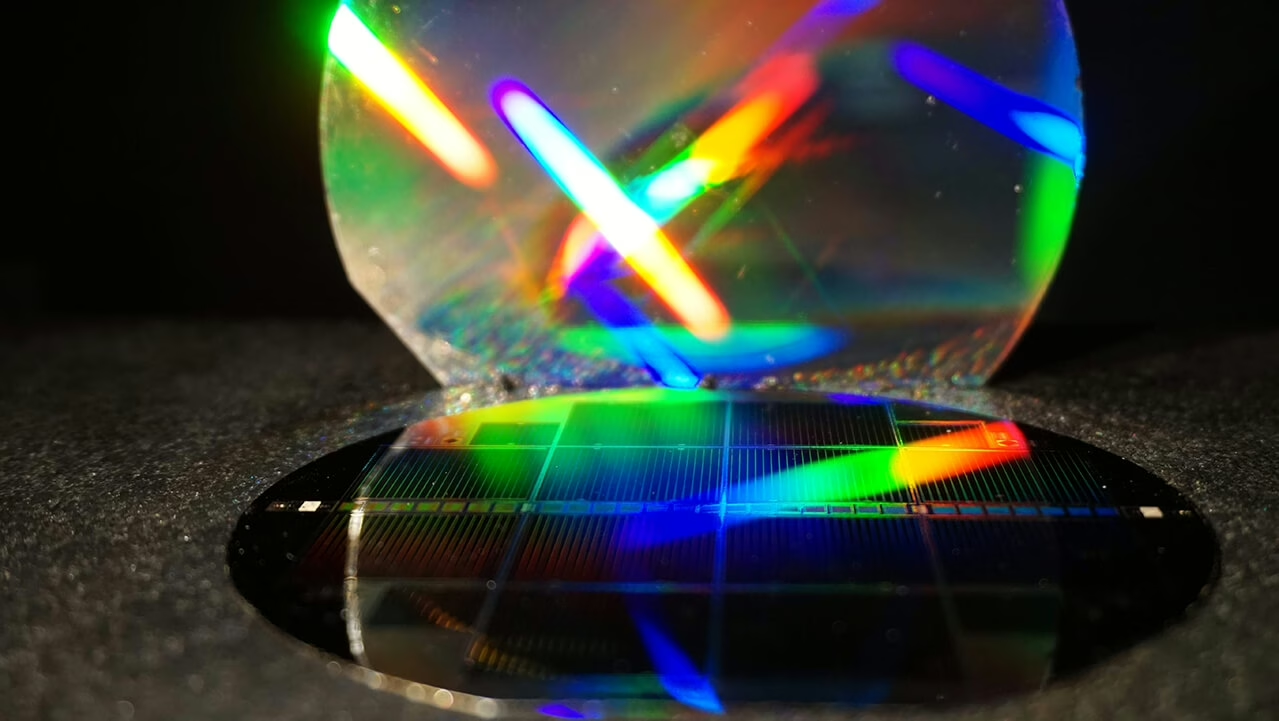
AMOLF and the Fraunhofer Institute for Solar Energy Systems have started a strategic cooperation in the field of metamaterials for optical applications. In the project “Metasurfaces for Energy Efficient Devices” (MEEt), the partners are developing metamaterials for solar cells, LEDs and optical sensors and the processes for their production. The joint project will run for three years and is funded by the Fraunhofer International Cooperation and Networking (ICON) program.
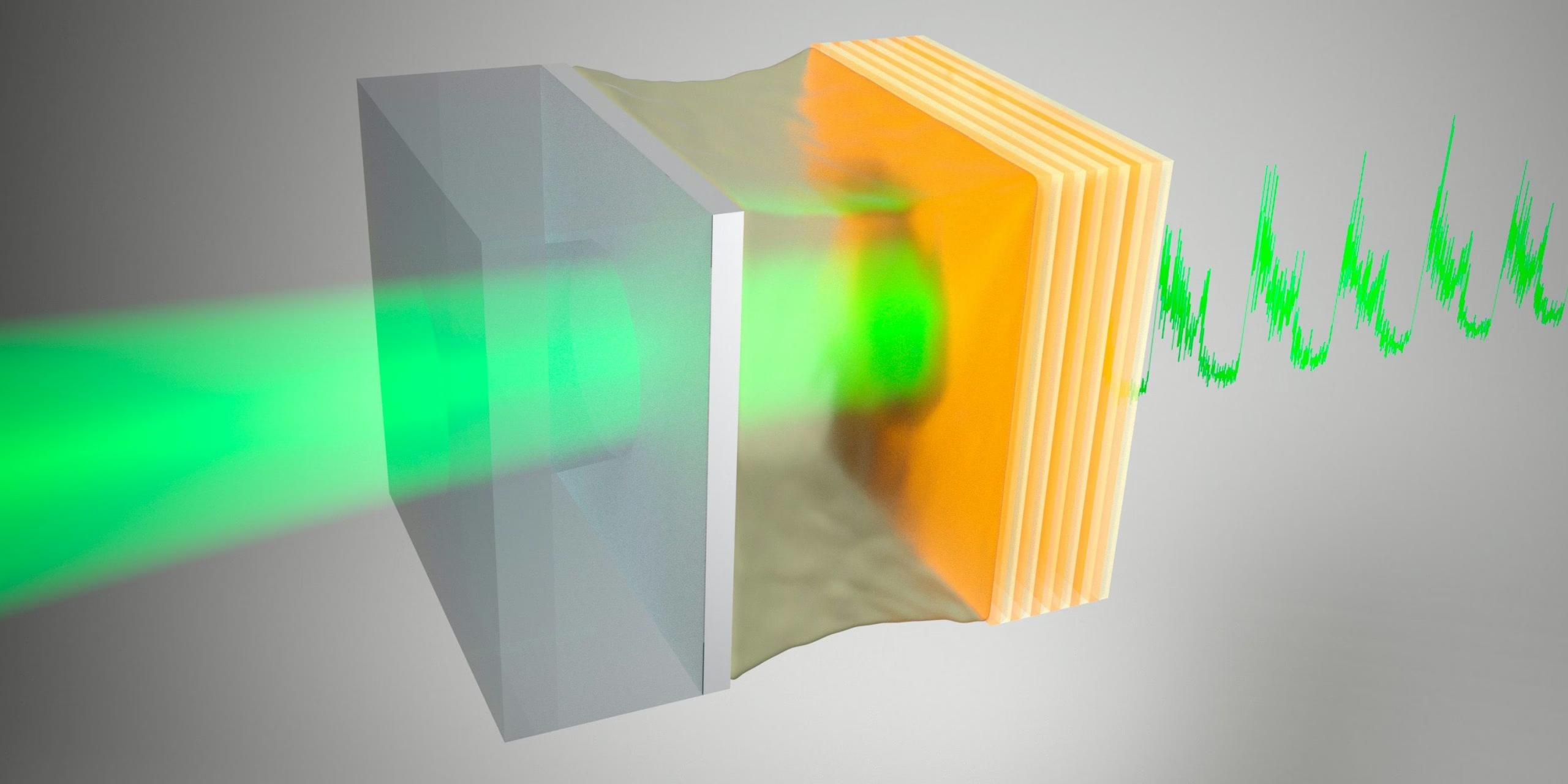
AMOLF scientists unravel noise-assisted signal amplification in systems with memory
Signals can be amplified by an optimum amount of noise, but this so-called stochastic resonance is a rather fragile phenomenon. Researchers at AMOLF were the first to investigate the role of memory for this phenomenon in an oil-filled optical microcavity. The effects of slow non-linearity (i.e. memory) on stochastic resonance were never considered before, but these experiments suggest that stochastic resonance becomes robust to variations in the signal frequency when systems have memory. This has implications in many fields of physics and energy technology. In particular, the scientists numerically show that introducing slow non-linearity in a mechanical oscillator harvesting energy from noise can increase its efficiency by tenfold. They publish their findings in Physical Review Letters on May 27th.

Marc Serra starts Hyper Smart Matter group
On October 1st Marc Serra will start as tenure track group leader at AMOLF. His Hyper Smart Matter group will be embedded in the Designer Matter research theme at AMOLF. Serra intends to design and build complex materials that manipulate sound waves to process information. These materials will enable a wide variety of new devices, from computers that consume very low power to soft robots that accomplish complex tasks autonomously. Serra aims to simultaneously solve practical problems and understand how physical principles such as the laws of thermodynamics fundamentally limit the energy efficiency of computers.
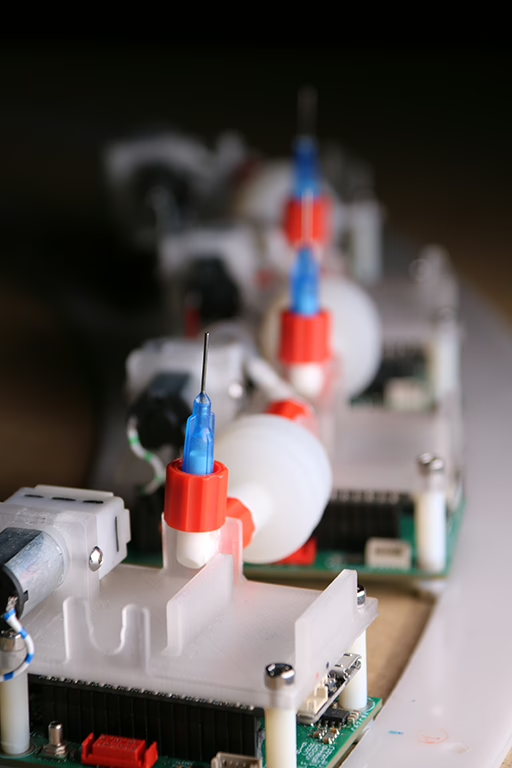
Self-learning robots go full steam ahead
Researchers from AMOLF’s Soft Robotic Matter group have shown that a group of small autonomous, self-learning robots can adapt easily to changing circumstances. They connected these simple robots in a line, after which each individual robot taught itself to move forward as quickly as possible. The results were published today in the scientific journal PNAS.