
News & updates
Latest developments from our institute
Stay informed about new research results, awards, events, and collaborations across our scientific community.
ERC Consolidator grants for Wim Noorduin and Erik Garnett
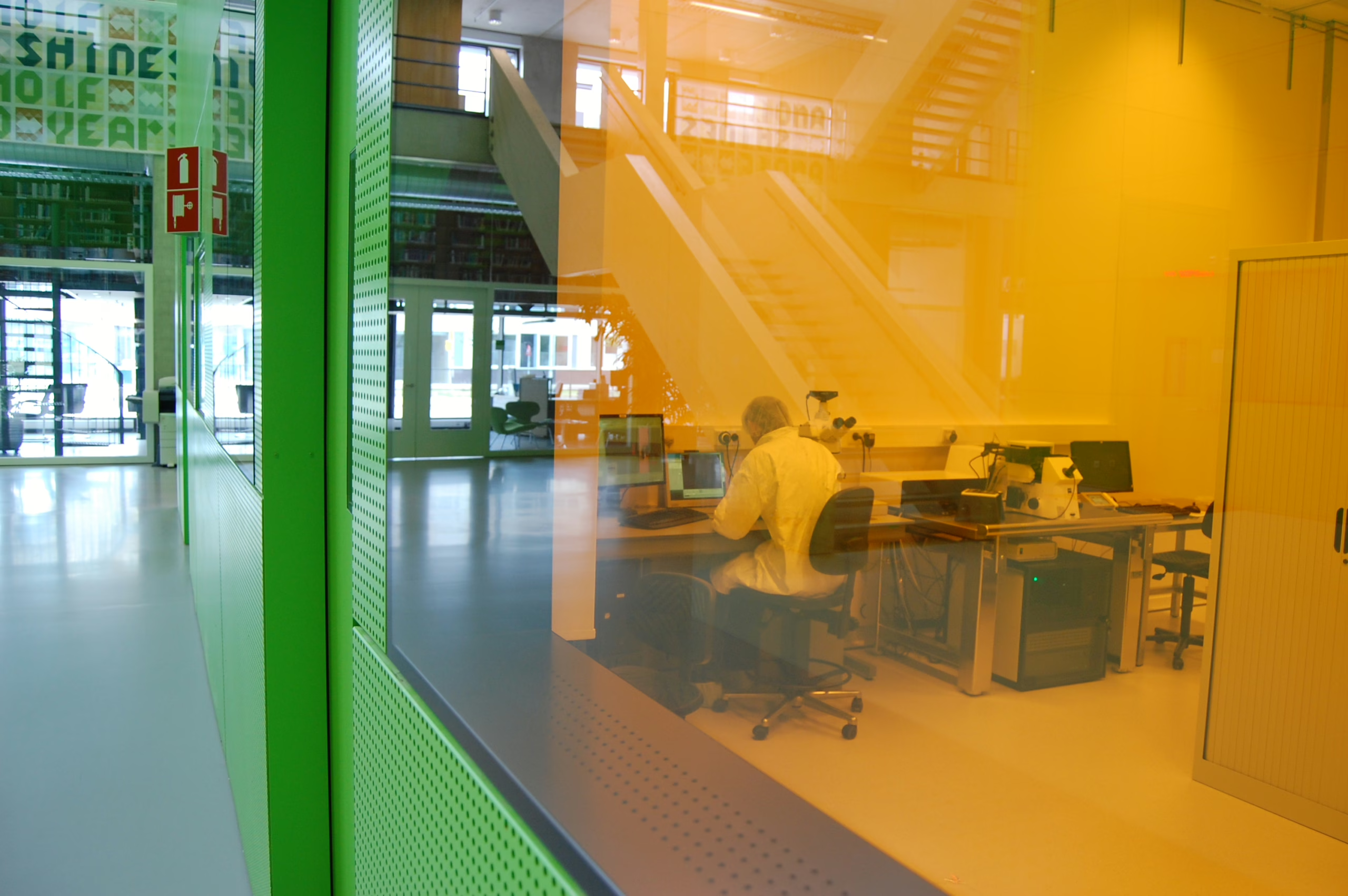
AMOLF group leaders Erik Garnett (Nanoscale Solar Cells) and Wim Noorduin (Self-Organizing Matter) have received an ERC Consolidator grant from the European Research Council (ERC). They have been granted respectively 3.0 and 2.4 million euros to carry out their research plans. In addition to being an AMOLF group leader, Garnett and Noorduin both hold a professorship by special appointment at the University of Amsterdam (UvA).
Cell unstuck: how a glue-like protein can make our cells move
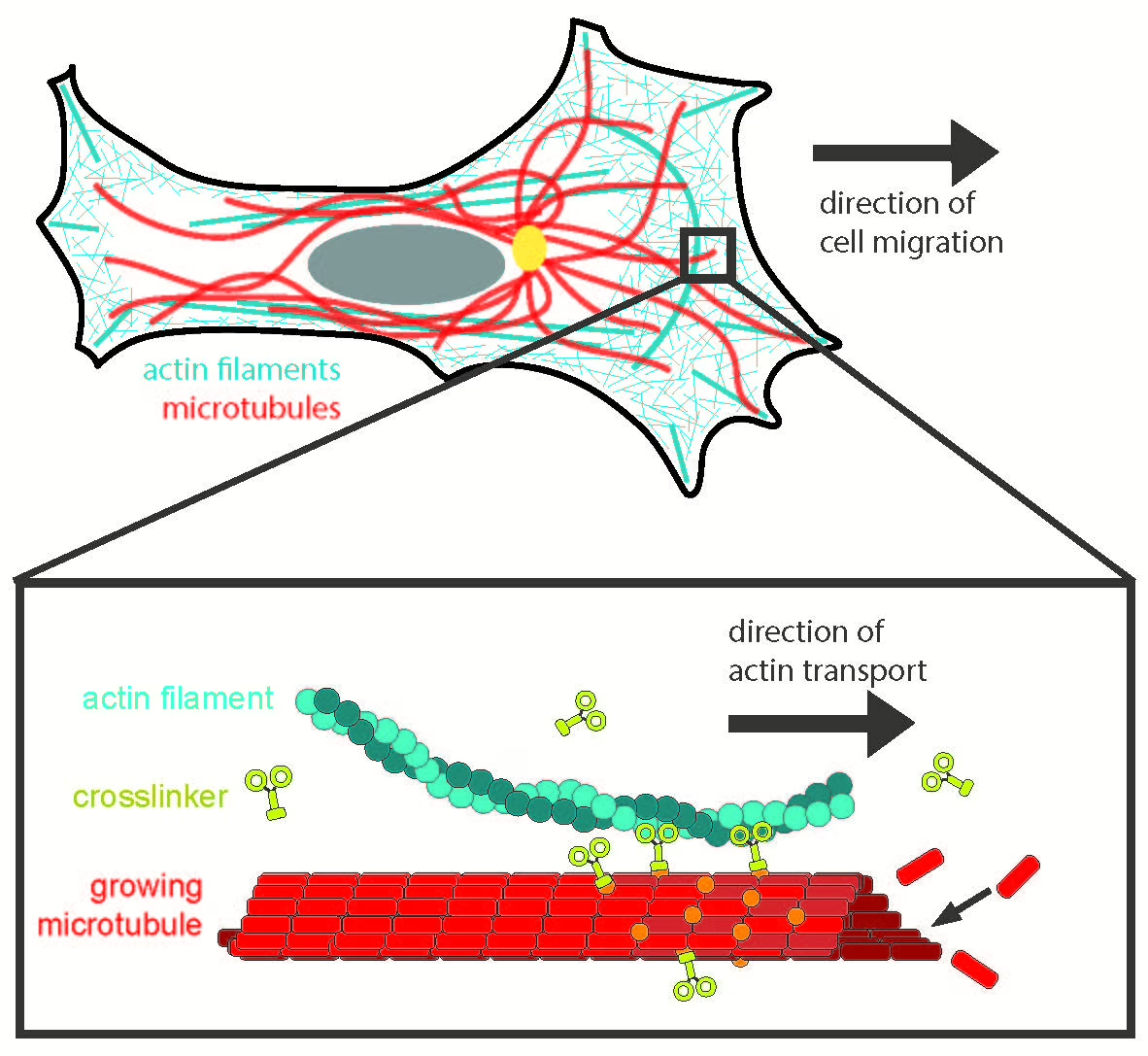
An essential aspect of the cells in our body is their ability to move, to repair certain tissues or chase intruders, for example: but how do they do it? Scientists from TU Delft, AMOLF and Utrecht University reveal how glue-like proteins called crosslinkers cannot only help to hold the whole cell together passively, but surprisingly cause the cell to move as well. The research is now published in PNAS.
A magic top hat for protein folding
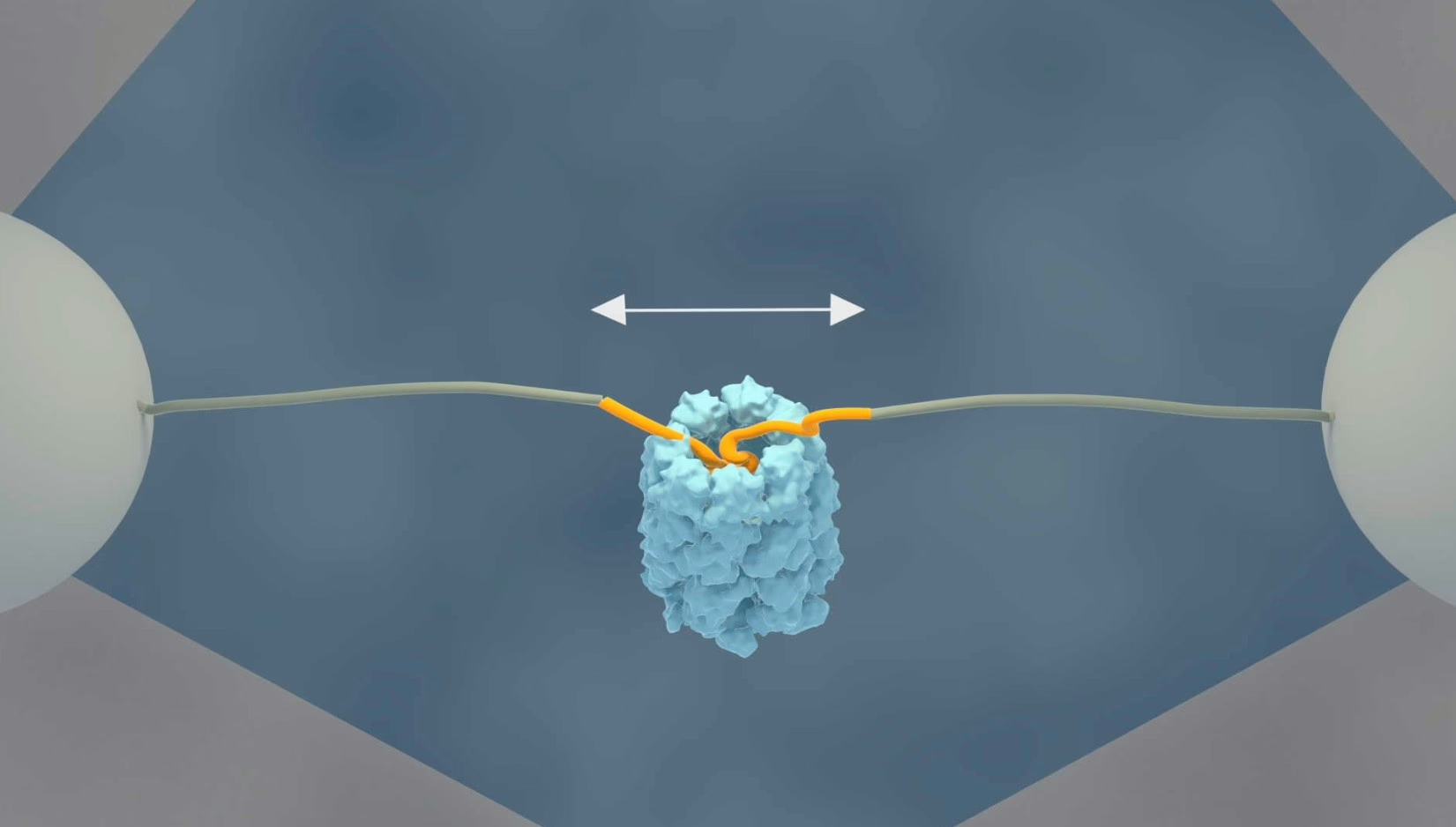
Following a single protein inside the cavity of a GroEL chaperone for the first time, researchers at AMOLF led by professor Sander Tans discovered how protein folding can be accelerated. Amino acid chains are pulled inside the open cavity of the chaperone, where they collapse on top of themselves and fold. The findings have implications for our understanding of cellular protein control and folding diseases. The research was published in Science Advances on March 4th.
Signal discovered that connects cell size with cell growth
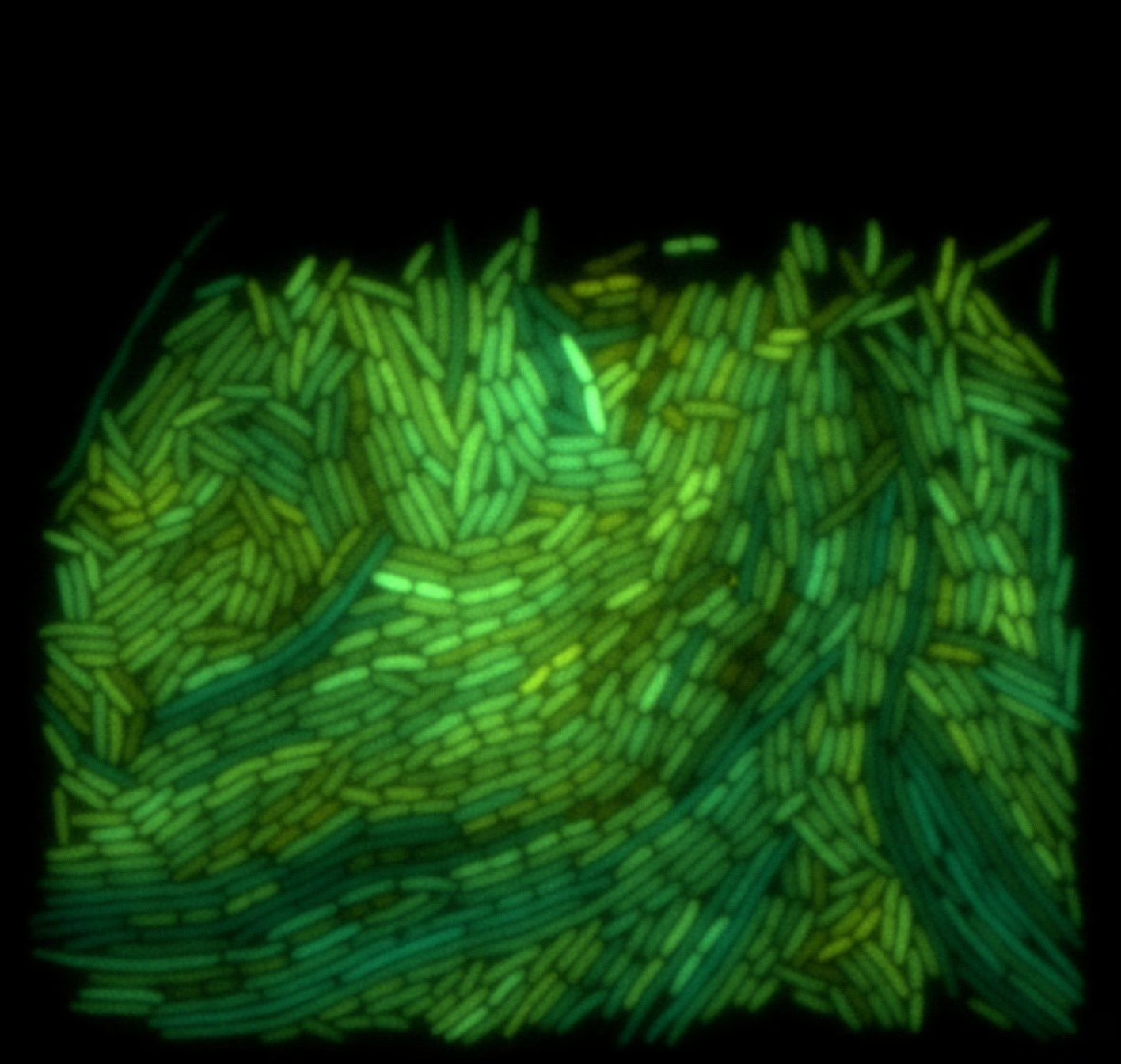
The mechanisms connecting growth with cell size have been mysterious – up till now: in a recent publication in Current Biology, researchers from AMOLF and TU Delft have uncovered that the signaling molecule ppGpp is essential to regulate cell size. Surprisingly, they also discover cells adjust their sizes to concentrations of ppGpp, rather than strictly according to growth rate.
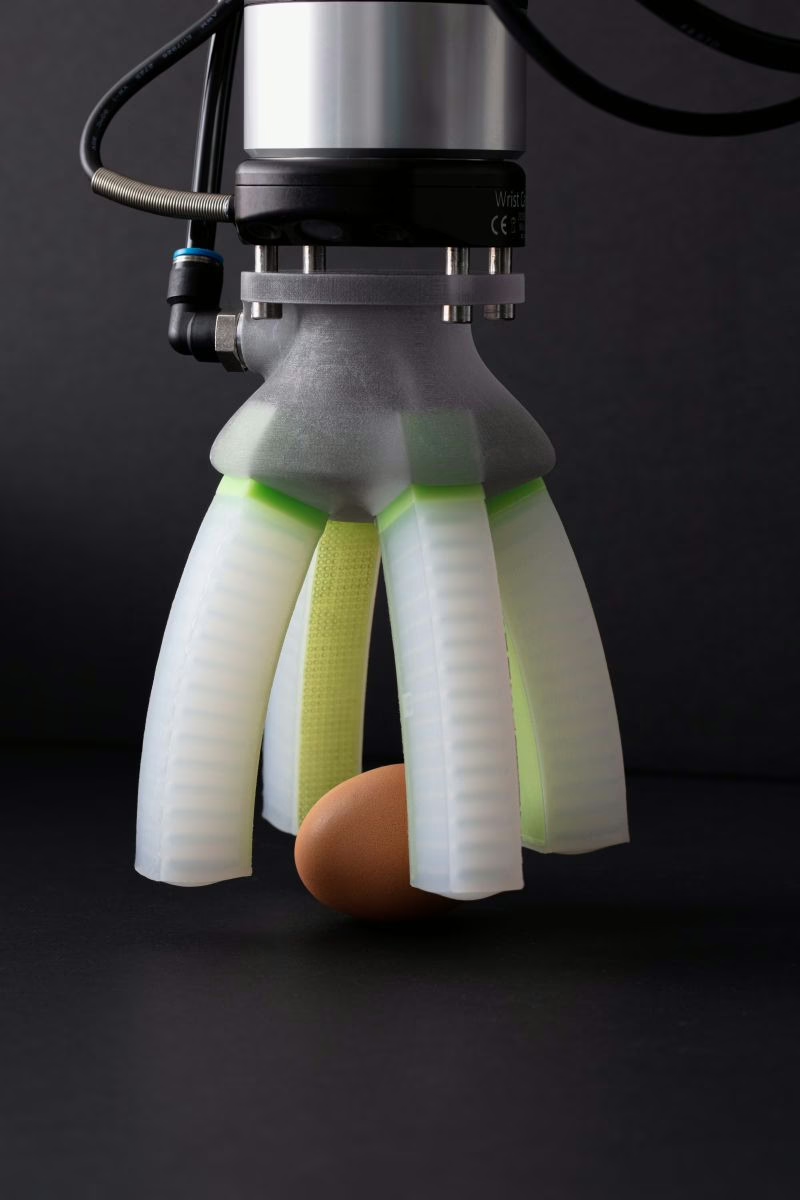
Soft Robots at Teknowlogy 2022
The Soft Robotic Matter research group led by Bas Overvelde will be present at Teknowlogy 2022: the Dutch festival where technology, science, innovation and valorization meet. At the event, visitors will be able to meet the latest soft robots that are controlled by fluidics, and soft robots that manage to carefully pick up differently shaped objects. Traditionally robots use electronics for their control, but the Soft Robotic Matter group mainly uses fluidic pressure to empower their robots.
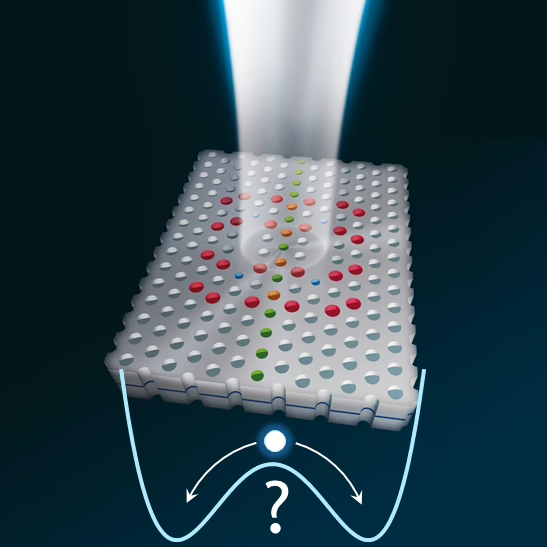
A Better Understanding of Symmetry Breaking
In an international collaboration, AMOLF researchers have theoretically described and experimentally observed spontaneous symmetry breaking (SSB) in two laser-driven coupled optical cavities. SSB is a universal phenomenon that occurs in many physical systems. It is at the heart of the laser, superconductivity, and the Higgs mechanism, for example. In the case of laser-driven systems like optical cavities, it was not yet understood how SSB occurs. Because laser-driven systems are always in a state imposed by the laser, the nature and manifestation of SSB is completely different from other systems.
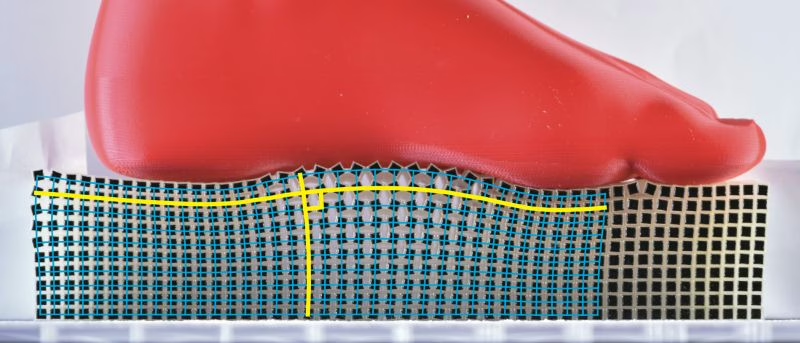
New puppeteering: streamlined control of material deformation
In a new publication in Nature Communications, a team of physicists from Amsterdam, Leiden and Georgia (USA) show how to ‘puppeteer’ lab-designed metamaterials. By only touching these materials from the outside, they are able to predict and perform precise deformations of the whole material.
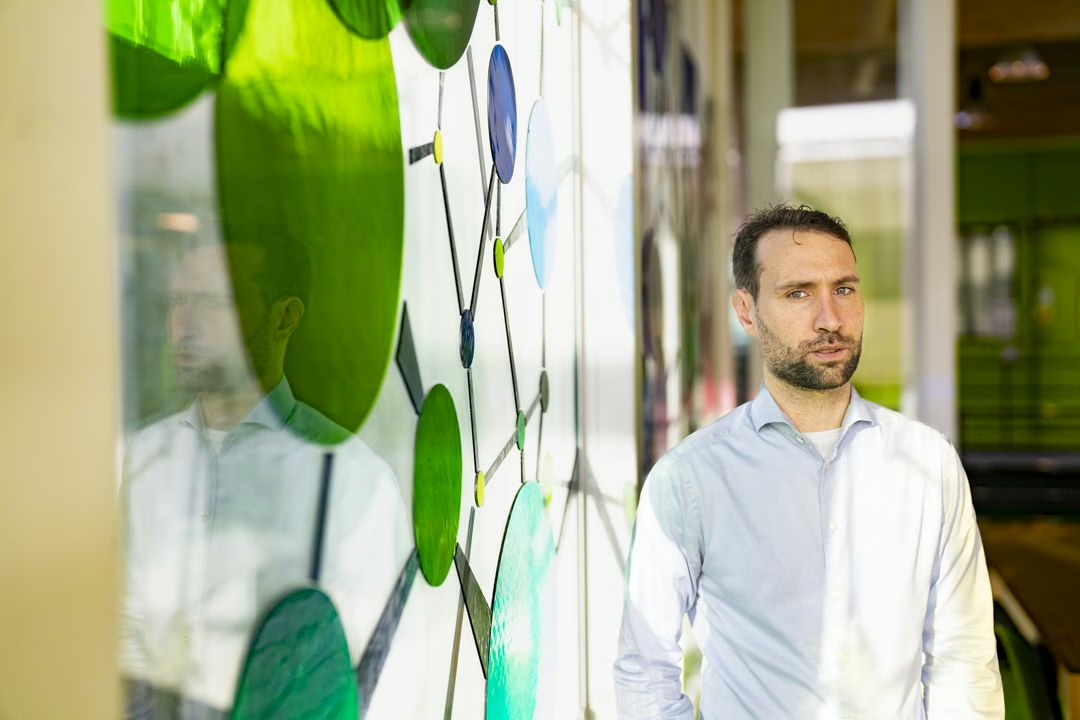
ERC Starting Grant for Marc Serra-Garcia
AMOLF tenure-track group leader Marc Serra-Garcia (Hypersmart Matter) has received a Starting Grant of 1.68 million euros from the European Research Council (ERC). With the project INFOPASS he will investigate information processing in passive elastic structures. The ERC uses the Starting Grants to support talented scientists in the early stages of their career in pursuing ground-breaking projects for a duration of five years.