
News & updates
Latest developments from our institute
Stay informed about new research results, awards, events, and collaborations across our scientific community.
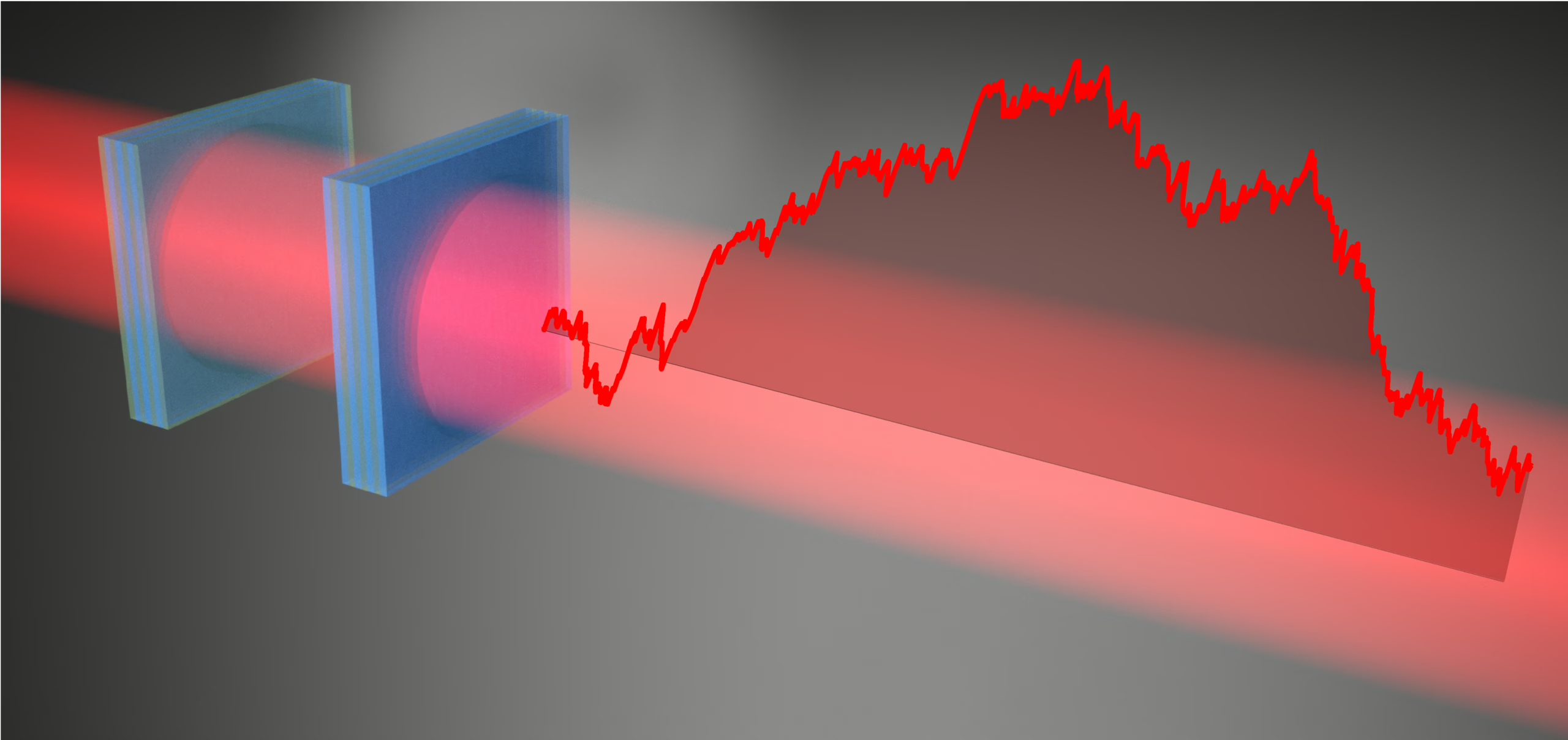
Light prefers the extremes
From monitoring pregnancies to distance detection in cars, light sensors are a workhorse of modern technology. But do we really understand the data they give us? In a surprising find, three AMOLF researchers show evidence of a tendency to detect extreme values more often than average ones, caused by the way our sensors work. This so-called arcsine behavior causes lows and highs to occur much more often than the average in between. The finding may have a great impact on sensing technology, write Vashist Ramesh, Kevin Peters and Said Rodriguez in the prominent scientific journal Physical Review Letters.
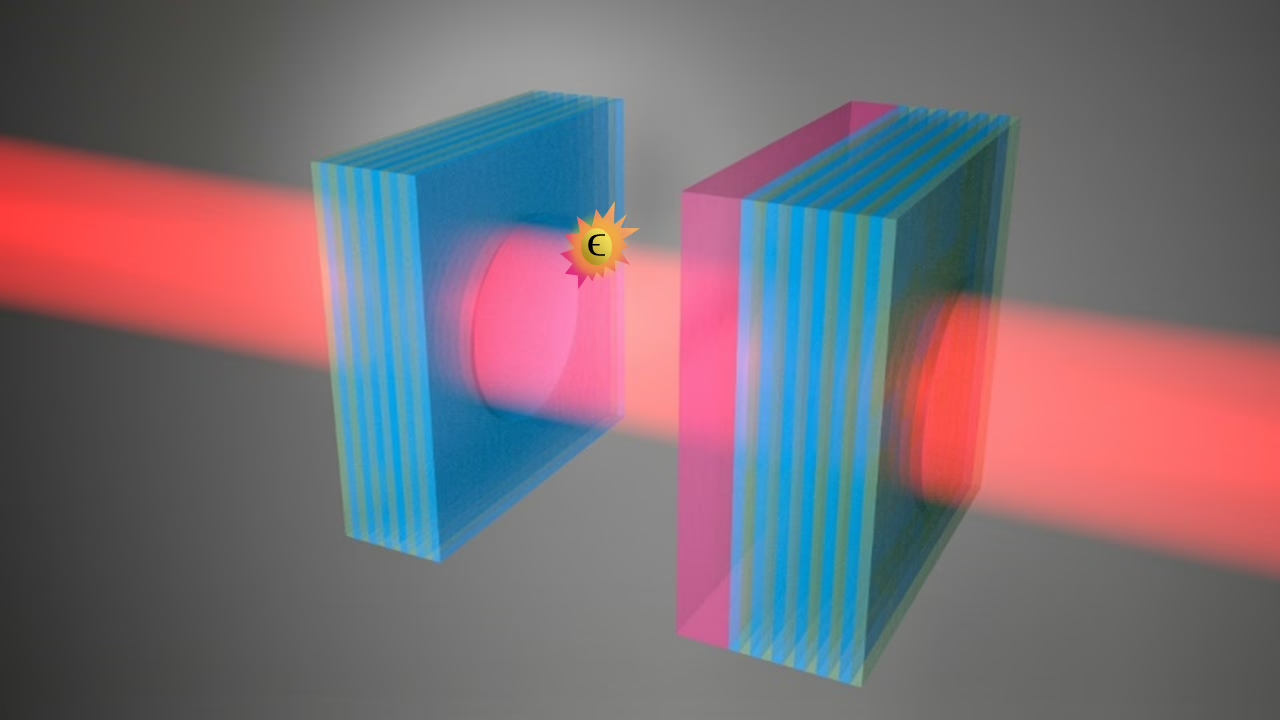
Getting more information by measuring faster and averaging less
For signals barely larger than the noise in a system, measurement is generally a trade-off between speed and precision. Averaging over several measurements reduces the influence of noise but takes (a lot of) time. That could change with a revolutionary new measurement method, devised by AMOLF researchers Kevin Peters and Said Rodriguez. Their idea is based on a non-linear optical resonator, explains Rodriguez: “In this sensor, faster measurement actually produces a stronger signal.” The theoretical elaboration of this new measurement method is published in Physical Review Letters today, June 27, 2022. For an experimental exploration, collaborations are being sought with companies seeking to make fast and precise measurements with light.
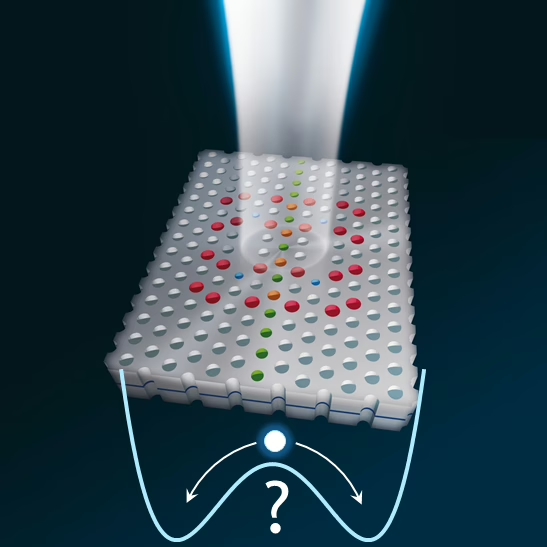
A Better Understanding of Symmetry Breaking
In an international collaboration, AMOLF researchers have theoretically described and experimentally observed spontaneous symmetry breaking (SSB) in two laser-driven coupled optical cavities. SSB is a universal phenomenon that occurs in many physical systems. It is at the heart of the laser, superconductivity, and the Higgs mechanism, for example. In the case of laser-driven systems like optical cavities, it was not yet understood how SSB occurs. Because laser-driven systems are always in a state imposed by the laser, the nature and manifestation of SSB is completely different from other systems.
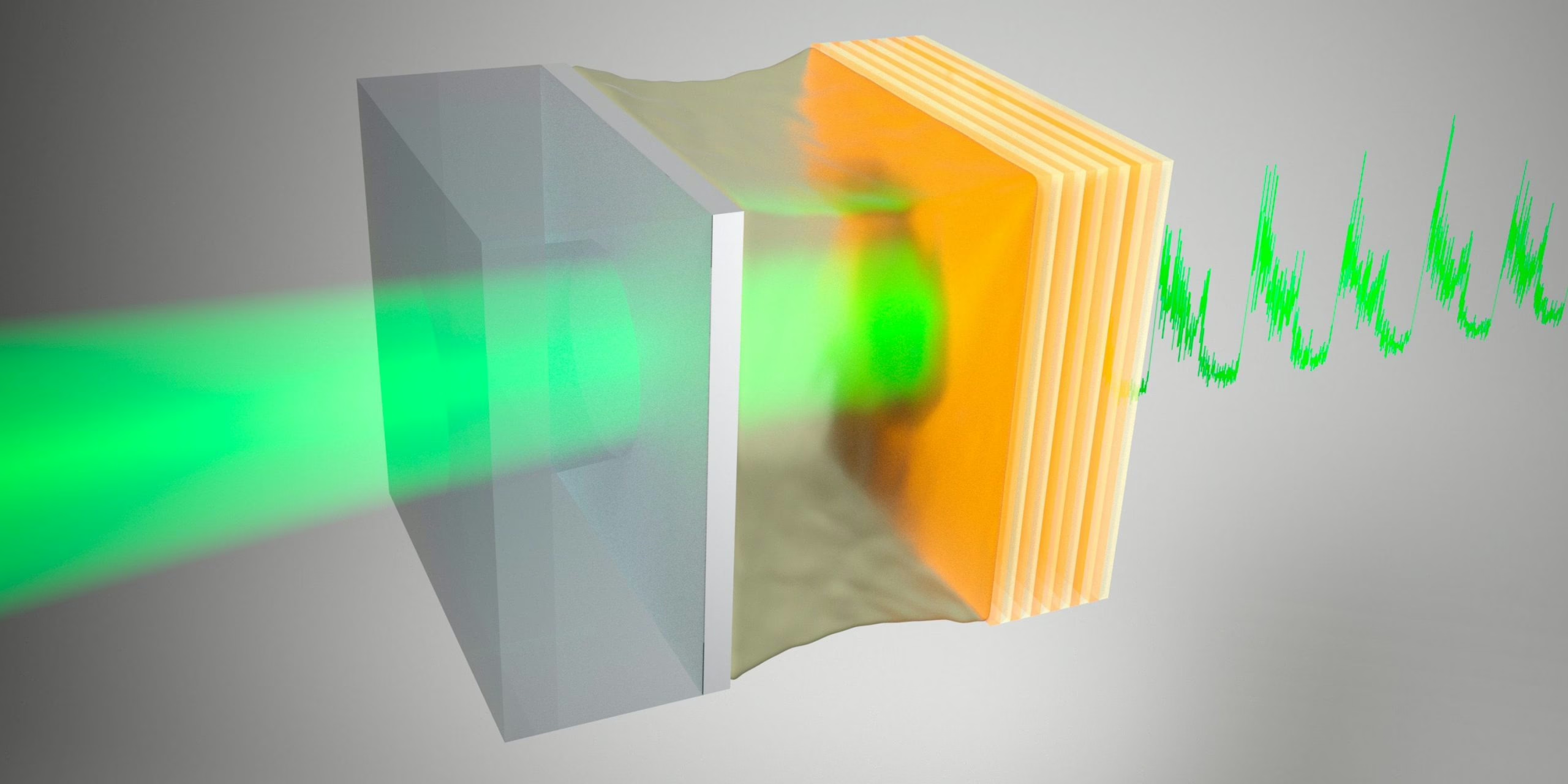
AMOLF scientists unravel noise-assisted signal amplification in systems with memory
Signals can be amplified by an optimum amount of noise, but this so-called stochastic resonance is a rather fragile phenomenon. Researchers at AMOLF were the first to investigate the role of memory for this phenomenon in an oil-filled optical microcavity. The effects of slow non-linearity (i.e. memory) on stochastic resonance were never considered before, but these experiments suggest that stochastic resonance becomes robust to variations in the signal frequency when systems have memory. This has implications in many fields of physics and energy technology. In particular, the scientists numerically show that introducing slow non-linearity in a mechanical oscillator harvesting energy from noise can increase its efficiency by tenfold. They publish their findings in Physical Review Letters on May 27th.
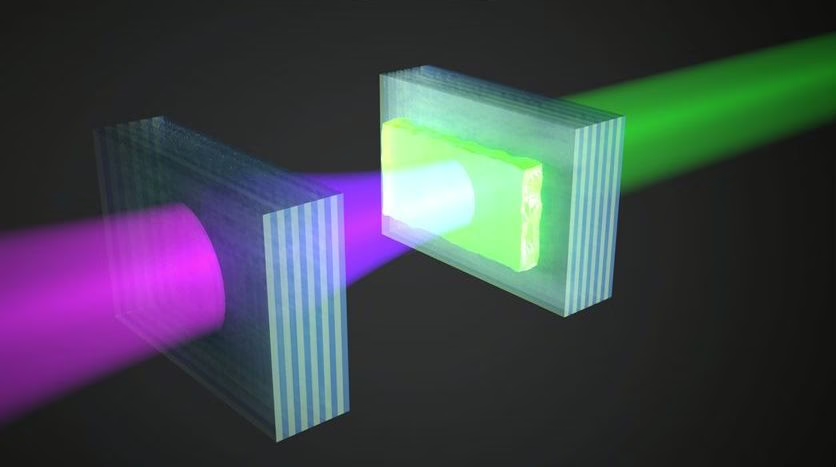
The properties of your microscope do matter
The coupling of light and matter is relevant to many emerging technologies like lasers, LEDs, sensors, and more. To observe this coupling researchers use optical microscopes, and the signatures of light-matter coupling are then evidenced by measuring the transmission of different colors of light (i.e. the spectrum). Typically, the measured spectrum is assumed to be independent of the microscope’s properties. However, scientists at AMOLF have discovered that the microscope’s properties can profoundly impact those measurements. The results raise awareness about a hitherto ignored source of error in optical experiments, and pave the way for the correct characterization of optical systems. The researchers published this study in the journal ACS Photonics on May 4th.
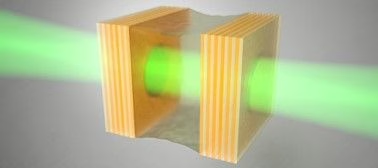
Olive oil sheds new light on universality in phase transitions
A simple drop of olive oil in a system of photons bouncing between two mirrors, has revealed universal aspects of phase transitions in physics. Researchers at AMOLF used an oil-filled optical cavity in which light undergoes phase transitions similar to those in boiling water. The system they studied has memory because the oil causes photons to interact with themselves. By varying the distance between the two mirrors and measuring the transmission of light through the cavity, they discovered a universal law describing phase transitions in systems with memory. These results are published on April 15th in Physical Review Letters.
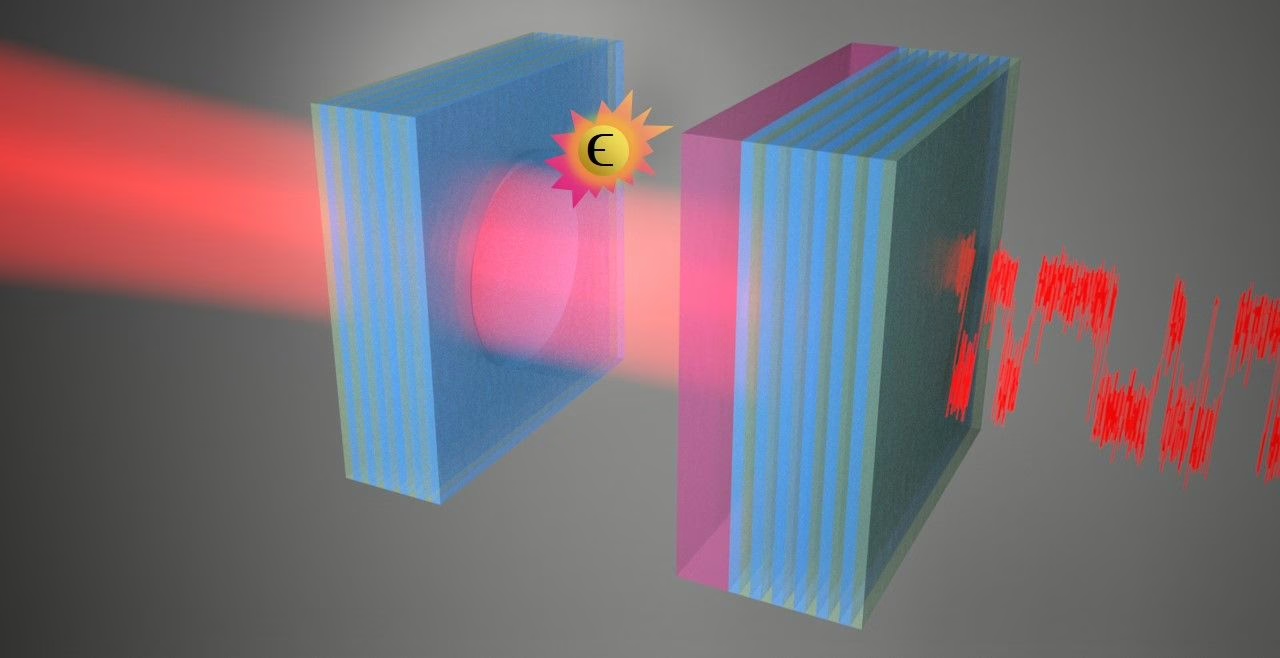
Noise in a sensor? No problem!
In conventional sensing methods, noise is always a problem, especially in systems that are meant to detect changes in their environment that are hardly bigger or even smaller than the noise in the system. Encountering this problem in his experiments with interacting photons, AMOLF physicist Said Rodriguez thought of a way around it. In an article that will be published in Physical Review Applied on February 13, 2020, he demonstrates how noise can be turned into a resource for optical sensing rather than a problem.

Said Rodriguez wins Early Career Award
Today the Royal Academy announced that AMOLF group leader Said Rodriguez is one of the winners of the Early Career Award. With this new prize the Academy wishes to reward talented researchers that have just started their career in the Netherlands. To further develop their original research ideas, the group of twelve researchers are rewarded today by the Academy. The prize consists of 15.000 euros and an artwork.