
News & updates
Latest developments from our institute
Stay informed about new research results, awards, events, and collaborations across our scientific community.
Open Technology Programme (OTP) funding
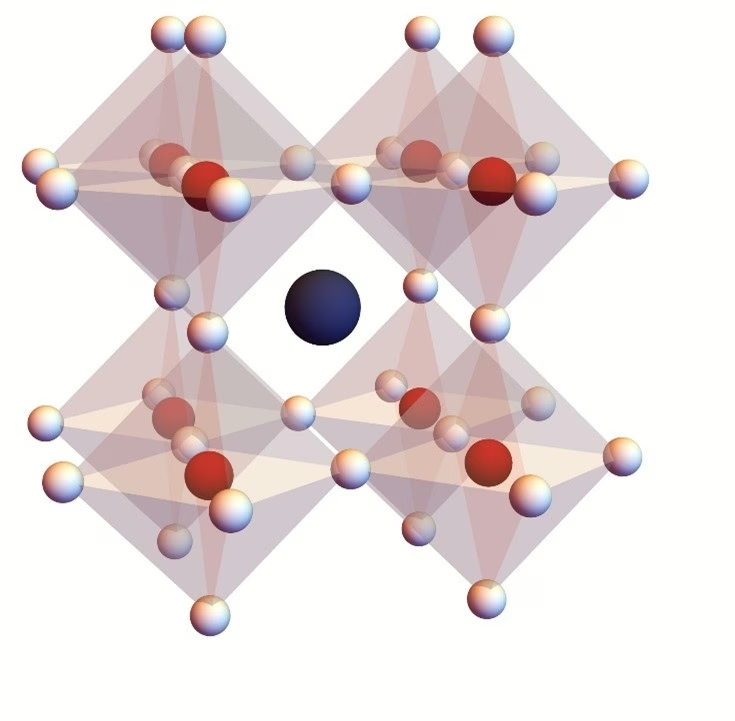
In the Open Technology Programme (OTP) call for proposals of NWO, Bruno Ehrler and Erik Garnett have received funding to carry out the research plan ‘Achieving Semiconductor Stability from the Ground Up’. The OTP call for proposals is open to excellent research aimed at the possible implementation of the results. In addition to the scientific contribution carried out by AMOLF, the following companies are involved: EDAX (subsidiary of Ametek), CL Solutions (part of Delmic), and Amsterdam Scientific Instruments (ASI). The total project receives 1.1 million euros.

NWO funding for perovskite solar foil consortium
The Light Management in New Photovoltaic Materials (LMPV) Center at AMOLF starts a new solar consortium on perovskite solar foils by roll-to-roll manufacturing, which has recently been funded by NWO’s Knowledge and Innovation Convenant (KIC). The grant has been awarded as part of the ‘Innovations for wind and solar energy’ thematic call for proposals. The consortium consists of a mix of academic organizations and small and medium-sized enterprises. The total grant amount is 1,5 million euro.
Perovskites under pressure: hot electrons cool faster
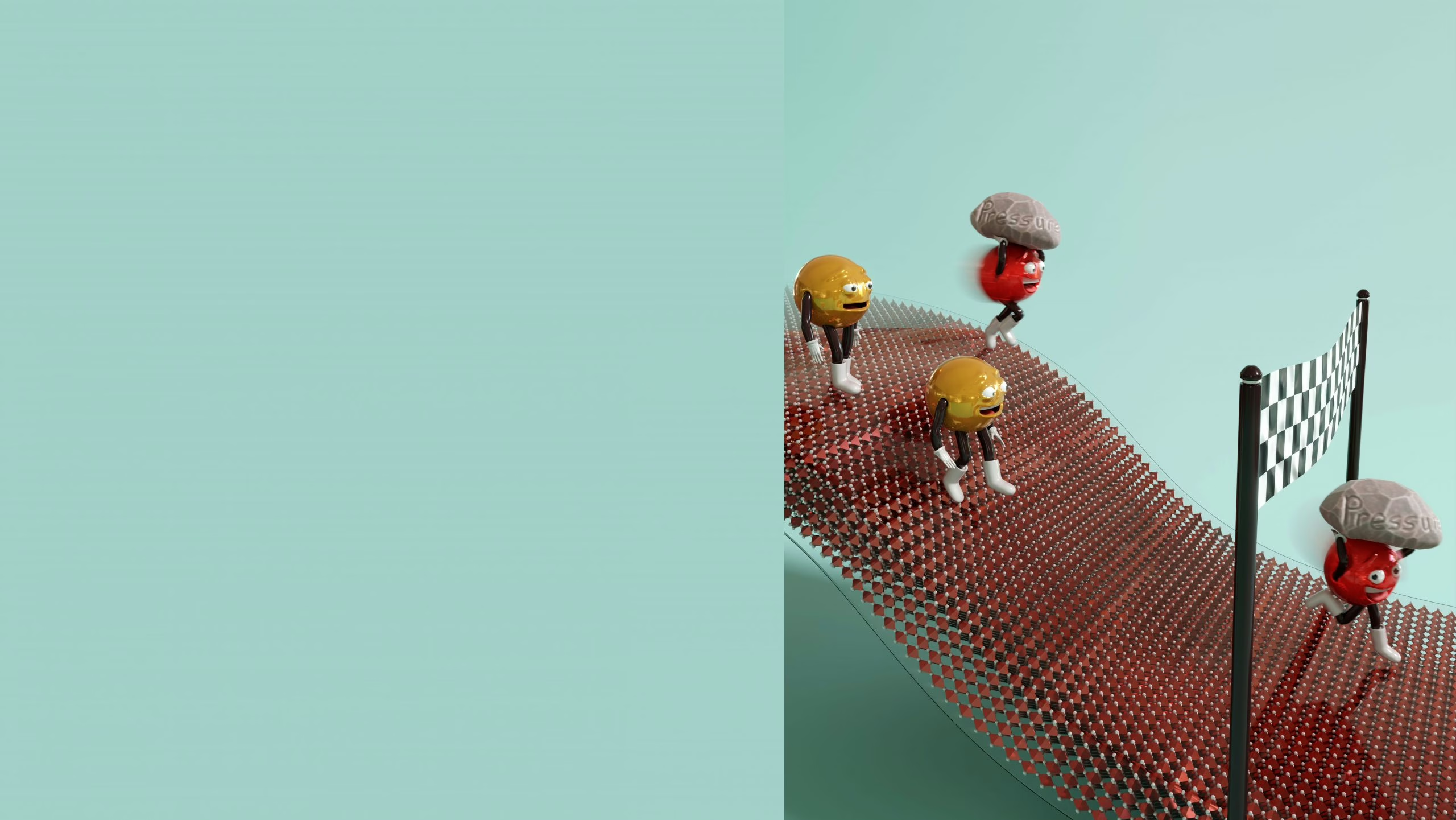
In solar cells, about two third of the energy of sunlight is lost. Half of this loss is due to a process called ‘hot carrier cooling’ where high energy photons lose their excess energy in the form of heat before being converted to electricity. Scientists at AMOLF have found a way to manipulate the speed of this process in perovskites by applying pressure to the material. This paves the way for making perovskites more versatile, not only for use in solar cells but also in a variety of other applications, from lasers to thermoelectric devices. The researchers will publish their study in the Journal of Physical Chemistry Letters on 23 April.
Painting with semiconductors
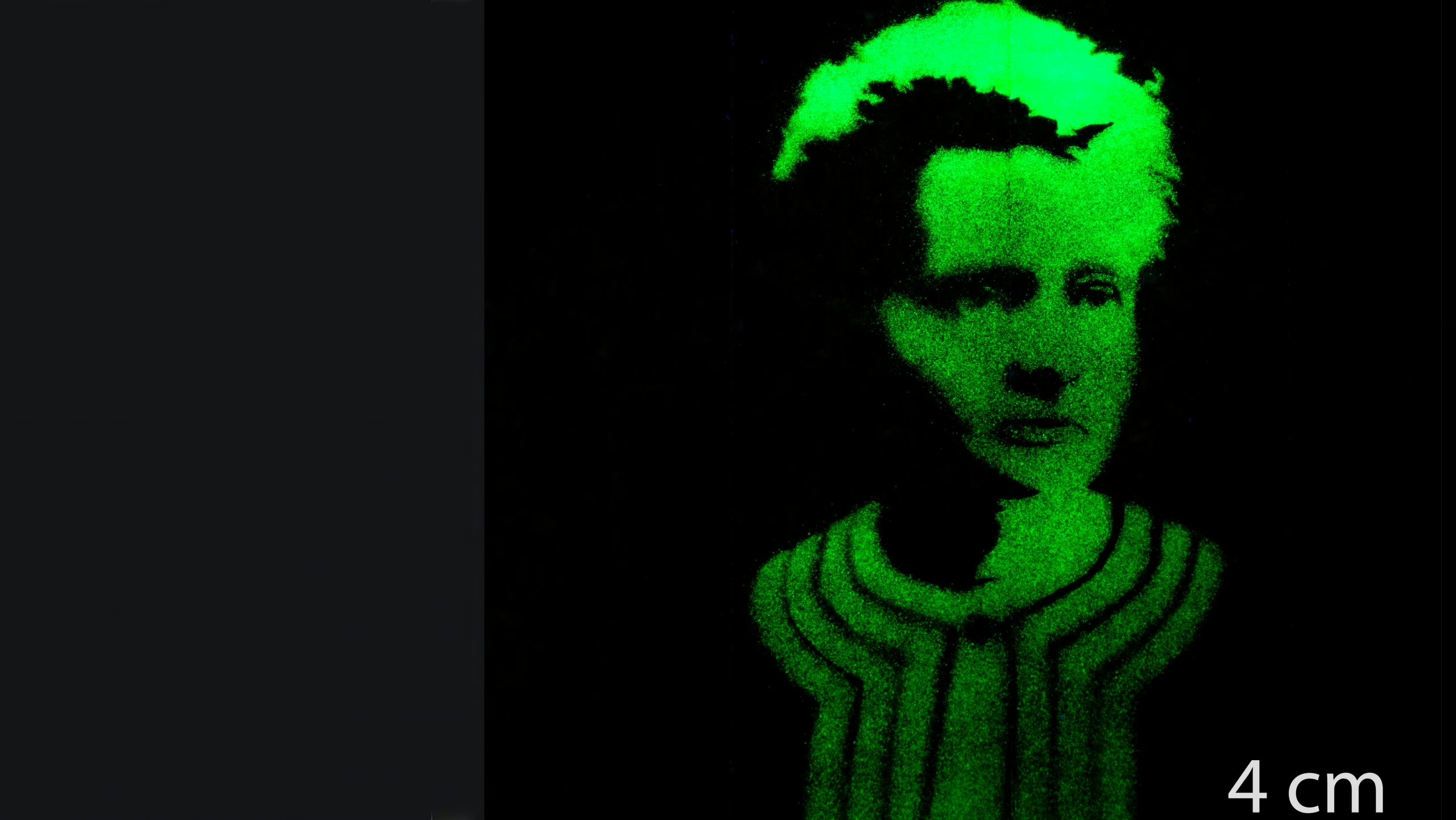
AMOLF researchers Lukas Helmbrecht and Wim Noorduin have developed a reactive ink that can be painted on an equally reactive canvas. The ink reacts with the material on the canvas to become a semiconductor that emits colored light, an essential part of electronic components such as LEDs. Consequently, a new way of producing these electronic components is now within reach. The results of the research, a collaboration between the AMOLF groups Self-Organizing Matter and Hybrid Solar Cells, are published this week in the journal ‘Advanced Materials’.

Bruno Ehrler appointed professor at University of Groningen
Group leader Bruno Ehrler has been named professor by special appointment for New Hybrid Material Systems for Solar-cell Applications at the University of Groningen. Ehrler will continue working at AMOLF leading the research group Hybrid Solar Cells.

ERC Starting Grant for Bruno Ehrler and Bas Overvelde
AMOLF group leaders Bruno Ehrler and Bas Overvelde have both received a Starting Grant of 1.5 million Euros from the European Research Council (ERC). The ERC uses this grant to support talented early-career scientists who have already produced excellent research, and show potential to be a research leader.
Solar cell material performs better under pressure
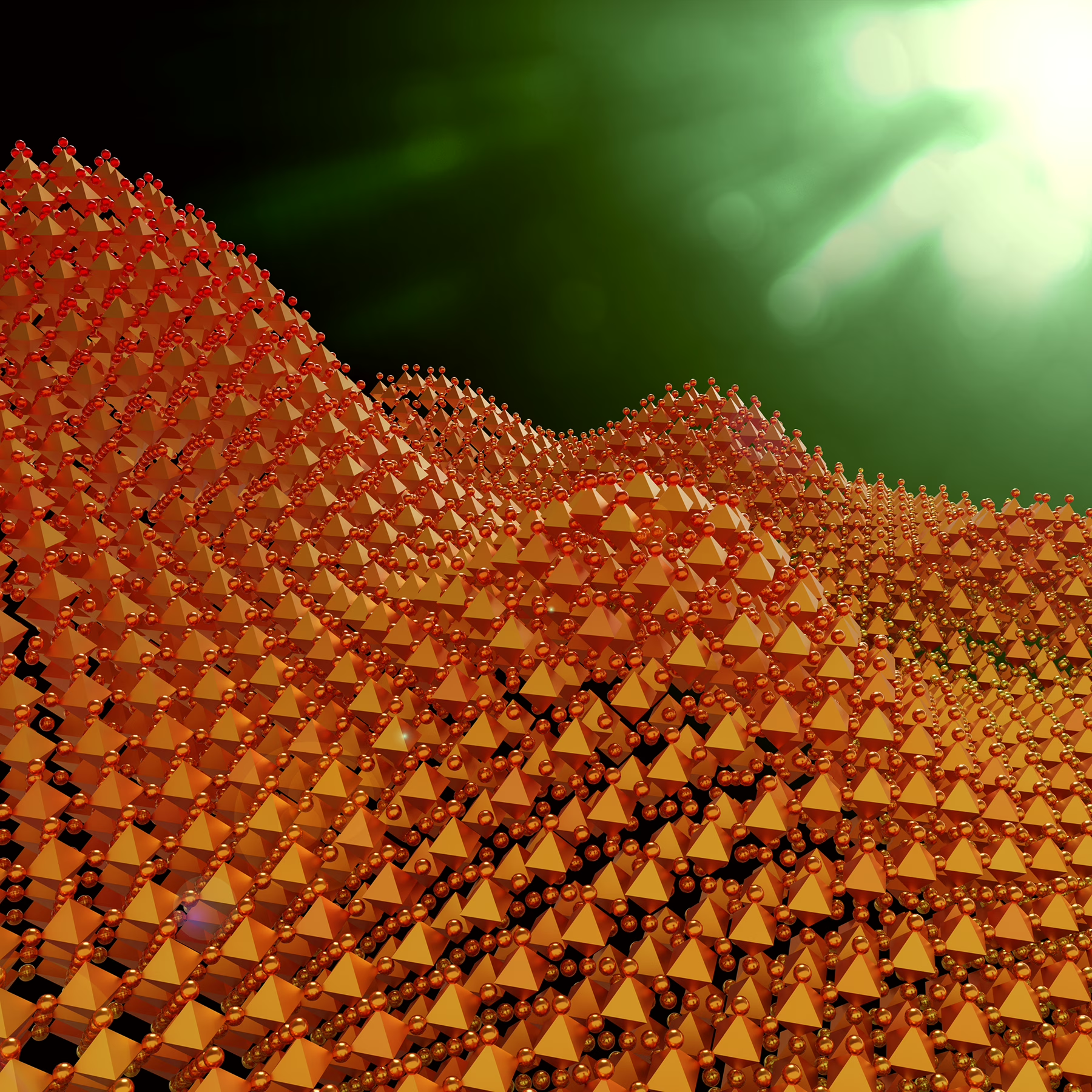
A novel and highly promising material for solar cells, halide perovskites, is more stable and consequently more efficient if just one ion is substituted. Researchers from AMOLF revealed in an unexpected manner why this is the case: pressure plays an important role. They published their findings on July 15th in Cell Reports Physical Science.

Veni grants for Eline Hutter and Sven Askes
The Dutch Research Council (NWO) awarded Veni grants to AMOLF postdocs Eline Hutter (Hybrid Solar Cells group) and Sven Askes (Nanoscale Solar Cells group).