
News & updates
Latest developments from our institute
Stay informed about new research results, awards, events, and collaborations across our scientific community.
Two NWO Rubicon grants for AMOLF researchers
Former PhD students Anne Meeussen (Mechanical Metamaterials group) and Mario Avellaneda Sarrio (Biophysics group) are amongst the 31 researchers who have recently received a Rubicon grant from NWO. The Rubicon program gives young, highly promising researchers the opportunity to gain international research experience. With a Rubicon grant they can spend up to 24 months doing research at a foreign institution.
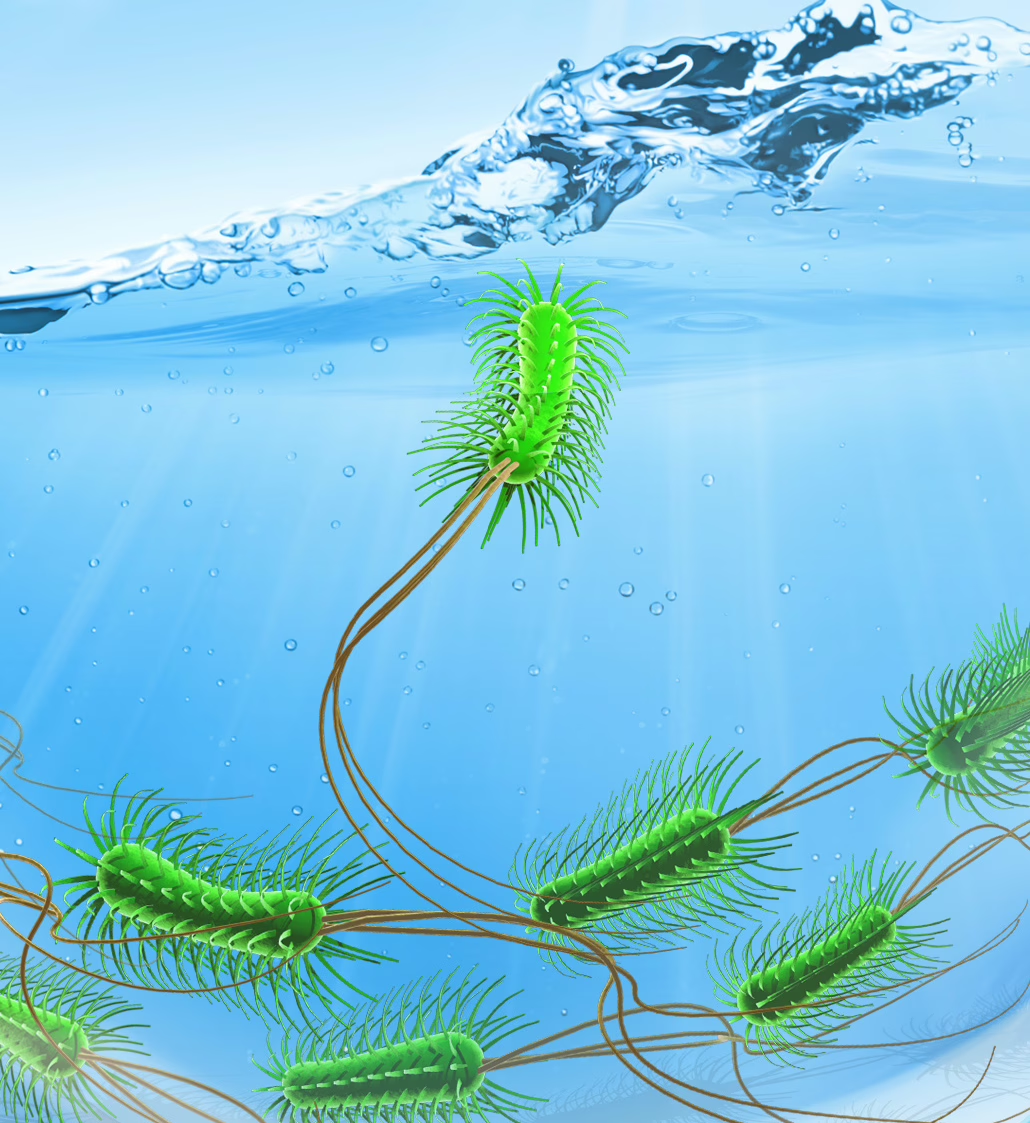
Evolutionary conflicts predicted
Evolution seems to be an unpredictable process. However, predicting the constraints of evolution is possible. Researchers from AMOLF and the French ESPCI have demonstrated this using their mathematical method, followed by experiments on bacteria. On June 24, they publish their results in the journal Cell Systems.
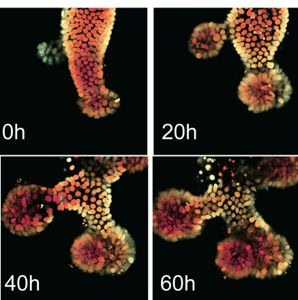
Organoid project granted in NWO Open Competition Domain Science
The project ‘Organoids in time’ is one out of twenty new consortia that can start thanks to NWO funding: the Open Competition Domain Science. The grant consists of a total of 2.5 million euros.
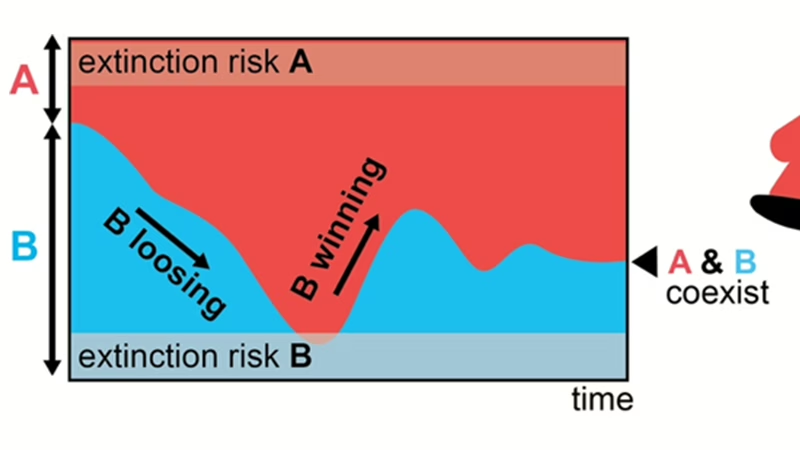
Researchers discover new mechanism for the coexistence of species
Researchers from AMOLF and Harvard University (USA) show how the ability of organisms to move around plays a role in stabilizing ecosystems. In their paper published 19 February 2020 in Nature, they describe how the competition between ‘movers’ and ‘growers’ leads to a balance in which both types of bacteria can continue to exist alongside each other.
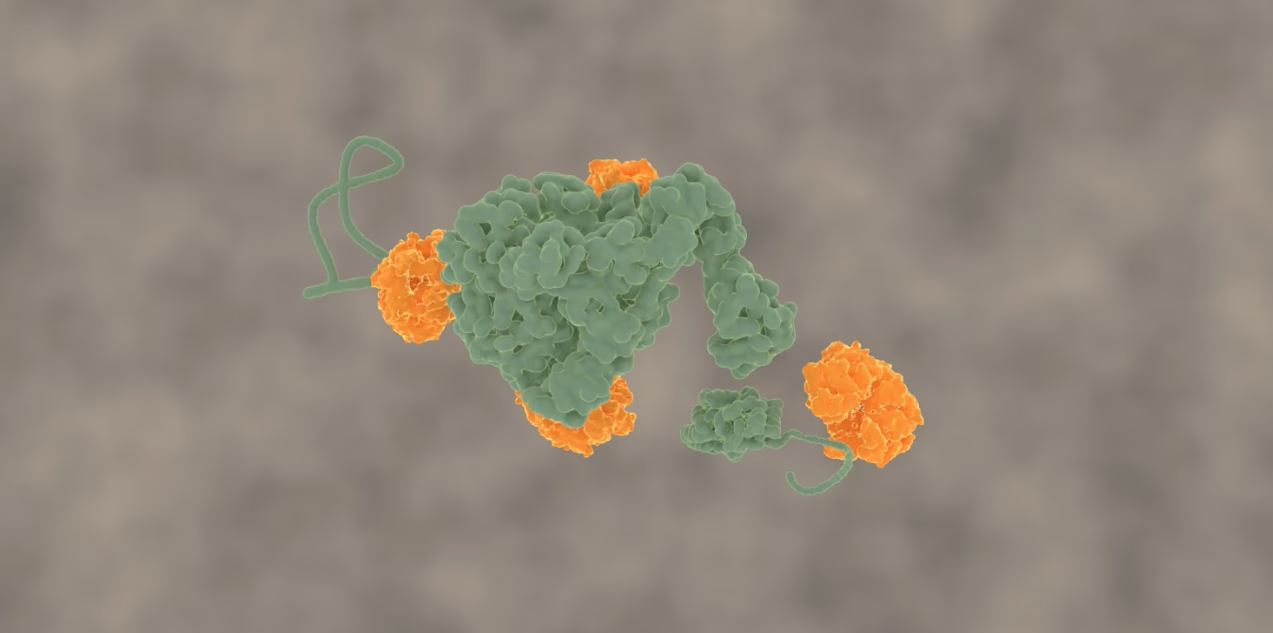
Molecular machine tears toxic protein clumps apart
How do cells disentangle proteins that are clumped together? Researchers from AMOLF in Amsterdam and Heidelberg University now show that the molecular chaperone ClpB can forcibly pull on exposed loops of protein chains, and hence extract them from protein clumps. They published their results in Nature today.
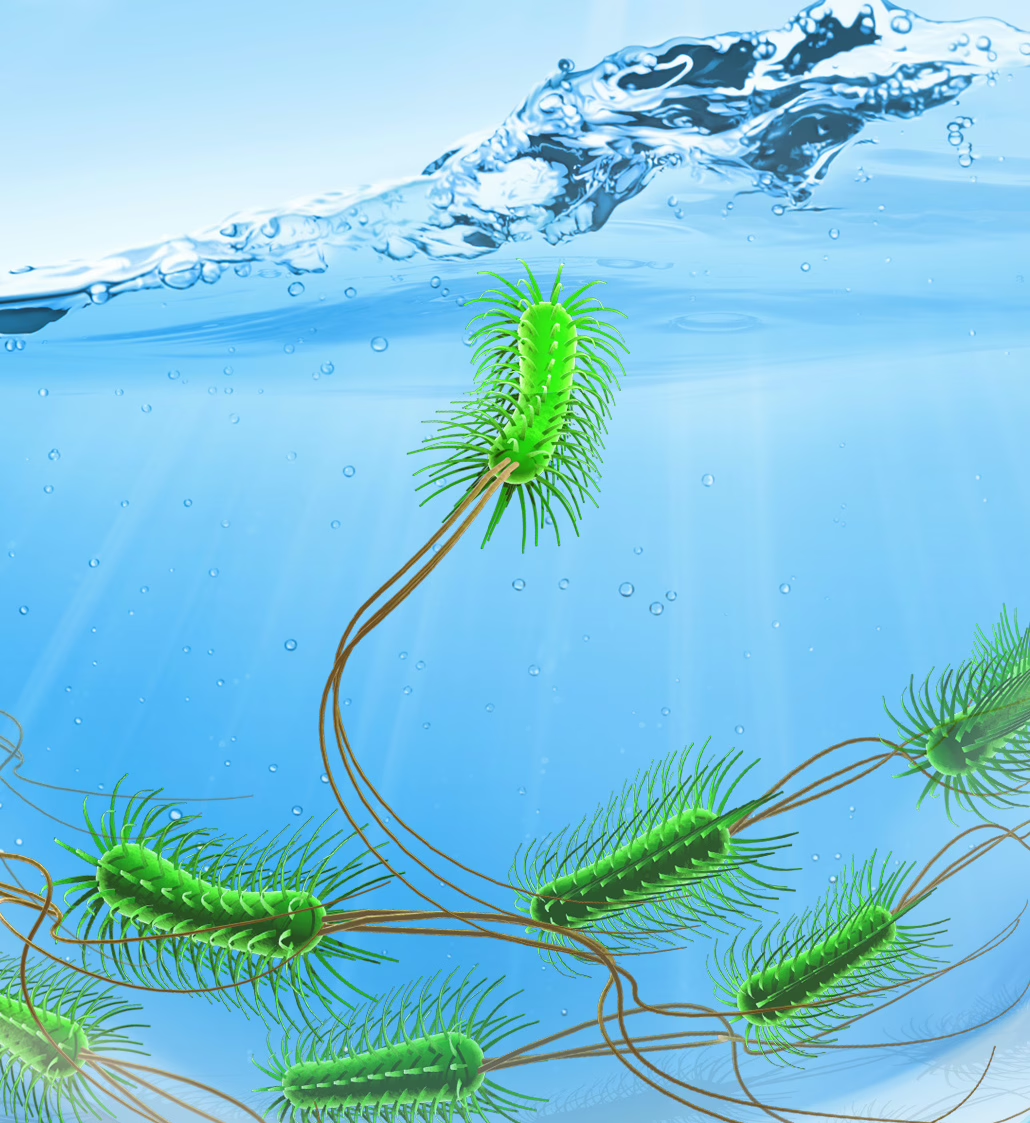
New method predicts evolution
As evolution is driven by chance, predicting it seems impossible. Nevertheless, scientists from AMOLF in Amsterdam and the ESPCI in Paris have succeeded in making predictions about the evolution of a set of genes in E. coli. When and how genes mutate remains random, but it did appear predictable which gene is more likely to evolve first, or if evolutionary deadlock arises. The results have been published on 13 April in the journal Nature Communications.
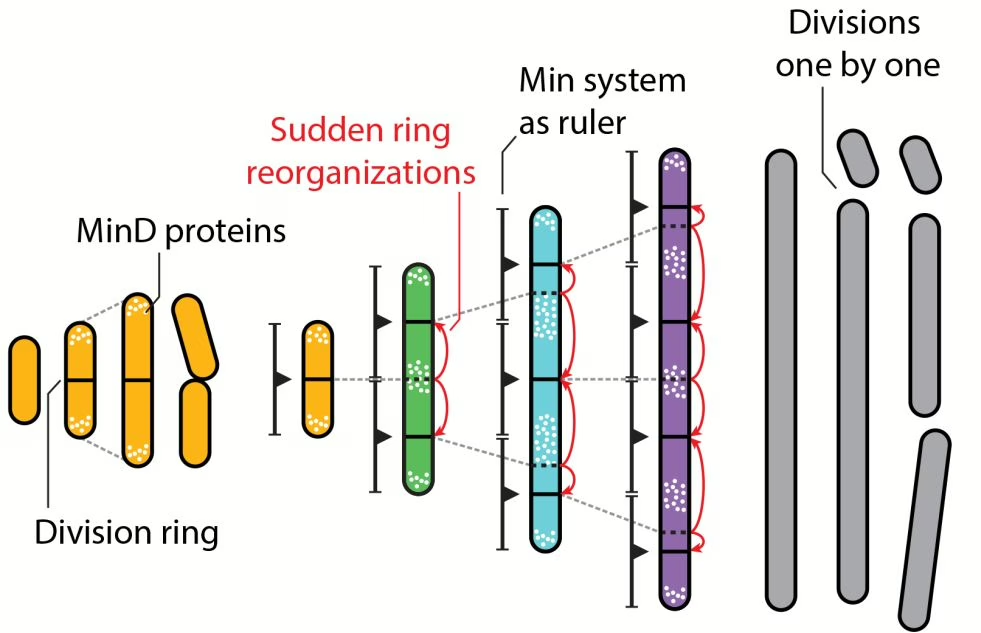
Stressed-out bacteria do measure up : As they grow, E. coli cells constantly mark sites where they can divide once the period of stress is over
When E. coli bacteria are physically distressed, they switch to stress mode and postpone cell division. But they still keep on growing, thus forming long filaments. AMOLF researchers discovered that these bacteria ‘know’ how long they are, which enables them to move protein rings to the sites where they will have to divide once the period of stress is over. The researchers involved published their findings in Current Biology, on 1 March 2018.
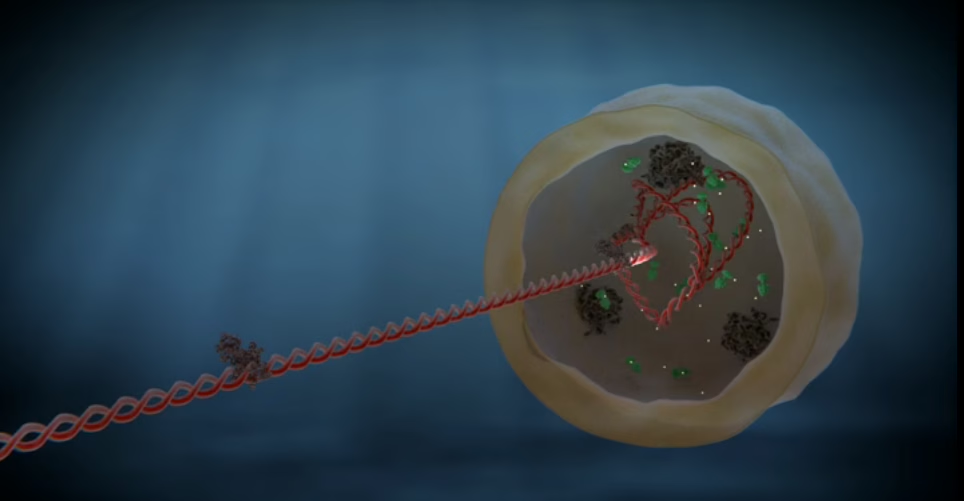
Dutch researchers join forces to build synthetic cell
The Dutch research consortium BaSyC is taking on the challenge of building a synthetic biological cell. For part of its funding, it has received a grant worth almost € 19 million from the Gravitation programme of the Netherlands Organisation for Scientific Research (NWO). The research partners will themselves be funding the remaining six million of the total of over € 25 million that the research programme will cost. AMOLF, together with five universities, is taking part in the consortium that is led by TU Delft. ‘A fundamental understanding of life within a cell will bring huge intellectual, scientific and technological rewards.’