
News & updates
Latest developments from our institute
Stay informed about new research results, awards, events, and collaborations across our scientific community.
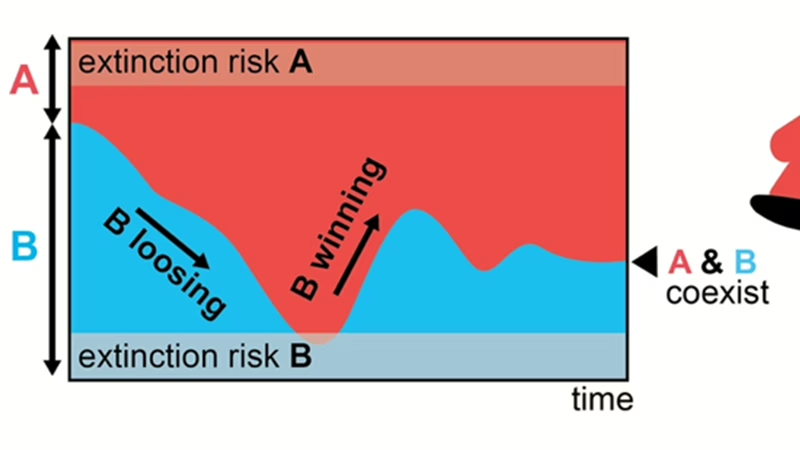
Researchers discover new mechanism for the coexistence of species
Researchers from AMOLF and Harvard University (USA) show how the ability of organisms to move around plays a role in stabilizing ecosystems. In their paper published 19 February 2020 in Nature, they describe how the competition between ‘movers’ and ‘growers’ leads to a balance in which both types of bacteria can continue to exist alongside each other.
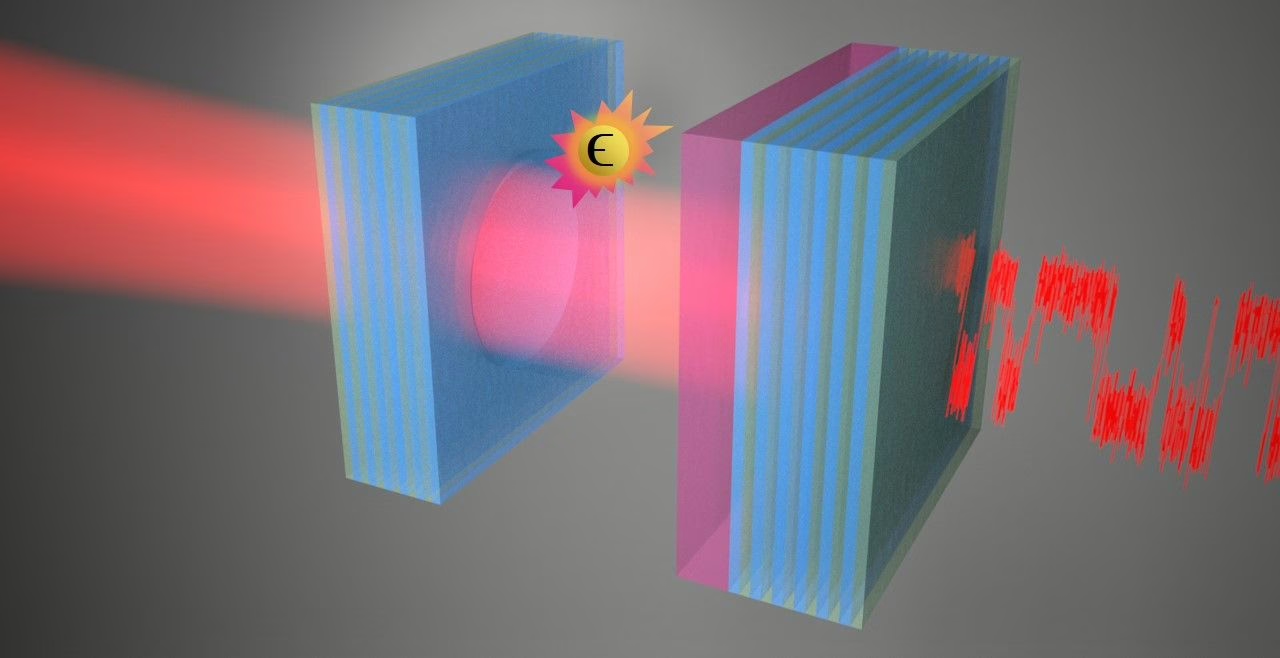
Noise in a sensor? No problem!
In conventional sensing methods, noise is always a problem, especially in systems that are meant to detect changes in their environment that are hardly bigger or even smaller than the noise in the system. Encountering this problem in his experiments with interacting photons, AMOLF physicist Said Rodriguez thought of a way around it. In an article that will be published in Physical Review Applied on February 13, 2020, he demonstrates how noise can be turned into a resource for optical sensing rather than a problem.
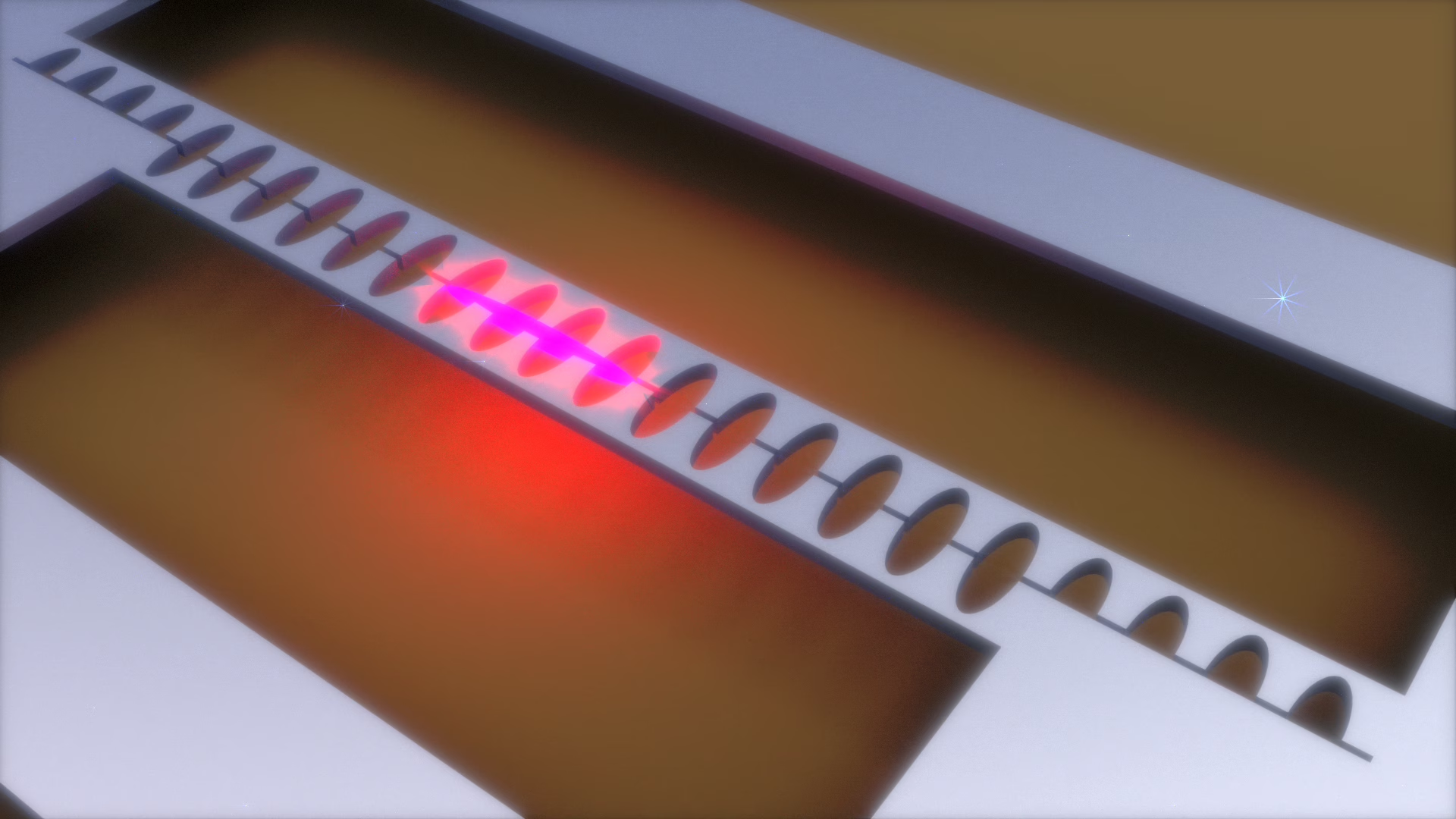
Vibrations on a chip feel a magnetic field
AMOLF physicists have made mechanical vibrations on a chip behave as if they were electrical currents flowing in a magnetic field. Because of their charge, electrons are influenced by magnetic fields, which curve their trajectories. Sound waves or more precisely the propagating mechanical vibrations don’t feel a magnetic field, because they don’t carry charge. By illuminating strings with laser light the researchers have found a way to make mechanical vibrations hop from one nanoscale string to another. Thus, these vibrations behave like electrons in a magnetic field. This unlocks new ways to manipulate sound waves and the information they can carry on chips. They publish their findings in Nature Nanotechnology on 3 February 2020.
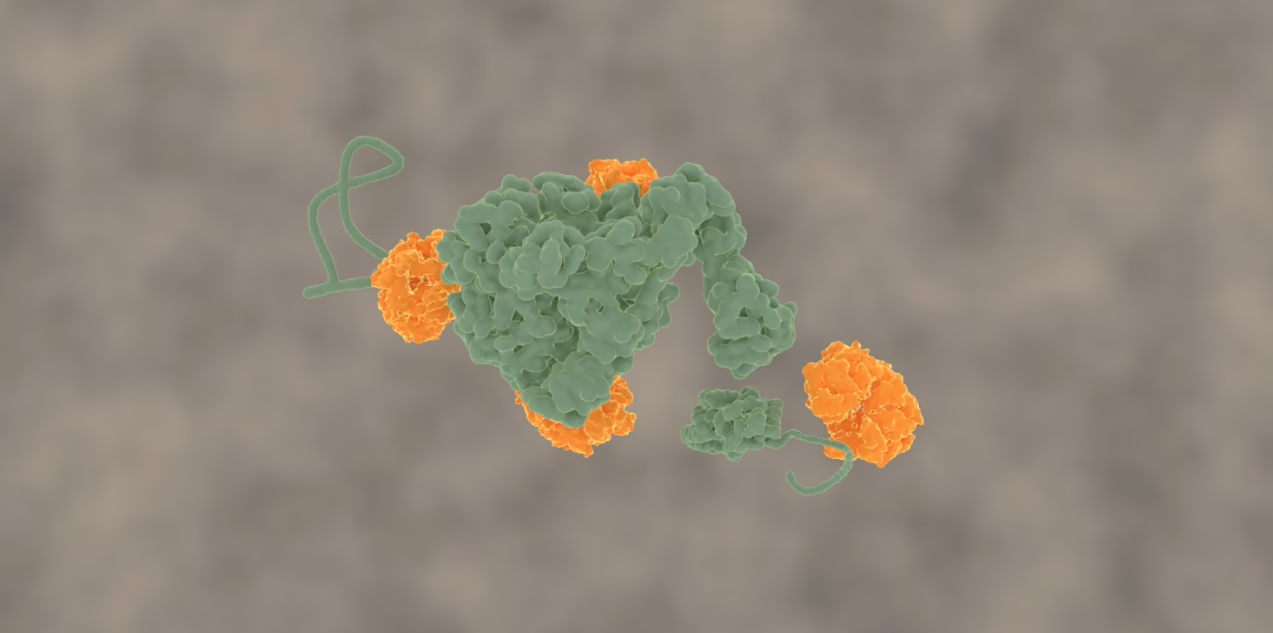
Molecular machine tears toxic protein clumps apart
How do cells disentangle proteins that are clumped together? Researchers from AMOLF in Amsterdam and Heidelberg University now show that the molecular chaperone ClpB can forcibly pull on exposed loops of protein chains, and hence extract them from protein clumps. They published their results in Nature today.
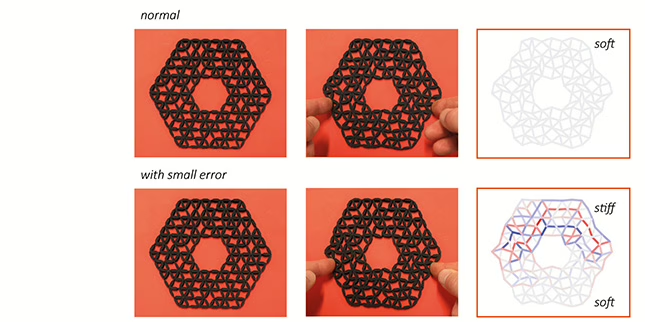
The peculiar effect of a small error
Metamaterials have properties that depend on their shape and architecture. Researchers at AMOLF, Leiden University and Tel Aviv University have found a new way of designing these metamaterials and their properties by deliberately incorporating small errors. They published their results on January 27th in Nature Physics.
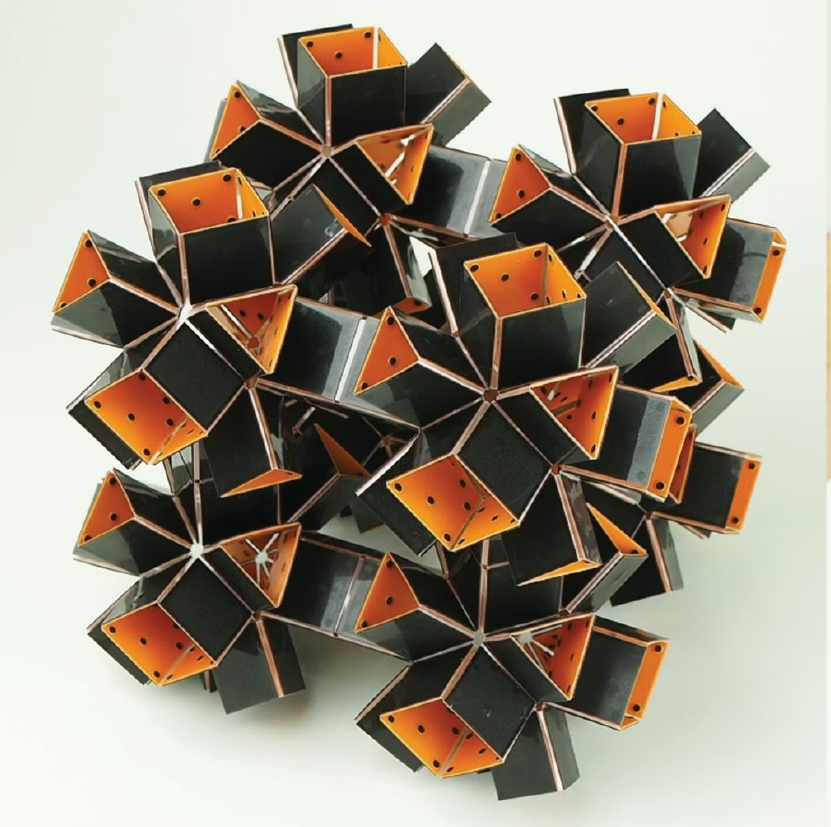
Smart simulations chart the behavior of surprising structures
AMOLF researchers are studying three-dimensional prismatic structures that can assume different shapes, with the aim of producing metamaterials that have multiple properties. Researchers have found a new way to simulate the deformations in such structures, and in doing so, they discovered a wide range of unexpected shapes. The results will be published today in the scientific journal Nature Communications.

Alphabet of 140 puzzle-pieces programs origami
How can a single origami crease pattern be folded into two precisely defined target shapes? Researchers at AMOLF and Leiden University have created an ‘alphabet’ of 140 origami ‘puzzle-pieces’ that allows them to do just that, as described today in Nature Physics. This discovery could help in the construction of origami robots and towards designing smart programmable materials.
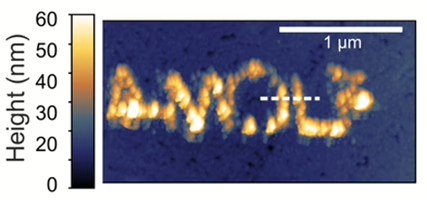
Microscope prints patterns at the nanoscale
Researchers from AMOLF’s 3D-Photovoltaics group have successfully used an atomic force microscope to electrochemically print at the nanoscale. This technique can print structures for a new generation of solar cells on chips. The researchers published their results today in the journal Nanoscale.