
News & updates
Latest developments from our institute
Stay informed about new research results, awards, events, and collaborations across our scientific community.
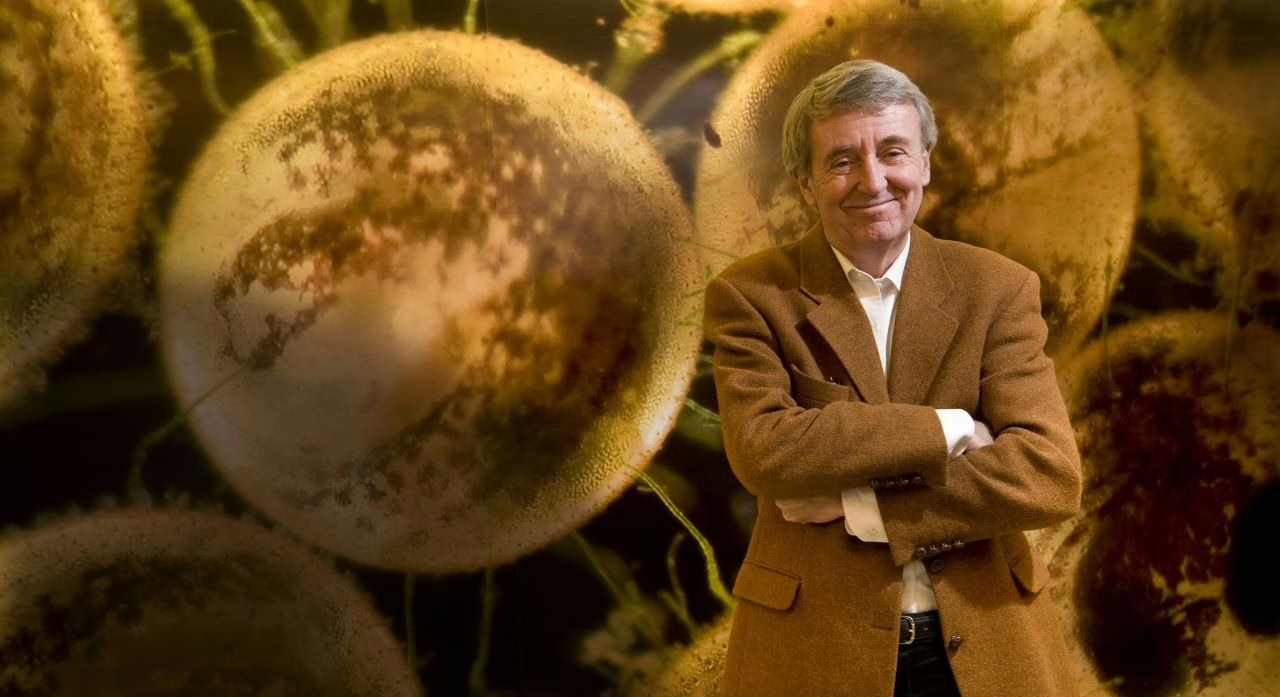
Former AMOLF director Frans Saris has passed away
On June 29th, former AMOLF director Frans Saris passed away. This sad news has touched many people, including AMOLF colleagues and alumni.
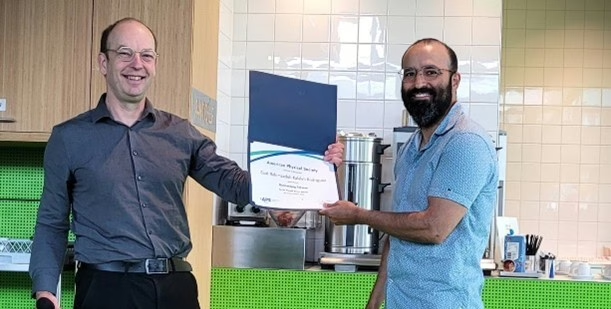
Said Rodriguez named Outstanding Referee by American Physical Society
On June 19, AMOLF director Huib Bakker congratulated group leader Said Rodriguez on his honorable and well-deserved recognition as an Outstanding Referee. The honor comes from the American Physical Society (APS), which named Said one of its 2025 Outstanding Referees in recognition of his exceptional contributions to the peer review process in physics.
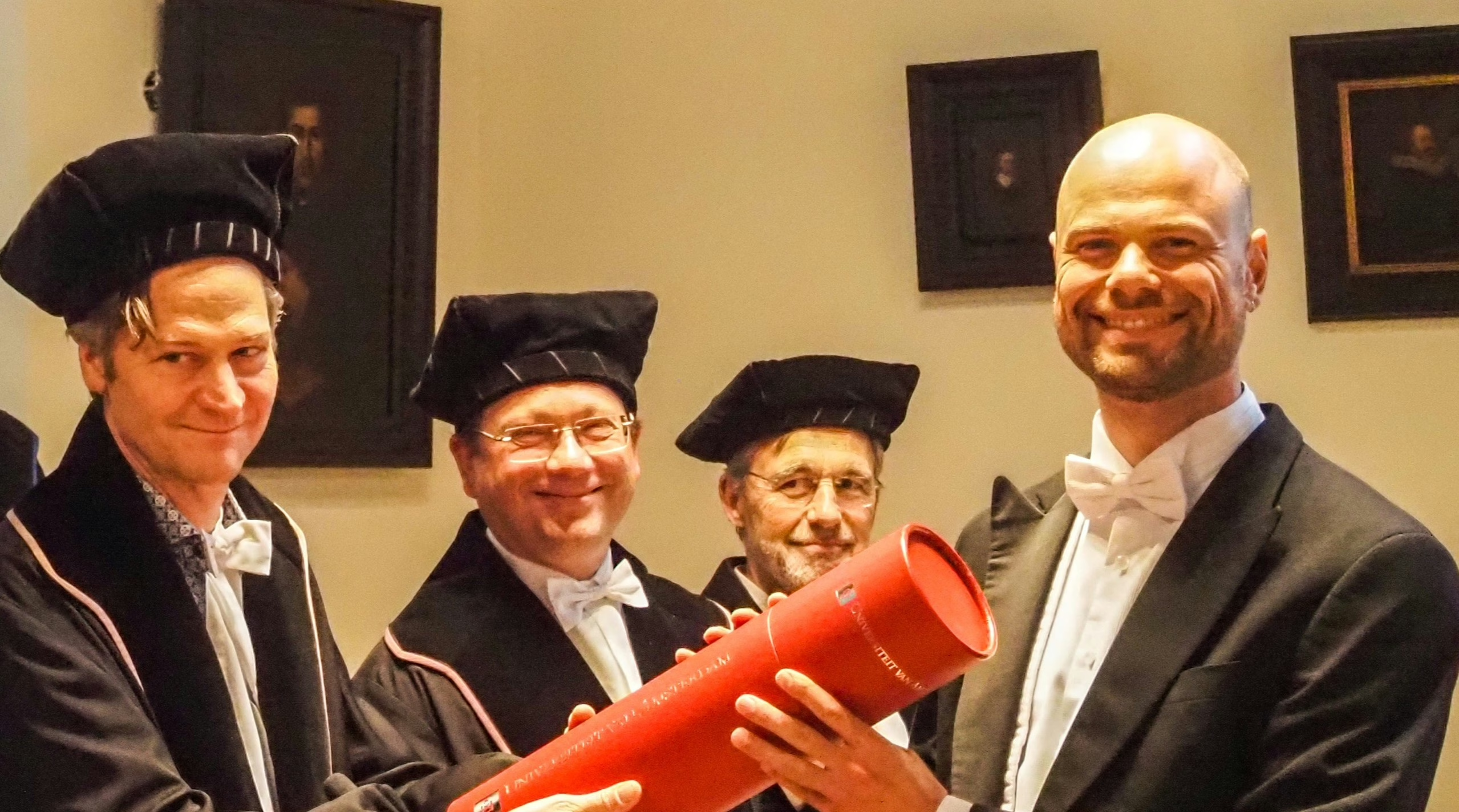
Spring brings many Doctorate Celebrations
Burak Demirbas – Stress-induced protein dynamics and growth arrest in C. elegans during development – May 16thBurak Demirbas with PhD committee and his familyBurak…
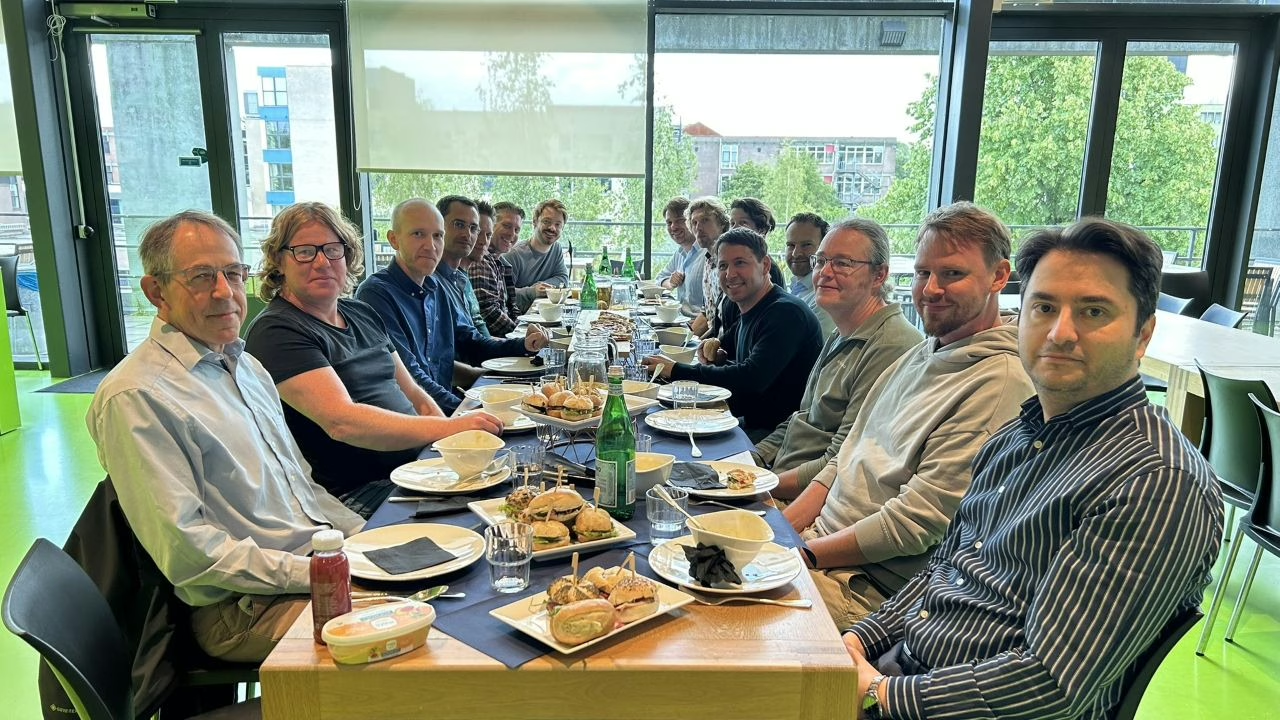
AMOLF, CWI, and DIFFER launch HELIOS project with NWO-I funding
An AMOLF collaboration with CWI and DIFFER has received funding from NWO-I to launch a joint project: HELIOS: AI-guided materials discovery facility for solar energy materials. On Friday, May 23rd, representatives from the three institutes gathered for the kick-off meeting to discuss the roadmap toward developing a highly efficient multilayered halide perovskite solar cell.
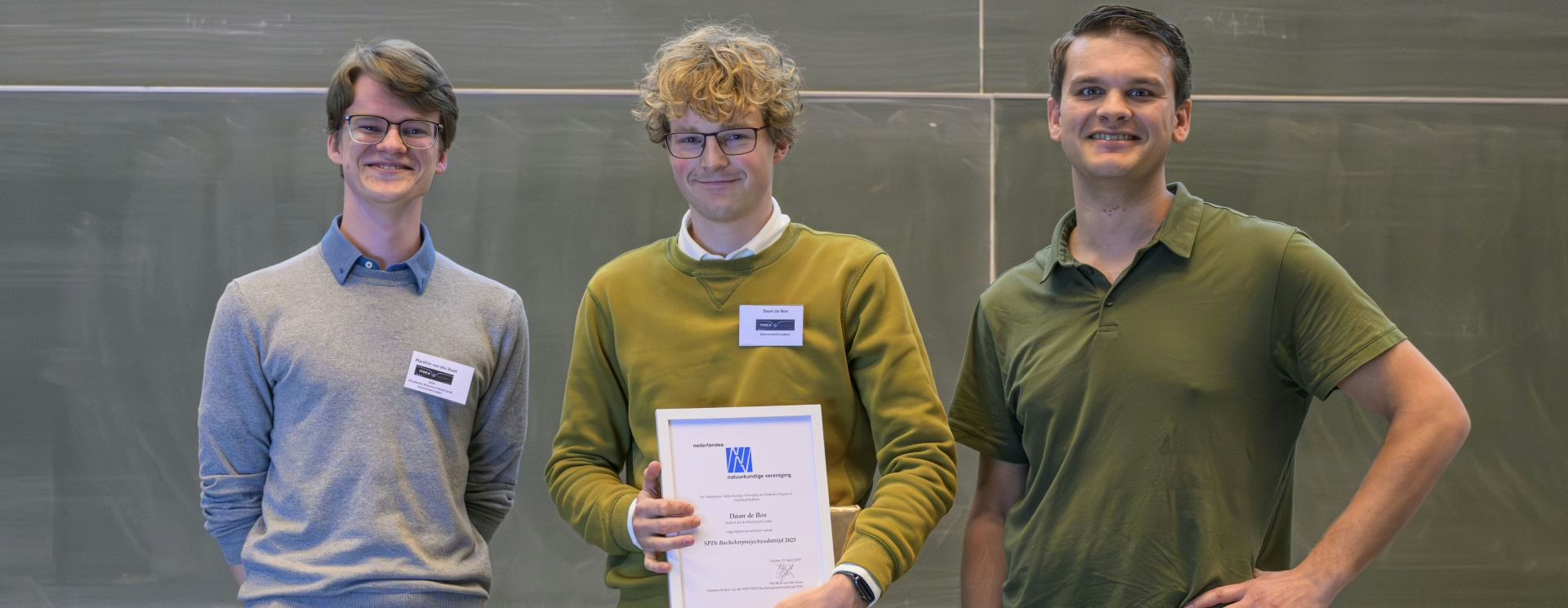
Daan de Bos’s research at AMOLF awarded best physics bachelor thesis
We are very proud to share that Daan de Bos has been awarded the SPIN Bachelor Project Award, for his research on self-learning materials with supervisor Marc Serra Garcia at AMOLF. Organized by the Dutch National Association of Physics Students (SPIN) and the Dutch Physics Association (NNV), the award is presented at NNV’s yearly FYSICA event for the best physics bachelor thesis in the Netherlands.
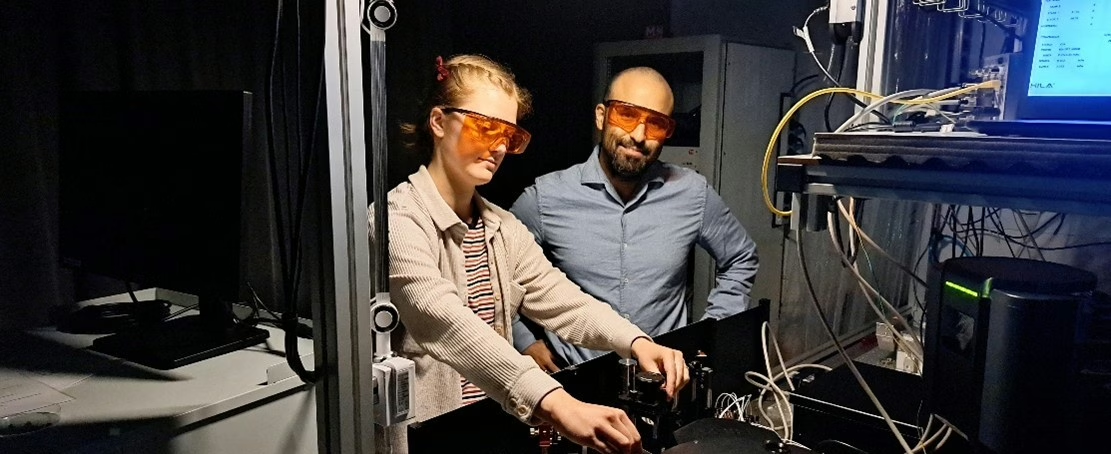
New properties discovered in promising optical materials
Halide perovskites are being studied throughout the world as promising materials for harvesting and controlling light, due to their unique optical and electrical properties. Now, for the first time, researchers have observed optical nonlinearity in a halide perovskite crystal under continuous laser illumination. With the discovery of these properties, published in Nature Photonics, researchers at AMOLF expand the possibilities for studies of atomic structure, electronics, and communication technologies.
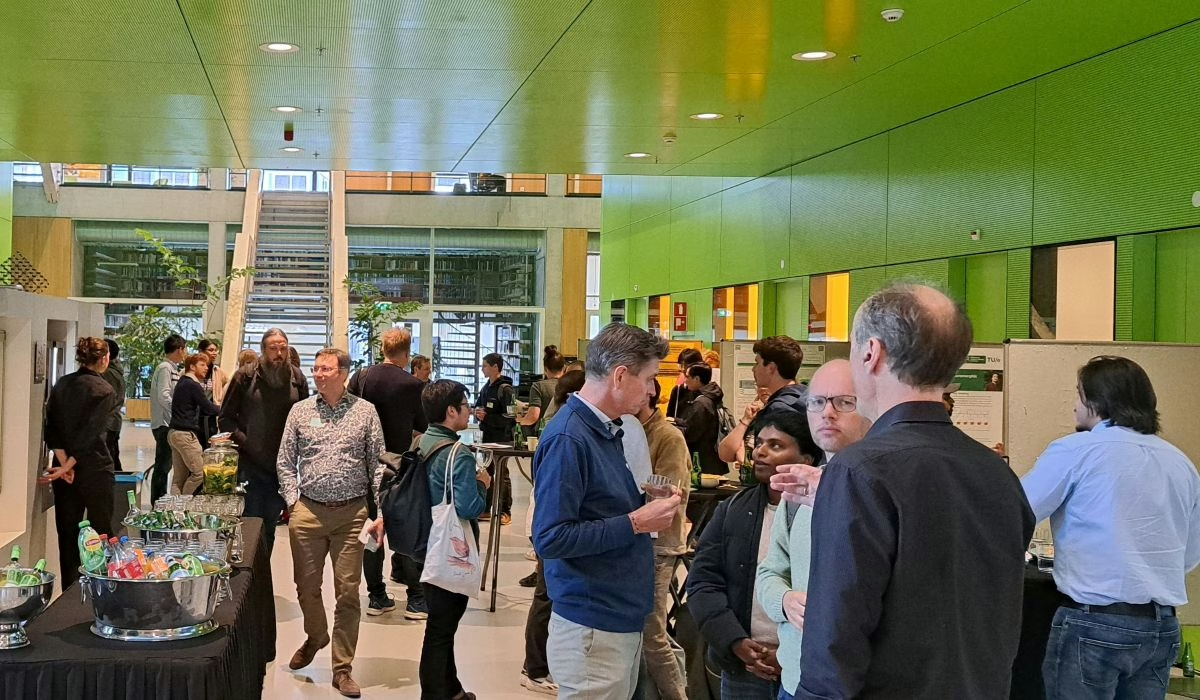
Infomatter symposium: taking advantage of information in a system
On Thursday, May 22nd, AMOLF organized the Infomatter Symposium to discuss exciting developments in information processing — ranging from biochemical to mechanical and optical systems. What these systems share is that they do not rely on conventional computers. This is a significant advantage, given that the energy cost of computing is rising much faster than that of energy production.
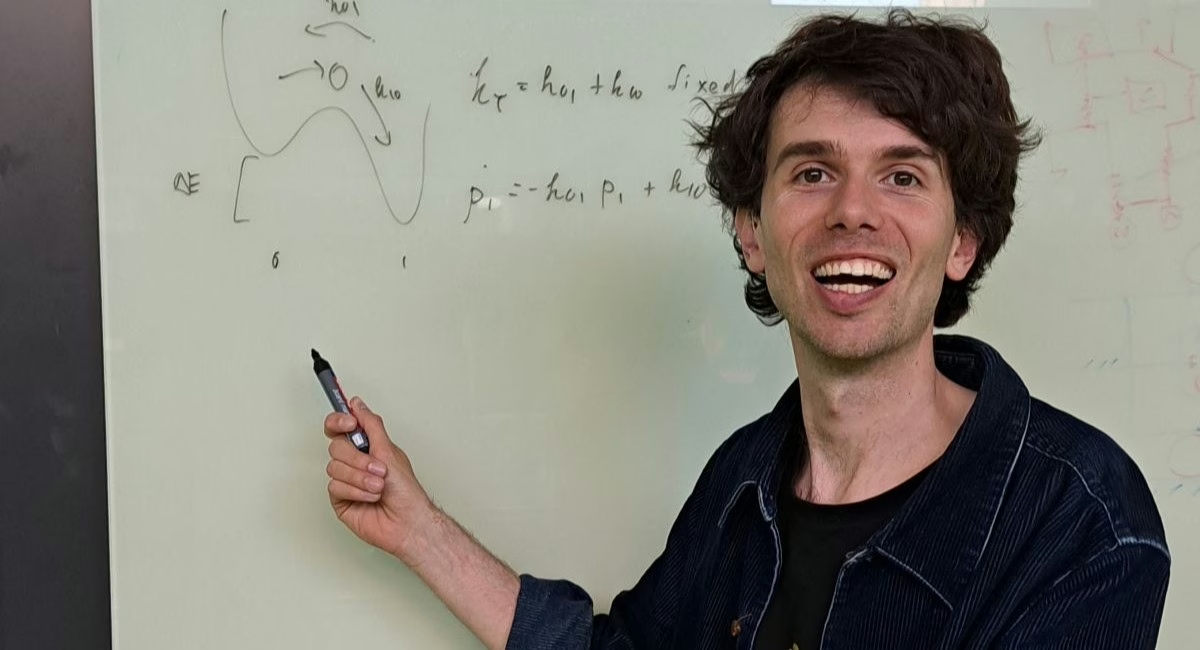
Optimizing bit-by-bit operations for energy-efficient computing
How can we make computing more energy-efficient when nature itself introduces randomness at every step? At the intersection of physics and information science, researchers from AMOLF and Imperial College London explore how thermal noise interferes with the physical switching of bits in computing devices. Their new work, published in Physical Review E, reveals that how we measure these state changes can make a surprising difference in designing the most efficient computational protocols.