
News & updates
Latest developments from our institute
Stay informed about new research results, awards, events, and collaborations across our scientific community.
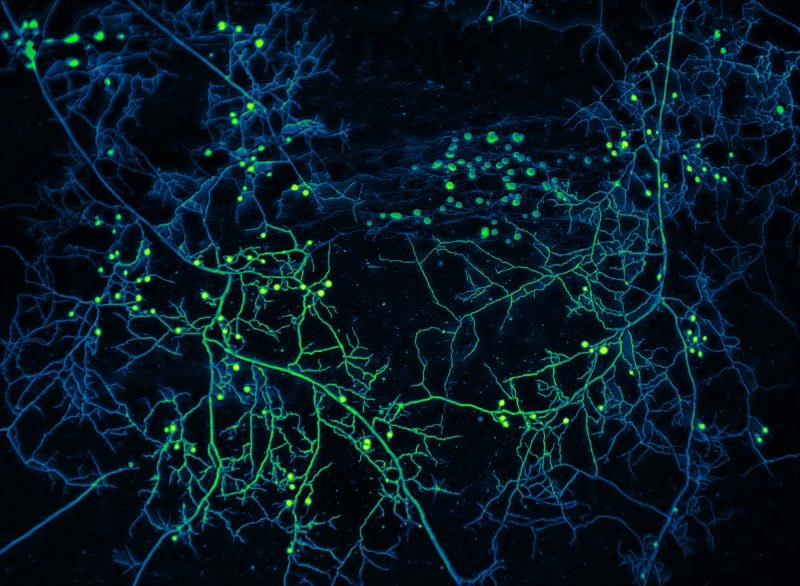
Moving massive amounts of CO2 underground: research shows how plant-fungal networks drive nutrient flows that support ecosystems
A study published online in Nature on February 26th has revealed how plants and fungi construct networks that operate as hyper-efficient ‘supply chains,’ moving billions of tons of CO2 underground. By building a robot (Aretha), which tracks over half a million fungal ’roadways’ simultaneously, researchers Tom Shimizu (AMOLF/Vrije Universiteit Amsterdam), Toby Kiers (SPUN/Vrije Universiteit Amsterdam), Howard Stone (Princeton University) and collaborators succeeded in mapping and tracking these nutrient-exchange networks that help regulate Earth’s ecosystems and carbon cycles. With atmospheric CO2 levels rising, the collected data is becoming increasingly important.
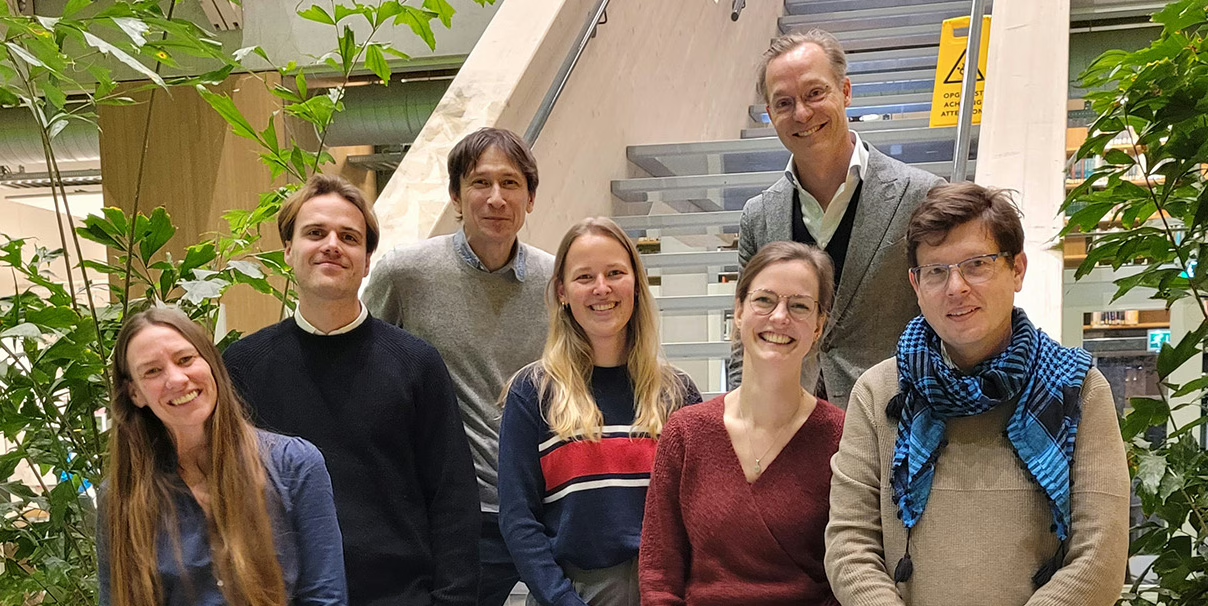
Climate envoy visits AMOLF to learn how fungal networks contribute to CO2 drawdown and storage underground
On January 8th, a delegation led by the Netherlands’ Climate Envoy, Jaime de Bourbon de Parme, visited the AMOLF lab of Tom Shimizu. Researchers in Tom’s group are developing new robotic imaging technologies to study fungal networks. Over the past few years, Tom and his collaborator Toby Kiers from Vrije Universiteit Amsterdam and The Society for the Protection of Underground Networks (SPUN) have made significant progress in understanding how these networks function.
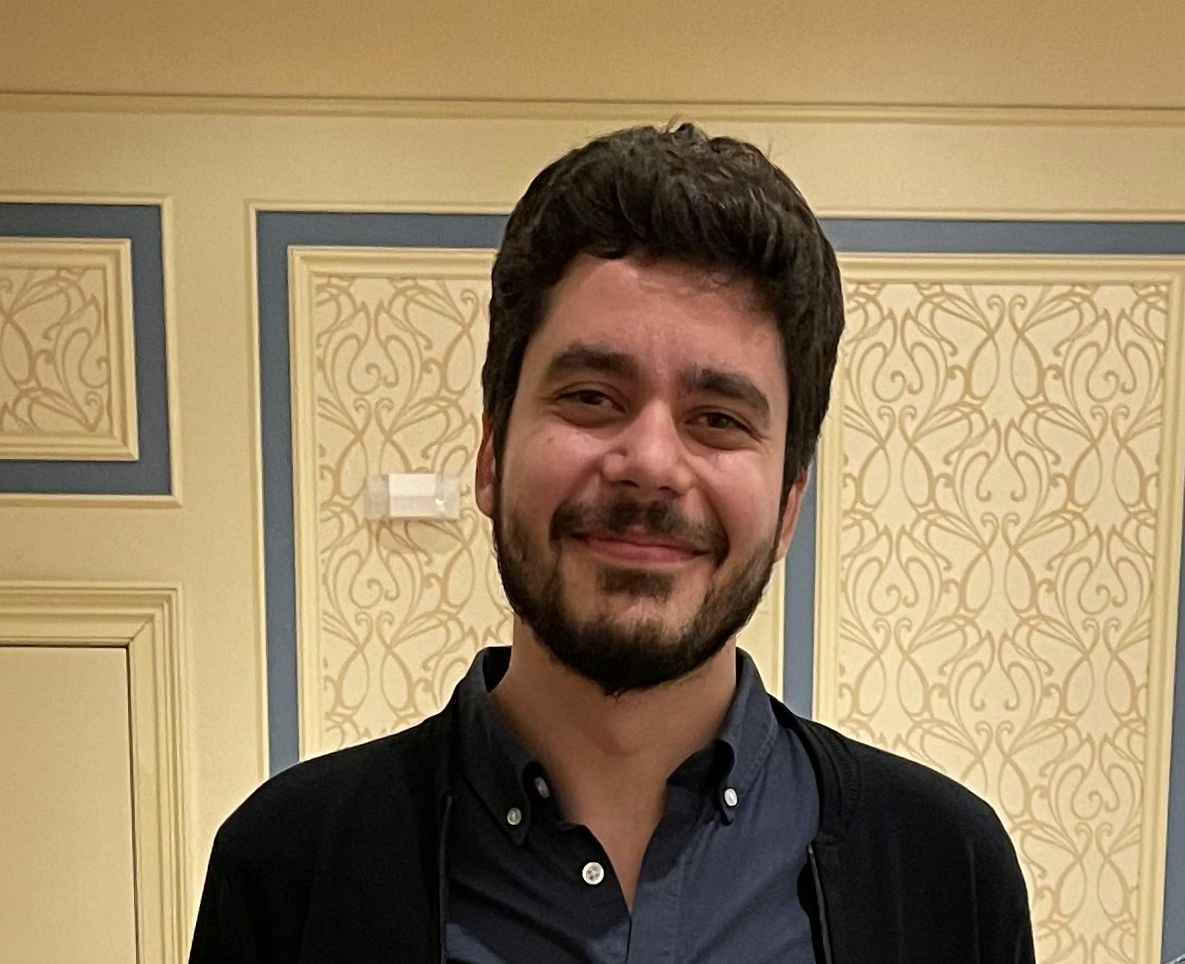
PhD student Fotios Avgidis wins award
At the BLAST XVII conference 2023, AMOLF PhD student Fotios Avgidis has won the Howard C. Berg award for outstanding talk by a young investigator. Howard C. Berg was a pioneer in the field of biophysics.
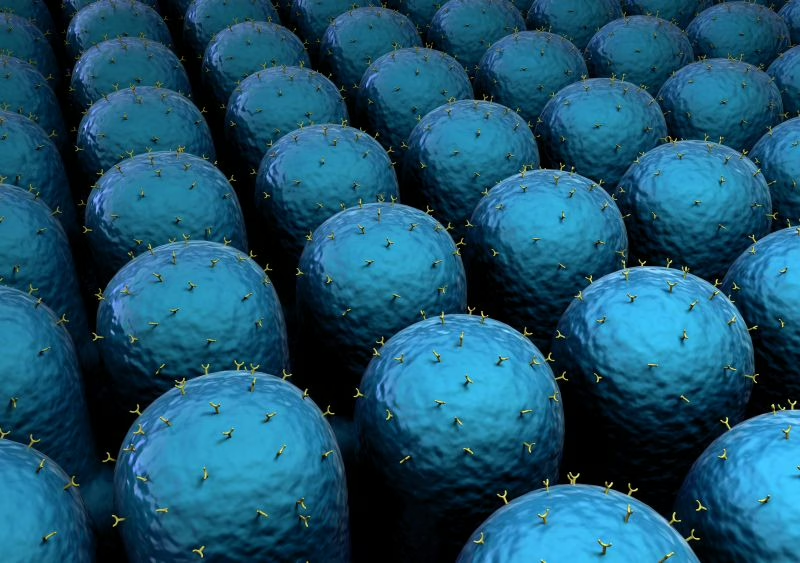
Dynamic risk management in cell populations
Much like investors on the stock market, cell populations prepare for changes in the environment by spreading the risk. The tool box they use contains a repertoire of sensory receptors on the surface of individual cells. These receptors can be tweaked to make individual members of the population responsive to different environmental signals. It was thought that cells could only modify this diversity relatively slowly, by producing new receptor proteins or degrading them. Scientists at AMOLF (Amsterdam, the Netherlands) and Yale University (New Haven, CT) now report the discovery of a mechanism that enables cell populations to tune their diversity much faster, by a combination of physical and chemical interactions between existing proteins. The findings are published in the journal Science Advances on November 13th.
International award for research on symbiotic networks
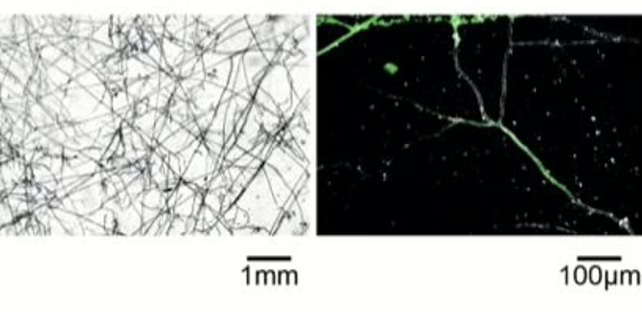
AMOLF group leader Tom Shimizu (Systems Biology) and colleagues from the Netherlands, USA and Japan have received a 1.2 million dollar research grant from the Human Frontier Science Program (HFSP).
Personality and mood swings in bacteria
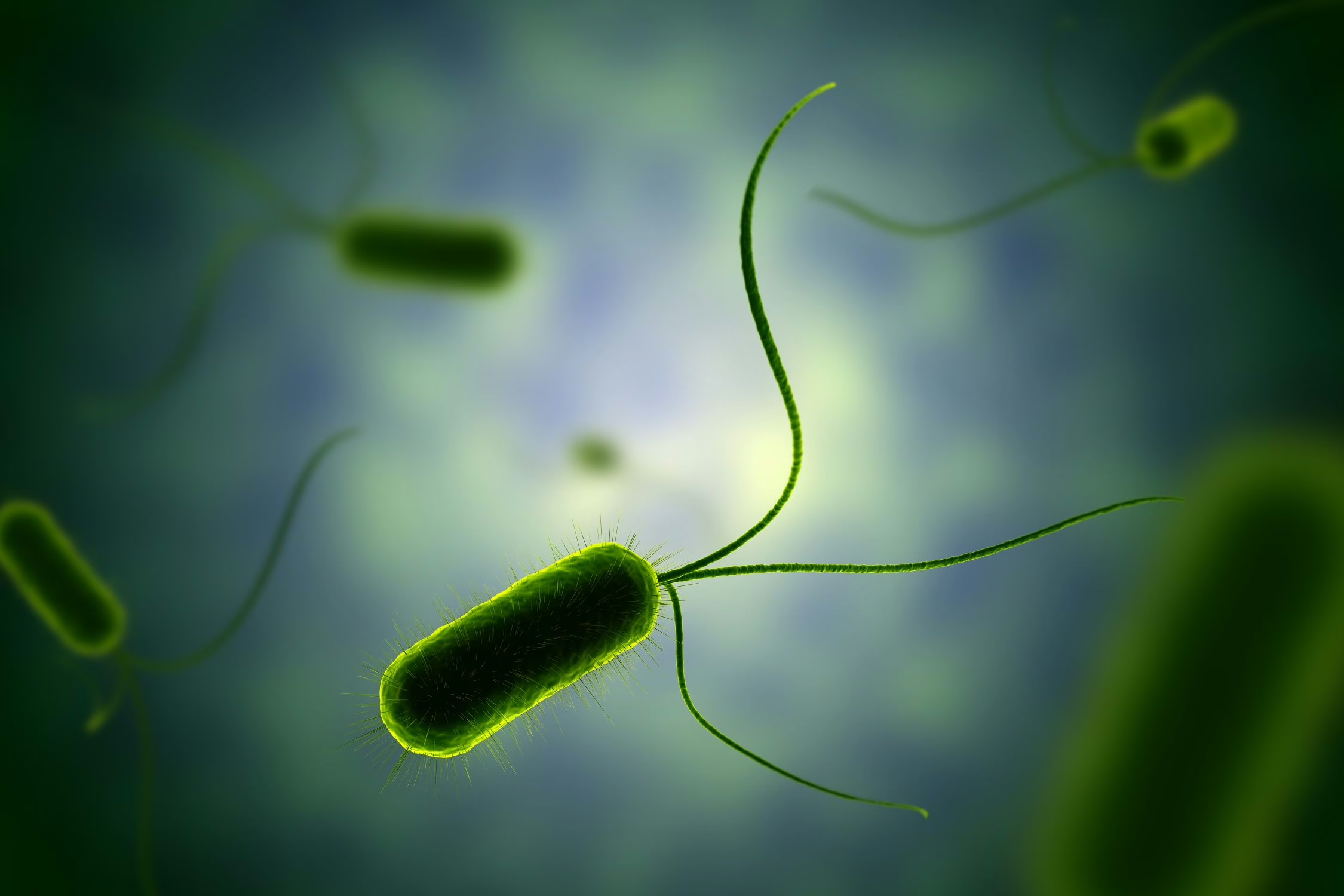
Bacteria can control where they go using a signaling network of protein molecules. Scientists at AMOLF have developed a microscopy method that allows them to see how individual bacteria use this network to make decisions.They discovered that bacteria are surprisingly diverse in personality and mood. The team publishes its findings in the scientific journal eLife on December 12, 2017.
New 3D tracking technique “for the masses” reveals individuality of bacterial behavior
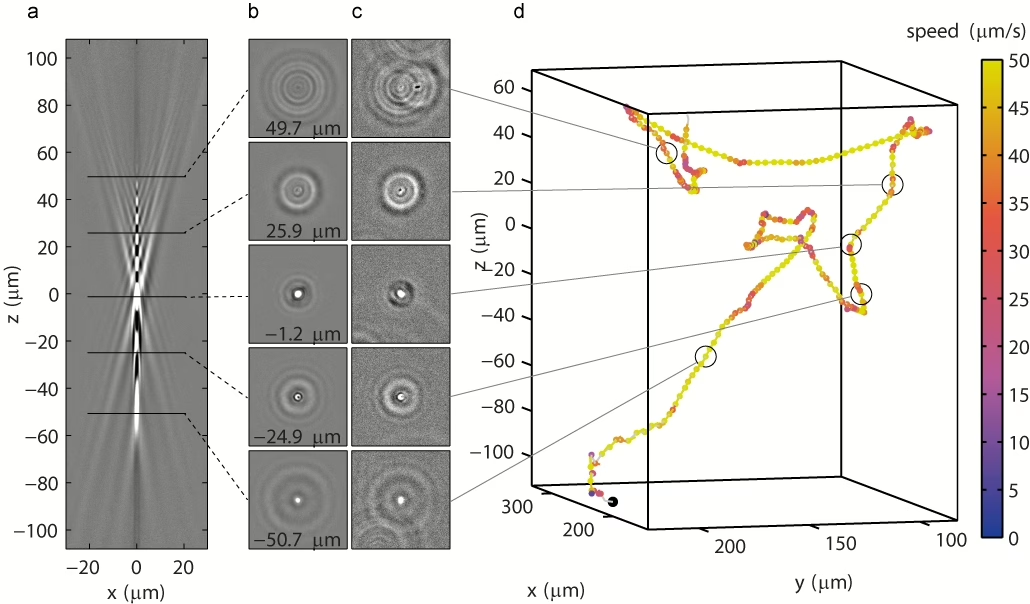
Microscopy techniques used to study the movement of swimming microbes are limited to two dimensions (2D) or require sophisticated devices. In a paper to be published online on 2 November, AMOLF researchers present a new method to track the movement of bacteria swimming in three dimensions (3D) using simple microscopes that are standard in biological laboratories.

Tom Shimizu appointed professor at VU University Amsterdam
As of September 1st, 2015 AMOLF group leader Tom Shimizu has been appointed professor of ‘Experimental Physics of Behavior’ at the VU University Amsterdam.